Portret Xu Beihong

39 najsłynniejszych obrazów artysty Xu Beihong – wybór z galerii

Aktualizacja: Listopad 2026 · ranking według naszego wskaźnika popularności (liczba wyszukiwań, wizyt i zamówień dla każdego dzieła) · 39 dzieł Xu Beihong w naszym katalogu

W skrócie

Spośród wszystkich dzieł oryginalnych, które pozostawił Xu Beihong, najsłynniejszym jest The Foolish Old Man Moves a Mountain (1940), znajdujący się w kolekcji CAFA Art Museum w Pekin. Tuż za nimi znajdują się Portrait of Sun Duoci (1936) oraz Tian Heng i Jego Pięćset Towarzyszy (1930). Nasz katalog zawiera 39 dzieł autorstwa Xu Beihong; galeria zachowała 39 najbardziej podziwianych na świecie prac, z których każda została przedstawiona wraz z datą powstania, informacją o muzeum oraz jej historią.

1895 – 1953, Yixing Contemporary realism Najwięcej dzieł: CAFA Art Museum

10 najlepszych obrazów artysty Xu Beihong: wybór galerii

1
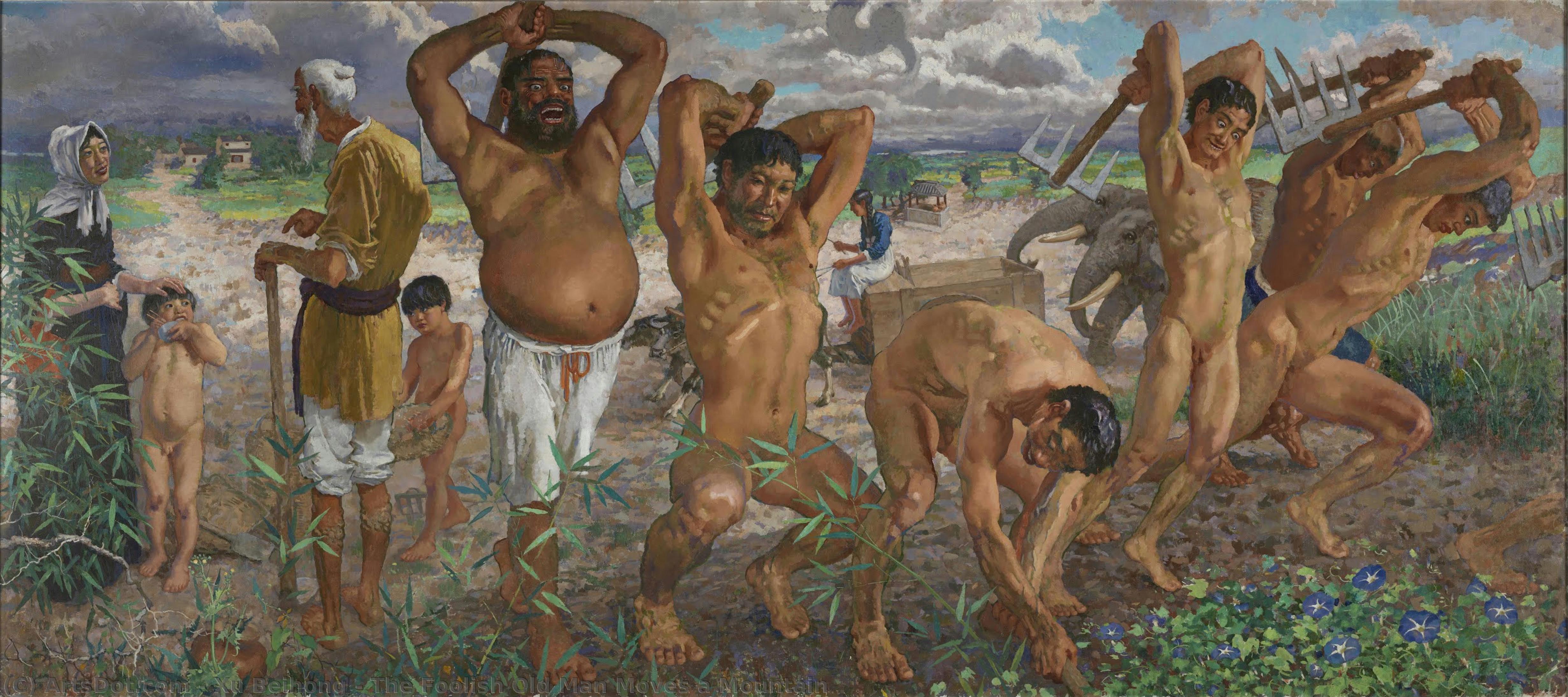
The Foolish Old Man Moves a Mountain (1940) autorstwa Xu Beihong

The Foolish Old Man Moves a Mountain

1940 · Oil On Canvas · CAFA Art Museum, Pekin

The Foolish Old Man Moves a Mountain by Xu Beihong is a monumental oil painting created about 1940. The work draws its narrative from a fable found in the Book of Lieh-tzu, a text dating back to the fourth century BC. This story was later retold in the first century BC and gained further prominence when it was championed in 1945. The painting captures a moment of intense physical labor…

2
Portrait of Sun Duoci (1936) autorstwa Xu Beihong

Portrait of Sun Duoci

1936 · Oil On Canvas · CAFA Art Museum, Pekin

In the quiet intimacy of a 1936 studio, Xu Beihong captured more than just a likeness; he immortalized a profound connection. The Portrait of Sun Duoci stands as a breathtaking testament to a moment when love and artistic revolution converged. As the viewer encounters this monumental canvas, they are immediately drawn into the serene gaze of Sun Duoci, a woman whose presence radiates a delicate balance of vulnerability and quiet…

3
Tian Heng i Jego Pięćset Towarzyszy (1930) autorstwa Xu Beihong

Tian Heng i Jego Pięćset Towarzyszy

1930 · Obraz olejny na płótnie · CAFA Art Museum, Pekin

Tian Heng and His Five Hundred Followers – A Monumental Reflection on Sacrifice and Loyalty Xu Beihong’s *Tian Heng and His Five Hundred Followers* transcends mere depiction; it's an immersive experience into the heart of Han Dynasty lore, rendered with breathtaking artistry and imbued with profound symbolic resonance. Completed in 1930 during his formative years at National Central University, this monumental oil painting stands as a testament to Xu’s ambition…

4
Standing Horse (1947) autorstwa Xu Beihong

Standing Horse

1947 · CAFA Art Museum, Pekin

A single horse occupies the center of this ink and wash painting on paper. The animal is depicted standing on all four legs, its head lifted toward the upper edge of the frame. Its mane and tail appear to move in a steady wind, creating a sense of physical motion within a static pose. The horse is rendered in black and white, utilizing varying tones of ink to define its…

5
Sketch of a Man from the Front and the Side (1924) autorstwa Xu Beihong

Sketch of a Man from the Front and the Side

1924 · Oil · CAFA Art Museum, Pekin

Xu Beihong’s Sketch of a Man from the Front and the Side, created about 1924, functions as a rigorous study of human anatomy and form. The composition centers on two nude male figures positioned against a dark, atmospheric background. One figure faces the viewer directly in a frontal view, while the second figure is presented in profile, facing right. This dual orientation allows for a comprehensive examination of the physical…

6
HORSE UNDER A WILLOW TREE autorstwa Xu Beihong

HORSE UNDER A WILLOW TREE

Ink

HORSE UNDER A WILLOW TREE is a painting by Xu Beihong. The work features a horse positioned beneath a tree, a central motif in the artist's oeuvre. Xu Beihong was born in 1895 in Yixing, People's Republic of China, and continued to influence the direction of Chinese art until his death in 1953.

7
Portrait of Xu (1943) autorstwa Xu Beihong

Portrait of Xu

1943 · Oil On Canvas · CAFA Art Museum, Pekin

Xu Beihong's “Portrait of Xu,” painted in 1943, isn’t merely a likeness; it’s a carefully constructed tableau brimming with quiet contemplation and the subtle power of suggestion. This oil painting, rendered on a canvas measuring 62 x 48 cm, offers a glimpse into the mind of a young woman – likely Xu Beihong's wife, Jingwen – captured in a moment of serene introspection. The work immediately draws the eye with…

9
Stroking the Cat (1924) autorstwa Xu Beihong

Stroking the Cat

1924 · Oil On Canvas · CAFA Art Museum, Pekin

In this intimate scene, Stroking the Cat brings together the artist Xu Beihong and his partner, Jiang Biwei, within a quiet moment of domestic life. The painting captures the pair alongside their cat, a creature they both hold dear. There is a palpable sense of closeness between the two figures as they interact with the animal, creating a scene of shared affection. The composition focuses on this private connection, pulling…

10
Portrait of a Young Woman (1940) autorstwa Xu Beihong

Portrait of a Young Woman

1940 · Oil · CAFA Art Museum, Pekin

A young woman sits in a room, her gaze drifting toward a distance we cannot see. She wears a floral shirt, the petals of which rest against her skin like small, silent memories. The light catches the dark weight of her hair, framing a face caught in a moment of deep thought. Behind her, the presence of another person lingers in the shadows, a soft silhouette that adds to the…

Kontynuacja zestawienia Xu Beihong, od 11 do 39

Słynne obrazy Xu Beihong epoka po epoce

Tematy, które przyciągnęły wzrok Xu Beihong

Cztery motywy najczęściej powracające w tych oryginałach, z których każdy doczekał się swojego najdoskonalszego przykładu.

Muzea przechowujące oryginały Xu Beihong

3 muzeów, w których znajduje się najwięcej obrazów z tej strony.

Muzea Miasto Dzieła artysty Xu Beihong Obrazy z tej listy
CAFA Art Museum, PekinCAFA Art Museum Pekin 24 The Foolish Old Man Moves a Mountain, Portrait of Sun Duoci, Tian Heng i Jego Pięćset Towarzyszy
China Modern and Contemporary Art Document Research Center, PekinChina Modern and Contemporary Art Document Research Center Pekin 2 Jiu Fang Gao, Galloping horse
Long Museum West Bund, SzanghajLong Museum West Bund Szanghaj 1 Two Horses

Xu Beihong dekada po dekadzie: oryginały definiujące każdy okres

Dzieła według dekad

Wybierz dekadę, aby zobaczyć dzieło, które ją definiuje.

Pytania kolekcjonerów o obrazy Xu Beihong

Z jakiego dzieła najbardziej znany jest Xu Beihong?Odkryj odpowiedź

The Foolish Old Man Moves a Mountain (1940), CAFA Art Museum, Pekin. Następne są Portrait of Sun Duoci (1936) oraz Tian Heng i Jego Pięćset Towarzyszy (1930).

W jakim wieku był Xu Beihong, gdy powstało The Foolish Old Man Moves a Mountain?Odkryj odpowiedź

45 lat: The Foolish Old Man Moves a Mountain pochodzi z 1940, a Xu Beihong urodził(a) się w 1895.

Jakie są dziesięć najsłynniejszych obrazów, których autorem jest Xu Beihong?Odkryj odpowiedź

The Foolish Old Man Moves a Mountain, Portrait of Sun Duoci, Tian Heng i Jego Pięćset Towarzyszy, Standing Horse, Sketch of a Man from the Front and the Side, HORSE UNDER A WILLOW TREE, Portrait of Xu, Mother and Daughter, Stroking the Cat i Portrait of a Young Woman. Powyższy ranking zawiera rok powstania oraz muzeum dla każdego z nich.

Ile obrazów pozostawił po sobie Xu Beihong?Odkryj odpowiedź

Nasz katalog zawiera 39 dzieł artysty Xu Beihong, datowanych od 1924 do 1950.

W których muzeach znajdują się arcydzieła Xu Beihong?Odkryj odpowiedź

W większości znajdują się w CAFA Art Museum (Pekin), China Modern and Contemporary Art Document Research Center (Pekin) i Long Museum West Bund (Szanghaj). Powyższa tabela muzeów zawiera ich pełną listę.

W których latach Xu Beihong namalował swoje najsłynniejsze dzieła?Odkryj odpowiedź

W 1930s: 9 z 39 dzieł na tej stronie powstało w tym czasie, w tym Portrait of Sun Duoci.

Jakie są pierwsze i ostatnie słynne oryginały Xu Beihong?Odkryj odpowiedź

Na tej stronie najwcześniejszy to Sketch of a Man from the Front and the Side (1924), a najpóźniejszy Cavalry Hero Tai Xide (1950).

Jakie tematy Xu Beihong wybierał najczęściej?Odkryj odpowiedź

Landscape (8), Chinese art (8) i Animals (5), w ramach 39 dzieł na tej stronie.

Której techniki Xu Beihong używał najczęściej?Odkryj odpowiedź

Oil On Canvas, dla 9 z 39 dzieł na tej stronie.

Do jakiego nurtu artystycznego należy Xu Beihong?Odkryj odpowiedź

Contemporary realism, sądząc po oryginałach na tej stronie.

Które dzieła Xu Beihong znajdują się w CAFA Art Museum?Odkryj odpowiedź

The Foolish Old Man Moves a Mountain, Portrait of Sun Duoci i Tian Heng i Jego Pięćset Towarzyszy: CAFA Art Museum, Pekin posiada 24 dzieł widocznych na tej stronie.

Xu Beihong: życie i twórczość

A Pioneer Bridging Worlds: The Life and Art of Xu Beihong

Xu Beihong, born Xu Shoukang in 1895 in the tranquil town of Yixing, Jiangsu province, stands as a monumental figure in 20th-century Chinese art. His life was a compelling narrative of artistic evolution, dedicated to forging a new path for Chinese painting—one that harmoniously blended the rich traditions of his homeland with the innovations of Western art. From humble beginnings steeped in classical learning and traditional brushwork under the tutelage of his father, Xu Dazhang, a struggling artist himself, young Beihong’s early life was marked by both artistic promise and economic hardship. This formative period instilled within him not only technical skill but also a deep appreciation for Chinese culture and a resilient spirit that would define his career. The family's itinerant existence, painting portraits and landscapes to make ends meet, exposed him to the realities of rural China and fueled an early ambition to elevate the status of art and artists. A pivotal moment arrived when he adopted the name “Beihong,” meaning "sad wild goose," a reflection perhaps of his youthful anxieties and aspirations—a poignant symbol of both longing and determination.

The European Awakening: Forging a New Artistic Vision

Driven by a thirst for knowledge and a desire to modernize Chinese art, Xu Beihong embarked on a transformative journey to Europe in 1917. Initially studying in Tokyo, he soon secured a coveted scholarship to the prestigious École Nationale Supérieure des Beaux-Arts in Paris. This period proved crucial in shaping his artistic philosophy and technique. Immersed in the heart of European art, he meticulously studied oil painting and drawing, mastering Western principles of perspective, composition, and realism. While embracing these new techniques, Xu Beihong remained critical of certain modernist trends prevalent at the time, favoring instead the classical traditions he encountered. He adopted the French name "Ju Péon" during his stay, a testament to his immersion in European culture—a deliberate choice that signaled his intention to synthesize Eastern and Western artistic approaches. However, it was not merely technical skill that he sought; he aimed to understand the underlying principles of Western art and adapt them to revitalize Chinese painting—a vision articulated in his later writings and teachings. This period laid the foundation for his unique artistic style, characterized by a powerful synthesis of Eastern aesthetics and Western techniques. He spent years absorbing the works of masters like Ingres and Delacroix, studying their use of light, color, and form with an almost obsessive dedication.

Iconic Motifs and Artistic Style: A Synthesis of East and West

Upon returning to China in 1927, Xu Beihong embarked on a prolific career marked by groundbreaking works that captured the spirit of a nation undergoing profound change. He quickly became renowned for his dynamic depictions of horses and birds—motifs that transcended mere representation to become powerful symbols of strength, freedom, and national pride. His horses, in particular, are celebrated for their muscularity, energy, and expressive power, often depicted galloping across vast landscapes with a sense of untamed spirit. Galloping Horse, perhaps his most iconic work, embodies this perfectly—a testament to the vitality and resilience of the Chinese people. The painting’s sweeping movement and dramatic composition capture the essence of Chinese heroism and national identity. Beyond these signature subjects, Xu Beihong also excelled in portraiture and historical painting, demonstrating his mastery of both oil painting and traditional ink wash techniques. His style was characterized by a unique blend of bold brushstrokes, precise delineation, and a masterful command of light and shadow. He seamlessly integrated Western perspective and composition into the fluidity of Chinese brushwork, creating a visual language that was both innovative and deeply rooted in tradition. Foolish Old Man Who Removed the Mountains, inspired by a traditional Chinese fable, exemplifies his ability to imbue classical themes with modern energy and social commentary—a powerful illustration of the artist’s engagement with contemporary issues.

Legacy and Influence: Shaping Modern Chinese Art Education

Xu Beihong’s impact extended far beyond his own artistic creations; he was also a pioneering art educator who profoundly shaped the development of modern Chinese art education. After returning to China, he held teaching positions at several prestigious universities, including National Central University and Peking University, where he tirelessly advocated for curriculum reform. He championed the incorporation of Western sketching and oil painting techniques into traditional Chinese art programs, believing that this integration was essential for revitalizing Chinese artistic expression. He argued that a truly modern Chinese artist needed to understand both the traditions of their heritage and the advancements of the West—a balanced approach that would allow them to create works with universal appeal. Following the founding of the People's Republic of China in 1949, he became president of the Central Academy of Fine Arts and chairman of the China Artists Association, further solidifying his influence on the nation’s artistic landscape. He trained generations of artists who went on to become leading figures in Chinese art, carrying forward his vision of a modern yet culturally grounded aesthetic. Xu Beihong's emphasis on artistic conception, the importance of life experiences, and the integration of Eastern and Western traditions left an indelible mark on Chinese art history, cementing his legacy as one of its most influential figures. His work continues to inspire artists and captivate audiences worldwide, serving as a powerful reminder of the enduring power of art to bridge cultures and transcend boundaries.

Major Achievements

* **Pioneering Modern Chinese Painting:** Xu Beihong is widely recognized as one of the founders of modern Chinese painting, bridging traditional techniques with Western influences. * Master of Horse and Bird Art:** His dynamic depictions of horses and birds became iconic symbols of Chinese strength and freedom. * **Development of Oil Painting in China:** He was among the first Chinese artists to successfully utilize oil painting techniques, expanding the possibilities of Chinese art. * **Revolutionizing Art Education:** As a leading educator, he championed the integration of Western methods into Chinese art curricula, shaping generations of artists. * Creation of Monumental Works:** Xu Beihong created several large-scale paintings that captured significant historical and cultural moments in China.

Historical Significance

Xu Beihong’s life and work are inextricably linked to the tumultuous period of 20th-century China, marked by political upheaval, social change, and a fervent desire for national renewal. His artistic journey reflects this complex history—from his initial embrace of Western techniques during his time in Paris to his later efforts to synthesize Eastern and Western traditions within a distinctly Chinese aesthetic. He played a crucial role in shaping the visual identity of modern China, leaving behind a rich legacy that continues to inspire artists and scholars today. His paintings serve as powerful reminders of China’s past, present, and future—a testament to the enduring spirit of a nation striving for progress and self-expression.