Portret William Dyce

69 najsłynniejszych obrazów artysty William Dyce, każdy niepowtarzalny

Aktualizacja: Październik 2026 · ranking według naszego wskaźnika popularności (liczba wyszukiwań, wizyt i zamówień dla każdego dzieła) · 69 dzieł William Dyce w naszym katalogu

W skrócie

Piety: The Knights of the Round Table about to Depart in Quest of the Holy Grail (1849) to obraz autorstwa William Dyce, który przyciąga najwięcej spojrzeń; oryginał znajduje się w Scottish National Gallery, Edynburg. Następnie wzrok kieruje się na James Hamilton, 1749 - 1835. Physician (1832) i The meeting of Jacob and Rachel (1853). Spośród 69 dzieł William Dyce w naszym katalogu, tych 69 jest najbardziej znanych – każde z nich to unikatowy oryginał, przedstawiony wraz z rokiem powstania, muzeum oraz powodem, dla którego przetrwało próbę czasu.

1806 – 1864, Aberdeen Najwięcej dzieł: Scottish National Gallery

10 najlepszych obrazów autorstwa William Dyce według oka galerii

1
Piety: The Knights of the Round Table about to Depart in Quest of the Holy Grail (1849) autorstwa William Dyce

Piety: The Knights of the Round Table about to Depart in Quest of the Holy Grail

1849 · Oil On Canvas · Scottish National Gallery, Edynburg

In the grand tapestry of Victorian Romanticism, few works capture the intersection of myth and morality as profoundly as William Dyce’s 1849 masterpiece, Piety: The Knights of the Round Table about to Depart in Quest of the Holy Grail. This monumental canvas is far more than a mere historical tableau; it is an evocative meditation on the spiritual yearning that pulsed through the heart of the nineteenth century. As the…

2
James Hamilton, 1749 - 1835. Physician (1832) autorstwa William Dyce

James Hamilton, 1749 - 1835. Physician

1832 · Oil On Canvas · Scottish National Portrait Gallery, Edynburg

A single figure occupies the vertical composition of this oil on canvas, rendered in a formal 19th-century academic style. James Hamilton stands slightly off-center, his body oriented toward the viewer. He is dressed in period attire consisting of a dark, textured frock coat, breeches, and a dark tricorne-style hat. A light cream cravat provides a sharp tonal contrast against the darker elements of his clothing and the skin tones of…

8
The Virgin and Child (1845) autorstwa William Dyce

The Virgin and Child

1845 · Oil On Canvas · Royal Collection, Londyn

This evocative painting, depicting The Virgin and Child, immediately draws the viewer into a moment of profound intimacy. At its heart lies the tender connection between mother and son; Mary cradles her young boy with palpable love and exquisite care. Her face, veiled in delicate fabric, speaks volumes of purity and modesty, lending an air of timeless grace to the sacred subject matter. The composition is masterfully balanced, guiding the…

Słynne obrazy artysty William Dyce, od 11 do 69

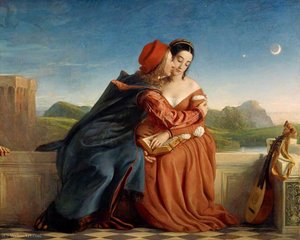
11Westburn (1827) autorstwa William DyceWestburn1827 12Portrait of Alexander Jardine (1834) autorstwa William DycePortrait of Alexander Jardine1834 13The Descent of Venus (2nd Version) autorstwa William DyceThe Descent of Venus (2nd Version) 14Life study autorstwa William DyceLife study 15The Judgement of Solomon autorstwa William DyceThe Judgement of SolomonScottish National Gallery 16Nicholson bain autorstwa William DyceNicholson bain 17Saint catherine autorstwa William DyceSaint catherineScottish National Gallery 18The honourable charlotte noel autorstwa William DyceThe honourable charlotte noel 19The Descent of Venus autorstwa William DyceThe Descent of Venus 20Beatrice autorstwa William DyceBeatrice 21Head of a Man autorstwa William DyceHead of a ManBirmingham Museum and Art Gallery 22Bacchus Nursed by the Nymphs of Nyssa autorstwa William DyceBacchus Nursed by the Nymphs of Nyssa 23Miss hannah carnegie autorstwa William DyceMiss hannah carnegie 24King Lear and the Fool in the Storm autorstwa William DyceKing Lear and the Fool in the StormScottish National Gallery 25St Joseph (1847) autorstwa William DyceSt Joseph1847 · Royal Collection 26Rosslyn Chapel, South Aisle autorstwa William DyceRosslyn Chapel, South AisleScottish National Gallery 27Westburn autorstwa William DyceWestburn 28Recollection of Pegwell Bay autorstwa William DyceRecollection of Pegwell Bay 29Isabella cay autorstwa William DyceIsabella cay 30View of Loch Lomond autorstwa William DyceView of Loch LomondScottish National Gallery 31Madonna and Child autorstwa William DyceMadonna and Child 32Motherhood autorstwa William DyceMotherhood 33John Small and His Son autorstwa William DyceJohn Small and His Son 34The Woman of Samaria autorstwa William DyceThe Woman of SamariaBirmingham Museum and Art Gallery 35The highland ferryman autorstwa William DyceThe highland ferryman 36Christ Enthroned with Saints autorstwa William DyceChrist Enthroned with Saints 37Pegwell Bay, Kent - a Recollection of October 5th (1858) autorstwa William DycePegwell Bay, Kent - a Recollection of October 5th (1858) 38Mrs william crombie autorstwa William DyceMrs william crombie 39Welsh Landscape with Two Women Knitting autorstwa William DyceWelsh Landscape with Two Women Knitting 40Virgin and Child autorstwa William DyceVirgin and Child 41The Garden of Gethsemane autorstwa William DyceThe Garden of Gethsemane 42Man of Sorrows autorstwa William DyceMan of SorrowsScottish National Gallery 43Christabel autorstwa William DyceChristabel 44Dante and Beatrice autorstwa William DyceDante and Beatrice 45Francis humberston autorstwa William DyceFrancis humberston 46Henry VI at Towton, North Yorkshire autorstwa William DyceHenry VI at Towton, North Yorkshire 47Alexander webster autorstwa William DyceAlexander webster 48Study for 'Cain' autorstwa William DyceStudy for 'Cain' 49The Daughters of Jethro Defended by Moses autorstwa William DyceThe Daughters of Jethro Defended by Moses 50Lowry william frederick dyce autorstwa William DyceLowry william frederick dyce 51Mrs John Clerk Maxwell and Her Son, James autorstwa William DyceMrs John Clerk Maxwell and Her Son, JamesBirmingham Museum and Art Gallery 52Sir James McGrigor autorstwa William DyceSir James McGrigor 53Omnia vanitas autorstwa William DyceOmnia vanitas 54John Knox Dispensing the Sacrament autorstwa William DyceJohn Knox Dispensing the Sacrament 55Francesca da Rimini autorstwa William DyceFrancesca da RiminiScottish National Gallery 56The goatherd autorstwa William DyceThe goatherd 57Christ's Entry into Jerusalem autorstwa William DyceChrist's Entry into Jerusalem 58Lamentation over the Dead Christ autorstwa William DyceLamentation over the Dead Christ 59Titian Preparing to Make His First Essay in Colouring autorstwa William DyceTitian Preparing to Make His First Essay in Colouring 60James chalmers autorstwa William DyceJames chalmers 61George Herbert at Bemerton, Salisbury autorstwa William DyceGeorge Herbert at Bemerton, Salisbury 62Portrait of a Lady autorstwa William DycePortrait of a Lady 63The Meeting of Jacob and Rachel autorstwa William DyceThe Meeting of Jacob and Rachel 64The infant hercules autorstwa William DyceThe infant herculesScottish National Gallery 65Sir galbraith lowry cole autorstwa William DyceSir galbraith lowry coleNational Portrait Gallery 66Titian's first painting autorstwa William DyceTitian's first painting 67Sketch of a Doorway with a Water Barrel autorstwa William DyceSketch of a Doorway with a Water Barrel 68Amongst the Trees autorstwa William DyceAmongst the Trees 69Pegwell Bay, Kent - a Recollection of October 5th 1858 (1858) autorstwa William DycePegwell Bay, Kent - a Recollection of October 5th 18581858 · Tate Britain

Tematy, które przyciągnęły wzrok William Dyce

Cztery motywy najczęściej powracające w tych oryginałach, z których każdy doczekał się swojego najdoskonalszego przykładu.

Muzea przechowujące oryginały William Dyce

8 muzeów, w których znajduje się najwięcej obrazów z tej strony.

Muzea Miasto Dzieła artysty William Dyce Obrazy z tej listy
Scottish National Gallery, EdynburgScottish National Gallery Edynburg 10 Piety: The Knights of the Round Table about to Depart in Quest of the Holy Grail, David in the Wilderness, The Judgement of Solomon
Birmingham Museum and Art Gallery, BirminghamBirmingham Museum and Art Gallery Birmingham 3 Head of a Man, The Woman of Samaria, Mrs John Clerk Maxwell and Her Son, James
Royal Collection, LondynRoyal Collection Londyn 2 The Virgin and Child, St Joseph
Scottish National Portrait Gallery, EdynburgScottish National Portrait Gallery Edynburg 1 James Hamilton, 1749 - 1835. Physician
New Walk Museum - Art Gallery, LeicesterNew Walk Museum - Art Gallery Leicester 1 The meeting of Jacob and Rachel
Minneapolis Institute of Art, MinneapolisMinneapolis Institute of Art Minneapolis 1 Eliezer of Damascus
Aberdeen Art GalleryAberdeen Art Gallery 1 Portrait of a Lady (The Artist's Wife)
National Portrait Gallery, LondynNational Portrait Gallery Londyn 1 Sir galbraith lowry cole

William Dyce na przestrzeni dekad: jeden unikatowy oryginał dla każdego

Dzieła według dekad

Wybierz dekadę, aby zobaczyć dzieło, które ją definiuje.

Obrazy artysty William Dyce: pytania do galerii

Jakie jest najsłynniejsze dzieło artysty William Dyce?Odkryj odpowiedź

Piety: The Knights of the Round Table about to Depart in Quest of the Holy Grail (1849), Scottish National Gallery, Edynburg. Następne są James Hamilton, 1749 - 1835. Physician (1832) oraz The meeting of Jacob and Rachel (1853).

W jakim wieku William Dyce stworzył/a Piety: The Knights of the Round Table about to Depart in Quest of the Holy Grail?Odkryj odpowiedź

43 lat: Piety: The Knights of the Round Table about to Depart in Quest of the Holy Grail pochodzi z 1849, a William Dyce urodził(a) się w 1806.

Które dziesięć obrazów William Dyce jest najbardziej znanych?Odkryj odpowiedź

Piety: The Knights of the Round Table about to Depart in Quest of the Holy Grail, James Hamilton, 1749 - 1835. Physician, The meeting of Jacob and Rachel, Eliezer of Damascus, Portrait of a Lady (The Artist's Wife), Design For A Stained Glass Window In Ely Cathedral by William Dyce - William Dyce, Scene in Arran, The Virgin and Child, Saint john leading home his adopted mother i David in the Wilderness. Powyższy ranking zawiera rok powstania oraz muzeum dla każdego z nich.

Ile znanych dzieł stworzył William Dyce?Odkryj odpowiedź

Nasz katalog zawiera 69 dzieł artysty William Dyce, datowanych od 1827 do 1860.

Gdzie można zobaczyć najsłynniejsze oryginały William Dyce?Odkryj odpowiedź

W większości znajdują się w Scottish National Gallery (Edynburg), Birmingham Museum and Art Gallery (Birmingham) i Royal Collection (Londyn). Powyższa tabela muzeów zawiera ich pełną listę.

W jakim okresie William Dyce stworzył/a swoje najsłynniejsze obrazy?Odkryj odpowiedź

W 1850s: 5 z 69 dzieł na tej stronie powstało w tym czasie, w tym The meeting of Jacob and Rachel.

Który z najsłynniejszych obrazów artysty William Dyce powstał najwcześniej, a który najpóźniej?Odkryj odpowiedź

Na tej stronie najwcześniejszy to Westburn (1827), a najpóźniejszy Eliezer of Damascus (1860).

Jakie tematy preferował William Dyce?Odkryj odpowiedź

Landscape (6), Women (6) i Victorian era (5), w ramach 69 dzieł na tej stronie.

Jakich materiałów William Dyce używał najczęściej?Odkryj odpowiedź

Oil On Canvas, dla 5 z 69 dzieł na tej stronie.

Jakie oryginały William Dyce można zobaczyć w Scottish National Gallery?Odkryj odpowiedź

Piety: The Knights of the Round Table about to Depart in Quest of the Holy Grail, David in the Wilderness i The Judgement of Solomon: Scottish National Gallery, Edynburg posiada 10 dzieł widocznych na tej stronie.

William Dyce: portret artysty

Early Life and Artistic Training

William Dyce (1806–1864) urodził się w Aberdeenie, Szkocja, jako syn doktora Williama Dyce’a FRSE, lekarza i członka Royal Society, oraz Margaret Chalmers, córki bogatego bankiera. Jego rodzina pielęgnowała zamiłowanie do nauki i kultury, wyposażając go z mocnym fundamentem dla przyszłych dążeń artystycznych. Ukończył Marischal College, uniwersytet w Aberdeenie, zdobywając tytuł magistra zaledwie w wieku szesnaściu lat – niezwykłe osiągnięcie na tamtejszym tle. Rozpoznając jego talent do projektowania, Dyce podjął formalne szkolenie w Royal Academy Schools w Edynburgu i Londynie, zanurzając się w studiowaniu sztuki klasycznej i opanowując techniki niezbędne dla jego późniejszej kariery. Jego dzieciństwo było naznaczone ekspozycją na wpływowe idee artystyczne krążące w Szkocji i Anglii, kształtujące jego wrażliwość estetyczną i ugruntowujące go jako studenta głęboko zaangażowanego w doskonałość artystyczną.

Wpływy Włoskie i Rozwój Artystyczny

Pierwsza poważna podróż Dyce’a za granicę miała miejsce w 1825 roku, kiedy wyjechał do Rzymu – kluczowy moment, który na zawsze zmienił bieg jego życia artystycznego. Zainspirowany potęgą sztuki renesansowej i oczarowany duchem malarzy nazarenych, Dyce spędził dziewięć miesięcy dokładnie studiując dzieła Tytiana i Poussina, wnikając w ich zasady kompozycyjne i opanowując ich mistrzowski sposób użycia koloru. Ta imersja w tradycję artystyczną włoską głęboko wpłynęła na jego styl, wzbudzając preferencję dla dokładnego obserwacji i przekazywania głębokiej kontemplacji duchowej – cechy, które miały stać się znakiem rozpoznawczym jego twórczości. W 1826 roku powrócił do Aberdeenu, kontynuując doskonalenie swoich umiejętności jako malarza i tworząc kilka notabliższych dzieł, w tym Bacchus Nursed by the Nymphs of Nysa, które wzbudziły znaczne uznanie.

Lata Edynburskie i Portrety

Dyce zyskał renomę w Edynburgu jako portretysta w latach 30. XIX wieku, zdobywając zamówienia od wybitnych postaci szkockiego społeczeństwa. Jego skrupulatna uwaga na szczegóły – szczególnie umiejętność uchwycenia subtelnych ekspresji i niuansów psychologicznych – zyskała mu znaczne uznanie. Umiejętnie łączył wpływy klasyczne z romantycznymi tendencjami, tworząc portrety zarówno estetycznie wyrafinowane, jak i emocjonalnie poruszające. Jednocześnie był zwolennikiem idei edukacji artystycznej, propagując powstanie szkoły projektowej w Edynburgu – stanowisko, które objął do 1843 roku, gdzie nadzorował jej rozwój i modernizację.

Zaangażowanie Londyńskie i Patronat Architektoniczny

W 1837 Dyce przeniósł się do Londynu, przyjmując rolę Mistrza School of Design w Somerset House. Stanowiło to znaczący zwrot w jego karierze, wprowadzając go do serca brytyjskiego dyskursu artystycznego i zapewniając mu dostęp do wpływowych mecenasów – przede wszystkim Księżnej Alberty. Podejmował rozległe badania nad praktykami edukacji artystycznej za granicą, informując stworzenie „Systemu South Kensington”, który miał dominować w brytyjskich kursach artystycznych przez kolejne dziesięciolecia. Zaangażowanie Dyce’a wykraczało poza inicjatywy pedagogiczne; pełnił funkcję doradcy przy projektach architektonicznych, w tym projektowaniu nowego Parlamentu – projektu, który zaprezentował jego mistrzostwo w malarstwie freskowym i umocnił jego reputację jako jednego z najwybitniejszych artystów Wielkiej Brytanii.

Główne Osiągnięcia i Dziedzictwo

Osiągnięcie Dyce’a spoczywa głównie na dwóch monumentalnych przedsięwzięciach: dekoracji Westminster Abbey i stworzeniu Parlamentu w Londynie. Jego freski w Westminster Abbey – szczególnie Neptuna Resigning to Britannia – stanowią triumf brytyjskiego imperium i demonstrują niezrównane umiejętności Dyce’a w technice malowania freskami. Jednak jego najbardziej znane dzieło to Pegwell Bay, Kent – obraz krajobrazowy, który doskonale oddaje dokładną obserwację natury Dyce’a i jego zdolność do przekazywania głębokiego emocjonalnego ładunku. Ponadto, wkład Dyce’a w edukację artystyczną – ustanowienie Royal College of Art i jego obronę innowacyjnych metod pedagogicznych – przetrwał jako świadectwo niezachwiarającego przekonania o transformującej mocy szkolenia artystycznego. William Dyce pozostaje artystą, którego twórczość oddaje ducha Wielkiej Brytanii wiktoriańskiej – charakteryzującego się ciekawością intelektualną, moralnym szczereństwem i gorącym poświęceniem podnoszeniu kultury ludzkiej.