Portret Walta Emerson Baum

100 najsłynniejszych obrazów artysty Walta Emerson Baum, każdy niepowtarzalny

Aktualizacja: Listopad 2026 · ranking według naszego wskaźnika popularności (liczba wyszukiwań, wizyt i zamówień dla każdego dzieła) · 115 dzieł Walta Emerson Baum w naszym katalogu

W skrócie

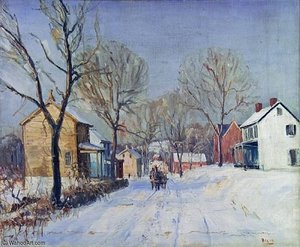
Quaint Street (1951) to obraz autorstwa Walta Emerson Baum, który przyciąga najwięcej spojrzeń; oryginał znajduje się w Pennsylvania Academy of Fine Arts, Filadelfia. Następnie wzrok kieruje się na Bucks County Landscape (1946) i Street Scene. Spośród 115 dzieł Walta Emerson Baum w naszym katalogu, tych 100 jest najbardziej znanych – każde z nich to unikatowy oryginał, przedstawiony wraz z rokiem powstania, muzeum oraz powodem, dla którego przetrwało próbę czasu.

1884 – 1956, Sellersville Impressionism Najwięcej dzieł: Pennsylvania Academy of Fine Arts

10 najlepszych obrazów autorstwa Walta Emerson Baum według oka galerii

2
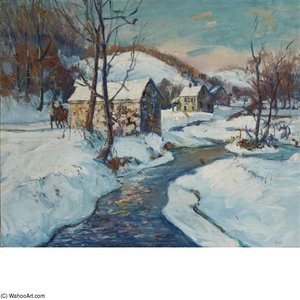
Bucks County Landscape (1946) autorstwa Walta Emerson Baum

Bucks County Landscape

1946 · Oil On Canvas · Reading Public Museum, Reading

Painted in 1946, “Bucks County Landscape” offers a poignant glimpse into rural America during a pivotal moment in history. Baum’s dedication to portraying the local landscape reflects a broader trend within American art – a renewed interest in regional identity and a celebration of everyday life. Born in Sellersville, Pennsylvania, Baum's deep connection to his birthplace is palpable in this work; he was one of the few Pennsylvania impressionists born…

3
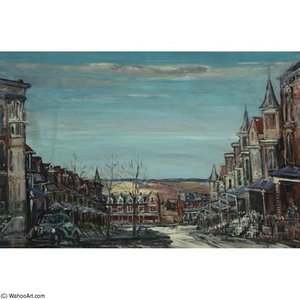
Street Scene autorstwa Walta Emerson Baum

Street Scene

Oil

Street Scene is a work by Walter Emerson Baum. Born in 1884 in Sellersville, United States, Baum established himself as a significant figure in the Pennsylvania Impressionist movement. His practice was deeply connected to the landscapes and urban environments of the Lehigh Valley and Bucks County regions.

4
Bucks County Landscape autorstwa Walta Emerson Baum

Bucks County Landscape

Oil On Canvas

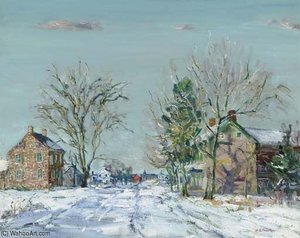
The quietude of a Pennsylvania winter settles over "Bucks County Landscape," a work by Walter Emerson Baum. This oil on canvas captures a specific moment in time, dating to about 1946. The scene unfolds as a rural landscape, where the weight of the season is felt through the heavy, snow-covered terrain that blankets the countryside.

Słynne obrazy artysty Walta Emerson Baum, od 11 do 100

11Sleigh Ride In Winter autorstwa Walta Emerson BaumSleigh Ride In Winter 12Houses ^ Stream In Fall autorstwa Walta Emerson BaumHouses ^ Stream In Fall 13South Side, Easton (Industrial Scene Easton) autorstwa Walta Emerson BaumSouth Side, Easton (Industrial Scene Easton)James A. Michener Art Museum 14Bethlehem Road (1950) autorstwa Walta Emerson BaumBethlehem Road1950 · Payne Gallery 15In The Lehigh Hills autorstwa Walta Emerson BaumIn The Lehigh Hills 16The Hexakopf autorstwa Walta Emerson BaumThe Hexakopf 17Manayunk autorstwa Walta Emerson BaumManayunk 18Snow Scene autorstwa Walta Emerson BaumSnow Scene 19Two Works Of Art autorstwa Walta Emerson BaumTwo Works Of Art 20Hillside Landscape autorstwa Walta Emerson BaumHillside Landscape 21Village In Winter autorstwa Walta Emerson BaumVillage In Winter 22Untitled autorstwa Walta Emerson BaumUntitled 23A Bridge In Winter autorstwa Walta Emerson BaumA Bridge In Winter 24Hagersville autorstwa Walta Emerson BaumHagersville 25Green And Yellow Fields autorstwa Walta Emerson BaumGreen And Yellow Fields 26Bucks County Mill Winter autorstwa Walta Emerson BaumBucks County Mill Winter 27Town Scene autorstwa Walta Emerson BaumTown Scene 28Spring autorstwa Walta Emerson BaumSpring 29City Stroll autorstwa Walta Emerson BaumCity Stroll 30West Philadelphia autorstwa Walta Emerson BaumWest Philadelphia 31Pennsylvania Village Scene, Winter autorstwa Walta Emerson BaumPennsylvania Village Scene, Winter 32Carversville autorstwa Walta Emerson BaumCarversville 33Gloucester autorstwa Walta Emerson BaumGloucester 34Brook Near Boyertown autorstwa Walta Emerson BaumBrook Near Boyertown 35Snowbound Brook autorstwa Walta Emerson BaumSnowbound Brook 36Pennsylvania Winter Landscape With Horse And Sleigh autorstwa Walta Emerson BaumPennsylvania Winter Landscape With Horse And Sleigh 37Harvest Web autorstwa Walta Emerson BaumHarvest Web 38Huff's Church Village autorstwa Walta Emerson BaumHuff's Church Village 39Snow On The Riverbank autorstwa Walta Emerson BaumSnow On The Riverbank 40Road In Pennsylvania autorstwa Walta Emerson BaumRoad In Pennsylvania 41Road To The Farm autorstwa Walta Emerson BaumRoad To The Farm 42Mill At Hellertown autorstwa Walta Emerson BaumMill At Hellertown 43Brook In The Woods autorstwa Walta Emerson BaumBrook In The Woods 44Gray Day, South Side autorstwa Walta Emerson BaumGray Day, South Side 45Trumbauersville Road autorstwa Walta Emerson BaumTrumbauersville Road 46Late Winter autorstwa Walta Emerson BaumLate Winter 47Grocery autorstwa Walta Emerson BaumGrocery 48Road To Mauch Chunck autorstwa Walta Emerson BaumRoad To Mauch Chunck 49Easton autorstwa Walta Emerson BaumEaston 50Study Of A Nude Female autorstwa Walta Emerson BaumStudy Of A Nude Female 51Bucks County Village autorstwa Walta Emerson BaumBucks County Village 52Mountain Village autorstwa Walta Emerson BaumMountain Village 53Pennsylvania Autumn autorstwa Walta Emerson BaumPennsylvania Autumn 54Trees In Winter autorstwa Walta Emerson BaumTrees In Winter 55Pleasant Valley autorstwa Walta Emerson BaumPleasant Valley 56Main Street autorstwa Walta Emerson BaumMain Street 57Landscape, Early Spring autorstwa Walta Emerson BaumLandscape, Early Spring 58Untitled autorstwa Walta Emerson BaumUntitled 59River Town autorstwa Walta Emerson BaumRiver Town 60Portrait Of A Girl autorstwa Walta Emerson BaumPortrait Of A Girl 61Sellersville autorstwa Walta Emerson BaumSellersville 62Untitled autorstwa Walta Emerson BaumUntitled 63Lock Along The Delaware autorstwa Walta Emerson BaumLock Along The Delaware 64Untitled autorstwa Walta Emerson BaumUntitled 65Spring Trees, Manayunk autorstwa Walta Emerson BaumSpring Trees, Manayunk 66Road to bedminster autorstwa Walta Emerson BaumRoad to bedminster 67Spring House autorstwa Walta Emerson BaumSpring House 68An Autumn Day autorstwa Walta Emerson BaumAn Autumn Day 69Autumn Creek autorstwa Walta Emerson BaumAutumn Creek 70Untitled autorstwa Walta Emerson BaumUntitled 71Snow Scene With Church autorstwa Walta Emerson BaumSnow Scene With Church 72A Pennsylvania Village autorstwa Walta Emerson BaumA Pennsylvania Village 73Carversville In Winter autorstwa Walta Emerson BaumCarversville In Winter 74Auchey's Mill autorstwa Walta Emerson BaumAuchey's Mill 75The Creek, Spring autorstwa Walta Emerson BaumThe Creek, Spring 76Black Eddy autorstwa Walta Emerson BaumBlack Eddy 77Road To River autorstwa Walta Emerson BaumRoad To River 78Paletown Road autorstwa Walta Emerson BaumPaletown Road 79New Bedford Fishing Boat autorstwa Walta Emerson BaumNew Bedford Fishing Boat 80The Trestle Bridge autorstwa Walta Emerson BaumThe Trestle Bridge 81The Pink House autorstwa Walta Emerson BaumThe Pink House 82Red Bridge Crossing autorstwa Walta Emerson BaumRed Bridge Crossing 83Bucks County Bridge autorstwa Walta Emerson BaumBucks County Bridge 84Scene North Of Kutztown, Pa autorstwa Walta Emerson BaumScene North Of Kutztown, Pa 85View Of Easton Pennsylvania In Winter autorstwa Walta Emerson BaumView Of Easton Pennsylvania In Winter 86School Girl autorstwa Walta Emerson BaumSchool Girl 87The Miller's House autorstwa Walta Emerson BaumThe Miller's House 88Forest Stream autorstwa Walta Emerson BaumForest Stream 89Tohickon autorstwa Walta Emerson BaumTohickon 90Red Mill autorstwa Walta Emerson BaumRed Mill 91Winter Sunlight autorstwa Walta Emerson BaumWinter Sunlight 92Corner Grocery autorstwa Walta Emerson BaumCorner Grocery 93Bathers By The Sea autorstwa Walta Emerson BaumBathers By The Sea 94Zion Hill autorstwa Walta Emerson BaumZion Hill 95Lafayette, College Hill Easton autorstwa Walta Emerson BaumLafayette, College Hill Easton 96Canal ^ River autorstwa Walta Emerson BaumCanal ^ River 97Twelfth Street autorstwa Walta Emerson BaumTwelfth Street 98Blue Church autorstwa Walta Emerson BaumBlue Church 99House, Road And Trees autorstwa Walta Emerson BaumHouse, Road And Trees 100Buckhill Brook autorstwa Walta Emerson BaumBuckhill Brook

Tematy, które przyciągnęły wzrok Walta Emerson Baum

Cztery motywy najczęściej powracające w tych oryginałach, z których każdy doczekał się swojego najdoskonalszego przykładu.

Muzea przechowujące oryginały Walta Emerson Baum

4 muzeów, w których znajduje się najwięcej obrazów z tej strony.

Muzea Miasto Dzieła artysty Walta Emerson Baum Obrazy z tej listy
Pennsylvania Academy of Fine Arts, FiladelfiaPennsylvania Academy of Fine Arts Filadelfia 1 Quaint Street
Reading Public Museum, ReadingReading Public Museum Reading 1 Bucks County Landscape
James A. Michener Art Museum, DoylestownJames A. Michener Art Museum Doylestown 1 South Side, Easton (Industrial Scene Easton)
Payne Gallery, Bethlehem, PennsylvaniaPayne Gallery Bethlehem, Pennsylvania 1 Bethlehem Road

Twórczość Walta Emerson Baum na przestrzeni lat: unikalne oryginały każdego dzieła

W okresie od 1946 do 1951, co daje łącznie 6 lat, Walta Emerson Baum stworzył każdy z zaprezentowanych tutaj datowanych oryginałów: krótki czas, rok po roku.

Dzieła według lat

Wybierz rok, aby zobaczyć oryginały.

Obrazy artysty Walta Emerson Baum: pytania do galerii

Jakie jest najsłynniejsze dzieło artysty Walta Emerson Baum?Odkryj odpowiedź

Quaint Street (1951), Pennsylvania Academy of Fine Arts, Filadelfia. Następne są Bucks County Landscape (1946) oraz Street Scene.

W jakim wieku Walta Emerson Baum stworzył/a Quaint Street?Odkryj odpowiedź

67 lat: Quaint Street pochodzi z 1951, a Walta Emerson Baum urodził(a) się w 1884.

Które dziesięć obrazów Walta Emerson Baum jest najbardziej znanych?Odkryj odpowiedź

Quaint Street, Bucks County Landscape, Street Scene, Bucks County Landscape, Village Cluster, Pennsylvania Winter, Pennsylvania Scene, A Pennsylvania Town, The Lane i Lehigh County Village. Powyższy ranking zawiera rok powstania oraz muzeum dla każdego z nich.

Ile znanych dzieł stworzył Walta Emerson Baum?Odkryj odpowiedź

Nasz katalog zawiera 115 dzieł artysty Walta Emerson Baum, datowanych od 1946 do 1951.

Gdzie można zobaczyć najsłynniejsze oryginały Walta Emerson Baum?Odkryj odpowiedź

W większości znajdują się w Pennsylvania Academy of Fine Arts (Filadelfia), Reading Public Museum (Reading) i James A. Michener Art Museum (Doylestown). Powyższa tabela muzeów zawiera ich pełną listę.

Który z najsłynniejszych obrazów artysty Walta Emerson Baum powstał najwcześniej, a który najpóźniej?Odkryj odpowiedź

Na tej stronie najwcześniejszy to Bucks County Landscape (1946), a najpóźniejszy Quaint Street (1951).

Jakie tematy preferował Walta Emerson Baum?Odkryj odpowiedź

Winter (13), Winter landscape (10) i Rural landscape (8), w ramach 100 dzieł na tej stronie.

Jakich materiałów Walta Emerson Baum używał najczęściej?Odkryj odpowiedź

Oil On Canvas, dla 3 z 100 dzieł na tej stronie.

Do jakiego nurtu należy twórczość Walta Emerson Baum?Odkryj odpowiedź

Impressionism, sądząc po oryginałach na tej stronie.

Walta Emerson Baum: portret artysty

Walter Emerson Baum: A Pennsylvania Impressionist’s Enduring Legacy

Walter Emerson Baum, a name inextricably linked to the artistic heart of Bucks County and the Lehigh Valley, was far more than simply a painter; he was an educator, a passionate advocate for regional art, and a vital architect of Pennsylvania's cultural identity. Born in Sellersville, Pennsylvania, on December 14, 1884, Baum’s life unfolded as a profound testament to his unwavering dedication to artistic expression and the enrichment of his community. Unlike many artists who sought refuge in the established grandeur of cities like New York or Paris, Baum remained deeply rooted in his native soil, drawing boundless inspiration from the rolling hills, quiet villages, and ever-changing seasons that defined eastern Pennsylvania’s landscape. His story is one of embracing local heritage while simultaneously contributing to a broader American Impressionist movement – a harmonious blend of tradition and innovation. While his family operated a barbershop, young Walter's artistic spirit burned brightly, nurtured early on through invaluable instruction from Isaac Hilker, the master of fraktur artistry – a traditional Pennsylvania-German decorative art form that instilled within him an unparalleled attention to detail and a deep appreciation for craftsmanship’s meticulous nature. This foundational training subtly informed his later work, imbuing it with a distinctive sense of place and a reverence for the tangible beauty of everyday life.

From Traditional Roots to Impressionistic Visions

Baum's formal artistic education commenced with an apprenticeship under the renowned historical painter William B.T. Trego from 1904 to 1909, a period that provided him with a solid grounding in traditional painting techniques – mastering perspective, anatomy, and the careful rendering of light and shadow. He further honed his skills at the prestigious Pennsylvania Academy of the Fine Arts between 1905 and 1906, studying under luminaries such as Thomas Pollock Anshutz, Hugh H. Breckenridge, William Merritt Chase, and Cecilia Beaux. These influential mentors exposed him to a diverse range of artistic approaches, yet Baum didn’t merely replicate their styles; he skillfully synthesized them with his own unique sensibility, forging a distinctive voice that resonated deeply within the Pennsylvania landscape. Initially, his work leaned towards tonalism and realism – capturing the essence of subjects through subtle gradations of tone and meticulous detail. However, a gradual shift toward Impressionism began to take hold, fueled by exposure to artists like Homer, Eakins, and those associated with the Ashcan School, as well as fellow Pennsylvania painters Edward Redfield and Walter Elmer Schofield. Baum’s canvases blossomed with vibrant colors, rich textures, and visible brushstrokes – hallmarks of the Impressionist aesthetic – capturing not just what he *saw*, but how light and atmosphere transformed the landscape before his eyes. He became particularly renowned for his captivating views from hilltops overlooking the Bucks County countryside, compositions that drew viewers into the scene and evoked a sense of depth and tranquility. His versatility extended beyond oil painting; Baum skillfully employed pastels, casein, lithography, ink, graphite, and watercolors, demonstrating a mastery across various mediums.

A Legacy Beyond the Canvas: Education and Advocacy

Walter Emerson Baum’s impact transcended his own artistic creations. Recognizing the critical importance of art education, he founded the Baum School of Art in 1929 – a pioneering institution that provided aspiring artists with invaluable training and mentorship, nurturing talent within the region for decades to come. Simultaneously, Baum played a pivotal role in establishing the Allentown Art Museum, serving as its first director and guiding its early development with his discerning eye and passion for accessibility. He understood that access to art – both creating it and experiencing it – was essential for a thriving society, believing passionately in the transformative power of artistic engagement. In 1949, he collaborated with Dr. Charles H. Boehm to create the Bucks County Traveling Art Gallery, bringing Pennsylvania Impressionist art directly to school children throughout the county, igniting their imaginations and fostering an appreciation for local artistic heritage – a testament to his commitment to democratizing access to beauty. Beyond these institutional contributions, Baum actively promoted regional artists through his writing as a columnist and art critic for both the *Sellersville Herald* and the *Philadelphia Evening and Sunday Bulletin*, providing insightful commentary on the evolving art world and championing the work of his peers.

Historical Significance: The “Father of Art” and Enduring Influence

Walter Emerson Baum’s contributions earned him the affectionate title of "Father of Art in the Lehigh Valley," a recognition that speaks volumes about his profound impact on the region's artistic landscape. He stands as a quintessential representative of Pennsylvania Impressionism, embodying its characteristic focus on capturing the beauty of rural life and the fleeting effects of light and atmosphere. However, his legacy extends far beyond stylistic categorization. The artists he mentored at the Baum School of Art – collectively known as “The Baum Circle” – carried on his artistic traditions and contributed to the continued vitality of the movement. His efforts to establish art institutions and traveling exhibitions were instrumental in preserving and promoting Pennsylvania’s rich artistic heritage for future generations. He received numerous accolades throughout his career, including the prestigious Jennie Sesnan Gold Medal in 1925 for his painting “Sunlight and Shadows,” solidifying his reputation within the artistic community. Baum's work continues to resonate today, reminding us of the power of art to connect us to our surroundings, celebrate local culture, and inspire creativity. He passed away on July 12, 1956, leaving behind a legacy that continues to enrich the artistic landscape of Pennsylvania and beyond.

A Lasting Impression

  • Key Influences: Homer, Eakins, Ashcan School artists, Edward Redfield, Walter Elmer Schofield.
  • Major Achievements: Founder of the Baum School of Art and Allentown Art Museum; Jennie Sesnan Gold Medal recipient.
  • Signature Style: Impressionistic landscapes with vibrant colors and visible brushstrokes, often depicting views from hilltops.
  • Historical Significance: Considered the “Father of Art in the Lehigh Valley” and a pivotal figure in Pennsylvania Impressionism.