


1


Aktualizacja: Listopad 2026 · ranking według naszego wskaźnika popularności (liczba wyszukiwań, wizyt i zamówień dla każdego dzieła) · 10 dzieł Vivien Alexander w naszym katalogu
W skrócie
Spośród wszystkich dzieł oryginalnych, które pozostawił Vivien Alexander, najsłynniejszym jest Blue Checked Cloth (1996), znajdujący się w kolekcji Scottish National Gallery of Modern Art w Edynburg. Tuż za nimi znajdują się Gala Water (1996) oraz The Garden Pond (1998). Nasz katalog zawiera 10 dzieł autorstwa Vivien Alexander; galeria zachowała 10 najbardziej podziwianych na świecie prac, z których każda została przedstawiona wraz z datą powstania, informacją o muzeum oraz jej historią.


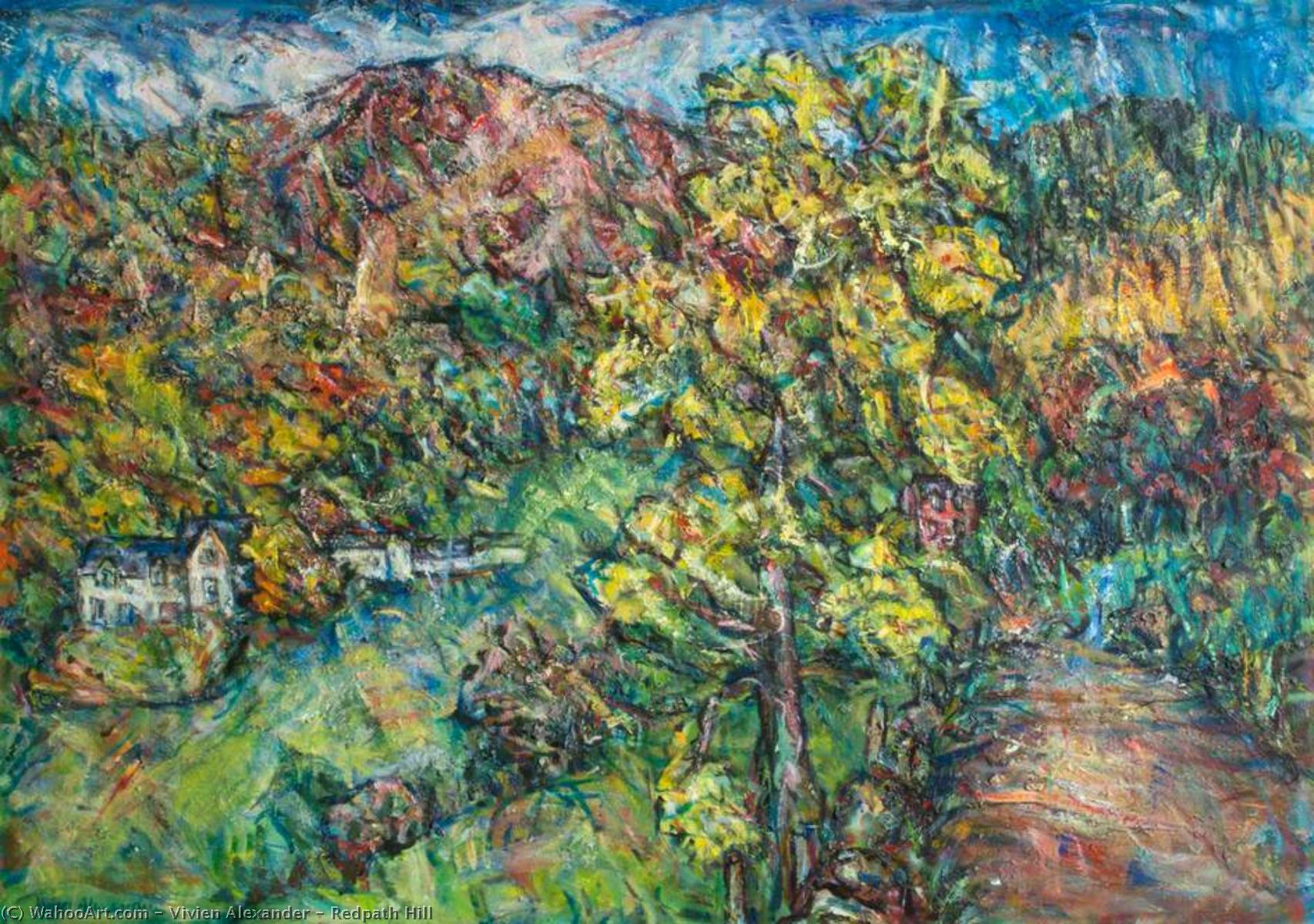
The painting Redpath Hill by Vivien Alexander is a beautiful representation of a peaceful countryside setting. Created in 1997, this oil on canvas work measures 89 x 109 cm and is currently housed at the Art museum in Edinburgh, United Kingdom. The painting depicts a green hillside with trees and grass, creating a serene atmosphere. In the foreground, there are two houses situated on the hillside, adding to the picturesque…
2 muzeów, w których znajduje się najwięcej obrazów z tej strony.
| Muzea | Miasto | Dzieła artysty Vivien Alexander | Obrazy z tej listy |
|---|---|---|---|
 Scottish National Gallery of Modern Art |
Edynburg | 7 | Blue Checked Cloth, Gala Water, The Garden Pond |
 Edinburgh College of Art |
Edynburg | 1 | Self Portrait |
Zaledwie dekada, od 1996 do 2006, dostarczyła światu każdy datowany oryginał Vivien Alexander w tym zestawieniu: oto one, rok po roku.
Wybierz rok, aby zobaczyć oryginały.
The painting Redpath Hill by Vivien Alexander is a beautiful representation of a peaceful countryside setting. Created in 1997, this oil on canvas work measures 89 x 109 cm and is currently housed at the Art museum in Edinburgh, United Kingdom. The painting depicts a green hillside with trees and grass, creating a serene atmosphere. In the foreground, there are two houses situated on the hillside, adding to the picturesque…
Blue Checked Cloth (1996), Scottish National Gallery of Modern Art, Edynburg. Następne są Gala Water (1996) oraz The Garden Pond (1998).
56 lat: Blue Checked Cloth pochodzi z 1996, a Vivien Alexander urodził(a) się w 1940.
Blue Checked Cloth, Gala Water, The Garden Pond, Irises on Blue, Portpatrick, George Street Corner, Secret Garden, Crinan, Seekers, Self Portrait i Redpath Hill. Powyższy ranking zawiera rok powstania oraz muzeum dla każdego z nich.
Nasz katalog zawiera 10 dzieł artysty Vivien Alexander, datowanych od 1996 do 2006.
W większości znajdują się w Scottish National Gallery of Modern Art (Edynburg) i Edinburgh College of Art (Edynburg). Powyższa tabela muzeów zawiera ich pełną listę.
W 1996: 3 z 10 dzieł na tej stronie powstało w tym czasie, w tym Blue Checked Cloth.
Na tej stronie najwcześniejszy to Blue Checked Cloth (1996), a najpóźniejszy Seekers (2006).
Painting, dla 2 z 10 dzieł na tej stronie.
Blue Checked Cloth, Gala Water i The Garden Pond: Scottish National Gallery of Modern Art, Edynburg posiada 7 dzieł widocznych na tej stronie.
Born in Edinburgh, Scotland, in 1940, Vivien Alexander’s artistic journey is one of quiet determination and a profound connection to the landscape. Her early life was steeped in creative influence – her mother a celebrated impressionist painter, and her brother an architect – fostering within her a deep appreciation for both form and color. This familial legacy, coupled with a rigorous engineering background (she holds a degree in civil engineering from the University of Edinburgh), provided a unique foundation for her distinctive artistic style: a meticulous blend of technical precision and evocative emotionality.
Alexander’s career began modestly, initially exploring decorative arts before gravitating towards painting. However, it was her fascination with the ancient art of enameling – a technique she meticulously mastered over years of dedicated study – that truly defined her artistic path. This skill, honed through collaboration with the Forbes Museum and its curator, Christopher Forbes, allowed her to achieve an unparalleled level of detail and luminosity in her work. The influence of this period is evident in her later pieces, particularly those depicting Scottish landscapes, where she expertly layers translucent enamel over meticulously crafted metalwork.
A pivotal moment in Alexander’s career arrived with a commission from Malcolm Forbes to recreate several iconic Fabergé eggs. This undertaking demanded an extraordinary level of technical skill and artistic sensitivity, pushing her to the very limits of her abilities. Working closely with the museum curator, she not only replicated the intricate designs but also surpassed them, elevating the enameling process to a new standard of excellence. Christopher Forbes famously described her work as “the best in the United States,” recognizing her mastery of color and texture.
Following this prestigious commission, Alexander shifted her focus towards creating miniature masterpieces – exquisite minaudiéres and objets d’art inspired by the Fabergé style. These pieces are not mere reproductions; they are original creations imbued with a distinctly personal vision. She skillfully combined precious metals, gemstones, and enamel to produce objects of breathtaking beauty and intricate detail. The influence of her mother's impressionistic paintings is subtly woven into the color palettes and compositions, adding an element of emotional depth to each piece.
While Alexander’s work with Fabergé eggs brought her international recognition, it was her landscape paintings that truly captured the essence of her artistic spirit. Her subjects – often scenes from the Scottish Highlands and surrounding countryside – are rendered with a remarkable sensitivity to light and atmosphere. She eschews dramatic vistas in favor of intimate glimpses into nature's quiet beauty, capturing fleeting moments of color and shadow.
Her technique is characterized by meticulous observation and a restrained palette. She rarely employs bold brushstrokes or vibrant hues, instead favoring subtle gradations of color and delicate details. This understated approach allows her paintings to evoke a sense of tranquility and contemplation, inviting the viewer to lose themselves in the beauty of the natural world. Works like “Redpath Hill,” “George Street Corner,” and “Secret Garden, Crinan” exemplify this style, showcasing her ability to capture the soul of Scotland’s landscapes.
Vivien Alexander's legacy extends beyond her stunning body of work. She represents a rare confluence of technical skill, artistic vision, and unwavering dedication. Her meticulous approach to enameling, combined with her deep appreciation for landscape painting, has established her as one of Scotland’s most distinctive artists. Her commitment to preserving traditional techniques while forging her own unique style ensures that her art will continue to inspire and captivate audiences for generations to come.
Today, Alexander continues to create new works, demonstrating a remarkable resilience and an enduring passion for her craft. Her pieces are exhibited in private collections and galleries throughout the United Kingdom, solidifying her place as a significant figure in contemporary Scottish art. Her story is a testament to the power of artistic heritage and the enduring beauty of the natural world.

