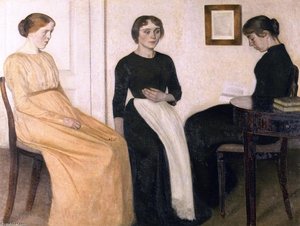
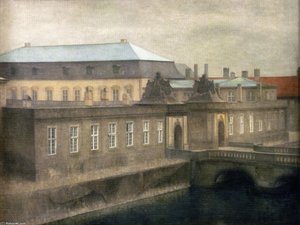
Portret Vilhelm Hammershøi

100 najsłynniejszych obrazów artysty Vilhelm Hammershøi, każdy niepowtarzalny

Aktualizacja: Listopad 2026 · ranking według naszego wskaźnika popularności (liczba wyszukiwań, wizyt i zamówień dla każdego dzieła) · 224 dzieł Vilhelm Hammershøi w naszym katalogu

W skrócie

Wnętrze, Strandgade 30 (1909) to obraz autorstwa Vilhelm Hammershøi, który przyciąga najwięcej spojrzeń. Następnie wzrok kieruje się na Montague Street in London (1906) i Figura kobiety (1888). Spośród 224 dzieł Vilhelm Hammershøi w naszym katalogu, tych 100 jest najbardziej znanych – każde z nich to unikatowy oryginał, przedstawiony wraz z rokiem powstania, muzeum oraz powodem, dla którego przetrwało próbę czasu.

1864 – 1916, Kopenhaga Early twentieth century realism Najwięcej dzieł: Statens Museum for Kunst

10 najlepszych obrazów autorstwa Vilhelm Hammershøi według oka galerii

1
Wnętrze, Strandgade 30 (1909) autorstwa Vilhelm Hammershøi

Wnętrze, Strandgade 30

1909 · Obraz olejny na płycie

Arcydzieło duńskiej sztuki Vilhelm Hammershøi w swoim dziele „Wnętrze, Strandgade 30” zaprezentował urzekający olej na desce, który stanowi kwintesencję duńskiej sztuki z początku XX wieku. Stworzone w 1909 roku arcydzieło jest świadectwem niezwykłej zdolności Hammershøiego do uchwycenia cichego piękna codzienności. Obraz jest czarno-białym przedstawieniem kobiety siedzącej na krześle przy oknie, pogrążonej w myślach podczas patrzenia na świat zewnętrzny. Styl artystyczny i inspiracje Hammershøi wypracował styl charakteryzujący się wykorzystaniem monochromatycznych barw…

2
Montague Street in London (1906) autorstwa Vilhelm Hammershøi

Montague Street in London

1906 · Oil On Panel · Ny Carlsberg Glyptotek, Kopenhaga

To encounter Vilhelm Hammershøi’s Montague Street in London is to step into a realm where time itself seems to have paused, caught in a delicate suspension between reality and a dream. Created in 1906, this exquisite oil on panel painting serves as a profound meditation on the beauty of stillness. The scene presents an empty London street, stripped of the frantic energy typically associated with urban life. Instead, we are…

3
Figura kobiety (1888) autorstwa Vilhelm Hammershøi

Figura kobiety

1888 · Obraz olejny na płótnie · Statens Museum for Kunst, Kopenhaga

Figura Kobiety Vilhelma Hammershøi – Odziecie Serenity i Minimalizmu Figura Kobiety Vilhelma Hammershøi, obraz stworzony w roku 1888 przez Duńskiego malarza Vilhelma Hammershøi, stanowi niezwykłe świadectwo jego wyjątkowego stylu oraz umiejętnego wykorzystania środków artystycznych. Obecnie przechowywany jest w Muzeum Narodowym Sztuki Królewskiej w Kopenhadze (Dania), obraz ten fascynuje widzów swoją prostotą i głębią emocjonalną, oferując jednocześnie doskonałą okazję do zrozumienia ducha epoki oraz filozofii twórczości Hammershøi. Styl i Technika –…

4
Interior with the Artist's Easel (1910) autorstwa Vilhelm Hammershøi

Interior with the Artist's Easel

1910 · Oil On Canvas · Statens Museum for Kunst, Kopenhaga

To gaze upon Vilhelm Hammershøi’s Interior with the Artist's Easel is not merely to observe a room; it is to slip into a state of profound, almost sacred stillness. This oil on canvas, dating from 1910, captures the essence of late nineteenth and early twentieth-century Danish domestic life, yet elevates it far beyond mere genre painting. Hammershøi possessed an unparalleled gift for rendering silence visible—a palpable quietude that seems to…

5
Świątno z promieniem słońca (1901) autorstwa Vilhelm Hammershøi

Świątno z promieniem słońca

1901 · Obraz olejny na płycie · Statens Museum for Kunst, Kopenhaga

Vilhelm Hammershøi i Świetle Żółtego Słońca Interior from Strandgade with Sunlight on the Floor przez Vilhelma Hammershøi stanowi jeden z najbardziej ikonicznych obrazów XX wieku, który fascynuje zarówno krytyków sztuki, jak i kolekcjonerów oraz osoby zainteresowane aranżacją wnętrz. Utworzony w roku 1901, obraz ten przenosi widza do spokojnego domu duńskiego artysty, gdzie światło słoneczne delikatnie wpada przez okno, tworząc atmosferę ciepła i harmonii. Kompozycja i Atmosfera Pokoju Obraz przedstawia kobietę…

6
St. Peter's Church, Copenhagen (1906) autorstwa Vilhelm Hammershøi

St. Peter's Church, Copenhagen

1906 · Oil On Canvas · Statens Museum for Kunst, Kopenhaga

To gaze upon Vilhelm Hammershøi’s depiction of St. Peter's Church in Copenhagen is not merely to observe architecture; it is to enter a hushed, contemplative space suspended outside the rush of modern life. Painted in 1906, this oil on canvas captures the enduring spirit of Danish craftsmanship blended with an almost ethereal sense of stillness. The composition immediately draws the eye upward, following the vertical thrust of the steeple and…

7
Moonlight, Strandgade 30 (1900) autorstwa Vilhelm Hammershøi

Moonlight, Strandgade 30

1900 · Oil On Canvas · Metropolitan Museum of Art, Nowy Jork

Moonlight, Strandgade 30 emerges from the canvas as a quiet meditation on a private world. Painted by Vilhelm Hammershøi, this oil on canvas captures the unadorned interior of the artist's own apartment in Copenhagen. The scene looks out toward a windowed loggia, where the pale light of the moon begins to settle into the room. It is a space defined by its stillness and the soft, muted tones of a…

8
Ida Hammershøi (1907) autorstwa Vilhelm Hammershøi

Ida Hammershøi

1907 · Oil On Panel

In this 1907 oil on panel painting, a woman named Ida Hammershøi sits at a table, her form positioned slightly off-center. She is captured in a moment of stillness, holding a cup and spoon as she gazes into the distance. A white cloth covers the table, providing a bright contrast to the muted tones of the surrounding space. The background remains largely undefined, composed of dark, receding shades that focus…

9
Sunbeams (also known as Sunshine. Dust Motes Dancing in the Sunbeams) (1900) autorstwa Vilhelm Hammershøi

Sunbeams (also known as Sunshine. Dust Motes Dancing in the Sunbeams)

1900 · Oil On Canvas · Ordrupgaard, Gentofte

A stillness settles over the room, a silence so heavy it feels tangible. Through a large, multi-paned window, shafts of winter sunlight pierce the dimness, cutting diagonally across the space. In these beams, tiny particles of dust dance in a slow, rhythmic motion, visible only because the light catches them in their descent. The room itself feels suspended in time, an empty interior in a 17th-century apartment in the Christianshavn…

Słynne obrazy artysty Vilhelm Hammershøi, od 11 do 100

11Young Girl Sewing. Anna Hammershoi, the Artist's Sister (1887) autorstwa Vilhelm HammershøiYoung Girl Sewing. Anna Hammershoi, the Artist's Sister1887 12From the British Museum, Winter (1906) autorstwa Vilhelm HammershøiFrom the British Museum, Winter1906 13Four Rooms, Interior from the Artist's Home, Strandgade 25 (1914) autorstwa Vilhelm HammershøiFour Rooms, Interior from the Artist's Home, Strandgade 251914 · Ordrupgaard 14Sunshine in the Drawing Room III (1903) autorstwa Vilhelm HammershøiSunshine in the Drawing Room III1903 · Nationalmuseum 15A Greek Relief in the Louvre (1891) autorstwa Vilhelm HammershøiA Greek Relief in the Louvre1891 · Ny Carlsberg Glyptotek 16Interior tate gallery (1899) autorstwa Vilhelm HammershøiInterior tate gallery1899 · National Gallery 17Untitled (566) autorstwa Vilhelm HammershøiUntitled (566) 18Nude Female Model (1884) autorstwa Vilhelm HammershøiNude Female Model1884 · Statens Museum for Kunst 19Portrait of Young Woman, The Artist's Sister, Anna Hammershoi (1885) autorstwa Vilhelm HammershøiPortrait of Young Woman, The Artist's Sister, Anna Hammershoi1885 · Hirschsprung Collection 20Frederikke Hammershøi, the artist's mother (1886) autorstwa Vilhelm HammershøiFrederikke Hammershøi, the artist's mother1886 21Malerinden Elisabeth Wandel (1890) autorstwa Vilhelm HammershøiMalerinden Elisabeth Wandel1890 · Statens Museum for Kunst 22Ida Ilsted, the Artist's Fiancée (1890) autorstwa Vilhelm HammershøiIda Ilsted, the Artist's Fiancée1890 · Statens Museum for Kunst 23Evening in the Drawing Room. The Artist's Mother and Wife (1891) autorstwa Vilhelm HammershøiEvening in the Drawing Room. The Artist's Mother and Wife1891 · Statens Museum for Kunst 24The art historian Karl Madsen, later Director of Statens Museum for Kunst (1890) autorstwa Vilhelm HammershøiThe art historian Karl Madsen, later Director of Statens Museum for Kunst1890 · Statens Museum for Kunst 25The Painter Kristian Zahrtmann (1889) autorstwa Vilhelm HammershøiThe Painter Kristian Zahrtmann1889 · Statens Museum for Kunst 26Ida Ilsted, the Artist's Wife (1890) autorstwa Vilhelm HammershøiIda Ilsted, the Artist's Wife1890 · Nationalmuseum 27An Old Woman (1886) autorstwa Vilhelm HammershøiAn Old Woman1886 · Hirschsprung Collection 28Frederikke Amalie Hammershøi, f. Rentzmann, kunstnerens moder (1894) autorstwa Vilhelm HammershøiFrederikke Amalie Hammershøi, f. Rentzmann, kunstnerens moder1894 · Statens Museum for Kunst 29Portræt af fru Thora Bendix (Anne Victoria, f. Sundberg) (1896) autorstwa Vilhelm HammershøiPortræt af fru Thora Bendix (Anne Victoria, f. Sundberg)1896 · Statens Museum for Kunst 30Komponisten Fini Henriques (1896) autorstwa Vilhelm HammershøiKomponisten Fini Henriques1896 · Statens Museum for Kunst 31Maleren Svend Hammershøi, kunstnerens broder (1897) autorstwa Vilhelm HammershøiMaleren Svend Hammershøi, kunstnerens broder1897 · Statens Museum for Kunst 32The Artist's Wife, Ida Hammershøi, née Ilsted (1894) autorstwa Vilhelm HammershøiThe Artist's Wife, Ida Hammershøi, née Ilsted1894 · Statens Museum for Kunst 33Vilhelm Hammershøi (1895) autorstwa Vilhelm HammershøiVilhelm Hammershøi1895 34Interior with a View of an Exterior Gallery (1903) autorstwa Vilhelm HammershøiInterior with a View of an Exterior Gallery1903 35Ida in an Interior with Piano (1901) autorstwa Vilhelm HammershøiIda in an Interior with Piano1901 36Portrait of Svend Hammershøi, the Artist´s Brother (1901) autorstwa Vilhelm HammershøiPortrait of Svend Hammershøi, the Artist´s Brother1901 · Statens Museum for Kunst 37Henry Madsen (1904) autorstwa Vilhelm HammershøiHenry Madsen1904 · Statens Museum for Kunst 38J.F. Willumsen (1901) autorstwa Vilhelm HammershøiJ.F. Willumsen1901 · Statens Museum for Kunst 39Henry Madsen (1904) autorstwa Vilhelm HammershøiHenry Madsen1904 · Statens Museum for Kunst 40The Architect Thorvald Bindesbøll (1904) autorstwa Vilhelm HammershøiThe Architect Thorvald Bindesbøll1904 · Statens Museum for Kunst 41A Room in the Artist’s Home in Strandgade, Copenhagen, with the Artist’s Wife (1902) autorstwa Vilhelm HammershøiA Room in the Artist’s Home in Strandgade, Copenhagen, with the Artist’s Wife1902 · Statens Museum for Kunst 42Aften i stuen (1904) autorstwa Vilhelm HammershøiAften i stuen1904 · Statens Museum for Kunst 43Interior with a Reading Lady (1900) autorstwa Vilhelm HammershøiInterior with a Reading Lady1900 · Nationalmuseum 44A room. The corner of a room with walls painted grey-lilac, divided into panels. (1903) autorstwa Vilhelm HammershøiA room. The corner of a room with walls painted grey-lilac, divided into panels.1903 45The Coin Collector (study) (1904) autorstwa Vilhelm HammershøiThe Coin Collector (study)1904 46Interior with Ida in a White Chair (1900) autorstwa Vilhelm HammershøiInterior with Ida in a White Chair1900 47Interior with the Artist's Wife (1910) autorstwa Vilhelm HammershøiInterior with the Artist's Wife1910 · National Museum of Art, Architecture and Design 48Ida Hammershøi, the Artist's Wife, with a Teacup (1907) autorstwa Vilhelm HammershøiIda Hammershøi, the Artist's Wife, with a Teacup1907 · Statens Museum for Kunst 49Self-Portrait (1911) (1911) autorstwa Vilhelm HammershøiSelf-Portrait (1911)1911 50Interior with Ida Playing the Piano (1910) autorstwa Vilhelm HammershøiInterior with Ida Playing the Piano1910 · Narodowe Muzeum Sztuki Zachodniej 51Self-Portrait at Spurveskjul (1911) autorstwa Vilhelm HammershøiSelf-Portrait at Spurveskjul1911 · Metropolitan Museum of Art 52Open Doors (also known as White Doors) (1905) autorstwa Vilhelm HammershøiOpen Doors (also known as White Doors)1905 53Interior, Strandgade 25 (1915) autorstwa Vilhelm HammershøiInterior, Strandgade 251915 54Interior with the Artist's Mother and Sister (1889) autorstwa Vilhelm HammershøiInterior with the Artist's Mother and Sister1889 · Nationalmuseum 55Interior, Bredgade (1911) autorstwa Vilhelm HammershøiInterior, Bredgade1911 56Interior (1899) autorstwa Vilhelm HammershøiInterior1899 · Tate Gallery 57Interior, Strandgade 30 - Vilhelm Hammershøi (2026) autorstwa Vilhelm HammershøiInterior, Strandgade 30 - Vilhelm Hammershøi2026 58Self-Portrait (1890) autorstwa Vilhelm HammershøiSelf-Portrait1890 · Statens Museum for Kunst 59Landscape in the Snow (1895) autorstwa Vilhelm HammershøiLandscape in the Snow1895 · Hirschsprung Collection 60Sunshine in the Drawing Room (Solskin i dagligstuen) (1910) autorstwa Vilhelm HammershøiSunshine in the Drawing Room (Solskin i dagligstuen)1910 · Narodowa Galeria Kanady 61Three Young Women (1895) autorstwa Vilhelm HammershøiThree Young Women1895 62Portrait of Ida, the Artist (1898) autorstwa Vilhelm HammershøiPortrait of Ida, the Artist1898 · National Gallery of Denmark 63Interior. Strandgade 30 (1906) autorstwa Vilhelm HammershøiInterior. Strandgade 301906 · Tate Gallery 64View of Refsnæs (1900) autorstwa Vilhelm HammershøiView of Refsnæs1900 65Interior with a Woman at a Sewing Table (1897) autorstwa Vilhelm HammershøiInterior with a Woman at a Sewing Table1897 · Nasjonalgalleriet 66Young Girl Pouring Tea - the Artist's Sister. (1884) autorstwa Vilhelm HammershøiYoung Girl Pouring Tea - the Artist's Sister.1884 67Study showing the back of a boy. (1884) autorstwa Vilhelm HammershøiStudy showing the back of a boy.1884 68Study of Standing Woman, Seen from Behind (1884) autorstwa Vilhelm HammershøiStudy of Standing Woman, Seen from Behind1884 69The Farm (1883) autorstwa Vilhelm HammershøiThe Farm1883 70Landscape with Barn (1883) autorstwa Vilhelm HammershøiLandscape with Barn1883 71Study drawing of plaster cast of ancient Greek Aphrodite, toss from c. 500 BC (1880) autorstwa Vilhelm HammershøiStudy drawing of plaster cast of ancient Greek Aphrodite, toss from c. 500 BC1880 72Bedroom (Interior) (1890) autorstwa Vilhelm HammershøiBedroom (Interior)1890 73View from Frederiksholms Kanal, Copenhagen. (1892) autorstwa Vilhelm HammershøiView from Frederiksholms Kanal, Copenhagen.1892 74Landscape on the Island of Falster (1891) autorstwa Vilhelm HammershøiLandscape on the Island of Falster1891 · Statens Museum for Kunst 75View of Jægersborg Allé. Gentofte, North of Copenhagen (1892) autorstwa Vilhelm HammershøiView of Jægersborg Allé. Gentofte, North of Copenhagen1892 · Statens Museum for Kunst 76Dagligstuen på Frederiksberg Allé (1887) autorstwa Vilhelm HammershøiDagligstuen på Frederiksberg Allé1887 · Statens Museum for Kunst 77Rainy summer landscape from Virum near Frederiksdal. (1888) autorstwa Vilhelm HammershøiRainy summer landscape from Virum near Frederiksdal.1888 78View of Christiansborg Castle, Late Autumn (1890) autorstwa Vilhelm HammershøiView of Christiansborg Castle, Late Autumn1890 · Statens Museum for Kunst 79Interior with Ida in a White Chair (1890) autorstwa Vilhelm HammershøiInterior with Ida in a White Chair1890 · Ordrupgaard 80Portrait of Ida Ilsted, Later the Artist's Wife (1890) autorstwa Vilhelm HammershøiPortrait of Ida Ilsted, Later the Artist's Wife1890 · Statens Museum for Kunst 81Self-Portrait (1891) autorstwa Vilhelm HammershøiSelf-Portrait1891 82Interior in Louis Seize style. From the artist's home. Rahbeks Allé (1897) autorstwa Vilhelm HammershøiInterior in Louis Seize style. From the artist's home. Rahbeks Allé1897 · Hirschsprung Collection 83Karen Bramsen (1898) autorstwa Vilhelm HammershøiKaren Bramsen1898 84Interior (1893) autorstwa Vilhelm HammershøiInterior1893 85Interior wit a Young Man Reading (1898) autorstwa Vilhelm HammershøiInterior wit a Young Man Reading1898 · Hirschsprung Collection 86Interior (1898) autorstwa Vilhelm HammershøiInterior1898 · Nationalmuseum 87Cello Player (1893) autorstwa Vilhelm HammershøiCello Player1893 88Two Figures, The Artist and His Wife (1898) autorstwa Vilhelm HammershøiTwo Figures, The Artist and His Wife1898 89Figures by the Window (1895) autorstwa Vilhelm HammershøiFigures by the Window1895 90Artemis (1894) autorstwa Vilhelm HammershøiArtemis1894 · National Gallery of Denmark 91White Doors, Strandgade 30 (1899) autorstwa Vilhelm HammershøiWhite Doors, Strandgade 301899 · Ordrupgaard 92Sunny Parlor. (1901) autorstwa Vilhelm HammershøiSunny Parlor.1901 · Alte Nationalgalerie 93The Coin Collector (1904) autorstwa Vilhelm HammershøiThe Coin Collector1904 · National Museum of Art, Architecture and Design 94Forstudie til "Solregn. Gentofte Sø" (1903) autorstwa Vilhelm HammershøiForstudie til "Solregn. Gentofte Sø"1903 · Statens Museum for Kunst 95Five Portraits. Study for painting in Thielska Galleriet, Stockholm (1901) autorstwa Vilhelm HammershøiFive Portraits. Study for painting in Thielska Galleriet, Stockholm1901 · Statens Museum for Kunst 96Interior with the artist's wife seen from behind. (1901) autorstwa Vilhelm HammershøiInterior with the artist's wife seen from behind.1901 97Interior with the artist's wife Ida in their home at Strandgade 30. (1905) autorstwa Vilhelm HammershøiInterior with the artist's wife Ida in their home at Strandgade 30.1905 98Dunkebakke, Frederiksværk (1904) autorstwa Vilhelm HammershøiDunkebakke, Frederiksværk1904 99Interior, Strandgade 30 (1899) autorstwa Vilhelm HammershøiInterior, Strandgade 301899 100Interior with Punchbowl (1904) autorstwa Vilhelm HammershøiInterior with Punchbowl1904

Słynne obrazy Vilhelm Hammershøi epoka po epoce

Tematy, które przyciągnęły wzrok Vilhelm Hammershøi

Cztery motywy najczęściej powracające w tych oryginałach, z których każdy doczekał się swojego najdoskonalszego przykładu.

Muzea przechowujące oryginały Vilhelm Hammershøi

8 muzeów, w których znajduje się najwięcej obrazów z tej strony.

Muzea Miasto Dzieła artysty Vilhelm Hammershøi Obrazy z tej listy
Statens Museum for Kunst, KopenhagaStatens Museum for Kunst Kopenhaga 42 Figura kobiety, Interior with the Artist's Easel, Świątno z promieniem słońca
Nationalmuseum, StockholmNationalmuseum Stockholm 7 Sunshine in the Drawing Room III, Ida Ilsted, the Artist's Wife, Interior with a Reading Lady
Hirschsprung Collection, KopenhagaHirschsprung Collection Kopenhaga 5 Portrait of Young Woman, The Artist's Sister, Anna Hammershoi, An Old Woman, Landscape in the Snow
Ordrupgaard, GentofteOrdrupgaard Gentofte 5 Sunbeams (also known as Sunshine. Dust Motes Dancing in the Sunbeams), Four Rooms, Interior from the Artist's Home, Strandgade 25, Interior with Ida in a White Chair
National Museum of Art, Architecture and Design, OsloNational Museum of Art, Architecture and Design Oslo 3 Interior with the Artist's Wife, The Coin Collector
National Gallery of Denmark, KopenhagaNational Gallery of Denmark Kopenhaga 3 Portrait of Ida, the Artist, Artemis
Ny Carlsberg Glyptotek, KopenhagaNy Carlsberg Glyptotek Kopenhaga 2 Montague Street in London, A Greek Relief in the Louvre
Metropolitan Museum of Art, Nowy JorkMetropolitan Museum of Art Nowy Jork 2 Moonlight, Strandgade 30, Self-Portrait at Spurveskjul

Vilhelm Hammershøi na przestrzeni dekad: jeden unikatowy oryginał dla każdego

Dzieła według dekad

Wybierz dekadę, aby zobaczyć dzieło, które ją definiuje.

Obrazy artysty Vilhelm Hammershøi: pytania do galerii

Jakie jest najsłynniejsze dzieło artysty Vilhelm Hammershøi?Odkryj odpowiedź

Wnętrze, Strandgade 30 (1909). Następne są Montague Street in London (1906) oraz Figura kobiety (1888).

W jakim wieku Vilhelm Hammershøi stworzył/a Wnętrze, Strandgade 30?Odkryj odpowiedź

45 lat: Wnętrze, Strandgade 30 pochodzi z 1909, a Vilhelm Hammershøi urodził(a) się w 1864.

Które dziesięć obrazów Vilhelm Hammershøi jest najbardziej znanych?Odkryj odpowiedź

Wnętrze, Strandgade 30, Montague Street in London, Figura kobiety, Interior with the Artist's Easel, Świątno z promieniem słońca, St. Peter's Church, Copenhagen, Moonlight, Strandgade 30, Ida Hammershøi, Sunbeams (also known as Sunshine. Dust Motes Dancing in the Sunbeams) i Interior with Ida Playing the Piano - Vilhelm Hammershøi. Powyższy ranking zawiera rok powstania oraz muzeum dla każdego z nich.

Ile znanych dzieł stworzył Vilhelm Hammershøi?Odkryj odpowiedź

Nasz katalog zawiera 224 dzieł artysty Vilhelm Hammershøi, datowanych od 1880 do 1915.

Gdzie można zobaczyć najsłynniejsze oryginały Vilhelm Hammershøi?Odkryj odpowiedź

W większości znajdują się w Statens Museum for Kunst (Kopenhaga), Nationalmuseum (Stockholm) i Hirschsprung Collection (Kopenhaga). Powyższa tabela muzeów zawiera ich pełną listę.

W jakim okresie Vilhelm Hammershøi stworzył/a swoje najsłynniejsze obrazy?Odkryj odpowiedź

W 1890s: 38 z 100 dzieł na tej stronie powstało w tym czasie, w tym A Greek Relief in the Louvre.

Który z najsłynniejszych obrazów artysty Vilhelm Hammershøi powstał najwcześniej, a który najpóźniej?Odkryj odpowiedź

Na tej stronie najwcześniejszy to Study drawing of plaster cast of ancient Greek Aphrodite, toss from c. 500 BC (1880), a najpóźniejszy Interior, Strandgade 25 (1915).

Jakie tematy preferował Vilhelm Hammershøi?Odkryj odpowiedź

Woman (23), Interior (21) i Portrait (15), w ramach 100 dzieł na tej stronie.

Jakich materiałów Vilhelm Hammershøi używał najczęściej?Odkryj odpowiedź

Oil On Canvas, dla 45 z 100 dzieł na tej stronie.

Do jakiego nurtu należy twórczość Vilhelm Hammershøi?Odkryj odpowiedź

Early twentieth century realism, sądząc po oryginałach na tej stronie.

Jakie oryginały Vilhelm Hammershøi można zobaczyć w Statens Museum for Kunst?Odkryj odpowiedź

Figura kobiety, Interior with the Artist's Easel i Świątno z promieniem słońca: Statens Museum for Kunst, Kopenhaga posiada 31 dzieł widocznych na tej stronie.

Vilhelm Hammershøi: portret artysty

Enigmatyczna cisza Vilhelma Hammershøi

Stanąć przed obrazem Vilhelma Hammershøi to przekroczyć próg krainy zawieszonej między pamięcią a snem. Jego twórczość posiada niemal namacalną ciszę, spokój, który zdaje się pochłaniać zgiełk współczesnego świata. Urodzony w 186K roku w Kopenhadze, ten duński mistrz wypracował język wizualny tak odrębny i głęboko nastrojowy, że do dziś nie przestaje zachwycać kolekcjonerów i krytyków. Płótna Hammershøi to nie tylko przedstawienia wnętrz czy postaci; to medytacje nad nieobecnością, światłem i delikatnym upływem czasu.

Jego wczesne lata były zakorzenione w kulturowym środowisku Kopenhagi końca XIX wieku, okresu pełnego artystycznego fermentu. Choć poruszał się w nurtach sztuki akademickiej, jego prawdziwe powołanie tkwiło w chwytaniu momentów głębokiej introspekcji. Jego oddanie przestrzeni wnętrz stało się legendarne, przekształcając domowe scenerie w wielkie sceny dla psychologicznego dramatu. Przygaszone tony — miękkie szarości, blade kremy, szept zakurzonej ochry — to znaki rozpoznawcze, które definiują jego unikalny podpis wizualny.

Mistrzostwo światła i atmosfery

Techniczna genialność, która stanowi fundament pozornie prostych scen Hammershøi, jest po prostu mistrzowska. Posiadał on niezrównaną zdolność przedstawiania światła nie jako zwykłego oświetlenia, lecz jako namacalnego, atmosferycznego elementu samego w sobie. W jego przedstawieniach pustych korytarzy czy skromnie umeblowanych salonów, jakość światła zdaje się emanować z wnętrza farby, sugerując niewidoczne źródła i niedopowiedziane historie. Ta obsesja na punkcie atmosfery wyniosła jego prace ponad ramy zwykłego malarstwa gatunkowego; stały się one eksploracją nastroju.

Jego kompozycje często wykorzystują cofającą się perspektywę, wciągając widza głęboko w przestrzeń obrazu, by ostatecznie pozwolić tej głębi rozproszyć się w miękkiej, niejednoznacznej mgle. Bez względu na to, czy portretuje samotne postacie — często przysłonięte lub widziane od tyłu — czy po prostu puste bryły architektoniczne, poczucie zamknięcia i cichej kontemplacji jest przytłaczające. To właśnie w tym starannym zarządzaniu negatywną przestrzenią kryje się jego geniusz; sama pustka staje się najbardziej wymownym tematem.

Symbolizm i wewnętrzny krajobraz

Sztuka Hammershøi zawsze była głęboko spleciona z nurtami symbolizmu, nawet jeśli nigdy nie trzymał się ściśle dogmatów tego ruchu. Jego obrazy zapraszają widzów do przestrzeni wieloznaczności. Postacie, kiedy już się pojawiają, często wydają się oderwane od otoczenia lub pogrążone we własnych myślach, co sugeruje życie wewnętrzne znacznie bogatsze niż to, które ukazuje płótno. Przenika je wszechobecne poczucie melancholijnego piękna — wzniosła tęsknota, która przemawia do uniwersalnych ludzkich doświadczeń: samotności, pamięci i przemijania.

Niektórzy badacze interpretują jego twórczość jako wizualny dziennik własnego krajobrazu emocjonalnego, ucieczkę w kontrolowane środowisko sztuki, gdy świat zewnętrzny okazywał się zbyt głośny lub złożony. Powtarzalność motywów — zasłona, pusty fotel, widok przez odległe okno — nadaje jego dziełom rytualny charakter, sugerując, że te ciche momenty były niezbędnymi kotwicami w obliczu zmienności istnienia.

Dziedzictwo i trwała inspiracja

Choć odszedł stosunkowo młodo w 1916 roku, wpływ Vilhelma Hammershøi okazał się niezwykle trwały. Jego przywiązanie do powściągliwości i tonalnej subtelności stanowiło kluczowy kontrapunkt dla odważniejszych palet wyłaniających się z innych współczesnych ruchów. Jego praca głęboko rezonowała ze współczesną wrażliwością, która ceniła introspekcję ponad jawną narrację.

Dziś jego obrazy są poszukiwane ze względu na zdolność do transformacji każdej przestrzeni, którą zamieszkują. One nie krzyczą; one szepczą głębokie prawdy o pięknie odnalezionym w umiarze. Docenić Hammershøi to zaakceptować poezję tego, co niewypowiedziane, odnaleźć wielkość w przygaszonych barwach i pozwolić sobie na chwilowe zagubienie w przejmującej, otulającej ciszy jego namalowanych światów.