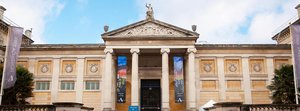
Portret Victor Pasmore

Obrazy: 57 najsłynniejszych dzieł artysty Victor Pasmore – spojrzenie galerii

Aktualizacja: Listopad 2026 · ranking według naszego wskaźnika popularności (liczba wyszukiwań, wizyt i zamówień dla każdego dzieła) · 58 dzieł Victor Pasmore w naszym katalogu

W skrócie

Według galerii najsłynniejszym obrazem Victor Pasmore jest Pink Roses (1944). Spiral Motif, Sea and Sky (1950) i The Café (Tea Gardens) (1935) dopełniają trio, które zna każde oko. Z 58 dzieł Victor Pasmore w naszym katalogu, galeria prezentuje poniżej 57 najsłynniejszych prac – każda z nich jest oryginałem z podaniem roku powstania, muzeum oraz cech wyróżniających ją na tle innych.

1908 – 1998, Chelsham Najwięcej dzieł: Arts Council Collection

10 najlepszych obrazów artysty Victor Pasmore w galerii

1
Pink Roses (1944) autorstwa Victor Pasmore

Pink Roses

1944 · Oil On Canvas

The painting titled Pink Roses is a work by the artist Victor Pasmore. This piece was created in 1944. The artist's name is visible in the top left corner of the image.

2
Spiral Motif, Sea and Sky (1950) autorstwa Victor Pasmore

Spiral Motif, Sea and Sky

1950 · Oil On Canvas

The artwork Spiral Motif, Sea and Sky is a vertical abstract composition characterized by a structured arrangement of three distinct horizontal bands. Each section is defined by rectangular shapes and filled with repetitive, densely packed spiral motifs that create a sense of rhythmic movement. The composition utilizes a muted and earthy color palette, primarily featuring shades of beige, grey, and brown, with subtle touches of gold. A gentle gradient is…

7
The Snowstorm: Spiral Motif in Black and White (1951) autorstwa Victor Pasmore

The Snowstorm: Spiral Motif in Black and White

1951 · Oil On Canvas · Arts Council Collection, Londyn

In the captivating realm of mid-century abstraction, few works command the eye with such rhythmic intensity as Victor Pasmore’s "The Snowstorm: Spiral Motif in Black and White." This masterpiece serves as a profound window into the artist's transformative journey, capturing that precise moment where the boundaries between the tangible world and pure geometric form begin to dissolve. At first glance, the viewer is swept up in a whirlwind of motion;…

Obrazy artysty Victor Pasmore, uszeregowane od 11 do 57 miejsca

11The Front at Seaford, East Sussex (1932) autorstwa Victor PasmoreThe Front at Seaford, East Sussex1932 · Towner 12Window, Finsbury Park (1933) autorstwa Victor PasmoreWindow, Finsbury Park1933 · Government Art Collection 13Girl with Bows in her Hair (1930) autorstwa Victor PasmoreGirl with Bows in her Hair1930 14The Life Class (1938) autorstwa Victor PasmoreThe Life Class1938 · The Hepworth Wakefield 15The Palace Pier, Brighton (1936) autorstwa Victor PasmoreThe Palace Pier, Brighton1936 · The Hepworth Wakefield 16The Quiet River The Thames at Chiswick (1943) autorstwa Victor PasmoreThe Quiet River The Thames at Chiswick1943 17Irish Girl (1940) autorstwa Victor PasmoreIrish Girl1940 18Girl at a Curtain (1943) autorstwa Victor PasmoreGirl at a Curtain1943 19Nude (1941) autorstwa Victor PasmoreNude1941 20Camberwell (1943) autorstwa Victor PasmoreCamberwell1943 21Girl in a Straw Hat (1940) autorstwa Victor PasmoreGirl in a Straw Hat1940 22Portrait of a Jewish Woman (1943) autorstwa Victor PasmorePortrait of a Jewish Woman1943 23Portrait of a Girl (1941) autorstwa Victor PasmorePortrait of a Girl1941 · Arts Council Collection 24Green Landscape with Gate (1943) autorstwa Victor PasmoreGreen Landscape with Gate1943 25Lamplight (1941) autorstwa Victor PasmoreLamplight1941 26Still Life with Flowers (1939) autorstwa Victor PasmoreStill Life with Flowers1939 27Café Interior (1946) autorstwa Victor PasmoreCafé Interior1946 28Snow Scene (1944) autorstwa Victor PasmoreSnow Scene1944 · Ashmolean Museum of Art and Archaeology 29Roses in a Jar (1947) autorstwa Victor PasmoreRoses in a Jar1947 30Riverside Gardens, Hammersmith (1944) autorstwa Victor PasmoreRiverside Gardens, Hammersmith1944 · Arts Council Collection 31Woman in a red Hat (1944) autorstwa Victor PasmoreWoman in a red Hat1944 · Ashmolean Museum of Art and Archaeology 32Carnations in Vase (1948) autorstwa Victor PasmoreCarnations in Vase1948 · Brytyjska Kolekcja Councilu 33Still Life with a Skull (1944) autorstwa Victor PasmoreStill Life with a Skull1944 · Walker Art Gallery 34Girl with a Mirror (1945) autorstwa Victor PasmoreGirl with a Mirror1945 · Laing Art Gallery 35Green Abstract (1948) autorstwa Victor PasmoreGreen Abstract1948 · The Stanley - Audrey Burton Gallery 36Spiral Motif in Black and White - The Wave (1950) autorstwa Victor PasmoreSpiral Motif in Black and White - The Wave1950 · Narodowa Galeria Kanady 37Abstract in White, Grey and Ochre (1949) autorstwa Victor PasmoreAbstract in White, Grey and Ochre1949 · Tate Modern 38The Gardens of Hammersmith No. 2 (1949) autorstwa Victor PasmoreThe Gardens of Hammersmith No. 21949 39Triangular Motif (1949) autorstwa Victor PasmoreTriangular Motif1949 · Ferens Art Gallery 40Rectangular Motif, Black and Olive (1950) autorstwa Victor PasmoreRectangular Motif, Black and Olive1950 · Arts Council Collection 41Square Motif, Blue and Gold The Eclipse (1950) autorstwa Victor PasmoreSquare Motif, Blue and Gold The Eclipse1950 42Motif in Indian Red and Mustard (1950) autorstwa Victor PasmoreMotif in Indian Red and Mustard1950 · Walker Art Gallery 43Abstract in White, Black, Indian and Lilac (1957) autorstwa Victor PasmoreAbstract in White, Black, Indian and Lilac1957 · Tate Modern 44Synthetic Construction (White and Black) (1965) autorstwa Victor PasmoreSynthetic Construction (White and Black)1965 45Relief Construction in White, Black and Maroon (1963) autorstwa Victor PasmoreRelief Construction in White, Black and Maroon1963 · Tate Modern 46Yellow Abstract (1961) autorstwa Victor PasmoreYellow Abstract1961 · Tate Modern 47Abstract in White, Black, Brown and Lilac (1957) autorstwa Victor PasmoreAbstract in White, Black, Brown and Lilac1957 · British Council 48Suburban Gardens (1947) autorstwa Victor PasmoreSuburban Gardens1947 · Brytyjska Kolekcja Councilu 49The Suffragettes autorstwa Victor PasmoreThe SuffragettesArt Gallery of New South Wales 50The Thames at Chiswick: Sun shining through the mist autorstwa Victor PasmoreThe Thames at Chiswick: Sun shining through the mistNational Gallery of Victoria 51Linear Development The Coast of the Inland Sea II autorstwa Victor PasmoreLinear Development The Coast of the Inland Sea II 52Vase of Flowers autorstwa Victor PasmoreVase of Flowers 53Head of a Girl autorstwa Victor PasmoreHead of a Girl 54Brown Development (Peat) autorstwa Victor PasmoreBrown Development (Peat) 55Mother and Florence autorstwa Victor PasmoreMother and FlorenceTowner 56Carnations in a Glass Vase autorstwa Victor PasmoreCarnations in a Glass VaseTowner 57Relief. Construction in Black, White & Cedar autorstwa Victor PasmoreRelief. Construction in Black, White & CedarMAC-Lima

Tematy, które przyciągnęły wzrok Victor Pasmore

Cztery motywy najczęściej powracające w tych oryginałach, z których każdy doczekał się swojego najdoskonalszego przykładu.

Muzea przechowujące oryginały Victor Pasmore

8 muzeów, w których znajduje się najwięcej obrazów z tej strony.

Muzea Miasto Dzieła artysty Victor Pasmore Obrazy z tej listy
Arts Council Collection, LondynArts Council Collection Londyn 4 The Snowstorm: Spiral Motif in Black and White, Portrait of a Girl, Riverside Gardens, Hammersmith
Towner, EastbourneTowner Eastbourne 4 Study of a Cast of a Child's Head, The Front at Seaford, East Sussex, Mother and Florence
Tate Modern, LondynTate Modern Londyn 4 Abstract in White, Grey and Ochre, Abstract in White, Black, Indian and Lilac, Relief Construction in White, Black and Maroon
The Hepworth Wakefield, WakefieldThe Hepworth Wakefield Wakefield 2 The Life Class, The Palace Pier, Brighton
Ashmolean Museum of Art and Archaeology, OksfordAshmolean Museum of Art and Archaeology Oksford 2 Snow Scene, Woman in a red Hat
Brytyjska Kolekcja Councilu, LondynBrytyjska Kolekcja Councilu Londyn 2 Carnations in Vase, Suburban Gardens
Walker Art Gallery, LiverpoolWalker Art Gallery Liverpool 2 Still Life with a Skull, Motif in Indian Red and Mustard
Abbot Hall Art Gallery, KendalAbbot Hall Art Gallery Kendal 1 Seated Figure, The Maid Florence Head

Victor Pasmore, jedno kultowe dzieło na dekadę

Dzieła według dekad

Wybierz dekadę, aby zobaczyć dzieło, które ją definiuje.

Obrazy artysty Victor Pasmore: odpowiedzi galerii

Który obraz Victor Pasmore jest najsłynniejszy ze wszystkich?Odkryj odpowiedź

Pink Roses (1944). Następne są Spiral Motif, Sea and Sky (1950) oraz The Café (Tea Gardens) (1935).

Ile lat miał Victor Pasmore, gdy ukończył Pink Roses?Odkryj odpowiedź

36 lat: Pink Roses pochodzi z 1944, a Victor Pasmore urodził(a) się w 1908.

Które to 10 najlepszych obrazów Victor Pasmore?Odkryj odpowiedź

Pink Roses, Spiral Motif, Sea and Sky, The Café (Tea Gardens), The Quiet River The Thames at Chiswick, Reclining Nude, Linear Development: The Coast of the Inland Sea II, The Snowstorm: Spiral Motif in Black and White, Landscape with Cattle, Study of a Cast of a Child's Head i Seated Figure, The Maid Florence Head. Powyższy ranking zawiera rok powstania oraz muzeum dla każdego z nich.

Ile dzieł stworzył/a Victor Pasmore?Odkryj odpowiedź

Nasz katalog zawiera 58 dzieł artysty Victor Pasmore, datowanych od 1924 do 1965.

Gdzie można znaleźć najsłynniejsze oryginały autorstwa Victor Pasmore?Odkryj odpowiedź

W większości znajdują się w Arts Council Collection (Londyn), Towner (Eastbourne) i Tate Modern (Londyn). Powyższa tabela muzeów zawiera ich pełną listę.

Kiedy Victor Pasmore stworzył swoje najsłynniejsze obrazy?Odkryj odpowiedź

W 1940s: 26 z 57 dzieł na tej stronie powstało w tym czasie, w tym Pink Roses.

Które z najsłynniejszych dzieł Victor Pasmore należą do jego najwcześniejszych i najpóźniejszych prac?Odkryj odpowiedź

Na tej stronie najwcześniejszy to Study of a Cast of a Child's Head (1924), a najpóźniejszy Synthetic Construction (White and Black) (1965).

Do jakich tematów Victor Pasmore powracał najczęściej?Odkryj odpowiedź

Abstract (3), Geometric (3) i Spiral motif (2), w ramach 57 dzieł na tej stronie.

W jakiej technice najczęściej tworzył Victor Pasmore?Odkryj odpowiedź

Oil On Canvas, dla 4 z 57 dzieł na tej stronie.

Które oryginały artysty Victor Pasmore znajdują się w zbiorach Arts Council Collection?Odkryj odpowiedź

The Snowstorm: Spiral Motif in Black and White, Portrait of a Girl i Riverside Gardens, Hammersmith: Arts Council Collection, Londyn posiada 4 dzieł widocznych na tej stronie.

Victor Pasmore: artysta

Victor Pasmore: Pionier brytyjskiej abstrakcji

Wczesne lata i edukacja

  • Edwin John Victor Pasmore przyszedł na świat 3 grudnia 1908 roku w Chelsham, w hrabstwie Surrey.
  • Swoją wczesną edukację odebrał w Summer Fields School w Oxfordzie oraz w Harrow w zachodnim Londynie.
  • Momentem zwrotnym w jego życiu stała się śmierć ojca w 1927 roku, co zmusiło go do podjęcia pracy administracyjnej w London County Council.
  • Mimo obowiązków zawodowych, z pasją rozwijał malarstwo na Central School of Art, stając się częścią środowiska Euston Road School.

Figuratywne początki i doświadczenia wojenne

  • Początkowo Pasmore eksperymentował z abstrakcją, by później przyjąć bardziej liryczny, figuratywny styl.
  • Jego wczesne dzieła często przedstawiały widoki Tamizy z Hammersmith, co budziło skojarzenia z twórczością J.M.W. Turnera oraz Jamesa McNeilla Whistlera.
  • Niezłomna postawa moralna: Podczas II wojny światowej Pasmore wystąpił w roli sumienia sprzeciwiającego się służbie wojskowej.
  • Po odmowie uznania jego statusu przez lokalny trybunał, w 1942 roku został powołany do wojska. Odmówił wykonania rozkazów, co doprowadziło do sądu wojennego i wyroku siedemdziesięciu trzech dni więzzenia.
  • Ostatecznie jednak udało mu się odwołać od tej decyzji, uzyskując bezwarunkowe zwolnienie ze służby wojskowej.

Przejście ku abstrakcji

    Przełom w twórczości Pasmorego nastąpił około 1947 roku, pod głębokim wpływem dzieł Pieta Mondriana i Paula Klee.
  • Inspirację czerpał z ich pism dotyczących natury oraz kreowania dynamicznej harmonii w sztuce, wierząc, że jest ona zapowiedzią przyszłej harmonii społecznej.
  • Kluczowe inspiracje: Odnajdywał również wzorce u Bena Nicholsona oraz innych artystów związanych z grupą Circle.
  • Jego abstrakcyjne prace często wykorzystywały techniki kolażu i konstrukcję reliefów, pioniersko wprowadzając nowe materiały, które niekiedy osiągały monumentalną, architektoniczną skalę.

Wielkie osiągnięcia i integracja z architekturą

  • Rewolucyjny wpływ: Herbert Read określił nowy styl Pasmorego mianem „najbardziej rewolucyjnego wydarzenia w powojennej sztuce brytyjskiej”.
  • W 1950 roku otrzymał zlecenie stworzenia abstrakcyjnego muralu dla zajezdni autobusowej w Kingston upon Thames.
  • W 1951 roku, podczas Festival of Britain, przyczynił się do powstania muralu prezentującego dorobek brytyjskich konstruktywistów.
  • Apollo Pavilion: W 1955 roku objął funkcję dyrektora ds. projektowania architektonicznego w Peterlee Development Corporation. Centralnym punktem tego projektu stała się abstrakcyjna struktura artystyczna, Apollo Pavilion – dzieło, które choć wzbudziło spore kontrowersje, pozostaje niezwykle ważnym symbolem regionu.

Międzynarodowe uznanie i późniejsze lata życia

  • Pasmore reprezentował Wielką Brytanię na Biennale w Wenecji w 1961 roku oraz uczestniczył w wystawie Documenta II w Kassel (1959).
  • Pełnił funkcję powiernika Tate Gallery, przekazując liczne dzieła do jej kolekcji.
  • Wkład w edukację: Był czołową postacią w promowaniu sztuki abstrakcyjnej oraz reformowaniu edukacji artystycznej.
  • W latach 1954–1961 prowadził kurs artystyczny w King’s College w Durham (Newcastle upon Tyne), rozwijając wpływający na pokolenia program nauczania projektowania, inspirowany ideami Bauhausu.
  • W 1966 roku przeprowadził się na Maltę, gdzie 23 stycznia 1998 roku zmarł w wieku 89 lat.

Dziedzictwo i znaczenie historyczne

  • Twórczość Victora Pasmorego stanowiła punkt zwrotny w sztuce brytyjskiej, ustanawiając abstrakcję jako żywotną siłę artystyczną.
  • Jego próby integracji sztuki z architekturą przełamywały konwencjonalne granice i wywarły ogromny wpływ na kolejne pokolenia artystów oraz projektantów.
  • Galeria Victora Pasmorego, otwarta na Malcie w 2014 roku, prezentuje stałą wystawę jego prac powstałych podczas pobytu na wyspie.