Wifredo Lam: portret artysty
Wifredo Lam - A Crossroads of Cultures: The Life and Art of Wifredo Lam
Wifredo Óscar de la Concepción Lam y Castilla, known simply as Wifredo Lam, was a painter who embodied the complexities of cultural identity in the 20th century. Born in Sagua La Grande, Cuba, in 1902, his very lineage spoke to the island’s layered history – a father descended from Chinese immigrants and a mother tracing her roots back to Spanish conquistadors and enslaved Africans. This multicultural heritage wasn't merely biographical detail; it became the wellspring of his artistic vision, fueling a unique style that fused European modernism with Afro-Cuban spirituality and symbolism. Lam’s early life was marked by an initial pursuit of law in Havana, but even amidst legal studies, he found himself drawn to the natural world, spending time at the botanical gardens – a foreshadowing of the organic forms that would later dominate his canvases. Formal artistic training followed at the Escuela de Bellas Artes in Havana and then in Madrid under Fernando Álvarez de Sotomayor y Zaragoza, where he absorbed traditional techniques while simultaneously beginning to question their limitations.
Early Life and Influences
Wifredo Lam’s formative years were shaped by a profound encounter with his family’s heritage. His father, Enrique Lam-Yam, was a Chinese immigrant from Canton (Guangdong province) who arrived in Cuba as part of the late-19th-century wave of Chinese laborers and merchants. Enrique instilled in Wifredo a fascination for Eastern aesthetics and philosophy—a connection that would resonate throughout his artistic career. Simultaneously, Ana Serafina Catilla, Lam’s mother, descended from Spanish conquistadors and enslaved Africans, embodying the enduring legacy of colonialism. Growing up amidst Sagua La Grande's vibrant Afro-Cuban culture exposed him to rituals and traditions rooted in Santería—a religion blending Yoruba cosmology with Catholicism—influencing his artistic symbolism and worldview. Early exposure to the Prado Museum’s masterpieces ignited a passion for Surrealism and Pieter Bruegel the Elder’s unsettling visions, fostering an appreciation for allegory and psychological depth. These influences would coalesce into Lam’s distinctive style: a synthesis of European modernism and Afro-Cuban spirituality.
European Encounters and Artistic Transformation
Lam’s time in Spain proved transformative. Studying under Fernando Álvarez de Sotomayor y Zaragoza at the Academy of Fine Arts in Madrid, he honed his skills in traditional painting techniques while simultaneously challenging their conventions. He was particularly captivated by Velázquez’s masterful realism and Goya’s unflinching portrayal of social injustice—artists who served as models for Lam's own artistic explorations. The Museo Nacional Centro de Arte Reina Sofía housed many paintings that inspired him, especially Picasso’s innovative Cubist approach. His encounter with Pablo Picasso was decisive, fostering a lifelong friendship and introducing him to fellow artists like Joan Miró and André Breton—figures who championed Surrealism as a means of accessing the unconscious mind. Lam embraced Surrealist techniques—automatic drawing and collage—experimenting with dreamlike imagery and disrupting conventional perspectives. This period solidified his commitment to artistic innovation and fueled his desire to express complex psychological states through visual language.
The Surrealist Vision and Artistic Output
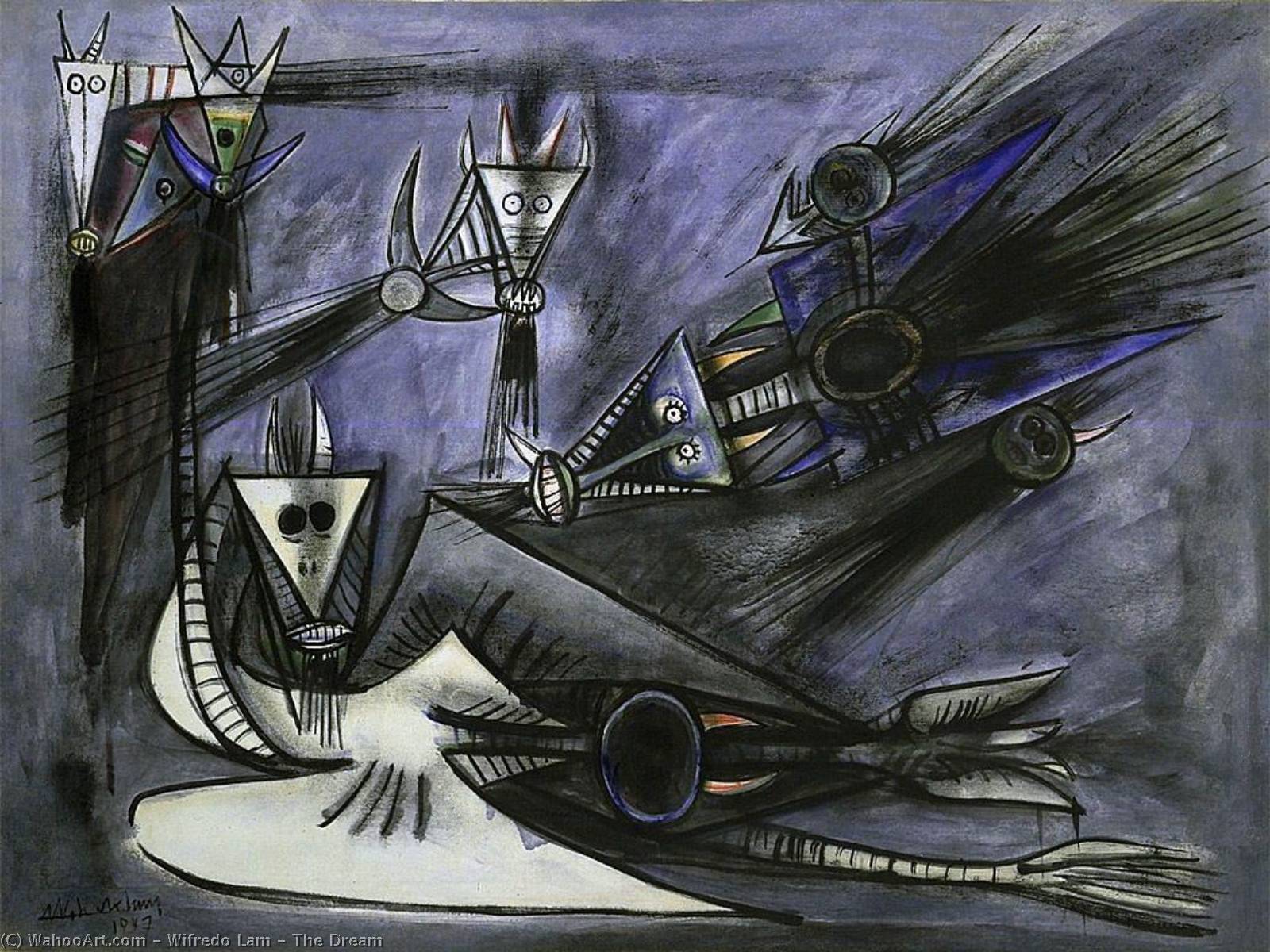
Lam’s involvement in the Surrealist movement resulted in a prolific output of paintings, drawings, and sculptures—each reflecting his preoccupation with themes of identity, spirituality, and social critique. His early works showcased a masterful command of traditional realism, capturing landscapes and still lifes with meticulous detail. However, as he matured, Lam increasingly sought to transcend representational conventions, embracing abstraction and exploring the expressive potential of color and form. The *Fata Morgana Suite*, created between 1940 and 1941 during his exile in Paris—influenced by Breton’s poetic explorations—demonstrates his ability to translate literary concepts into compelling visual narratives. Lam's exploration of Surrealist imagery—particularly masks, fragmented figures, and dreamlike landscapes—became a hallmark of his artistic style. He skillfully blended Cubist techniques with Surrealist sensibilities, creating canvases that challenged viewers’ perceptions and provoked contemplation about the human condition.
Legacy and Recognition
Wifredo Lam died in Paris on September 11, 1982, leaving behind an unparalleled artistic legacy—one celebrated globally for its boldness, originality, and profound engagement with cultural heritage. His monumental painting *La Jungla* (1943), considered his masterpiece, exemplifies this distinctive aesthetic vision. Created during his exile in Martinique and Cuba, the canvas depicts a dense tropical landscape populated by fantastical hybrid figures—a synthesis of human, animal, and vegetal forms—infused with symbolism drawn from Afro-Cuban religious rituals and traditions. Lam’s work continues to inspire artists and scholars alike, recognized as a pivotal contribution to modern art history and a testament to the transformative power of intercultural dialogue. His paintings stand as enduring emblems of cultural identity and artistic innovation—a legacy that secures his place among the most influential figures of the 20th century.