Portret Waldek Evans

Obrazy: 50 najsłynniejszych dzieł artysty Waldek Evans – spojrzenie galerii

Aktualizacja: Październik 2026 · ranking według naszego wskaźnika popularności (liczba wyszukiwań, wizyt i zamówień dla każdego dzieła) · 50 dzieł Waldek Evans w naszym katalogu

W skrócie

Według opinii kuratorów galerii, najsłynniejszym obrazem Waldek Evans jest Roadside Stand, vicinity Birmingham, Alabama (1971), którego oryginał znajduje się w Muzeum George’a Eastmana w Rochester. Let Us Now Praise Famous Men (1936) i Havana Citizen / Citizen in Downtown Havana (1933) dopełniają trio, które zna każde oko. Z 50 dzieł Waldek Evans w naszym katalogu, galeria prezentuje poniżej 50 najsłynniejszych prac – każda z nich jest oryginałem z podaniem roku powstania, muzeum oraz cech wyróżniających ją na tle innych.

1903 – 1975, St. Louis Contemporary realism Najwięcej dzieł: Muzeum J. Paula Getty'ego

10 najlepszych obrazów artysty Waldek Evans w galerii

1
Roadside Stand, vicinity Birmingham, Alabama (1971) autorstwa Waldek Evans

Roadside Stand, vicinity Birmingham, Alabama

1971 · Black and White Photography · Muzeum George’a Eastmana, Rochester

In the quiet, sun-drenched corners of rural Alabama, Walker Evans captured more than just a storefront; he froze a moment of profound human resilience. "Roadside Stand, vicinity Birmingham, Alabama," produced in 1971, serves as a hauntingly beautiful meditation on American identity. The photograph presents a deceptively simple tableau: a weathered structure, the home of ‘F.M. Pointer – The Old Reliable House Mover,’ where two men stand amidst their trade. There…

2
Let Us Now Praise Famous Men (1936) autorstwa Waldek Evans

Let Us Now Praise Famous Men

1936 · Photography · La Biennale di Venezia, Wenecja

Walker Evans' "Let Us Now Praise Famous Men," born from a collaboration between the photographer and writer James Agee in 1936-37, isn’t merely a collection of photographs; it’s a profound meditation on poverty, resilience, and the fractured landscape of the American South during the Great Depression. The work, initially conceived as an article for *Fortune* magazine, ultimately transcended its journalistic origins to become a seminal text in documentary photography and…

3
Havana Citizen / Citizen in Downtown Havana (1933) autorstwa Waldek Evans

Havana Citizen / Citizen in Downtown Havana

1933 · Gelatin Silver Print · Muzeum J. Paula Getty'ego, Los Angeles

Walker Evans’ “Citizen in Downtown Havana,” created in 1933, isn’t merely a photograph; it’s a distilled moment, a frozen tableau of urban life that speaks volumes about a city grappling with change and the quiet dignity of its inhabitants. Captured during a brief assignment for Carlton Beals' book *The Crime of Cuba*, this image transcends simple documentation, becoming a poignant meditation on identity, masculinity, and the subtle rhythms of daily…

4
Let Us Now Praise Famous Men (1936) autorstwa Waldek Evans

Let Us Now Praise Famous Men

1936 · Acrylic On Canvas · La Biennale di Venezia, Wenecja

Walker Evans’s “Let Us Now Praise Famous Men,” published in 1941, isn't merely a collection of photographs; it’s a profound meditation on poverty, dignity, and the fractured American landscape during the Great Depression. Born from an assignment for *Fortune* magazine to document the lives of tenant farmers in Alabama, the project quickly transcended its initial journalistic purpose. James Agee, a young writer brimming with empathy, joined Evans, and together they…

5
Silverware (1936) autorstwa Waldek Evans

Silverware

1936 · Black and White Photography · Nelson-Atkins Museum of Art, Kansas City

In the quiet, textured stillness of Walker Evans’ 1936 masterpiece, “Silverware,” we find much more than a mere photographic record of a weathered interior. It is a profound, distilled moment of American history, captured with an unwavering gaze that speaks volumes about the spirit of perseverance during the Great Depression. At first glance, the viewer is presented with a seemingly simple depiction of a wooden wall, yet beneath this surface…

6
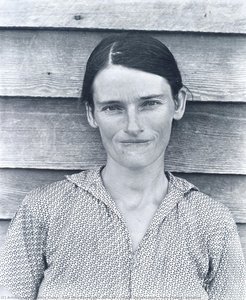
Allie Mae Burroughs, Wife of a Cotton Sharecropper, Hale County, Alabama (1936) autorstwa Waldek Evans

Allie Mae Burroughs, Wife of a Cotton Sharecropper, Hale County, Alabama

1936 · Acrylic On Canvas · Muzeum J. Paula Getty'ego, Los Angeles

Walker Evans's photograph, "Allie Mae Burroughs, Wife of a Cotton Sharecropper, Hale County, Alabama," isn't merely a snapshot; it’s a poignant window into the heart of the American Depression. Captured in 1936 during his work for the Farm Security Administration, this image transcends its documentary origins to become a powerful meditation on dignity, hardship, and the quiet strength of an ordinary woman facing extraordinary circumstances. The photograph, now housed at…

7
Alabama Tenant Farmer (1936) autorstwa Waldek Evans

Alabama Tenant Farmer

1936 · Gelatin Silver Print · Muzeum J. Paula Getty'ego, Los Angeles

In the quiet, monochrome stillness of Walker Evans’ “Alabama Tenant Farmer,” one finds much more than a mere documentation of a kitchen interior; one encounters a profound meditation on the human condition. Captured in 1936 amidst the dust and desperation of the Great Depression, this masterpiece serves as a poignant emblem of resilience. The photograph transports the viewer into a humble cotton farmer’s cabin in Hale County, Alabama, where the…

8
Let Us Now Praise Famous Men (1936) autorstwa Waldek Evans

Let Us Now Praise Famous Men

1936 · Acrylic On Canvas · La Biennale di Venezia, Wenecja

Walker Evans' "Let Us Now Praise Famous Men," born from a 1936 assignment for *Fortune* magazine, isn’t merely a photographic record; it’s a profound meditation on the dignity of human existence amidst crushing poverty. Published in 1941, this seminal work transcends its documentary origins to become a hauntingly beautiful exploration of rural America during the Great Depression. Evans, initially tasked with capturing the realities of sharecropping families in Alabama, quickly…

9
Uncle Sam (1935) autorstwa Waldek Evans

Uncle Sam

1935 · Black and White Photography · Ogden Museum of Southern Art, New Orleans

In the quiet, silvered tones of Walker Evans’s 1935 masterpiece, Uncle Sam, we are invited to step through a temporal threshold into the heart of a vanishing America. This evocative black and white photograph serves as more than a mere documentation of architecture; it is a profound meditation on existence during the Great Depression. The composition centers on a sprawling, two-story house, its weathered facade and numerous windows acting as…

10
Let Us Now Praise Famous Men (1936) autorstwa Waldek Evans

Let Us Now Praise Famous Men

1936 · Acrylic On Canvas · La Biennale di Venezia, Wenecja

Walker Evans’s “Let Us Now Praise Famous Men,” published in 1941, stands as an unparalleled achievement in documentary photography and a cornerstone of American literature. More than just capturing the bleak realities of the Great Depression—specifically the plight of tenant farmers in Hale County, Alabama—Evans’s magnum opus delves into the profound dignity inherent within human experience even amidst crushing hardship.

Obrazy artysty Waldek Evans, uszeregowane od 11 do 50 miejsca

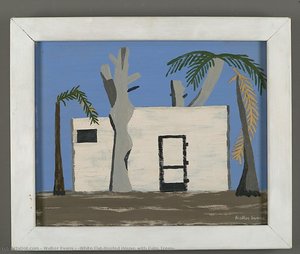
11License Photo Studio, New York (1934) autorstwa Waldek EvansLicense Photo Studio, New York1934 · Muzeum J. Paula Getty'ego 12Water Fountain, Havana (1932) autorstwa Waldek EvansWater Fountain, Havana1932 · Boca Raton Museum of Art 13Miners (1935) autorstwa Waldek EvansMiners1935 · Muzeum J. Paula Getty'ego 14Barber Shop, New Orleans (1971) autorstwa Waldek EvansBarber Shop, New Orleans1971 · Boca Raton Museum of Art 15Boarding House Porch, Birmingham, Alabama (1971) autorstwa Waldek EvansBoarding House Porch, Birmingham, Alabama1971 · Boca Raton Museum of Art 16Brooklyn bridge, new york autorstwa Waldek EvansBrooklyn bridge, new york 17Parked car, small town main street autorstwa Waldek EvansParked car, small town main street 18Sharecropper, hale county, alabama autorstwa Waldek EvansSharecropper, hale county, alabama 19Coal dock worker autorstwa Waldek EvansCoal dock worker 20American legionnaire autorstwa Waldek EvansAmerican legionnaire 21Interior detail, west virginia coal miner's house autorstwa Waldek EvansInterior detail, west virginia coal miner's house 22Girl in Fulton Street, New York autorstwa Waldek EvansGirl in Fulton Street, New York 23Roadside Sandwich Shop, Ponchatoula, Louisiana autorstwa Waldek EvansRoadside Sandwich Shop, Ponchatoula, Louisiana 24Battlefield Monument, Vicksburg, MS (1936) autorstwa Waldek EvansBattlefield Monument, Vicksburg, MS1936 · Ogden Museum of Southern Art 25[Landscape with Adobe Church] (1947) autorstwa Waldek Evans[Landscape with Adobe Church]1947 26[Red Church] (1950) autorstwa Waldek Evans[Red Church]1950 27[Three Director's Chairs] (1950) autorstwa Waldek Evans[Three Director's Chairs]1950 28[Ship's Prow] (1950) autorstwa Waldek Evans[Ship's Prow]1950 29[Floral Still-Life] (1950) autorstwa Waldek Evans[Floral Still-Life]1950 30[Shack with Broken Windows] (1950) autorstwa Waldek Evans[Shack with Broken Windows]1950 31[Architectural Interior] (1950) autorstwa Waldek Evans[Architectural Interior]1950 32[White Flat-Roofed House with Palm Trees] (1950) autorstwa Waldek Evans[White Flat-Roofed House with Palm Trees]1950 33[Construction Site] (1950) autorstwa Waldek Evans[Construction Site]1950 34The Shell House (1950) autorstwa Waldek EvansThe Shell House1950 35Anna Maria, Florida (1958) autorstwa Waldek EvansAnna Maria, Florida1958 36[Seashore Scene with Boardwalk] (1961) autorstwa Waldek Evans[Seashore Scene with Boardwalk]1961 37[Boat with Palm Trees on Shore] (1958) autorstwa Waldek Evans[Boat with Palm Trees on Shore]1958 38[House with Gridded Panel and Palm Trees] (1958) autorstwa Waldek Evans[House with Gridded Panel and Palm Trees]1958 39[Barn with Porch Addition, Old Lyme, Connecticut] (1963) autorstwa Waldek Evans[Barn with Porch Addition, Old Lyme, Connecticut]1963 40[Red Building in Field] (1963) autorstwa Waldek Evans[Red Building in Field]1963 41Main Street in a Pennsylvania Town (1971) autorstwa Waldek EvansMain Street in a Pennsylvania Town1971 42Joe's auto graveyard, pennsylvania autorstwa Waldek EvansJoe's auto graveyard, pennsylvania 43Kitchen wall, alabama farmstead autorstwa Waldek EvansKitchen wall, alabama farmstead 44Kitchen corner, tenant farmhouse, hale county, alabama autorstwa Waldek EvansKitchen corner, tenant farmhouse, hale county, alabama 45End of House on Logan Street, Charleston, South Carolina autorstwa Waldek EvansEnd of House on Logan Street, Charleston, South Carolina 46Allie Mae Burroughs, Wife of a Cotton Sharecropper, Hale County, Alabama autorstwa Waldek EvansAllie Mae Burroughs, Wife of a Cotton Sharecropper, Hale County, Alabama 47Main street block, selma, alabama autorstwa Waldek EvansMain street block, selma, alabamaGeorgia Museum of Art 48Penny picture display, savannah, georgia autorstwa Waldek EvansPenny picture display, savannah, georgia 49Negro church, south carolina autorstwa Waldek EvansNegro church, south carolina 50City lunch counter, new york autorstwa Waldek EvansCity lunch counter, new york

Słynne obrazy Waldek Evans epoka po epoce

Tematy, które przyciągnęły wzrok Waldek Evans

Cztery motywy najczęściej powracające w tych oryginałach, z których każdy doczekał się swojego najdoskonalszego przykładu.

Muzea przechowujące oryginały Waldek Evans

7 muzeów, w których znajduje się najwięcej obrazów z tej strony.

Muzeum Miasto Dzieła artysty Waldek Evans Obrazy z tej listy
Muzeum J. Paula Getty'ego, Los AngelesMuzeum J. Paula Getty'ego Los Angeles 5 Havana Citizen / Citizen in Downtown Havana, Allie Mae Burroughs, Wife of a Cotton Sharecropper, Hale County, Alabama, Alabama Tenant Farmer
La Biennale di Venezia, WenecjaLa Biennale di Venezia Wenecja 4 Let Us Now Praise Famous Men, Let Us Now Praise Famous Men, Let Us Now Praise Famous Men
Boca Raton Museum of Art, Boca RatonBoca Raton Museum of Art Boca Raton 3 Water Fountain, Havana, Barber Shop, New Orleans, Boarding House Porch, Birmingham, Alabama
Ogden Museum of Southern Art, New OrleansOgden Museum of Southern Art New Orleans 2 Uncle Sam, Battlefield Monument, Vicksburg, MS
Muzeum George’a Eastmana, RochesterMuzeum George’a Eastmana Rochester 1 Roadside Stand, vicinity Birmingham, Alabama
Nelson-Atkins Museum of Art, Kansas CityNelson-Atkins Museum of Art Kansas City 1 Silverware
Georgia Museum of Art, AthensGeorgia Museum of Art Athens 1 Main street block, selma, alabama

Waldek Evans, jedno kultowe dzieło na dekadę

Dzieła według dekad

Wybierz dekadę, aby zobaczyć dzieło, które ją definiuje.

Obrazy artysty Waldek Evans: odpowiedzi galerii

Który obraz Waldek Evans jest najsłynniejszy ze wszystkich?Odkryj odpowiedź

Roadside Stand, vicinity Birmingham, Alabama (1971), Muzeum George’a Eastmana, Rochester. Następne są Let Us Now Praise Famous Men (1936) oraz Havana Citizen / Citizen in Downtown Havana (1933).

Ile lat miał Waldek Evans, gdy ukończył Roadside Stand, vicinity Birmingham, Alabama?Odkryj odpowiedź

68 lat: Roadside Stand, vicinity Birmingham, Alabama pochodzi z 1971, a Waldek Evans urodził(a) się w 1903.

Które to 10 najlepszych obrazów Waldek Evans?Odkryj odpowiedź

Roadside Stand, vicinity Birmingham, Alabama, Let Us Now Praise Famous Men, Havana Citizen / Citizen in Downtown Havana, Let Us Now Praise Famous Men, Silverware, Allie Mae Burroughs, Wife of a Cotton Sharecropper, Hale County, Alabama, Alabama Tenant Farmer, Let Us Now Praise Famous Men, Uncle Sam i Let Us Now Praise Famous Men. Powyższy ranking zawiera rok powstania oraz muzeum dla każdego z nich.

Ile dzieł stworzył/a Waldek Evans?Odkryj odpowiedź

Nasz katalog zawiera 50 dzieł artysty Waldek Evans, datowanych od 1932 do 1971.

Gdzie można znaleźć najsłynniejsze oryginały autorstwa Waldek Evans?Odkryj odpowiedź

W większości znajdują się w Muzeum J. Paula Getty'ego (Los Angeles), La Biennale di Venezia (Wenecja) i Boca Raton Museum of Art (Boca Raton). Powyższa tabela muzeów zawiera ich pełną listę.

Kiedy Waldek Evans stworzył swoje najsłynniejsze obrazy?Odkryj odpowiedź

W 1930s: 13 z 50 dzieł na tej stronie powstało w tym czasie, w tym Let Us Now Praise Famous Men.

Które z najsłynniejszych dzieł Waldek Evans należą do jego najwcześniejszych i najpóźniejszych prac?Odkryj odpowiedź

Na tej stronie najwcześniejszy to Water Fountain, Havana (1932), a najpóźniejszy Roadside Stand, vicinity Birmingham, Alabama (1971).

Do jakich tematów Waldek Evans powracał najczęściej?Odkryj odpowiedź

Usa (7), Great depression (5) i American south (4), w ramach 50 dzieł na tej stronie.

W jakiej technice najczęściej tworzył Waldek Evans?Odkryj odpowiedź

Acrylic On Canvas, dla 5 z 50 dzieł na tej stronie.

Z jakim nurtem związany jest Waldek Evans?Odkryj odpowiedź

Contemporary realism i Documentary photography, sądząc po oryginałach na tej stronie.

Które oryginały artysty Waldek Evans znajdują się w zbiorach Muzeum J. Paula Getty'ego?Odkryj odpowiedź

Havana Citizen / Citizen in Downtown Havana, Allie Mae Burroughs, Wife of a Cotton Sharecropper, Hale County, Alabama i Alabama Tenant Farmer: Muzeum J. Paula Getty'ego, Los Angeles posiada 5 dzieł widocznych na tej stronie.

Waldek Evans: artysta

A Witness to America: The Life and Legacy of Walker Evans

Walker Evans, born in St. Louis in 1903, emerged as a pivotal figure in American photography, his name inextricably linked with the visual record of the Great Depression. Yet to define him solely by this period would be to diminish the breadth of his artistic vision and enduring influence. His journey was one of constant exploration, evolving from literary aspirations to a uniquely observant photographic style that captured not just *what* America was, but *how* it felt – its quiet dignity, its stark realities, and its often-overlooked beauty. Evans’s upbringing, marked by frequent moves between cities like Toledo, Chicago, and New York, instilled in him an early awareness of the diverse facets of American life. Though educated at prestigious institutions like Phillips Academy Andover and briefly at Williams College, his true education unfolded through self-directed study and immersion in the cultural currents of the time. A year spent in Paris in 1926 exposed him to European artistic trends, but it was upon his return to New York that he discovered his calling, initially as a writer before turning decisively towards photography around 1928.

Forging a Documentary Vision

The early influences on Evans’s photographic approach were profound. He admired the meticulous documentation of Eugène Atget, whose images of Parisian streets felt both timeless and immediate, and August Sander, whose portraits aimed for an objective cataloging of German society. Equally important were literary figures like T.S. Eliot, D.H. Lawrence, James Joyce, and e.e. cummings – writers who valued precision of language and a keen observation of the human condition. These influences coalesced in Evans’s developing aesthetic: a commitment to clarity, directness, and an avoidance of sentimentality. This approach found its most powerful expression during his tenure with the Farm Security Administration (FSA) beginning in 1935. Tasked with documenting the effects of the Depression on rural communities in the Southern United States, Evans traveled extensively, capturing images that became iconic representations of hardship and resilience. His collaboration with writer James Agee on *Let Us Now Praise Famous Men* (1941), a groundbreaking work combining stark photographs with lyrical prose depicting three tenant farming families in Alabama, remains a cornerstone of documentary literature and photography. Though initially rejected by *Fortune* magazine for its length and unconventional style, the project stands as a testament to their shared commitment to portraying the lives of ordinary people with honesty and empathy. Evans’s use of an 8x10 view camera contributed significantly to his distinctive style; the large format yielded images of exceptional detail and formal clarity, lending a sense of timelessness to his subjects.

Beyond the FSA: Portraits and Shifting Perspectives

Following his work with the FSA, Evans’s artistic trajectory continued to evolve. The landmark exhibition “Walker Evans: American Photographs” at the Museum of Modern Art in 1938 solidified his reputation as a major force in photography, marking the first solo show dedicated to a photographer at the museum. However, he resisted being pigeonholed as simply a documentary photographer. He increasingly turned his attention towards portraits and street photography, capturing candid moments of urban life in New York City with an understated elegance. These later works reveal a subtle shift in focus – less concerned with social commentary and more interested in exploring the aesthetic qualities of everyday scenes. In the 1960s, Evans embraced color photography, producing vibrant images of interiors, architecture, and commonplace objects. This experimentation demonstrated a willingness to challenge conventional notions of photographic representation and explore new avenues for artistic expression. The playful and decorative quality of these later works often surprises those familiar only with his black-and-white FSA photographs, revealing a previously unseen facet of his creative personality.

The Influence of Literature and the Pursuit of Truth

Evans’s approach to photography was deeply informed by his literary sensibilities. He admired writers like T.S. Eliot, D.H. Lawrence, James Joyce, and e.e. cummings—writers who valued precision of language and a keen observation of the human condition. This influence is evident in his photographs' careful composition, their stark clarity, and their avoidance of sentimentality. He sought to capture not just what he saw, but also *how* it felt – the quiet dignity of ordinary people, the harsh realities of poverty, and the beauty that could be found even in the most difficult circumstances. Evans’s work is often described as “lyrical realism,” a term coined by critic John Szarkowski to describe his ability to imbue documentary photographs with a sense of poetry and emotion. He believed that photography could be more than just a record of events; it could also be a means of exploring the human experience, revealing truths about ourselves and our society.

A Lasting Impact on Photographic History

Walker Evans’s legacy extends far beyond the iconic images he created during the Great Depression. He is widely considered one of the most important figures in the history of documentary photography, having established a new standard for realism and objectivity in photographic representation. His work profoundly influenced generations of photographers, inspiring them to look at the world with fresh eyes and to find beauty and meaning in the ordinary. His impact on social realism is undeniable, as his FSA photographs became powerful symbols of hardship and resilience during a pivotal moment in American history. But perhaps his greatest contribution lies in demonstrating how photography could serve not only as a tool for social commentary but also as a medium for aesthetic exploration. He proved that even the most seemingly mundane subjects could be transformed into works of art through careful observation, precise composition, and a commitment to visual truth. Evans’s work continues to resonate today, reminding us of the power of photography to document our world, challenge our perceptions, and connect us to the shared human experience.

Wszystkie 50 dzieła artysty Waldek Evans →