Portret Vittore Carpaccio

100 najsłynniejszych obrazów artysty Vittore Carpaccio – wybór z galerii

Aktualizacja: Listopad 2026 · ranking według naszego wskaźnika popularności (liczba wyszukiwań, wizyt i zamówień dla każdego dzieła) · 201 dzieł Vittore Carpaccio w naszym katalogu

W skrócie

Spośród wszystkich dzieł oryginalnych, które pozostawił Vittore Carpaccio, najsłynniejszym jest Chrystus z Symbolami Paschalnymi Otoczony Aniołami (1510), znajdujący się w kolekcji Metropolitan Museum of Art w Nowy Jork. Tuż za nimi znajdują się The Ten Thousand Martyrs on the Mount Ararat (1515) oraz Meeting of the Betrothed Couple (detail) (1495). Nasz katalog zawiera 201 dzieł autorstwa Vittore Carpaccio; galeria zachowała 100 najbardziej podziwianych na świecie prac, z których każda została przedstawiona wraz z datą powstania, informacją o muzeum oraz jej historią.

1465 – 1526, Wenecja Renesans wenecki Najwięcej dzieł: Gallerie dell'Accademia di Venezia

10 najlepszych obrazów artysty Vittore Carpaccio: wybór galerii

1
Chrystus z Symbolami Paschalnymi Otoczony Aniołami (1510) autorstwa Vittore Carpaccio

Chrystus z Symbolami Paschalnymi Otoczony Aniołami

1510 · Obraz olejny na płycie · Metropolitan Museum of Art, Nowy Jork

Zanurzmy się w głębokie, wizualne opowieści tego arcydzieła, które emanuje bólem i poświęceniem Chrystusa. „Christ with the Symbols of the Passion Surrounded by Angels” to nie tylko obraz; to potężny przekaz, który przenosi nas do momentu kulminacyjnego Paschy, otoczonego symbolami cierpienia i nadziei. Wyobraźcie sobie salę, oświetloną delikatnym blaskiem, gdzie w centrum uwagi znajduje się Chrystus, umieszczony na krzyżu – scena pełna emocji, która wywołuje głębokie refleksje duchowe. Ten obraz,…

2
The Ten Thousand Martyrs on the Mount Ararat (1515) autorstwa Vittore Carpaccio

The Ten Thousand Martyrs on the Mount Ararat

1515 · Oil On Panel · Gallerie dell'Accademia di Venezia, Wenecja

To stand before this monumental canvas is to be enveloped by a wave of profound spiritual energy. Vittore Carpaccio’s depiction, The Ten Thousand Martyrs on the Mount Ararat, is not merely a painting; it is an overwhelming testament to faith, endurance, and the ultimate promise of resurrection. The sheer scale of the work—a dramatic expanse measuring 307 by 205 centimeters—demands attention, drawing the viewer into its complex narrative heart. It…

3
Meeting of the Betrothed Couple (detail) (1495) autorstwa Vittore Carpaccio

Meeting of the Betrothed Couple (detail)

1495 · Oil · Gallerie dell'Accademia di Venezia, Wenecja

Vittore Carpaccio's “Meeting of the Betrothed Couple” is not merely a depiction of a historical event; it’s a meticulously crafted window into the vibrant, complex world of 15th-century Venice. This particular detail, focusing on the central figures amidst a throng of nobility and civic officials, offers an intimate invitation to explore the artist's unique approach to narrative painting – a style that eschewed the prevailing humanist trends of his time…

4
The Lion of St Mark (detail) (1516) autorstwa Vittore Carpaccio

The Lion of St Mark (detail)

1516 · Tempera · Pałac Dożów, Wenecja

In this detail from 1516, a winged lion occupies the foreground, its physical presence defined by a heavy, stone-like texture. The creature is positioned with its hind legs submerged in water while its forelegs rest upon dry land. Its wings are spread wide across the upper portion of the frame. In its paws, the lion holds an open book. The pages contain Latin text that reads "PAX TIBI MARCE EVANGELISTA…

5
The Lion of St Mark (detail) (1516) autorstwa Vittore Carpaccio

The Lion of St Mark (detail)

1516 · Tempera On Panel · Pałac Dożów, Wenecja

In the heart of the Palazzo Ducale, where the echoes of history still resonate through the marble halls of Venice, resides one of the most profound symbols of a vanished republic. Vittore Carpaccio’s "The Lion of St Mark," completed in 1516, is far more than a mere depiction of a mythical creature; it is a breathtaking window into the soul of the Venetian Renaissance. To gaze upon this work is…

6
Lamentation of Christ (1510) autorstwa Vittore Carpaccio

Lamentation of Christ

1510 · Oil

In the heavy stillness that follows the Crucifixion, Vittore Carpaccio’s Lamentation of Christ captures a moment of profound theological and human tragedy. Painted around 1510, the scene unfolds with a somber atmosphere, inviting a slow, meditative gaze. At the center of this spiritual drama, the figure of Jesus hangs from the cross, his body a silent witness to sacrifice. The composition is meticulously detailed, creating a stage where the divine…

7
The Dead Christ (1520) autorstwa Vittore Carpaccio

The Dead Christ

1520 · Oil On Canvas · Berlińskie Muzea Państwowe, Berlin

The body of Jesus lies upon a cold stone slab, a pale weight amidst the shadows of a rocky landscape. Around him, the air is heavy with the silence of the departed. Figures gather, their faces etched with the quiet geometry of grief. Some stand close to the lifeless limbs, while others linger in the periphery, caught in a moment of profound stillness. A single tree rises nearby, its branches…

8
St George and the Dragon (detail) (1502) autorstwa Vittore Carpaccio

St George and the Dragon (detail)

1502 · Tempera On Panel · Scuola di San Giorgio degli Schiavoni, Venice

In the heart of Venice, within the hallowed halls of the Scuola di San Giorgio degli Schiavoni, lies a fragment of a much larger epic. The detail from Vittore Carpaccio’s St George and the Dragon serves as a breathtaking window into the height of the Italian Renaissance. Painted in 1502, this tempera on wood panel is not merely a depiction of a myth, but a visceral experience of movement and…

9
St George and the Dragon (1516) autorstwa Vittore Carpaccio

St George and the Dragon

1516 · Tempera On Panel · San Giorgio Maggiore, Wenecja

In the heart of the Venetian Renaissance, where the shimmering reflections of the canals met the burgeoning spirit of humanism, Vittore Carpaccio captured a moment of eternal struggle. St George and the Dragon is not merely a depiction of a legendary battle; it is a breathtaking narrative tapestry that weaves together the chivalric ideals of the sixteenth century with a profound spiritual allegory. As the viewer’s eye meets the canvas,…

10
Meeting of the Betrothed Couple (detail) (1495) autorstwa Vittore Carpaccio

Meeting of the Betrothed Couple (detail)

1495 · Acrylic On Canvas · Gallerie dell'Accademia di Venezia, Wenecja

Vittore Carpaccio’s “Meeting of the Betrothed Couple,” a meticulously rendered detail from his monumental cycle depicting scenes from Dante Alighieri's *Divine Comedy*, offers a captivating glimpse into the vibrant, complex world of 15th-century Venice. Far more than a simple illustration, this panel—a fragment of a larger narrative—is a masterclass in observation and storytelling, revealing Carpaccio’s unique approach to Renaissance painting. It’s a scene brimming with social nuance, legal formality, and…

Kontynuacja zestawienia Vittore Carpaccio, od 11 do 100

11Martyrdom of the Pilgrims and the Funeral of St Ursula (detail) (1493) autorstwa Vittore CarpaccioMartyrdom of the Pilgrims and the Funeral of St Ursula (detail)1493 · Gallerie dell'Accademia di Venezia 12The Healing of the Madman (detail) (1496) autorstwa Vittore CarpaccioThe Healing of the Madman (detail)1496 · Gallerie dell'Accademia di Venezia 13Portrait of a Knight (1510) autorstwa Vittore CarpaccioPortrait of a Knight1510 · Thyssen-Bornemisza Museum 14The Miracle of the Relic of the True Cross on the Rialto Bridge (1494) autorstwa Vittore CarpaccioThe Miracle of the Relic of the True Cross on the Rialto Bridge1494 · Gallerie dell'Accademia di Venezia 15The Healing of the Madman (detail) (1496) autorstwa Vittore CarpaccioThe Healing of the Madman (detail)1496 · Gallerie dell'Accademia di Venezia 16The Arrival of the Pilgrims in Cologne (1490) autorstwa Vittore CarpaccioThe Arrival of the Pilgrims in Cologne1490 · Gallerie dell'Accademia di Venezia 17St Stephen is Consecrated Deacon (detail) autorstwa Vittore CarpaccioSt Stephen is Consecrated Deacon (detail)Berlińskie Muzea Państwowe 18Świętego Piotra Apostoła (1505) autorstwa Vittore CarpaccioŚwiętego Piotra Apostoła1505 · Philbrook Museum of Art 19The Ambassadors Return to the English Court (detail) (1495) autorstwa Vittore CarpaccioThe Ambassadors Return to the English Court (detail)1495 · Gallerie dell'Accademia di Venezia 20The Dream of St Ursula (1495) autorstwa Vittore CarpaccioThe Dream of St Ursula1495 · Gallerie dell'Accademia di Venezia 21The Meditation on the Passion (1510) autorstwa Vittore CarpaccioThe Meditation on the Passion1510 · Metropolitan Museum of Art 22Portrait of a lady (1495) autorstwa Vittore CarpaccioPortrait of a lady1495 · Museum of Fine Arts 23Vision of St. Augustine (1507) autorstwa Vittore CarpaccioVision of St. Augustine1507 24Departure of the Pilgrims (detail) (1495) autorstwa Vittore CarpaccioDeparture of the Pilgrims (detail)1495 · Gallerie dell'Accademia di Venezia 25Martyrdom of the Pilgrims and the Funeral of St Ursula (detail) (1493) autorstwa Vittore CarpaccioMartyrdom of the Pilgrims and the Funeral of St Ursula (detail)1493 · Gallerie dell'Accademia di Venezia 26St Catherine of Alexandria and St Veneranda (1500) autorstwa Vittore CarpaccioSt Catherine of Alexandria and St Veneranda1500 · Muzeum Castelvecchio 27Madonna and Child with two Saints (1490) autorstwa Vittore CarpaccioMadonna and Child with two Saints1490 · Gemäldegalerie 28The Lion of St Mark autorstwa Vittore CarpaccioThe Lion of St Mark 29Portrait of a Man (1510) autorstwa Vittore CarpaccioPortrait of a Man1510 · Museum of Fine Arts 30Madonna and Child Enthroned with Saints and Donor (1507) autorstwa Vittore CarpaccioMadonna and Child Enthroned with Saints and Donor1507 · Walters Art Museum 31A Gondolier (1517) autorstwa Vittore CarpaccioA Gondolier1517 · Isabella Stewart Gardner Museum 32St George and the Dragon (1516) autorstwa Vittore CarpaccioSt George and the Dragon1516 33The Baptism of the Selenites (detail) (1507) autorstwa Vittore CarpaccioThe Baptism of the Selenites (detail)1507 · Scuola di San Giorgio degli Schiavoni 34Salvator Mundi (1520) autorstwa Vittore CarpaccioSalvator Mundi1520 35Two Court Ladies autorstwa Vittore CarpaccioTwo Court Ladies 36The Marriage of the Virgin (1504) autorstwa Vittore CarpaccioThe Marriage of the Virgin1504 · Pinacoteca di Brera 37A Bishop Saint Blessing (1514) autorstwa Vittore CarpaccioA Bishop Saint Blessing1514 · Philbrook Museum of Art 38Mary with the Child and Saints Catherine and Jerome (1508) autorstwa Vittore CarpaccioMary with the Child and Saints Catherine and Jerome1508 · Staatliche Kunsthalle Karlsruhe 39Crucifixion and Apotheosis of the Ten Thousand Martyrs (1515) autorstwa Vittore CarpaccioCrucifixion and Apotheosis of the Ten Thousand Martyrs1515 · Gallerie dell'Accademia di Venezia 40Disputation of St Stephen (detail) (1514) autorstwa Vittore CarpaccioDisputation of St Stephen (detail)1514 · Pinacoteca di Brera 41Apotheosis of St Ursula (1491) autorstwa Vittore CarpaccioApotheosis of St Ursula1491 · Gallerie dell'Accademia di Venezia 42The Lion of St Mark (detail) (1516) autorstwa Vittore CarpaccioThe Lion of St Mark (detail)1516 · Pałac Dożów 43The Ambassadors Depart (detail) (1495) autorstwa Vittore CarpaccioThe Ambassadors Depart (detail)1495 · Gallerie dell'Accademia di Venezia 44The Healing of the Madman (1496) autorstwa Vittore CarpaccioThe Healing of the Madman1496 · Gallerie dell'Accademia di Venezia 45Death of the Virgin by Carpaccio (1508) autorstwa Vittore CarpaccioDeath of the Virgin by Carpaccio1508 · Pinacoteca Nazionale 46The Ambassadors Return to the English Court (detail) (1495) autorstwa Vittore CarpaccioThe Ambassadors Return to the English Court (detail)1495 · Gallerie dell'Accademia di Venezia 47Disputation of St Stephen (detail) (1514) autorstwa Vittore CarpaccioDisputation of St Stephen (detail)1514 · Pinacoteca di Brera 48Arrival of the English Ambassadors (detail) (13) (1495) autorstwa Vittore CarpaccioArrival of the English Ambassadors (detail) (13)1495 · Gallerie dell'Accademia di Venezia 49Arrival of the English Ambassadors (detail) (1495) autorstwa Vittore CarpaccioArrival of the English Ambassadors (detail)1495 · Gallerie dell'Accademia di Venezia 50Presentation of Jesus in the Temple (detail) (1510) autorstwa Vittore CarpaccioPresentation of Jesus in the Temple (detail)1510 · Gallerie dell'Accademia di Venezia 51Arrival of the English Ambassadors (detail) (9) (1495) autorstwa Vittore CarpaccioArrival of the English Ambassadors (detail) (9)1495 · Gallerie dell'Accademia di Venezia 52Funeral of St Jerome (1502) autorstwa Vittore CarpaccioFuneral of St Jerome1502 · Scuola di San Giorgio degli Schiavoni 53Portrait of a lady (1485) autorstwa Vittore CarpaccioPortrait of a lady1485 54The Departure of the English Ambassadors (1498) autorstwa Vittore CarpaccioThe Departure of the English Ambassadors1498 55Glorification of St. Ursula and her Companions (1491) autorstwa Vittore CarpaccioGlorification of St. Ursula and her Companions1491 56the ambassadors depart - 280x253 - (1494) autorstwa Vittore Carpacciothe ambassadors depart - 280x253 -1494 57Hunting on the Lagoon (1490) autorstwa Vittore CarpaccioHunting on the Lagoon1490 58Meeting of the Betrothed Couple (detail) (1495) autorstwa Vittore CarpaccioMeeting of the Betrothed Couple (detail)1495 · Gallerie dell'Accademia di Venezia 59Agony in the Garden (1502) autorstwa Vittore CarpaccioAgony in the Garden1502 · Scuola di San Giorgio degli Schiavoni 60The Crucifixion and the Glorification the Ten Thousand Martyrs on Mount Ararat (1515) autorstwa Vittore CarpaccioThe Crucifixion and the Glorification the Ten Thousand Martyrs on Mount Ararat1515 61Portrait of a Venetian Nobleman (1510) autorstwa Vittore CarpaccioPortrait of a Venetian Nobleman1510 62The Baptism of the Selenites (1502) autorstwa Vittore CarpaccioThe Baptism of the Selenites1502 63The Triumph of St. George (1507) autorstwa Vittore CarpaccioThe Triumph of St. George1507 64Young Knight in a Landscape (1510) autorstwa Vittore CarpaccioYoung Knight in a Landscape1510 65Holy Conversation (detail) (1505) autorstwa Vittore CarpaccioHoly Conversation (detail)1505 · Musée du Petit Palais 66Baptism of the Selenites (detail) (1502) autorstwa Vittore CarpaccioBaptism of the Selenites (detail)1502 · Scuola di San Giorgio degli Schiavoni 67St. George Killing the Dragon (1507) autorstwa Vittore CarpaccioSt. George Killing the Dragon1507 68St. George Baptising the Gentile (1507) autorstwa Vittore CarpaccioSt. George Baptising the Gentile1507 69The Glory of St. Vidal (1514) autorstwa Vittore CarpaccioThe Glory of St. Vidal1514 70The Annunciation (1504) autorstwa Vittore CarpaccioThe Annunciation1504 · Ca' d'Oro 71The Dead Christ Supported by Angels. (1502) autorstwa Vittore CarpaccioThe Dead Christ Supported by Angels.1502 72Presentation in the Temple (1510) autorstwa Vittore CarpaccioPresentation in the Temple1510 73St. Stephen is Consecrated Deacon (1514) autorstwa Vittore CarpaccioSt. Stephen is Consecrated Deacon1514 74Salvator Mundi (1520) autorstwa Vittore CarpaccioSalvator Mundi1520 75The Annunciation (1504) autorstwa Vittore CarpaccioThe Annunciation1504 76Saint John the Baptist (1505) autorstwa Vittore CarpaccioSaint John the Baptist1505 · Philbrook Museum of Art 77Dream of St.Ursula (1495) autorstwa Vittore CarpaccioDream of St.Ursula1495 78St Jerome and the Lion (1502) autorstwa Vittore CarpaccioSt Jerome and the Lion1502 · Scuola di San Giorgio degli Schiavoni 79Vision of St Augustin (1502) autorstwa Vittore CarpaccioVision of St Augustin1502 · Scuola di San Giorgio degli Schiavoni 80The Stoning of St Stephen (1520) autorstwa Vittore CarpaccioThe Stoning of St Stephen1520 · Staatsgalerie 81Debate of St. Stephen (1514) autorstwa Vittore CarpaccioDebate of St. Stephen1514 82Portrait of a Woman autorstwa Vittore CarpaccioPortrait of a WomanRijksmuseum 83St George and the Dragon (detail) (1502) autorstwa Vittore CarpaccioSt George and the Dragon (detail)1502 · Scuola di San Giorgio degli Schiavoni 84Apotheosis of St Ursula (detail) (1491) autorstwa Vittore CarpaccioApotheosis of St Ursula (detail)1491 · Gallerie dell'Accademia di Venezia 85St. Stephen Preaching (1514) autorstwa Vittore CarpaccioSt. Stephen Preaching1514 86The Birth of the Virgin (1508) autorstwa Vittore CarpaccioThe Birth of the Virgin1508 87The Virgin Reading to the Infant Christ/The Virgin Adoring the Infant Christ with Saint John\n\nThe Virgin Reading to the Infant Christ (recto) (1490) autorstwa Vittore CarpaccioThe Virgin Reading to the Infant Christ/The Virgin Adoring the Infant Christ with Saint John\n\nThe Virgin Reading to the Infant Christ (recto)1490 · Courtauld Gallery 88Birth of the Virgin (1504) autorstwa Vittore CarpaccioBirth of the Virgin1504 · Accademia Carrara 89The Ten Thousand Martyrs on the Mount Ararat (detail) (1515) autorstwa Vittore CarpaccioThe Ten Thousand Martyrs on the Mount Ararat (detail)1515 · Gallerie dell'Accademia di Venezia 90Two Venetian Ladies (1510) autorstwa Vittore CarpaccioTwo Venetian Ladies1510 · Museo Correr 91Allegorical Figure of a Woman in a Landscape Holding a Spear and a Cornucopia autorstwa Vittore CarpaccioAllegorical Figure of a Woman in a Landscape Holding a Spear and a Cornucopia 92Madonna and Child autorstwa Vittore CarpaccioMadonna and ChildCollection Bemberg 93Resurrection of Christ autorstwa Vittore CarpaccioResurrection of ChristGemäldegalerie 94Coronation of Mary autorstwa Vittore CarpaccioCoronation of MaryGemäldegalerie 95Arrival of the English Ambassadors (detail - ) autorstwa Vittore CarpaccioArrival of the English Ambassadors (detail - ) 96The Madonna Reading autorstwa Vittore CarpaccioThe Madonna Reading 97Sacra Conversazione autorstwa Vittore CarpaccioSacra Conversazione 98Annunciation autorstwa Vittore CarpaccioAnnunciation 99the ambassadors depart autorstwa Vittore Carpacciothe ambassadors depart 100The Ambassadors Return to the English Court (detail) autorstwa Vittore CarpaccioThe Ambassadors Return to the English Court (detail)

Słynne obrazy Vittore Carpaccio epoka po epoce

Tematy, które przyciągnęły wzrok Vittore Carpaccio

Cztery motywy najczęściej powracające w tych oryginałach, z których każdy doczekał się swojego najdoskonalszego przykładu.

Muzea przechowujące oryginały Vittore Carpaccio

8 muzeów, w których znajduje się najwięcej obrazów z tej strony.

Muzea Miasto Dzieła artysty Vittore Carpaccio Obrazy z tej listy
Gallerie dell'Accademia di Venezia, WenecjaGallerie dell'Accademia di Venezia Wenecja 36 The Ten Thousand Martyrs on the Mount Ararat, Meeting of the Betrothed Couple (detail), Meeting of the Betrothed Couple (detail)
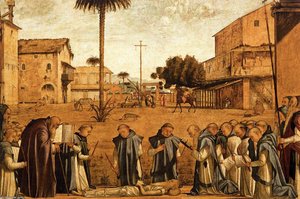
Scuola di San Giorgio degli Schiavoni, VeniceScuola di San Giorgio degli Schiavoni Venice 17 St George and the Dragon (detail), The Baptism of the Selenites (detail), Funeral of St Jerome
Pinacoteca di Brera, MediolanPinacoteca di Brera Mediolan 6 The Marriage of the Virgin, Disputation of St Stephen (detail), Disputation of St Stephen (detail)
Pałac Dożów, WenecjaPałac Dożów Wenecja 4 The Lion of St Mark (detail), The Lion of St Mark (detail), The Lion of St Mark (detail)
Gemäldegalerie, BerlinGemäldegalerie Berlin 4 Madonna and Child with two Saints, Resurrection of Christ, Coronation of Mary
Philbrook Museum of Art, TulsaPhilbrook Museum of Art Tulsa 3 Świętego Piotra Apostoła, A Bishop Saint Blessing, Saint John the Baptist
Metropolitan Museum of Art, Nowy JorkMetropolitan Museum of Art Nowy Jork 3 Chrystus z Symbolami Paschalnymi Otoczony Aniołami, The Meditation on the Passion
Berlińskie Muzea Państwowe, BerlinBerlińskie Muzea Państwowe Berlin 3 The Dead Christ, St Stephen is Consecrated Deacon (detail)

Vittore Carpaccio dekada po dekadzie: oryginały definiujące każdy okres

Dzieła według dekad

Wybierz dekadę, aby zobaczyć dzieło, które ją definiuje.

Pytania kolekcjonerów o obrazy Vittore Carpaccio

Z jakiego dzieła najbardziej znany jest Vittore Carpaccio?Odkryj odpowiedź

Chrystus z Symbolami Paschalnymi Otoczony Aniołami (1510), Metropolitan Museum of Art, Nowy Jork. Następne są The Ten Thousand Martyrs on the Mount Ararat (1515) oraz Meeting of the Betrothed Couple (detail) (1495).

W jakim wieku był Vittore Carpaccio, gdy powstało Chrystus z Symbolami Paschalnymi Otoczony Aniołami?Odkryj odpowiedź

45 lat: Chrystus z Symbolami Paschalnymi Otoczony Aniołami pochodzi z 1510, a Vittore Carpaccio urodził(a) się w 1465.

Jakie są dziesięć najsłynniejszych obrazów, których autorem jest Vittore Carpaccio?Odkryj odpowiedź

Chrystus z Symbolami Paschalnymi Otoczony Aniołami, The Ten Thousand Martyrs on the Mount Ararat, Meeting of the Betrothed Couple (detail), The Lion of St Mark (detail), The Lion of St Mark (detail), Lamentation of Christ, The Dead Christ, St George and the Dragon (detail), St George and the Dragon i Meeting of the Betrothed Couple (detail). Powyższy ranking zawiera rok powstania oraz muzeum dla każdego z nich.

Ile obrazów pozostawił po sobie Vittore Carpaccio?Odkryj odpowiedź

Nasz katalog zawiera 201 dzieł artysty Vittore Carpaccio, datowanych od 1485 do 1520.

W których muzeach znajdują się arcydzieła Vittore Carpaccio?Odkryj odpowiedź

W większości znajdują się w Gallerie dell'Accademia di Venezia (Wenecja), Scuola di San Giorgio degli Schiavoni (Venice) i Pinacoteca di Brera (Mediolan). Powyższa tabela muzeów zawiera ich pełną listę.

W których latach Vittore Carpaccio namalował swoje najsłynniejsze dzieła?Odkryj odpowiedź

W 1490s: 28 z 100 dzieł na tej stronie powstało w tym czasie, w tym Meeting of the Betrothed Couple (detail).

Jakie są pierwsze i ostatnie słynne oryginały Vittore Carpaccio?Odkryj odpowiedź

Na tej stronie najwcześniejszy to Portrait of a lady (1485), a najpóźniejszy The Dead Christ (1520).

Jakie tematy Vittore Carpaccio wybierał najczęściej?Odkryj odpowiedź

Renaissance (23), Religious (16) i Narrative painting (13), w ramach 100 dzieł na tej stronie.

Której techniki Vittore Carpaccio używał najczęściej?Odkryj odpowiedź

Oil, dla 18 z 100 dzieł na tej stronie.

Do jakiego nurtu artystycznego należy Vittore Carpaccio?Odkryj odpowiedź

Renesans wenecki, sądząc po oryginałach na tej stronie.

Które dzieła Vittore Carpaccio znajdują się w Gallerie dell'Accademia di Venezia?Odkryj odpowiedź

The Ten Thousand Martyrs on the Mount Ararat, Meeting of the Betrothed Couple (detail) i Meeting of the Betrothed Couple (detail): Gallerie dell'Accademia di Venezia, Wenecja posiada 24 dzieł widocznych na tej stronie.

Vittore Carpaccio: życie i twórczość

Wczesne lata i kształcenie artystyczne

Urodzony w Wenecji około 1465 roku, Vittore Carpaccio dorastał w mieście definiowanym przez handel morski i jego unikalne, migotliwe światło. Jako młody adept szkoły weneckiej, szukał przewodnictwa u Gentile Belliniego. Ten okres terminowania był czasem formacyjnym, który ukształtował jego warsztat techniczny i zapewnił niezbędne fundamenty pod przyszłe sukcesy malarskie.

Szkolenie, jakie Carpaccio otrzymał pod okiem Belliniego, pozwoliło mu wypracować pewną rękę oraz niezwykłą uważność na specyficzne detale weneckiego życia. Nauczył się on poruszania w gąszczu złożonych kompozycji i niuansów koloru, które były kluczowe dla tej epoki. Ta wczesna edukacja pomogła mu wywalczyć swoje miejsce w niezwykle konkurencyjnym krajobrazie artystycznym Republiki, przygotowując grunt pod karierę poświęconą dokumentowaniu zarówno świętych narracji, jak i codziennej rzeczywistości jego rodzinnego miasta.

Styl artystyczny i inspiracje

Podejście Vittore Carpaccio do malarstwa pozostało uderzająco konserwatywne, nawet gdy świat wokół niego ulegał nieustannym przemianom. Podczas gdy wielu jego współczesnych z entuzjazmem przyjmowało potężne nurty humanistyczne, które redefiniowały włoski renesans, on często spoglądał w zupełnie innym kierunku. Jego dzieła niosą w sobie pewien rodzaj fantastyki, sięgając częściej ku duchowi średniowiecznego romansu niż ku pastoralnym ideałom, które faworyzowało kolejne pokolenie malarzy. Ta preferencja nadała jego scenom unikalną atmosferę, odrębną od ewoluujących gustów weneckiego kontynentu.

Język wizualny artysty został ukształtowany przez specyficzną mieszankę wpływów. Czerpał on obficie ze stylu Antonello da Messiny oraz skrupulatnych tradycji wczesnego malarstwa niderlandzkiego. To połączenie pozwoliło mu wypracować biegłość w operowaniu perspektywą oraz precyzję w oddawaniu architektonicznego detalu, co wyróżniało go na tle innych artystów jego epoki. Potrafił on umieszczać swoje tematy w niezwykle konkretnych, ustrukturyzowanych środowiskach, wykorzystując światłocień do budowania głębi, która wydawała się jednocześnie osadzona w rzeczywistości i nieziemska.

Ta dbałość o szczegół jest szczególnie widoczna w jego wielkoformatowych dziełach narracyjnych, w których potrafił wpleść złożone opowieści w samą tkankę otoczenia. Umiejętność oddawania tekstur tkanin oraz precyzyjnej geometrii budowli pomagała tworzyć poczucie realizmu, które wspierało jego bardziej wyobraźnią nasycone opowieści. Skupiając się na tych drobnych elementach, budował świat, który sprawiał wrażenie autentycznego i tętniącego życiem, nawet gdy tematyka skłaniała się ku sferze legendarnej lub świętej.

Wybitne dzieła i cykle narracyjne

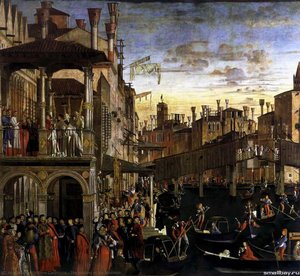
Najpełniejszą ekspresję Carpaccio odnalazł w wielkoformatowej narracji malarskiej. Jego najbardziej monumentalnym przedsięwzięciem stał się cykl dziewięciu płócien znany jako Legenda Świętej Urszuli, nad którym prace rozpoczął w 1490 roku. Dzieła te pozwoliły mu na kreowanie złożonych, tętniących życiem światów, wciągając widza w sam środek intymnych i szczegółowych momentów z życia świętej. Artysta posiadał również niezwykły dar chwytania ducha swojego rodzinnego miasta. W obrazie Cud relikwii Krzyża na moście Rialto przedstawił Wenecję u szczytu jej potęgi, wykorzystując miejski krajobraz, aby osadzić religijne narracje w namacalnej, rozpoznawalnej rzeczywistości.

Wszechstronność jego talentu objawia się w różnorodności otrzymywanych zleceń. Wśród nich odnajdziemy Portret doży Leonarda Loredana – dzieło będące świadectwem jego wysokiej pozycji w kręgu weneckiego renesansu. Carpaccio namalował również Świętego Jerzego ze smokiem, temperę na desce, która obecnie znajduje się w Scuola di San Giorgio degli Schiavoni w Wenecji. Kompozycja tego dzieła oraz dynamiczna interakcja postaci budują w nim niezwykłe poczucie dramatyzmu.

  • Legenda Świętej Urszuli (rozpoczęta w 1490 r.)
  • Cud relikwii Krzyża na moście Rialto
  • Święty Jerzy ze smokiem
  • Portret doży Leonarda Loredana

Kariera i najważniejsze zamówienia

Najbardziej płodne lata w twórczości Vittore Carpaccio przypadły na okres między 1490 a 1519 rokiem. W tym czasie artysta stał się nieodłącznym elementem życia religijnego Wenecji, otrzymując liczne zamówienia kościelne, które pozwoliły mu na zgłębianie złożonych, wielowątkowych narracji. Jego dzieła często przenosiły widza wprost na ulice miasta, chwytając ducha Repubetyki w monumentalnych, miejskich scenach. Doskonałym przykładem tej umiejętności jest Cud relikwii Krzyża na Ponte di Rialto – dzieło, które ukazuje Wenecję w samym szczycie jej obywatelskiej dumy.

Wraz z rozwojem kariery charakter jego mecenatu zaczął ulegać zmianom. O ile wczesne lata twórczości definiowały wielkie cykle religijne i dzieła o charakterze publicznym, o tyle jego produkcja po 1510 roku skierowała się ku sferze prywatnej. Artysta zaczął tworzyć przede wszystkim dla indywidualnych weneckich patronów, powołując do życia dzieła odzwierciedlające osobiste gusta rosnącej w siłę klasy kupieckiej. Ta ewolucja oznaczała przejście od wielkiej, publicznej opowieści z czasów młodości ku bardziej intymnym relacjom z kolekcjonerami.

Jego dorobek religijny pozostawał niezwykle stabilny przez pierwszą dekadę XVI wieku. Do najbardziej znaczących zamówień z tego okresu należą:

  • Święty Tomasz Akwinata na tronie (1507)
  • Prezentacja Chrystusa w Świątyni (1510)

Dziedzictwo i miejsce w historii

Vittore Carpaccio zajmuje wyjątkowe miejsce wśród wczesnych mistrzów renesansu weneckiego, okresu niosącego ze sobą głębokie przemiany w sztuce włoskiej. Podczas gdy jego współcześni nieustannie zmierzali ku nowym, humanistycznym trendom, Carpaccio często pozostawał zakotwiczony w bardziej tradycyjnym sposobie postrzegania świata. Do 1510 roku ci, którzy żyli i tworzyli u jego boku, zaczęli postrzegać jego styl jako zbyt konserwatywny. Artysta nie podążał za zmiennymi prądami swojej epoki, wybierając zamiast tego metodę, która z nostalgią spoglądała wstecz, ku szczegółowym, narracyjnym tradycjom przeszłości.

Ta niezłomność sprawiła, że jego nazwisko bywało czasem spychane na dalszy plan, ginąc w cieniu takich postaci jak Giovanni Bellini czy Giorgione. Podczas gdy inni ewoluowali w stronę zupełnie nowego języka wizualnego, Carpaccio nieustannie budował swoje światy poprzez precyzyjny detal architektoniczny oraz fascynację tym, co egzotyczne. Jego twórczość pozostaje oknem na konkretny moment w historii Wenecji, chwytając dumę obywatelską miasta oraz jego silne związki z Lewantem poprzez pryzmat, który dla jego rówieśników stawał się coraz bardziej staroświecki. Zmarł w 1526 roku, pozostawiając po sobie dorobek będący świadectwem niezwykłego, choć momentami wręcz upartego, oddania swojemu rzemiosłu.

Wśród jego najważniejszych dokonań odnaleźć możemy:

  • Legenda o Świętej Urszuli
  • Cud nad Relikwią Krzyża na Ponte di Rialto
  • Święty Jerzy i Smok