Portret Salvator Rosa

Obrazy: 100 najsłynniejszych dzieł artysty Salvator Rosa – spojrzenie galerii

Aktualizacja: Październik 2026 · ranking według naszego wskaźnika popularności (liczba wyszukiwań, wizyt i zamówień dla każdego dzieła) · 274 dzieł Salvator Rosa w naszym katalogu

W skrócie

Według opinii kuratorów galerii, najsłynniejszym obrazem Salvator Rosa jest The Baptism of the Eunuch (1660), którego oryginał znajduje się w Chrysler Museum of Art w Norfolk. Pythagoras Wychodzący z Podziemnego Świata (1662) i Landscape with St Jerome (1670) dopełniają trio, które zna każde oko. Z 274 dzieł Salvator Rosa w naszym katalogu, galeria prezentuje poniżej 100 najsłynniejszych prac – każda z nich jest oryginałem z podaniem roku powstania, muzeum oraz cech wyróżniających ją na tle innych.

1615 – 1673, Neapol Baroque style Najwięcej dzieł: Bawarskie Państwowe Zbiory Malarstwa

10 najlepszych obrazów artysty Salvator Rosa w galerii

1
The Baptism of the Eunuch (1660) autorstwa Salvator Rosa

The Baptism of the Eunuch

1660 · Oil On Canvas · Chrysler Museum of Art, Norfolk

In "The Baptism of the Eunuch" by Salvator Rosa, a profound moment of spiritual transformation unfolds within a rugged landscape. Created in 1660, the scene captures the precise instant of a man's rebirth through water. A figure, dressed in a white robe, receives the sacrament from another person. This act of baptism occurs amidst a natural setting where rocks rise from the earth, grounding the sacred event in a physical,…

2
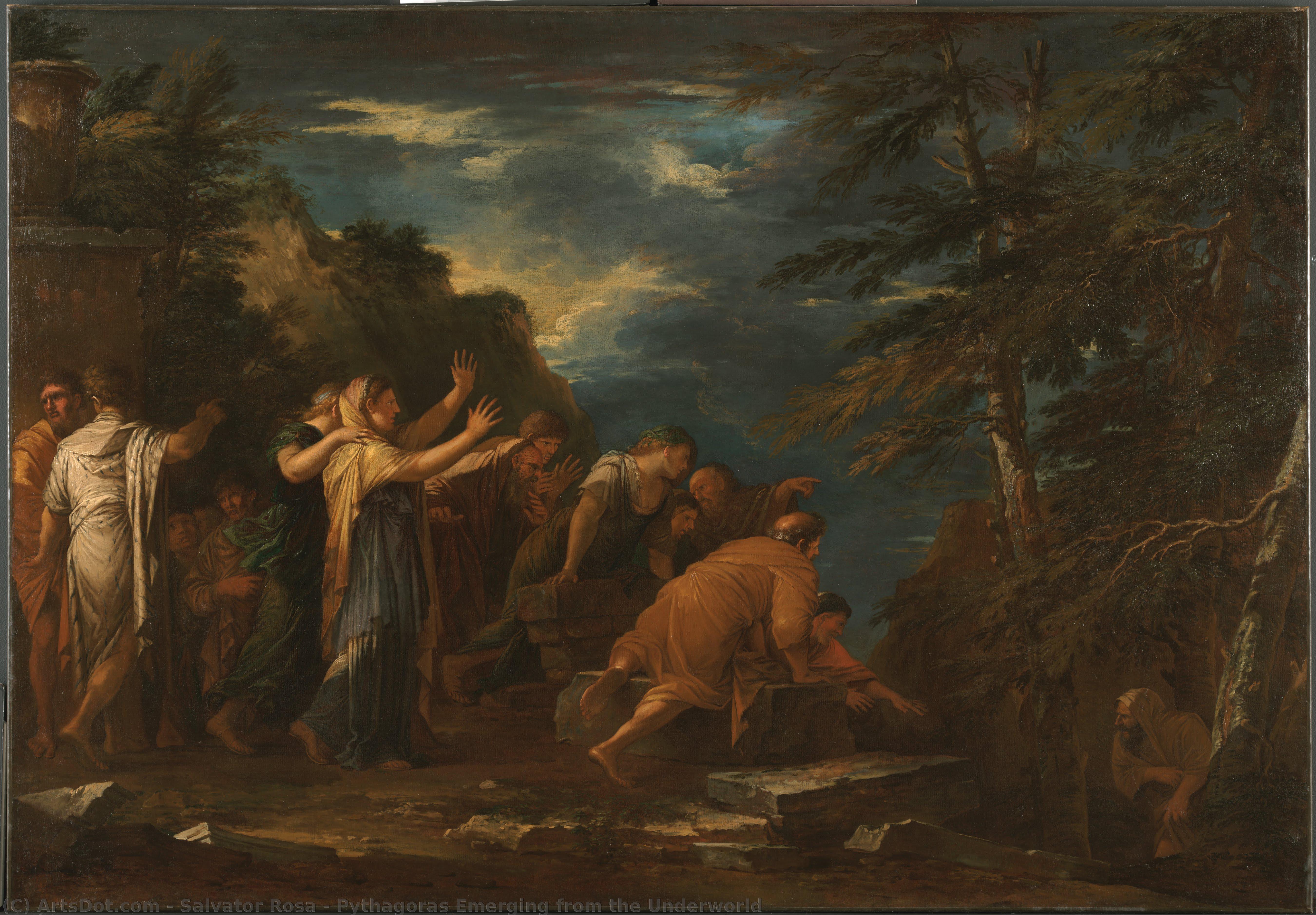
Pythagoras Wychodzący z Podziemnego Świata (1662) autorstwa Salvator Rosa

Pythagoras Wychodzący z Podziemnego Świata

1662 · Obraz olejny na płótnie · Kimbell Art Museum, Fort Worth

Pythagoras Emerging from the Underworld – A Baroque Meditation on Mortality Salvator Rosa’s “Pythagoras Emerging from the Underworld” is more than just a depiction of myth; it's a profound exploration of philosophical ideas interwoven with masterful baroque artistry. Painted in 1662, this monumental canvas embodies the spirit of its time—a fascination with classical antiquity colliding with burgeoning anxieties about death and rebirth—themes central to Pythagorean thought itself. Rosa’s unwavering commitment…

3
Landscape with St Jerome (1670) autorstwa Salvator Rosa

Landscape with St Jerome

1670 · Oil On Canvas · Musée Condé, Chantilly

A rugged, mountainous gorge dominates the vertical composition, creating a sense of isolation through deep, narrow canyons. The landscape is defined by jagged, irregular rock faces and the skeletal, tangled branches of overhanging trees. Earthy tones of ochre, deep brown, and muted green establish a somber atmosphere, while a luminous patch of sky at the top center provides a sharp contrast to the shadows below. Within this untamed environment, a…

4
Head of a Man with a Turban (1652) autorstwa Salvator Rosa

Head of a Man with a Turban

1652 · Oil On Canvas · Birmingham Museum and Art Gallery, Birmingham

A single light source strikes the left side of a weathered face, carving it out of a heavy, ink-black void. The man’s gaze is steady, meeting the viewer with a quiet, stoic intensity. He wears a voluminous turban, its cream and ochre folds catching the light, revealing the coarse texture of the cloth. Deep shadows swallow the right side of his head, merging his beard and the nape of his…

5
Tobias and the Angel (1662) autorstwa Salvator Rosa

Tobias and the Angel

1662 · Oil On Canvas · Musée Condé, Chantilly

The canvas holds a vertical tension, a sudden movement between the heavens and the earth. A celestial figure descends, cutting through a darkness that feels heavy and thick. This is the moment of intervention, where the divine enters the realm of the mortal. Light does not merely illuminate; it strikes. It catches the curve of a reaching hand and the pale skin of a kneeling figure, leaving the rest of…

6
Return of Astrea (1642) autorstwa Salvator Rosa

Return of Astrea

1642 · Oil On Canvas · Kunsthistorisches Museum, Wiedeń

A heavy, weathered stone structure anchors the left side of the canvas, its crumbling edges catching the light. Beside it, a gnarled tree leans into the frame, its dark branches reaching like fingers toward a vast, cloud-filled sky. In the lower foreground, rustic figures move through the shadows of the ruins. A man in white and blue stands amidst the earthy tones of ochre and sienna. Above this earthly realm,…

7
Daniel in the Lion's Den (1662) autorstwa Salvator Rosa

Daniel in the Lion's Den

1662 · Oil On Canvas · Musée Condé, Chantilly

Salvator Rosa painted Daniel in the Lion's Den as a profound exercise in religious art. This oil on canvas work emerged after 1662, a period when the artist sought to expand his reputation beyond the rugged landscapes for which he was known. The composition belongs to a larger, cohesive cycle of five thematically linked Biblical stories. These paintings were executed for Carlo de' Rossi, intended to decorate a private chapel…

8
Crucifixion of Polyclitus (1650) autorstwa Salvator Rosa

Crucifixion of Polyclitus

1650 · Oil · Muzeum Narodowe w Warszawie, Warszawa

In this dramatic Baroque oil painting, we find ourselves witnessing a moment of profound martyrdom. The composition is built upon a restless diagonal, pulling the eye from a crowded, agitated group of figures in the lower left toward the central figure of Polyclitus, suspended upon the cross in the upper right. The landscape is not a place of peace; it is a rugged, mountainous terrain of craggy rocks and turbulent…

9
Jesus carrying the cross (1667) autorstwa Salvator Rosa

Jesus carrying the cross

1667 · Oil · Musée Condé, Chantilly

A heavy, wooden cross dominates the composition, its diagonal thrust cutting through a turbulent scene of physical and spiritual struggle. Christ is caught in a moment of intense exertion, his body strained under the burden of the timber. Around him, a crowd of onlookers and tormentors creates a sense of claustrophobic chaos. The arrangement of figures is agitated, driving the eye across the canvas in a series of sharp, conflicting…

10
Witches at their Incantations (1646) autorstwa Salvator Rosa

Witches at their Incantations

1646 · Oil On Canvas · National Gallery, Londyn

The shadows deepen as we encounter Witches at their Incantations, a work that pulls the viewer into a dark, nocturnal ritual. Painted by Salvator Rosa about 1646, the scene captures a gathering of figures caught in the midst of a witches' sabbath. This macabre assembly unfolds beneath a heavy, cloud-covered sky, where the line between the human and the monstrous begins to blur. It is a moment of profound unrest,…

Obrazy artysty Salvator Rosa, uszeregowane od 11 do 100 miejsca

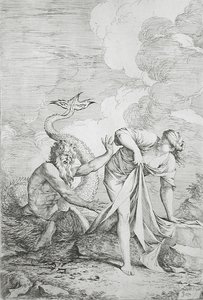
11Group of Warriors (1644) autorstwa Salvator RosaGroup of Warriors1644 · Bawarskie Państwowe Zbiory Malarstwa 12Self-Portrait as Philosopher of Silence (1641) autorstwa Salvator RosaSelf-Portrait as Philosopher of Silence1641 · National Gallery 13Landscape with Bather (1660) autorstwa Salvator RosaLandscape with Bather1660 · Yale University Art Gallery 14Saint John the Baptist Baptizing Christ in the Jordan (1655) autorstwa Salvator RosaSaint John the Baptist Baptizing Christ in the Jordan1655 · Kelvingrove Art Gallery and Museum 15Jeremie pulled from the cistern (1622) autorstwa Salvator RosaJeremie pulled from the cistern1622 · Musée Condé 16Armed Robbers in Rocky Countryside (1644) autorstwa Salvator RosaArmed Robbers in Rocky Countryside1644 · Bawarskie Państwowe Zbiory Malarstwa 17Jonah Preaching to the People of Niniveh (1645) autorstwa Salvator RosaJonah Preaching to the People of Niniveh1645 · Statens Museum for Kunst 18Prometheus on the Rock (1644) autorstwa Salvator RosaPrometheus on the Rock1644 · Bawarskie Państwowe Zbiory Malarstwa 19Mountain Landscape (1644) autorstwa Salvator RosaMountain Landscape1644 · Bawarskie Państwowe Zbiory Malarstwa 20Landscape with Saint Anthony Abbot and Saint Paul the Hermit (1662) autorstwa Salvator RosaLandscape with Saint Anthony Abbot and Saint Paul the Hermit1662 · Scottish National Gallery 21Study for 'Il Genio di Rosa' autorstwa Salvator RosaStudy for 'Il Genio di Rosa' 22Astraea Leaves The Earth (1665) autorstwa Salvator RosaAstraea Leaves The Earth1665 · Kunsthistorisches Museum 23An Evangelist (1635) autorstwa Salvator RosaAn Evangelist1635 · Muzeum Izraela 24The War People of Gideon (1644) autorstwa Salvator RosaThe War People of Gideon1644 · Bawarskie Państwowe Zbiory Malarstwa 25Allegory of Study (1647) autorstwa Salvator RosaAllegory of Study1647 · Muzeum Sztuki Johna i Mable Ringlingów 26Scenes of Witchcraft: Night (1640) autorstwa Salvator RosaScenes of Witchcraft: Night1640 · Cleveland Museum of Art 27Scenes of Witchcraft: Evening (1640) autorstwa Salvator RosaScenes of Witchcraft: Evening1640 · Cleveland Museum of Art 28Scenes of Witchcraft: Day (1640) autorstwa Salvator RosaScenes of Witchcraft: Day1640 · Cleveland Museum of Art 29Scenes of Witchcraft: Morning (1640) autorstwa Salvator RosaScenes of Witchcraft: Morning1640 · Cleveland Museum of Art 30A Philosopher (1643) autorstwa Salvator RosaA Philosopher1643 · Kedleston Hall 31The Founding of Thebes (1645) autorstwa Salvator RosaThe Founding of Thebes1645 · Statens Museum for Kunst 32The Martyrdom of Saint Januarius and his Fellows (1650) autorstwa Salvator RosaThe Martyrdom of Saint Januarius and his Fellows1650 · Städel Museum 33Head of a Philosopher, called 'Democritus' (1659) autorstwa Salvator RosaHead of a Philosopher, called 'Democritus'1659 34Bandits robbing Travellers (1656) autorstwa Salvator RosaBandits robbing Travellers1656 · Knole House 35Anchorites Tempted by Demons (1660) autorstwa Salvator RosaAnchorites Tempted by Demons1660 · Galleria Nazionale d'Arte Antica 36Three Marys at the Tomb (1665) autorstwa Salvator RosaThree Marys at the Tomb1665 · Muzeum Sztuki Johna i Mable Ringlingów 37Christ expelling the Money Changers from the Temple (1664) autorstwa Salvator RosaChrist expelling the Money Changers from the Temple1664 · Attingham Park 38The Angel Leaving the House of Tobias (1662) autorstwa Salvator RosaThe Angel Leaving the House of Tobias1662 39Cavalieri in Marcia (1673) autorstwa Salvator RosaCavalieri in Marcia1673 40Self-Portrait (1650) autorstwa Salvator RosaSelf-Portrait1650 · Detroit Institute of Arts 41Saint Simon the Apostle (1673) autorstwa Salvator RosaSaint Simon the Apostle1673 · Georgia Museum of Art 42Landscape with Armed Men (1640) autorstwa Salvator RosaLandscape with Armed Men1640 · Los Angeles County Museum of Art 43St. Francis in Ecstasy autorstwa Salvator RosaSt. Francis in EcstasyThe Phillips Collection 44Fall of the Giants autorstwa Salvator RosaFall of the Giants 45Saint Humphrey (Onuphrius) (1660) autorstwa Salvator RosaSaint Humphrey (Onuphrius)1660 · Minneapolis Institute of Art 46Landscape with an "Arco Naturale" (1651) autorstwa Salvator RosaLandscape with an "Arco Naturale"1651 · Statens Museum for Kunst 47Odysseus and Nausicaa (1655) autorstwa Salvator RosaOdysseus and Nausicaa1655 · Los Angeles County Museum of Art 48Sleeping Warrior (1644) autorstwa Salvator RosaSleeping Warrior1644 · Bawarskie Państwowe Zbiory Malarstwa 49Ceres and Phytalus (1662) autorstwa Salvator RosaCeres and Phytalus1662 · Los Angeles County Museum of Art 50Witches at their Incantations autorstwa Salvator RosaWitches at their Incantations 51A Cavalry Battle (1652) autorstwa Salvator RosaA Cavalry Battle1652 · Auckland Art Gallery Toi o Tāmaki 52Desolate Landscape with Two Figures (1662) autorstwa Salvator RosaDesolate Landscape with Two Figures1662 · Scottish National Gallery 53Landscape with Mercury and the Dishonest Woodman (1652) autorstwa Salvator RosaLandscape with Mercury and the Dishonest Woodman1652 · National Gallery 54Landscape with Warriors (1644) autorstwa Salvator RosaLandscape with Warriors1644 · Bawarskie Państwowe Zbiory Malarstwa 55Landscape with Armed Men (1640) autorstwa Salvator RosaLandscape with Armed Men1640 · Los Angeles County Museum of Art 56Glaucus and Scylla (1661) autorstwa Salvator RosaGlaucus and Scylla1661 · Los Angeles County Museum of Art 57The Raising of Lazarus autorstwa Salvator RosaThe Raising of LazarusMusée Condé 58Still Life (1673) autorstwa Salvator RosaStill Life1673 · Bawarskie Państwowe Zbiory Malarstwa 59Youth with An Effigy of Diana of Ephesus (1657) autorstwa Salvator RosaYouth with An Effigy of Diana of Ephesus1657 · Royal Collection 60River Landscape with Apollo and the Cumean Sibyl (1655) autorstwa Salvator RosaRiver Landscape with Apollo and the Cumean Sibyl1655 · Wallace Collection 61Rocky Landscape with a Huntsman and Warriors (1670) autorstwa Salvator RosaRocky Landscape with a Huntsman and Warriors1670 · Luwr 62The Finding of Moses (1650) autorstwa Salvator RosaThe Finding of Moses1650 · Kimbell Art Museum 63Bandits on a Rocky Coast (1656) autorstwa Salvator RosaBandits on a Rocky Coast1656 · Metropolitan Museum of Art 64Standing Warror with Shield (1657) autorstwa Salvator RosaStanding Warror with Shield1657 · Los Angeles County Museum of Art 65Saint John the Baptist Revealing Christ to the Disciples (1655) autorstwa Salvator RosaSaint John the Baptist Revealing Christ to the Disciples1655 · Kelvingrove Art Gallery and Museum 66Pythagoras and the Fisherman (1662) autorstwa Salvator RosaPythagoras and the Fisherman1662 · Berlińskie Muzea Państwowe 67Rocky Landscape (1644) autorstwa Salvator RosaRocky Landscape1644 · Bawarskie Państwowe Zbiory Malarstwa 68A Pass with Travellers attacked by Bandits (1627) autorstwa Salvator RosaA Pass with Travellers attacked by Bandits1627 · Knole House 69Bay in a Calm Sea (1644) autorstwa Salvator RosaBay in a Calm Sea1644 · Bawarskie Państwowe Zbiory Malarstwa 70Sea Storm (1644) autorstwa Salvator RosaSea Storm1644 · Bawarskie Państwowe Zbiory Malarstwa 71Sea Bay with Rocky Coast (1644) autorstwa Salvator RosaSea Bay with Rocky Coast1644 · Bawarskie Państwowe Zbiory Malarstwa 72Landscape with Riders (1644) autorstwa Salvator RosaLandscape with Riders1644 · Bawarskie Państwowe Zbiory Malarstwa 73Sea Storm (1644) autorstwa Salvator RosaSea Storm1644 · Bawarskie Państwowe Zbiory Malarstwa 74Mountain Landscape (1644) autorstwa Salvator RosaMountain Landscape1644 · Bawarskie Państwowe Zbiory Malarstwa 75Rocky Coast at a Bay (1644) autorstwa Salvator RosaRocky Coast at a Bay1644 · Bawarskie Państwowe Zbiory Malarstwa 76Bay by Turbulent Sea (1644) autorstwa Salvator RosaBay by Turbulent Sea1644 · Bawarskie Państwowe Zbiory Malarstwa 77Seastorm (1644) autorstwa Salvator RosaSeastorm1644 · Bawarskie Państwowe Zbiory Malarstwa 78Wild rocky landscape (1644) autorstwa Salvator RosaWild rocky landscape1644 · Bawarskie Państwowe Zbiory Malarstwa 79Sea bay with castle ruins (1644) autorstwa Salvator RosaSea bay with castle ruins1644 · Bawarskie Państwowe Zbiory Malarstwa 80Coastal Landscape with Castle (1644) autorstwa Salvator RosaCoastal Landscape with Castle1644 · Bawarskie Państwowe Zbiory Malarstwa 81Lucrezia as Poetry (1641) autorstwa Salvator RosaLucrezia as Poetry1641 · Wadsworth Atheneum Museum of Art 82Evening Landscape (1640) autorstwa Salvator RosaEvening Landscape1640 83Harbour with Ruins (1640) autorstwa Salvator RosaHarbour with Ruins1640 · Szépművészeti Múzeum 84St John Preaching (1660) autorstwa Salvator RosaSt John Preaching1660 · York Art Gallery 85Rocky Landscape with Figures (1660) autorstwa Salvator RosaRocky Landscape with Figures1660 86The Finding of Moses (1660) autorstwa Salvator RosaThe Finding of Moses1660 · Detroit Institute of Arts 87The Return of the Prodigal Son (1660) autorstwa Salvator RosaThe Return of the Prodigal Son1660 · Narodowa Galeria Kanady 88A Seaport (1651) autorstwa Salvator RosaA Seaport1651 · Statens Museum for Kunst 89Southern Harbour (1651) autorstwa Salvator RosaSouthern Harbour1651 · Statens Museum for Kunst 90Rocky landscape with figures (1651) autorstwa Salvator RosaRocky landscape with figures1651 91Landscape with figures (1651) autorstwa Salvator RosaLandscape with figures1651 92Landscape with Tower and Boat (1660) autorstwa Salvator RosaLandscape with Tower and Boat1660 · Musée Condé 93Christ resurrected autorstwa Salvator RosaChrist resurrectedMusée Condé 94the Witches' Sabbath (1654) autorstwa Salvator Rosathe Witches' Sabbath1654 · Museum of Fine Arts 95Glaucus and Scylla (1661) autorstwa Salvator RosaGlaucus and Scylla1661 · Art Gallery of South Australia 96Diogenes Throwing Away His Drinking Cup. (1651) autorstwa Salvator RosaDiogenes Throwing Away His Drinking Cup.1651 · Statens Museum for Kunst 97Wooded Landscape (1650) autorstwa Salvator RosaWooded Landscape1650 98Portrait of the Artist's Wife Lucrezia (1657) autorstwa Salvator RosaPortrait of the Artist's Wife Lucrezia1657 · Galleria Nazionale d'Arte Antica 99Diogenes Casting away his Cup (1650) autorstwa Salvator RosaDiogenes Casting away his Cup1650 · Museum of Fine Arts 100Landscape with a Wide River, Waterfall and Three Figures (1665) autorstwa Salvator RosaLandscape with a Wide River, Waterfall and Three Figures1665 · Muzeum Sztuki Johna i Mable Ringlingów

Słynne obrazy Salvator Rosa epoka po epoce

Tematy, które przyciągnęły wzrok Salvator Rosa

Cztery motywy najczęściej powracające w tych oryginałach, z których każdy doczekał się swojego najdoskonalszego przykładu.

Muzea przechowujące oryginały Salvator Rosa

8 muzeów, w których znajduje się najwięcej obrazów z tej strony.

Muzea Miasto Dzieła artysty Salvator Rosa Obrazy z tej listy
Bawarskie Państwowe Zbiory Malarstwa, MonachiumBawarskie Państwowe Zbiory Malarstwa Monachium 21 Group of Warriors, Armed Robbers in Rocky Countryside, Prometheus on the Rock
Musée Condé, ChantillyMusée Condé Chantilly 9 Landscape with St Jerome, Tobias and the Angel, Daniel in the Lion's Den
Statens Museum for Kunst, KopenhagaStatens Museum for Kunst Kopenhaga 10 Jonah Preaching to the People of Niniveh, The Founding of Thebes, Landscape with an "Arco Naturale"
Los Angeles County Museum of Art, Los AngelesLos Angeles County Museum of Art Los Angeles 7 Landscape with Armed Men, Odysseus and Nausicaa, Ceres and Phytalus
Cleveland Museum of Art, ClevelandCleveland Museum of Art Cleveland 5 Scenes of Witchcraft: Night, Scenes of Witchcraft: Evening, Scenes of Witchcraft: Day
National Gallery, LondynNational Gallery Londyn 7 Witches at their Incantations, Self-Portrait as Philosopher of Silence, Landscape with Mercury and the Dishonest Woodman
Muzeum Sztuki Johna i Mable Ringlingów, SarasotaMuzeum Sztuki Johna i Mable Ringlingów Sarasota 4 Allegory of Study, Three Marys at the Tomb, Landscape with a Wide River, Waterfall and Three Figures
Kunsthistorisches Museum, WiedeńKunsthistorisches Museum Wiedeń 4 Return of Astrea, Astraea Leaves The Earth

Salvator Rosa, jedno kultowe dzieło na dekadę

Dzieła według dekad

Wybierz dekadę, aby zobaczyć dzieło, które ją definiuje.

Obrazy artysty Salvator Rosa: odpowiedzi galerii

Który obraz Salvator Rosa jest najsłynniejszy ze wszystkich?Odkryj odpowiedź

The Baptism of the Eunuch (1660), Chrysler Museum of Art, Norfolk. Następne są Pythagoras Wychodzący z Podziemnego Świata (1662) oraz Landscape with St Jerome (1670).

Ile lat miał Salvator Rosa, gdy ukończył The Baptism of the Eunuch?Odkryj odpowiedź

45 lat: The Baptism of the Eunuch pochodzi z 1660, a Salvator Rosa urodził(a) się w 1615.

Które to 10 najlepszych obrazów Salvator Rosa?Odkryj odpowiedź

The Baptism of the Eunuch, Pythagoras Wychodzący z Podziemnego Świata, Landscape with St Jerome, Head of a Man with a Turban, Tobias and the Angel, Return of Astrea, Daniel in the Lion's Den, Crucifixion of Polyclitus, Jesus carrying the cross i Witches at their Incantations. Powyższy ranking zawiera rok powstania oraz muzeum dla każdego z nich.

Ile dzieł stworzył/a Salvator Rosa?Odkryj odpowiedź

Nasz katalog zawiera 274 dzieł artysty Salvator Rosa, datowanych od 1627 do 1673.

Gdzie można znaleźć najsłynniejsze oryginały autorstwa Salvator Rosa?Odkryj odpowiedź

W większości znajdują się w Bawarskie Państwowe Zbiory Malarstwa (Monachium), Musée Condé (Chantilly) i Statens Museum for Kunst (Kopenhaga). Powyższa tabela muzeów zawiera ich pełną listę.

Kiedy Salvator Rosa stworzył swoje najsłynniejsze obrazy?Odkryj odpowiedź

W 1640s: 36 z 100 dzieł na tej stronie powstało w tym czasie, w tym Return of Astrea.

Które z najsłynniejszych dzieł Salvator Rosa należą do jego najwcześniejszych i najpóźniejszych prac?Odkryj odpowiedź

Na tej stronie najwcześniejszy to A Pass with Travellers attacked by Bandits (1627), a najpóźniejszy Cavalieri in Marcia (1673).

Do jakich tematów Salvator Rosa powracał najczęściej?Odkryj odpowiedź

Sky (25), People (24) i Man (17), w ramach 100 dzieł na tej stronie.

W jakiej technice najczęściej tworzył Salvator Rosa?Odkryj odpowiedź

Oil On Canvas, dla 50 z 100 dzieł na tej stronie.

Z jakim nurtem związany jest Salvator Rosa?Odkryj odpowiedź

Baroque style, sądząc po oryginałach na tej stronie.

Które oryginały artysty Salvator Rosa znajdują się w zbiorach Bawarskie Państwowe Zbiory Malarstwa?Odkryj odpowiedź

Group of Warriors, Armed Robbers in Rocky Countryside i Prometheus on the Rock: Bawarskie Państwowe Zbiory Malarstwa, Monachium posiada 21 dzieł widocznych na tej stronie.

Salvator Rosa: artysta

Wczesne lata, rodzina i szkolenie

Na obrzeżach Neapolu, a konkretnie w Arenella, na świat przychodzi Salvator Rosa. Data jego narodzin pozostaje przedmiotem historycznych sporów, oscylując między 20 czerwca a 21 lipca 1615 roku. Rodzi się w rodzinie o odmiennych korzeniach; jego matka, Giulia Greca Rosa, wywodzi się z jednej z greckich rodzin Sycylii, podczas gdy ojciec, Vito Antonio de Rosa, pracuje jako geodeta. Nad jego wczesnymi latami unosi się cień Wezuwiusza – potężna, geologiczna obecność, która ostatecznie ukształtuje jego język wizualny.

To konflikt definiuje jego drogę ku powołaniu. Ojciec, pragnąc dla syna życia bardziej stabilnego i tradycyjnego, zamierza, aby Salvator Rosa wstąpił do stanu duchownego lub poświęcił się karierze prawnika. Przeznaczeniem, jakie dla niego przygotowano, jest klasztor Ojców Somatów. Jednak zainteresowania chłopca ciągną go w zupełnie innym kierunku. Odwraca się od życia zakonnego, by potajemnie zgłębiać tajniki sztuki. Pod cichym okiem wuja ze strony matki, Paolo Greco, zaczyna opanowywać fundamenty rzemiosła. To konspiracyjne szkolenie trwa nadal, gdy artysta trafia pod opiekę Francesco Fracanzano, chłonąc techniczne podstawy, które pozwolą mu w przyszłości rzucić wyzwanie ustalonym normom estetycznym epoki baroku.

Kariera artystyczna w Neapolu, Rzymie i Florencji

Trajektoria kariery, którą obrał Salvator Rosa, nierozerwalnie splata się z politycznymi i społecznymi prądami XVII-wiecznych Włoch. W 1635 roku opuszcza on rodzinny Neapol, by udać się do Rzymu – niekwestionowanego centrum ówczesnego świata sztuki. Choć w 1637 roku powraca do Neapolu, jego obecność w mieście staje się coraz bardziej burzliwa. Do roku 1648 artysta zostaje zmuszony do całkowitej ucieczki z Neapolu po tym, jak zaangażował się w nieudane powstanie przeciwko hiszpańskim władcom. Ten okres buntu stanowi definitywne zerwanie z jego wczesnymi latami twórczości.

Kolejny etap jego wędrówki prowadzi go do Florencji. Ten drugi okres spędzony w tym mieście oferuje zupełnie inny rodzaj zaangażowania. Poza pracą w pracowni, Rosa zanurza się w intelektualnym i zmysłowym życiu florenckich kręgów. Spędza godziny na muzykowaniu, pisaniu poezji i studiowaniu filozofii stoickiej. To wieloaspektowe życie nadaje głębi jego późniejszej twórczości, gdy zainteresowania słowem pisanym i myślą filozoficzną zaczynają przenikać się z jego praktyką wizualną.

Technika i styl

Sposób prowadzenia pędzla przez Salvatora Rosę stanowi odważne zerwanie z wygładzonymi powierzchniami i idealizowanymi formami, które definiowały znaczną część epoki baroku. Zamiast tego artysta wybiera styl nieortodoksyjny i ekstrawagancki, skłaniając się ku temu, co surowe i nieokiełznane. Mistrzowsko operuje światłocieniem, wykorzystując dramatyczną grę światła i cienia do rzeźbienia formy oraz budowania nastroju. Ta technika robi coś więcej niż tylko definiuje kształty; ona tworzy na płótnie wszechobecne poczucie napięcia. Jego krajobrazy nie są sielankowymi przystaniami do kontemplacji, lecz charakteryzują się dzikością i surowością. Burzliwe niebo oraz poszarpany, skalisty teren dominują w jego kompozycjach, odzwierciedlając fascynację zmienną i nieprzewidywalną potęgą natury.

Tematyka jego dzieł często wykracza poza powszechne sceny religijne, tak typowe dla jego współczesnych. Często sięga po tematy ezoteryczne i nieoczywiste, czerpiąc inspirację z Biblii, mitologii oraz żywotów filozofów. Ta intelektualna rygorystyczność sprawia, że krajobraz przestaje być jedynie tłem, a staje się centralnym, aktywnym uczestnikiem narracji. W rękach Salvatora Rosy środowisko naturalne staje się sceną dla pytań natury moralnej i filozoficznej. Często przedstawia on ludzką postać jako byt marginalny, przytłoczony ogromem i często wrogą skalą świata naturalnego.

Kluczowe dzieła i arcydzieła

Płótno w rękach Salvatora Rosy często staje się przestrzenią intensywnej, psychologicznej analizy. W dziele z 1641 roku, Self-Portrait as Philosopher of Silence, znajdującym się w National Gallery w Londynie, artysta staje twarzą w twarz z widzem poprzez pryzmat ciszy i skupienia. Obraz ten funkcjonuje jako medytacja nad mądrością, wykorzystując mroczną, kontemplacyjną atmosferę do zdefiniowania własnej tożsamości. Podobnie, jego dzieło z 1645 roku, Self-Portrait as a Philosopher, również w National Gallery w Londynie, wzmacnia tę personę człowieka myślącego, odchodząc od czystej reprezentacji w stronę wyrazu intelektualnej rygorystyczności.

Natura w ujęciu Salvatora Rosy rzadko jest jedynie spokojnym tłem; jest ona raczej burzliwą, nieokiełznaną siłą. Około 1640 roku powstało Ruins in a Rocky Landscape – dzieło znajdujące się obecnie w Cleveland Museum of Art, które wykorzystuje klasyczne ruiny i opalizujące światło, aby zasugerować świat w nieustannym ruchu. Ta surowość przenika również jego kompozycje mitologiczne i alegoryczne. Obraz z 1662 roku, Pythagoras Emerging from the Underworld, znajdujący się w Kimbell Art Museum w Fort Worth, wykorzystuje dramatyczną kompozycję krajobrazu, aby zasypać przepaść między tym, co fizyczne, a tym, co metafizyczne. W podobny sposób, Democrito E Protagora z 1664 roku w Hermitage Museum w Sankt Petersburgu, posługuje się filozoficzną alegorią osadzoną w dramatycznym krajobrazie.

Nawet narracje religijne ulegają transformacji pod jego pędzlem. The Baptism of the Eunuch, stworzone w 1660 roku i znajdujące się w Chrysler Museum of Art w Norfolk, nasyca biblijną scenę głębokim dramatyzmem. Zdolność artysty do poruszania się między tak różnorodnymi tematami – od mitologii po sferę sacrum – stanowi o wyjątkowości jego twórczości.

  • Self-Portrait as Philosopher of Silence (1641)
  • Pythagoras Emerging from the Underworld (1662)
  • Democrito E Protagora (1664)
  • The Baptism of the Eunuch (1660)
  • Ruins in a Rocky Landscape (ok. 1640)

Dziedzictwo i wpływ

Wpływ, jaki wywarł Salvator Rosa, niesie się echem przez całą ewolucję sztuki baroku. Jego odejście od idealizowanych, uporządkowanych krajobrazów współczesnych mu mistrzów tworzy napięcie, które zmienia kierunek malarstwa XVII wieku. To artystyczne oddziaływanie przenika przez kolejne dekady, docierając aż do dzieł późniejszych twórców, takich jak Luca Giordano. Rosa nie ograniczał się jedynie do malowania scenerii; on konstruował wizualny język niepokoju i turbulencji, który przetrwał w kulturze długo po jego śmierci.

Jego romantyzowane krajobrazy oraz malarstwo historyczne wywierają silną obecność w sztuce od XVII wieku aż po początek XIX stulecia. Dzieła te służą jako prototypy dla pejzażu romantycznego, zastępując „malownicze” klasyczne widoki czymś znacznie bardziej ulotnym i gwałtownym. Zamiast spokojnych, pasterskich azyli, artysta prezentuje naturę dziką i często wrogą. Ta zmiana perspektywy antycypuje emocjonalną intensywność, która w późniejszych latach miała zdefiniować ruch romantyczny.

Dziedzictwo jego wizji odnajdujemy w napięciu między ludzką postacią a nieokiełznaną dzikością. Poprzez uczynienie z krajobrazu głównego tematu, a nie tylko tła dla narracji religijnych czy mitologicznych, Rosa zmienia hierarchię gatunków malarskich. Jego surowe, skaliste tereny i burzowe niebo stanowią wzorzec dla estetyki wzniosłości, w której natura jest siłą budzącą grozę i skłaniającą do introspekcji, a nie jedynie kontrolowanym ogrodem.

Gdzie dziś można podziwiać jego dzieła

Fizyczne ślady niespokojnej kariery, jaką prowadził Salvator Rosa, są rozproszone po najważniejszych stolicach sztuki w Europie i obu Amerykach. W Sankt Petersburgu, w Ermitażu, zachowano jego wczesną precyzję w dziele z 1640 roku, jakim jest Portret mężczyzny. Na innym krańcu kontynentu, Luwr w Paryżu pielęgnuje jego dziedzictwo poprzez ukazany w 1652 roku Heroiczny bój. Te płótna stanowią fundament jego obecności w wielkich, instytucjonalnych kolekcjach wywodzących się z XVII wieku.

Filozoficzne i mitologiczne fascynacje artysty znajdują swoje odzwierciedlenie również w kolekcjach wyspecjalizowanych. National Gallery w Londynie przechowuje jego dzieło z 1645 roku, Autoportret jako filozof, które w sposób niezwykły oddaje jego głębokie zaangażowanie w myśl intelektualną. W Fort Worth, Kimbell Art Museum skrywa Pitagorejczyka wychodzącego z podziemi – kompozycję z 1662 roku, która podkreśla jego unikalną zdolność do łączenia mitu z dramatycznym krajobrazem. Tymczasem Metropolitan Museum of Art w Nowym Jorku posiada jego dzieło z 1656 roku, Bandyci na skalistym wybrzeżu, będące świadectwem zamiłowania do surowej, nieokiełznanej natury.

Wśród innych miejsc przechowujących jego dziedzictwo warto wymienić: