


1


Aktualizacja: Październik 2026 · ranking według naszego wskaźnika popularności (liczba wyszukiwań, wizyt i zamówień dla każdego dzieła) · 28 dzieł Peter Doig w naszym katalogu
W skrócie
Blotter (1996) to obraz autorstwa Peter Doig, który przyciąga najwięcej spojrzeń. Następnie wzrok kieruje się na Girl in White with Trees i Blotter (1993). Spośród 28 dzieł Peter Doig w naszym katalogu, tych 28 jest najbardziej znanych – każde z nich to unikatowy oryginał, przedstawiony wraz z rokiem powstania, muzeum oraz powodem, dla którego przetrwało próbę czasu.

Peter Doig's 'Girl in White with Trees' isn’t merely a depiction of a young woman; it’s an immersion into the hazy, dreamlike realm of memory and suggestion. Painted in 2001-2002 during his time in Trinidad, this work stands as a cornerstone of Doig’s distinctive style – a masterful blend of photographic observation, personal experience, and a profound understanding of color and texture. The painting immediately draws the viewer into its…

Blotter: A Landscape of Memory and Reflection Peter Doig’s “Blotter,” completed in 1993, stands as a cornerstone of his oeuvre—a painting that encapsulates the artist's signature blend of observation, imagination, and subtle emotional resonance. More than just a depiction of a snowy Canadian landscape, it’s an exploration of memory itself, filtered through the lens of photographic inspiration and imbued with a profound sense of solitude. The artwork immediately draws the…


Peter Doig’s “Hill Houses,” painted in 1991, isn't merely a depiction of a country road; it’s an immersion into the hazy, subjective realm of memory and place. The painting immediately draws you in with its muted palette – predominantly greens, browns, and greys – creating an atmosphere thick with mist and suggestion. It feels less like a photograph and more like a half-remembered dream, a fleeting impression captured on canvas.…
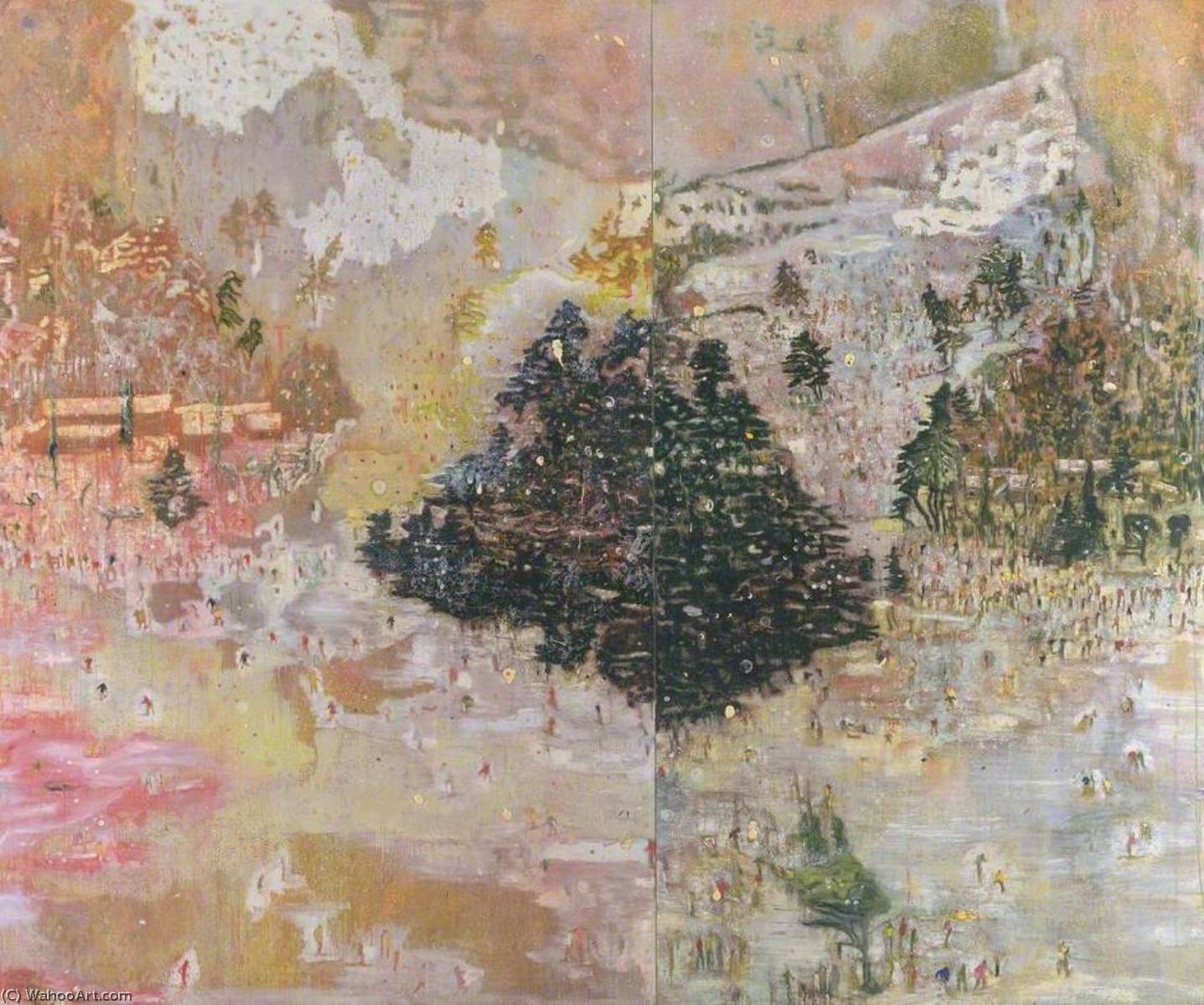


 100 Years Ago2002
12
 Pelican
13
 Hitch Hiker (Reflected)
14
 Abstract Composition 1
15
 Concrete Cabin1992 · New Walk Museum - Art Gallery
16
 Orange Sunshine
17
 Pink Snow1991
18
 Ski Jacket1994
19
 Border House1996
20
 Jetty1996
21
 Camp Forestia1996
22
 Girl on Skis1997
23
 Pelican Man2003
24
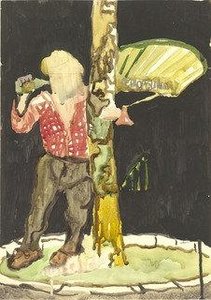 Metropolitan2004
25
 Grand RiviereNarodowa Galeria Kanady
26
 Cold Blooded
27
 The Painter's Lake
28
 Żółw czerwony1990 · Arts Council Collection
Cztery motywy najczęściej powracające w tych oryginałach, z których każdy doczekał się swojego najdoskonalszego przykładu.
6 muzeów, w których znajduje się najwięcej obrazów z tej strony.
| Muzeum | Miasto | Dzieła artysty Peter Doig | Obrazy z tej listy |
|---|---|---|---|
 Bonnefanten Museum |
Maastricht | 1 | Girl in White with Trees |
 Walker Art Gallery |
Liverpool | 1 | Blotter |
 Brytyjska Kolekcja Councilu |
Londyn | 1 | Hill Houses |
 New Walk Museum - Art Gallery |
Leicester | 1 | Concrete Cabin |
 Narodowa Galeria Kanady |
Ottawa | 1 | Grand Riviere |
 Arts Council Collection |
Londyn | 1 | Żółw czerwony |
15 lat dzieli pierwsze i ostatnie oryginalne dzieła Peter Doig zaprezentowane tutaj, 1990 i 2004: każdy rok ma swoje miejsce poniżej.
Wybierz rok, aby zobaczyć oryginały.

Peter Doig’s “Red Deer,” completed in 1990, is more than just a depiction of two deer inhabiting a snowy woodland; it's an exquisitely crafted meditation on memory, perception, and the transformative power of artistic representation. This monumental canvas—measuring 237.5 x 182.6 cm—holds a profound fascination for anyone attuned to the subtleties of landscape painting and particularly Doig’s distinctive approach.
Peter Doig’s “Hill Houses,” painted in 1991, isn't merely a depiction of a country road; it’s an immersion into the hazy, subjective realm of memory and place. The painting immediately draws you in with its muted palette – predominantly greens, browns, and greys – creating an atmosphere thick with mist and suggestion. It feels less like a photograph and more like a half-remembered dream, a fleeting impression captured on canvas.…
Więcej od 1991

Concrete Cabin: A Landscape of Memory and Modernity Peter Doig’s "Concrete Cabin," painted in 1992, is more than just a depiction of a forest scene; it's an exploration of memory, the interplay between nature and human intervention, and the subtle anxieties of modernity. The canvas presents a dense woodland, rendered with a distinctive looseness that evokes both the vibrancy of Impressionism and the unsettling ambiguity of Magic Realism. Towering trees,…
Blotter: A Landscape of Memory and Reflection Peter Doig’s “Blotter,” completed in 1993, stands as a cornerstone of his oeuvre—a painting that encapsulates the artist's signature blend of observation, imagination, and subtle emotional resonance. More than just a depiction of a snowy Canadian landscape, it’s an exploration of memory itself, filtered through the lens of photographic inspiration and imbued with a profound sense of solitude. The artwork immediately draws the…


Blotter (1996). Następne są Girl in White with Trees oraz Blotter (1993).
37 lat: Blotter pochodzi z 1996, a Peter Doig urodził(a) się w 1959.
Blotter, Girl in White with Trees, Blotter, Screaming Cop (Echo Lake), Pelican, Echo Lake, Hill Houses, Ski Jacket, Echo Lake i Untitled (Figure in Mountain Landscape). Powyższy ranking zawiera rok powstania oraz muzeum dla każdego z nich.
Nasz katalog zawiera 28 dzieł artysty Peter Doig, datowanych od 1990 do 2004.
W większości znajdują się w Bonnefanten Museum (Maastricht), Walker Art Gallery (Liverpool) i Brytyjska Kolekcja Councilu (Londyn). Powyższa tabela muzeów zawiera ich pełną listę.
W 1996: 4 z 28 dzieł na tej stronie powstało w tym czasie, w tym Blotter.
Na tej stronie najwcześniejszy to Żółw czerwony (1990), a najpóźniejszy Metropolitan (2004).
Landscape (7), Lakes (3) i Trees (3), w ramach 28 dzieł na tej stronie.
Acrylic On Canvas, dla 2 z 28 dzieł na tej stronie.
Contemporary realism i Expressionism, sądząc po oryginałach na tej stronie.


