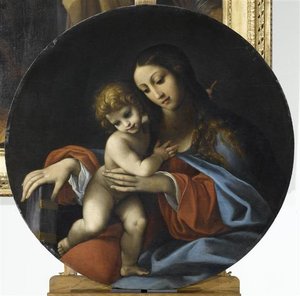
Portret Ludovico Carracci

64 najsłynniejszych obrazów artysty Ludovico Carracci, każdy niepowtarzalny

Aktualizacja: Październik 2026 · ranking według naszego wskaźnika popularności (liczba wyszukiwań, wizyt i zamówień dla każdego dzieła) · 67 dzieł Ludovico Carracci w naszym katalogu

W skrócie

The Dream of Saint Catherine of Alexandria (1593) to obraz autorstwa Ludovico Carracci, który przyciąga najwięcej spojrzeń; oryginał znajduje się w National Gallery of Art, Waszyngton. Następnie wzrok kieruje się na Madonna and Child with Saints (1607) i The Lamentation (1582). Spośród 67 dzieł Ludovico Carracci w naszym katalogu, tych 64 jest najbardziej znanych – każde z nich to unikatowy oryginał, przedstawiony wraz z rokiem powstania, muzeum oraz powodem, dla którego przetrwało próbę czasu.

1555 – 1619, Bolonia Baroque Najwięcej dzieł: Bawarskie Państwowe Zbiory Malarstwa

10 najlepszych obrazów autorstwa Ludovico Carracci według oka galerii

1
The Dream of Saint Catherine of Alexandria (1593) autorstwa Ludovico Carracci

The Dream of Saint Catherine of Alexandria

1593 · Oil On Canvas · National Gallery of Art, Waszyngton

To gaze upon this depiction of The Dream of Saint Catherine of Alexandria is to step directly into the heart of Baroque devotion. It is an artwork that does not merely hang on a wall; it envelops the viewer in a palpable atmosphere of sacred serenity and profound familial love. The composition immediately draws the eye into a pyramidal embrace, centering the Virgin Mary with the infant Jesus at its…

2
Madonna and Child with Saints (1607) autorstwa Ludovico Carracci

Madonna and Child with Saints

1607 · Oil On Copper · Metropolitan Museum of Art, Nowy Jork

To gaze upon this depiction of the Madonna and Child with Saints is to step directly into the heart of Bologna's artistic fervor during the early seventeenth century. Ludovico Carracci, a master whose hand guided art through a period of profound transition, has gifted us a scene that is both deeply devotional and exquisitely sophisticated. The composition immediately draws the eye into a moment suspended between earthly celebration and heavenly…

3
The Lamentation (1582) autorstwa Ludovico Carracci

The Lamentation

1582 · Oil On Canvas · Metropolitan Museum of Art, Nowy Jork

To stand before The Lamentation by Ludovico Carracci is to be enveloped in an atmosphere so thick with palpable sorrow that it feels almost breathable. This is not the polished, idealized grief often depicted in later art; rather, it is a raw, visceral outpouring of human emotion captured at its most agonizing peak. The scene presents a profound tableau of loss, centering on figures whose poses and expressions reject classical…

4
The Dream of Saint Catherine of Alexandria (detail) (1593) autorstwa Ludovico Carracci

The Dream of Saint Catherine of Alexandria (detail)

1593 · Oil On Canvas · National Gallery of Art, Waszyngton

To gaze upon this detail from Ludovico Carracci’s The Dream of Saint Catherine of Alexandria is to step directly into the heart of the Bolognese Baroque—a moment where profound spirituality met breathtaking artistic realism. The scene unfolds with an almost palpable sense of devotion, capturing a sacred narrative rich with human emotion and divine mystery. At its core, we find Mary cradling the infant Jesus, their forms rendered with a…

5
An Angel Frees the Souls of Purgatory (1610) autorstwa Ludovico Carracci

An Angel Frees the Souls of Purgatory

1610 · Oil · Pinakoteca Watykańska, Watykan

Completed in 1610, this work reflects the religious fervor of the Counter-Reformation. As the Catholic Church sought to reaffirm its doctrines against Protestant critiques, artists in Bologna moved away from the artificiality of Mannerism toward a more visceral, emotive naturalism. This piece likely originated as a sketch for an altarpiece within the Carracci workshop. It captures a pivotal theological moment: the transition of souls from the state of purification to…

6
The Trinity with the Dead Christ (1590) autorstwa Ludovico Carracci

The Trinity with the Dead Christ

1590 · Oil On Canvas · Pinakoteca Watykańska, Watykan

In this work from around 1590, we find ourselves witnessing a heavy, quiet moment of transition. The composition is built upon a pyramidal structure, drawing the eye upward toward the limp, lifeless body of Christ. He rests upon a draped cloth, marked by the imprint of Veronica, a detail that anchors the scene in a tradition of compassion. There is a palpable sense of weight here, as the physical reality…

7
The Transfiguration (1590) autorstwa Ludovico Carracci

The Transfiguration

1590 · Oil On Canvas · Scottish National Gallery, Edynburg

The air seems to thicken with a sudden, celestial weight as Jesus Christ stands at the center of this unfolding miracle. He is not a distant figure of stone, but a presence felt in the very movement of his outstretched arms. Light does not merely strike his form; it seems to emanate from within him, carving his silhouette against a world caught in a moment of profound spiritual upheaval. Around…

8
Saint Francis of Assisi in the Portiuncula (1601) autorstwa Ludovico Carracci

Saint Francis of Assisi in the Portiuncula

1601 · Oil · Museo del Prado, Madryt

The air in the Portiuncula feels heavy, thick with the scent of damp earth and the weight of a profound, sudden silence. Below, in the dimness of the earthly realm, Saint Francis of Assisi kneels. He is a figure of deep humility, his body pressed toward the ground in a gesture of total surrender. His arms cross over his chest, a physical manifestation of a soul caught in a moment…

9
The Vision of Saint Francis (1602) autorstwa Ludovico Carracci

The Vision of Saint Francis

1602 · Oil On Canvas · Art Institute of Chicago, Chicago

The canvas splits into two distinct realms, divided by a diagonal surge of clouds. On the lower left, Saint Francis kneels in the heavy shadows of the earthly plane, his form solid and grounded. Above him, the darkness of the night is pierced by a sudden, divine light. The Virgin Mary and the infant Christ emerge from this celestial glow, surrounded by the soft, rounded shapes of cherubs. A moon…

10
The Agony in the Garden (1590) autorstwa Ludovico Carracci

The Agony in the Garden

1590 · Oil On Canvas · Museo del Prado, Madryt

The Agony in the Garden emerges from the shadows of history as a profound oil on canvas by Ludovico Carracci. This specific work, known in collections as Prado P00074, captures a moment of intense spiritual weight. The paint clings to the fabric, holding the tension of a scene that feels as though it is unfolding right before our eyes. It is a work that breathes with the heavy atmosphere of…

Słynne obrazy artysty Ludovico Carracci, od 11 do 64

11The Vision of St Jerome (1594) autorstwa Ludovico CarracciThe Vision of St Jerome1594 · Statens Museum for Kunst 12Bacchus and Ariadne (1591) autorstwa Ludovico CarracciBacchus and Ariadne1591 13Portrait of a Widow (1585) autorstwa Ludovico CarracciPortrait of a Widow1585 · Dayton Art Institute 14St Sebastian (1590) autorstwa Ludovico CarracciSt Sebastian1590 · Fitzwilliam Museum 15Portrait of a Young Man (1583) autorstwa Ludovico CarracciPortrait of a Young Man1583 · Muzea Kapitolińskie 16Saint Francis in Meditation (1580) autorstwa Ludovico CarracciSaint Francis in Meditation1580 · Galeria Dulwich 17Sacrifice of Isaac (1586) autorstwa Ludovico CarracciSacrifice of Isaac1586 18Holy Family (1600) autorstwa Ludovico CarracciHoly Family1600 · Słowacka Galeria Narodowa w Bratysławie 19Annunciation (1603) autorstwa Ludovico CarracciAnnunciation1603 · Musei di Strada Nuova 20Allegory of Providence (1604) autorstwa Ludovico CarracciAllegory of Providence1604 · Muzea Kapitolińskie 21Singing angels (1605) autorstwa Ludovico CarracciSinging angels1605 · Museo Cerralbo 22Hercules and the Hydra (1594) autorstwa Ludovico CarracciHercules and the Hydra1594 23The Adoration of the Shepherds (1613) autorstwa Ludovico CarracciThe Adoration of the Shepherds1613 24Three angels visiting Abraham (1610) autorstwa Ludovico CarracciThree angels visiting Abraham1610 · Pinacoteca Nazionale di Bologna 25The Stories of Jason (detail) (1584) autorstwa Ludovico CarracciThe Stories of Jason (detail)1584 · Palazzo Fava 26The Virgin Appearing to St Hyacinth (1594) autorstwa Ludovico CarracciThe Virgin Appearing to St Hyacinth1594 · Luwr 27Ludovico ) (1555) autorstwa Ludovico CarracciLudovico )1555 28Male Nude (Hercules ?) (1588) autorstwa Ludovico CarracciMale Nude (Hercules ?)1588 · Kunstpalast 29The Agony in the Garden (1590) autorstwa Ludovico CarracciThe Agony in the Garden1590 · National Gallery 30The Marriage of the Virgin (1590) autorstwa Ludovico CarracciThe Marriage of the Virgin1590 · National Gallery 31Portrait of Carlo Alberto Rati Opizzoni in Armour (1597) autorstwa Ludovico CarracciPortrait of Carlo Alberto Rati Opizzoni in Armour1597 32Christ in the Wilderness, Served by Angels (1608) autorstwa Ludovico CarracciChrist in the Wilderness, Served by Angels1608 · Gemäldegalerie 33The Martyrdom of St Margaret (1616) autorstwa Ludovico CarracciThe Martyrdom of St Margaret1616 34Susannah and the Elders (1616) autorstwa Ludovico CarracciSusannah and the Elders1616 35Annunciation (1616) autorstwa Ludovico CarracciAnnunciation1616 · Kunstpalast 36The Denial of Saint Peter (1616) autorstwa Ludovico CarracciThe Denial of Saint Peter1616 · Metropolitan Museum of Art 37Bargellini Madonna (1588) autorstwa Ludovico CarracciBargellini Madonna1588 · Pinacoteca Nazionale 38Saint Francis autorstwa Ludovico CarracciSaint FrancisBawarskie Państwowe Zbiory Malarstwa 39Presentation in the Temple (1605) autorstwa Ludovico CarracciPresentation in the Temple1605 · Thyssen-Bornemisza Museum 40Preaching of John the Baptist autorstwa Ludovico CarracciPreaching of John the BaptistBawarskie Państwowe Zbiory Malarstwa 41Portrait of a Young Man autorstwa Ludovico CarracciPortrait of a Young ManBawarskie Państwowe Zbiory Malarstwa 42Saint Francis Seraphic autorstwa Ludovico CarracciSaint Francis SeraphicBawarskie Państwowe Zbiory Malarstwa 43Entombment of Christ autorstwa Ludovico CarracciEntombment of ChristBawarskie Państwowe Zbiory Malarstwa 44The Agony in the Garden of Gethsemane autorstwa Ludovico CarracciThe Agony in the Garden of Gethsemane 45St. John the Baptist at the Fontain autorstwa Ludovico CarracciSt. John the Baptist at the FontainMusée Fesch 46Saint Mary Magdalene autorstwa Ludovico CarracciSaint Mary MagdaleneNational Museum of Fine Arts 47Le martyre de saint Pierre et saint Paul autorstwa Ludovico CarracciLe martyre de saint Pierre et saint Paul 48LE BAPTEME DE JESUS autorstwa Ludovico CarracciLE BAPTEME DE JESUSMusée des Beaux-Arts de Lyon 49The Baptism of Christ autorstwa Ludovico CarracciThe Baptism of ChristBawarskie Państwowe Zbiory Malarstwa 50Christ Served by Angels in the Wilderness (1608) autorstwa Ludovico CarracciChrist Served by Angels in the Wilderness1608 · Berlińskie Muzea Państwowe 51The Vision of Saint Francis of Assisi, Ludovico Carracci, 1583 - 1585 (1585) autorstwa Ludovico CarracciThe Vision of Saint Francis of Assisi, Ludovico Carracci, 1583 - 15851585 52Mądra Madonna z Dzieciątkiem, św. Janem Chrzcicielem, archaniołem Michałem, św. Franciszkiem, św. Luciją i św. Józefem (1616) autorstwa Ludovico CarracciMądra Madonna z Dzieciątkiem, św. Janem Chrzcicielem, archaniołem Michałem, św. Franciszkiem, św. Luciją i św. Józefem1616 · Muzeum Łazienki Królewskie 53L'apparition de la Vierge et de l'enfant Jésus à saint Hyacinthe autorstwa Ludovico CarracciL'apparition de la Vierge et de l'enfant Jésus à saint HyacintheLuwr 54Antonio Landscape with Bathers autorstwa Ludovico CarracciAntonio Landscape with Bathers 55The Vision of Saint Francis autorstwa Ludovico CarracciThe Vision of Saint Francis 56L'Adoration des bergers La Nativité de Jésus Christ autorstwa Ludovico CarracciL'Adoration des bergers La Nativité de Jésus Christ 57The Marriage of the Virgin autorstwa Ludovico CarracciThe Marriage of the Virgin 58The Assumption of the Virgin autorstwa Ludovico CarracciThe Assumption of the Virgin 59Orlando Delivering Olympia from the Sea Monster autorstwa Ludovico CarracciOrlando Delivering Olympia from the Sea MonsterNational Trust 60La Vierge à l'enfant autorstwa Ludovico CarracciLa Vierge à l'enfantLuwr 61St. Sebastian Thrown into the Cloaca Maxima (1612) autorstwa Ludovico CarracciSt. Sebastian Thrown into the Cloaca Maxima1612 · Muzeum J. Paula Getty'ego 62Chess players (1590) autorstwa Ludovico CarracciChess players1590 · Gemäldegalerie 63The Funeral of the Virgin Mary (1605) autorstwa Ludovico CarracciThe Funeral of the Virgin Mary1605 · Galleria Nazionale 64La Flagellation autorstwa Ludovico CarracciLa FlagellationMusée de la Chartreuse de Douai

Słynne obrazy Ludovico Carracci epoka po epoce

Tematy, które przyciągnęły wzrok Ludovico Carracci

Cztery motywy najczęściej powracające w tych oryginałach, z których każdy doczekał się swojego najdoskonalszego przykładu.

Muzea przechowujące oryginały Ludovico Carracci

8 muzeów, w których znajduje się najwięcej obrazów z tej strony.

Muzea Miasto Dzieła artysty Ludovico Carracci Obrazy z tej listy
Bawarskie Państwowe Zbiory Malarstwa, MonachiumBawarskie Państwowe Zbiory Malarstwa Monachium 6 Saint Francis, Preaching of John the Baptist, Portrait of a Young Man
Metropolitan Museum of Art, Nowy JorkMetropolitan Museum of Art Nowy Jork 3 Madonna and Child with Saints, The Lamentation, The Denial of Saint Peter
Luwr, ParyżLuwr Paryż 3 The Virgin Appearing to St Hyacinth, L'apparition de la Vierge et de l'enfant Jésus à saint Hyacinthe, La Vierge à l'enfant
National Gallery of Art, WaszyngtonNational Gallery of Art Waszyngton 2 The Dream of Saint Catherine of Alexandria, The Dream of Saint Catherine of Alexandria (detail)
Pinakoteca Watykańska, WatykanPinakoteca Watykańska Watykan 2 An Angel Frees the Souls of Purgatory, The Trinity with the Dead Christ
Museo del Prado, MadrytMuseo del Prado Madryt 2 Saint Francis of Assisi in the Portiuncula, The Agony in the Garden
Muzea Kapitolińskie, RzymMuzea Kapitolińskie Rzym 2 Portrait of a Young Man, Allegory of Providence
Kunstpalast, DüsseldorfKunstpalast Düsseldorf 2 Male Nude (Hercules ?), Annunciation

Ludovico Carracci na przestrzeni dekad: jeden unikatowy oryginał dla każdego

Dzieła według dekad

Wybierz dekadę, aby zobaczyć dzieło, które ją definiuje.

Obrazy artysty Ludovico Carracci: pytania do galerii

Jakie jest najsłynniejsze dzieło artysty Ludovico Carracci?Odkryj odpowiedź

The Dream of Saint Catherine of Alexandria (1593), National Gallery of Art, Waszyngton. Następne są Madonna and Child with Saints (1607) oraz The Lamentation (1582).

W jakim wieku Ludovico Carracci stworzył/a The Dream of Saint Catherine of Alexandria?Odkryj odpowiedź

38 lat: The Dream of Saint Catherine of Alexandria pochodzi z 1593, a Ludovico Carracci urodził(a) się w 1555.

Które dziesięć obrazów Ludovico Carracci jest najbardziej znanych?Odkryj odpowiedź

The Dream of Saint Catherine of Alexandria, Madonna and Child with Saints, The Lamentation, The Dream of Saint Catherine of Alexandria (detail), An Angel Frees the Souls of Purgatory, The Trinity with the Dead Christ, The Transfiguration, Saint Francis of Assisi in the Portiuncula, The Vision of Saint Francis i The Agony in the Garden. Powyższy ranking zawiera rok powstania oraz muzeum dla każdego z nich.

Ile znanych dzieł stworzył Ludovico Carracci?Odkryj odpowiedź

Nasz katalog zawiera 67 dzieł artysty Ludovico Carracci, datowanych od 1580 do 1616.

Gdzie można zobaczyć najsłynniejsze oryginały Ludovico Carracci?Odkryj odpowiedź

W większości znajdują się w Bawarskie Państwowe Zbiory Malarstwa (Monachium), Metropolitan Museum of Art (Nowy Jork) i Luwr (Paryż). Powyższa tabela muzeów zawiera ich pełną listę.

W jakim okresie Ludovico Carracci stworzył/a swoje najsłynniejsze obrazy?Odkryj odpowiedź

W 1590s: 14 z 64 dzieł na tej stronie powstało w tym czasie, w tym The Dream of Saint Catherine of Alexandria.

Który z najsłynniejszych obrazów artysty Ludovico Carracci powstał najwcześniej, a który najpóźniej?Odkryj odpowiedź

Na tej stronie najwcześniejszy to Saint Francis in Meditation (1580), a najpóźniejszy The Martyrdom of St Margaret (1616).

Jakie tematy preferował Ludovico Carracci?Odkryj odpowiedź

Man (11), Angels (8) i Virgin mary (6), w ramach 64 dzieł na tej stronie.

Jakich materiałów Ludovico Carracci używał najczęściej?Odkryj odpowiedź

Oil On Canvas, dla 21 z 64 dzieł na tej stronie.

Do jakiego nurtu należy twórczość Ludovico Carracci?Odkryj odpowiedź

Baroque, sądząc po oryginałach na tej stronie.

Jakie oryginały Ludovico Carracci można zobaczyć w Bawarskie Państwowe Zbiory Malarstwa?Odkryj odpowiedź

Saint Francis, Preaching of John the Baptist i Portrait of a Young Man: Bawarskie Państwowe Zbiory Malarstwa, Monachium posiada 6 dzieł widocznych na tej stronie.

Ludovico Carracci: portret artysty

Architekt bolońskiego baroku

W tętniącym życiem, intelektualnym sercu Bolonii – mieście, w którym renesansowa tradycja spotkała się z rodzącym się duchem nowej ery – Ludovico Carracci wyłonił się jako siła transformująca europejską sztukę. Urodzony w 1555 roku, był nierozerwalnie związany z samymi fundamentami szkoły bolońskiej. Jako członek znamienitej rodziny Carracci, u boku swoich kuzynów, Annibale i Agostino, Ludovico nie tylko uczestniczył w ruchu artystycznym; on pomógł zaprojektować przejście od stylizowanej, często sztucznej elegancji manieryzmu do głębokiego, emocjonalnego naturalizmu baroku. Jego wczesne lata kształtowały się w warsztacie ojca, Prospero Carracci – miejscu, które służyło jako tygiel dla eksperymentów i sanktuarium studiowania disegno, czyli skrupulatnej obserwacji formy i anatomii, która stała się znakiem rozpoznawczym jego dziedzictwa.

Podczas gdy jego kuzyni często szukali sławy na wielkich dworach Rzymu, Ludovico pozostał głęboko zakorzeniony w rodzimej Bolonii. Ta niezłomna więź pozwoliła mu stworzyć unikalne artystyczne sanktuarium, prowadząc akademię, która stała się latarnią dla kolejnego pokolenia mistrzów, w tym Guido Reni i Domenichino. Jego twórczość stanowi mistrzowską syntezę wpływów historycznych; czerpał z boskiej łaski Rafaela, miękkiej luminancji Correggia oraz bogatego kolorystyki Tycjana, a jednak tchnął w te klasyczne elementy nową, dramatyczną witalność. Odrzucając wydłużone i często napięte pozy późnomanierystycznych malarzy, takich jak Parmigianino, Ludovico przyjął bardziej zmysłową rzeczywistość, wykorzystując odważne gesty i migotliwe, atmosferyczne światło, aby poruszyć dusze swoich widzów.

Światło, cień i duchowa intensywnół

Prawdziwy geniusz Ludovico Carracci tkwi w jego zdolności do manipulowania chiaroscuro – dramatyczną grą światła i cienia – tak, aby służyło ono jako kanał dla duchowej kontemplacji. Jego płótna rzadko są jedynie przedstawieniami biblijnych wydarzeń; to immersyjne doświadczenia zaprojektowane, by wywoływać religijną żarliwość. W dziełach takich jak Anioł uwalniający dusze z czyśćca, można dostrzec, jak użycie światła nie tylko oświetla scenę, ale aktywnie uczestniczy w jej narracji, wyłaniając postacie z mroku, aby podkreślić momenty boskiego współczucia i łaski. Ta technika, przypominająca rodzący się naturalizm Caravaggia, pozwoliła mu nasycić nawet najświętsze tematy namacalnym, ludzkim emocjami.

Jego mistrzostwo rozciągało się na różne media, od monumentalnej skali fresków po delikatną precyzję rytów i grafik. Bez względu na to, czy uwieczniał spokojną świętość Prezentacji w Świątyni, czy mięśniowe, heroiczne napięcie odnalezione w jego Akcie męskim (Herkules?), przez całe jego dzieło przebiega spójna nić emocjonalnej głębi. Jego malarstwo religijne, jak choćby Madonny Bargellini, ukazuje zdolność do organizowania złożonych grup świętych i aniołów w harmonijne, a zarazem dynamiczne kompozycje, gdzie każdy fałd szaty i każde nachylenie głowy przyczynia się do większego poczucia niebiańskiego ruchu.

Trwałe dziedzictwo w kanonie włoskim

Historycznego znaczenia Ludovico Carracci nie można przecenić. Był kluczową postacią, która pomogła odświeżyć sztukę włoską w czasie, gdy ryzykowała ona stagnację pod ciężarem własnych formalistycznych tradycji. Poprzez promowanie stylu, który priorytetyzował emocjonalną prawdę i naturalistyczną obserwację, dostarczył wzorca dla najsławniejszych osiągnięć epoki baroku. Jego wpływ promieniował z Bolonii na całą Europę, kształtując język estetyczny wielu jej części i kładąc fundamenty pod klasyczny naturalizm, który zdominował XVII wiek.

Reflektując nad jego życiem i twórczością, widzimy artystę, który z sukcesem połączył dwa światy: ustrukturyzowaną doskonałość Renesansu oraz dramatyczną, teatralną energię Baroku. Jego zdolność do małżeństwa intelektualnego rygoru disegno z głębokim poczuciem colore i emocjonalnym rezonansem zapewnia mu miejsce jako jednego z najbardziej żywotnych malarzy jego epoki. Poprzez oddanie swojemu rzemiosłu i zaangażowanie w duchową moc sztuki, Ludovico Carracci pozostawił niezatarte piętno w historii malarstwa zachodniego, przypominając nam, że prawdziwe piękno kryje się na styku technicznego mistrzostwa i ludzkiego serca.