Portret Luca Della Robbia

79 najsłynniejszych obrazów artysty Luca Della Robbia, każdy niepowtarzalny

Aktualizacja: Listopad 2026 · ranking według naszego wskaźnika popularności (liczba wyszukiwań, wizyt i zamówień dla każdego dzieła) · 80 dzieł Luca Della Robbia w naszym katalogu

W skrócie

Madonna and Child (1445) to obraz autorstwa Luca Della Robbia, który przyciąga najwięcej spojrzeń; oryginał znajduje się w Metropolitan Museum of Art, Nowy Jork. Następnie wzrok kieruje się na Cantoria: third bottom relief (1431) i Bronze Doors of the New Sacristy (1446). Spośród 80 dzieł Luca Della Robbia w naszym katalogu, tych 79 jest najbardziej znanych – każde z nich to unikatowy oryginał, przedstawiony wraz z rokiem powstania, muzeum oraz powodem, dla którego przetrwało próbę czasu.

1399 – 1482, Florencja Renaissance Najwięcej dzieł: Museo dell'Opera del Duomo

10 najlepszych obrazów autorstwa Luca Della Robbia według oka galerii

1
Madonna and Child (1445) autorstwa Luca Della Robbia

Madonna and Child

1445 · Terracotta · Metropolitan Museum of Art, Nowy Jork

To gaze upon this depiction of the Madonna and Child is to step directly into the luminous heart of the early Italian Renaissance. It captures not merely a portrait, but an eternal moment of divine connection—a quiet communion between mother and son that has resonated with humanity for centuries. The composition itself is masterfully arranged, centering the Virgin Mary in a posture of gentle support as she cradles the infant…

2
Cantoria: third bottom relief (1431) autorstwa Luca Della Robbia

Cantoria: third bottom relief

1431 · Marble · Museo dell'Opera del Duomo, Florencja

To gaze upon this relief is to step directly into the vibrant heart of the early Italian Renaissance. Depicting six youthful male figures, perhaps muses or celestial beings, these forms are captured in a moment of exquisite, shared resonance. The composition itself feels alive, a tightly woven tapestry of flesh and gesture rendered in pale beige-grey marble. One senses not merely stone, but the lingering warmth of human connection—a celebration…

3
Bronze Doors of the New Sacristy (1446) autorstwa Luca Della Robbia

Bronze Doors of the New Sacristy

1446 · Bronze · Duomo di Firenze, Florencja

Luca della Robbia’s “Bronze Doors of the New Sacristy,” crafted in 1446, stands as a testament to the burgeoning artistic spirit of early Florence. This extraordinary work, now meticulously reproduced at 420 x 200 cm, offers a captivating glimpse into the heart of the Renaissance – a period defined by an unprecedented reverence for classical antiquity and a profound exploration of human experience. More than just decorative panels, these doors…

4
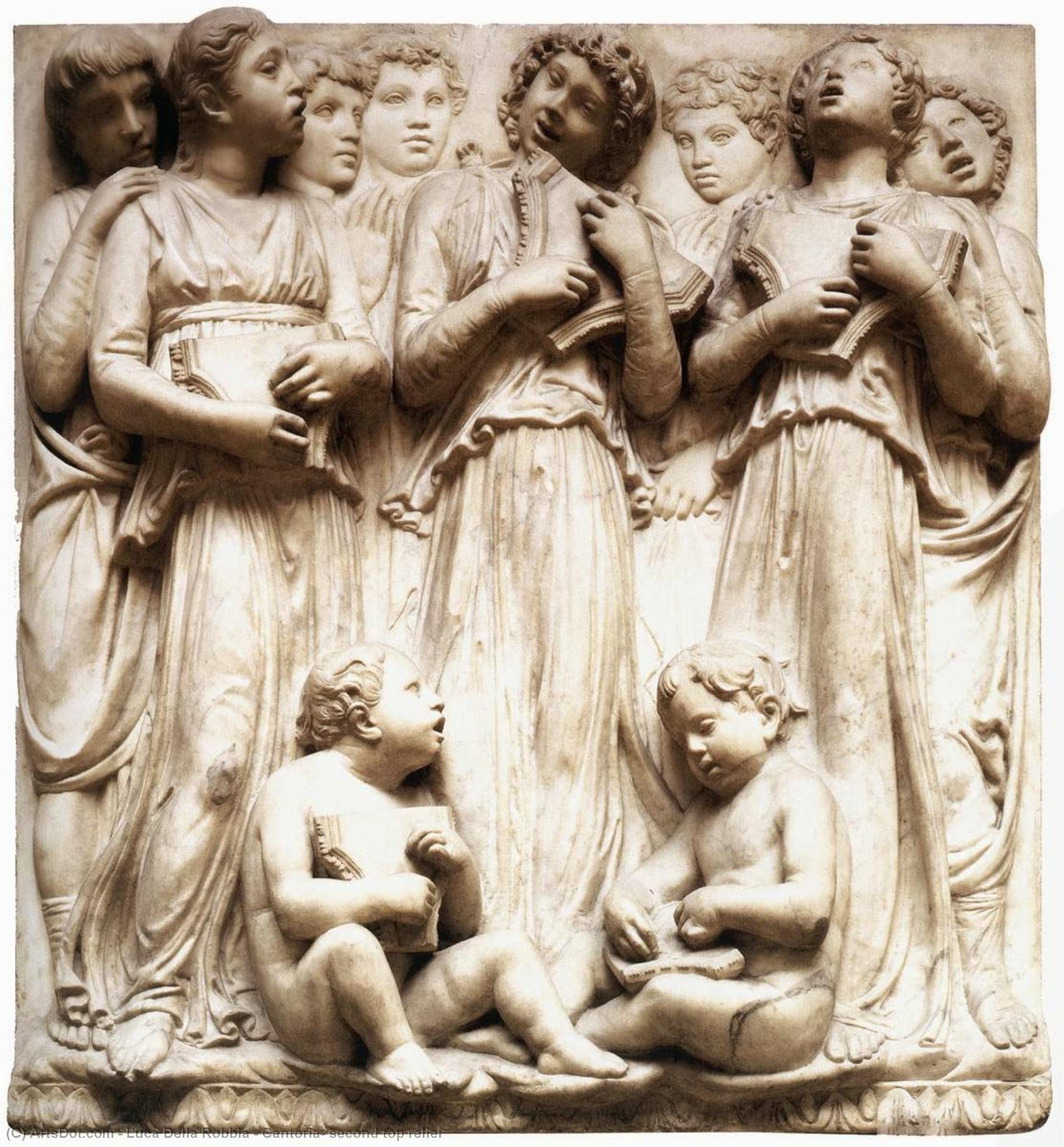
Cantoria: second top relief (1431) autorstwa Luca Della Robbia

Cantoria: second top relief

1431 · Marble · Museo dell'Opera del Duomo, Florencja

To stand before Cantoria: second top relief is to step directly into the vibrant intellectual atmosphere of early Quattrocento Florence. This magnificent marble work, executed by the master craftsman Luca della Robbia in 1431, is far more than a mere sculptural grouping; it is a tangible echo of Renaissance humanism itself. The scene unfolds with an arresting sense of community, depicting a gathering of figures whose very presence speaks to…

5
Cantoria: first bottom relief (1431) autorstwa Luca Della Robbia

Cantoria: first bottom relief

1431 · Marble · Museo dell'Opera del Duomo, Florencja

In the heart of the Italian Renaissance, where the revival of classical antiquity met a new, profound humanism, Luca della Robbia breathed life into cold stone with his Cantoria: first bottom relief. Created in 1431, this exquisite marble masterpiece transcends its medium to capture a fleeting moment of pure, unadulterated jubilation. At first glance, the viewer is swept into a whirlwind of movement, as a group of nude male children—putti—engage…

6
Cantoria: second top relief (1431) autorstwa Luca Della Robbia

Cantoria: second top relief

1431 · Ceramics · Museo dell'Opera del Duomo, Florencja

To gaze upon Luca della Robbia's Cantoria: second top relief is to step directly into the vibrant, sun-drenched heart of Quattrocento Florence. This work is not merely a depiction of musicians; it is an effervescent portrait of community, artistry, and shared human joy. The scene unfolds with remarkable vitality, capturing a moment where music acts as the invisible thread weaving together a gathering of souls. One can almost hear the…

7
Cantoria: first top relief (1431) autorstwa Luca Della Robbia

Cantoria: first top relief

1431 · Marble · Museo dell'Opera del Duomo, Florencja

In the heart of the Florentine Renaissance, where the rebirth of classical ideals met a newfound passion for human emotion, Luca della Robbia carved a moment of eternal celebration into marble. His Cantoria: first top relief, completed in 1431, is not merely a sculpture but a rhythmic explosion of life captured in stone. To gaze upon this masterpiece is to be transported to a period of profound artistic awakening, where…

8
Madonna and Child (1445) autorstwa Luca Della Robbia

Madonna and Child

1445 · Ceramics · Spedale degli Innocenti, Florencja

The air feels heavy with a quiet, holy peace as we gaze upon the Virgin Mary and her infant son. She cradles the child in a posture of gentle support, her presence radiating a soft, maternal warmth that seems to pull the viewer into her private world of devotion. The figures emerge from their medium with a peculiar, celestial glow, appearing almost as if they are made of light itself…

9
Madonna of the Apple (1455) autorstwa Luca Della Robbia

Madonna of the Apple

1455 · Terracotta · Museo Nazionale del Bargello, Florencja

The Madonna of the Apple, crafted in exquisite terracotta by Luca della Robbia around 1455, is more than simply a depiction of the Virgin Mary cradling her Christ Child; it's a profound meditation on humanity’s relationship with divine grace, temptation, and redemption. Housed within the Museo Nazionale del Bargello in Florence, this sculpture stands as a testament to Della Robbia’s revolutionary technique – his masterful application of vibrant glazes to…

10
Cantoria: right side relief (1431) autorstwa Luca Della Robbia

Cantoria: right side relief

1431 · Marble · Museo dell'Opera del Duomo, Florencja

To stand before Cantoria: right side relief is to step directly into the vibrant heart of the early Italian Renaissance. This breathtaking marble sculpture, executed by the prodigious hands of Luca Della Robbia in 1431, is far more than a decorative panel; it is a frozen moment of profound human expression. It captures the very essence of communal artistry—the joy, devotion, and skill inherent in music. The scene unfolds with…

Słynne obrazy artysty Luca Della Robbia, od 11 do 79

11Cantoria: second bottom relief (1431) autorstwa Luca Della RobbiaCantoria: second bottom relief1431 · Museo dell'Opera del Duomo 12Cantoria (1431) autorstwa Luca Della RobbiaCantoria1431 · Museo dell'Opera del Duomo 13Deliverance of St Peter from Prison (1439) autorstwa Luca Della RobbiaDeliverance of St Peter from Prison1439 · Museo Nazionale del Bargello 14Ceiling decoration (1461) autorstwa Luca Della RobbiaCeiling decoration1461 · San Miniato al Monte 15Crucifixion of St Peter (1439) autorstwa Luca Della RobbiaCrucifixion of St Peter1439 · Museo Nazionale del Bargello 16Cantoria: fourth top relief (1431) autorstwa Luca Della RobbiaCantoria: fourth top relief1431 · Museo dell'Opera del Duomo 17Cantoria (1431) autorstwa Luca Della RobbiaCantoria1431 · Museo dell'Opera del Duomo 18Cantoria: fourth bottom relief (1431) autorstwa Luca Della RobbiaCantoria: fourth bottom relief1431 · Museo dell'Opera del Duomo 19Madonna in a Rose-Garden (Madonna del Roseto) (1450) autorstwa Luca Della RobbiaMadonna in a Rose-Garden (Madonna del Roseto)1450 · Museo Nazionale del Bargello 20North Sacristy Doors with the Resurrection (1442) autorstwa Luca Della RobbiaNorth Sacristy Doors with the Resurrection1442 · Duomo di Firenze 21Labours of the Months: June (1450) autorstwa Luca Della RobbiaLabours of the Months: June1450 · Victoria and Albert Museum 22The Peretola Tabernacle (1441) autorstwa Luca Della RobbiaThe Peretola Tabernacle1441 · Santa Maria Novella 23Chryst i Tomasz (1465) autorstwa Luca Della RobbiaChryst i Tomasz1465 · Szépművészeti Múzeum 24Ascension of Christ (1446) autorstwa Luca Della RobbiaAscension of Christ1446 · Duomo di Firenze 25Nativity (1460) autorstwa Luca Della RobbiaNativity1460 26Madonna and Child with Scroll (1455) autorstwa Luca Della RobbiaMadonna and Child with Scroll1455 · Metropolitan Museum of Art 27Saint Michael the Archangel (1475) autorstwa Luca Della RobbiaSaint Michael the Archangel1475 · Metropolitan Museum of Art 28Tondo Portrait of a Lady (1465) autorstwa Luca Della RobbiaTondo Portrait of a Lady1465 · Museo Nazionale del Bargello 29Visitation (1445) autorstwa Luca Della RobbiaVisitation1445 · San Giovanni Fuorcivitas 30Resurrection (1442) autorstwa Luca Della RobbiaResurrection1442 · Duomo di Firenze 31Cantoria: left side relief (1431) autorstwa Luca Della RobbiaCantoria: left side relief1431 · Museo dell'Opera del Duomo 32Labours of the Months: January (1450) autorstwa Luca Della RobbiaLabours of the Months: January1450 · Victoria and Albert Museum 33Cantoria: fourth top relief (1431) autorstwa Luca Della RobbiaCantoria: fourth top relief1431 · Museo dell'Opera del Duomo 34Madonna and Child between Two Angels (1450) autorstwa Luca Della RobbiaMadonna and Child between Two Angels1450 · Museo Nazionale del Bargello 35St James the Great (1440) autorstwa Luca Della RobbiaSt James the Great1440 36Monument to Bishop Benozzo Federighi (1453) autorstwa Luca Della RobbiaMonument to Bishop Benozzo Federighi1453 · Santa Trinità 37Cantoria: first bottom relief (detail) (1431) autorstwa Luca Della RobbiaCantoria: first bottom relief (detail)1431 · Museo dell'Opera del Duomo 38Cantoria: first bottom relief (detail) (1431) autorstwa Luca Della RobbiaCantoria: first bottom relief (detail)1431 · Museo dell'Opera del Duomo 39Cantoria: first top relief (detail) (1431) autorstwa Luca Della RobbiaCantoria: first top relief (detail)1431 · Museo dell'Opera del Duomo 40Cantoria: third bottom relief (detail) (1431) autorstwa Luca Della RobbiaCantoria: third bottom relief (detail)1431 · Museo dell'Opera del Duomo 41Cantoria (1431) autorstwa Luca Della RobbiaCantoria1431 · Museo dell'Opera del Duomo 42Cantoria: second top relief (detail) (1431) autorstwa Luca Della RobbiaCantoria: second top relief (detail)1431 · Museo dell'Opera del Duomo 43Cantoria: fourth bottom relief (detail) (1431) autorstwa Luca Della RobbiaCantoria: fourth bottom relief (detail)1431 · Museo dell'Opera del Duomo 44Cantoria: second bottom relief (detail) (1431) autorstwa Luca Della RobbiaCantoria: second bottom relief (detail)1431 · Museo dell'Opera del Duomo 45Cantoria: first bottom relief (1431) autorstwa Luca Della RobbiaCantoria: first bottom relief1431 · Museo dell'Opera del Duomo 46Cantoria: third top relief (1431) autorstwa Luca Della RobbiaCantoria: third top relief1431 · Museo dell'Opera del Duomo 47Cupola of the Portico (1440) autorstwa Luca Della RobbiaCupola of the Portico1440 48Visitation (detail) (1445) autorstwa Luca Della RobbiaVisitation (detail)1445 · San Giovanni Fuorcivitas 49Interior (1440) autorstwa Luca Della RobbiaInterior1440 50Madonna and Child between Saints (1449) autorstwa Luca Della RobbiaMadonna and Child between Saints1449 · Galleria Nazionale delle Marche 51Madonna and Child (9) (1440) autorstwa Luca Della RobbiaMadonna and Child (9)1440 52The Peretola Tabernacle (detail) (1441) autorstwa Luca Della RobbiaThe Peretola Tabernacle (detail)1441 · Santa Maria Novella 53Logic (or Philosophy) (1437) autorstwa Luca Della RobbiaLogic (or Philosophy)1437 · Museo dell'Opera del Duomo 54Madonna and Child (1455) autorstwa Luca Della RobbiaMadonna and Child1455 · Museo Nazionale del Bargello 55Madonna of the Apple (detail) (1455) autorstwa Luca Della RobbiaMadonna of the Apple (detail)1455 · Museo Nazionale del Bargello 56Monument to Bishop Benozzo Federighi (detail) (1453) autorstwa Luca Della RobbiaMonument to Bishop Benozzo Federighi (detail)1453 · Santa Trinità 57Madonna and Child (1465) autorstwa Luca Della RobbiaMadonna and Child1465 · Santa Maria 58Monument to Bishop Benozzo Federighi (detail) (1453) autorstwa Luca Della RobbiaMonument to Bishop Benozzo Federighi (detail)1453 · Santa Trinità 59Ceiling decoration (1461) autorstwa Luca Della RobbiaCeiling decoration1461 · San Miniato al Monte 60Crucifixion (detail) (1465) autorstwa Luca Della RobbiaCrucifixion (detail)1465 · Santa Maria 61Madonna and Child (11) (1455) autorstwa Luca Della RobbiaMadonna and Child (11)1455 · Orsanmichele 62Crucifixion (1465) autorstwa Luca Della RobbiaCrucifixion1465 · Santa Maria 63Madonna and Child autorstwa Luca Della RobbiaMadonna and Child 64Cantoria (detail)4 autorstwa Luca Della RobbiaCantoria (detail)4 65Tabernacle autorstwa Luca Della RobbiaTabernacle 66Cantoria (detail) autorstwa Luca Della RobbiaCantoria (detail) 67Madonna and Child between Angels (1475) autorstwa Luca Della RobbiaMadonna and Child between Angels1475 · Museo Nazionale del Bargello 68Candelabrum-Bearing Angel (1448) autorstwa Luca Della RobbiaCandelabrum-Bearing Angel1448 · Duomo di Firenze 69Cantoria (1431) autorstwa Luca Della RobbiaCantoria1431 · Museo dell'Opera del Duomo 70Cantoria: fourth top relief (detail) (1431) autorstwa Luca Della RobbiaCantoria: fourth top relief (detail)1431 · Museo dell'Opera del Duomo 71Candelabrum-Bearing Angel (1448) autorstwa Luca Della RobbiaCandelabrum-Bearing Angel1448 · Duomo di Firenze 72Grammar (1437) autorstwa Luca Della RobbiaGrammar1437 · Museo dell'Opera del Duomo 73Madonna with Two Angels in Adoration (1450) autorstwa Luca Della RobbiaMadonna with Two Angels in Adoration1450 74Cantoria (detail)6 autorstwa Luca Della RobbiaCantoria (detail)6 75Madonna of Roses autorstwa Luca Della RobbiaMadonna of Roses 76Meeting of Mary and Elisabeth autorstwa Luca Della RobbiaMeeting of Mary and Elisabeth 77Christ and Thomas autorstwa Luca Della RobbiaChrist and ThomasSzépművészeti Múzeum 78Madonna with Child and Angels autorstwa Luca Della RobbiaMadonna with Child and AngelsPalazzo di Parte Guelfa 79Cappuccini tondo autorstwa Luca Della RobbiaCappuccini tondo

Słynne obrazy Luca Della Robbia epoka po epoce

Tematy, które przyciągnęły wzrok Luca Della Robbia

Cztery motywy najczęściej powracające w tych oryginałach, z których każdy doczekał się swojego najdoskonalszego przykładu.

Muzea przechowujące oryginały Luca Della Robbia

8 muzeów, w których znajduje się najwięcej obrazów z tej strony.

Muzea Miasto Dzieła artysty Luca Della Robbia Obrazy z tej listy
Museo dell'Opera del Duomo, FlorencjaMuseo dell'Opera del Duomo Florencja 27 Cantoria: third bottom relief, Cantoria: second top relief, Cantoria: first bottom relief
Museo Nazionale del Bargello, FlorencjaMuseo Nazionale del Bargello Florencja 9 Madonna of the Apple, Deliverance of St Peter from Prison, Crucifixion of St Peter
Duomo di Firenze, FlorencjaDuomo di Firenze Florencja 6 Bronze Doors of the New Sacristy, North Sacristy Doors with the Resurrection, Ascension of Christ
Metropolitan Museum of Art, Nowy JorkMetropolitan Museum of Art Nowy Jork 3 Madonna and Child, Madonna and Child with Scroll, Saint Michael the Archangel
Santa Trinità, FlorencjaSanta Trinità Florencja 3 Monument to Bishop Benozzo Federighi, Monument to Bishop Benozzo Federighi (detail), Monument to Bishop Benozzo Federighi (detail)
Santa Maria, ImprunetaSanta Maria Impruneta 3 Madonna and Child, Crucifixion (detail), Crucifixion
San Miniato al Monte, FlorencjaSan Miniato al Monte Florencja 2 Ceiling decoration, Ceiling decoration
Victoria and Albert Museum, LondynVictoria and Albert Museum Londyn 2 Labours of the Months: June, Labours of the Months: January

Luca Della Robbia na przestrzeni dekad: jeden unikatowy oryginał dla każdego

Dzieła według dekad

Wybierz dekadę, aby zobaczyć dzieło, które ją definiuje.

Obrazy artysty Luca Della Robbia: pytania do galerii

Jakie jest najsłynniejsze dzieło artysty Luca Della Robbia?Odkryj odpowiedź

Madonna and Child (1445), Metropolitan Museum of Art, Nowy Jork. Następne są Cantoria: third bottom relief (1431) oraz Bronze Doors of the New Sacristy (1446).

W jakim wieku Luca Della Robbia stworzył/a Madonna and Child?Odkryj odpowiedź

46 lat: Madonna and Child pochodzi z 1445, a Luca Della Robbia urodził(a) się w 1399.

Które dziesięć obrazów Luca Della Robbia jest najbardziej znanych?Odkryj odpowiedź

Madonna and Child, Cantoria: third bottom relief, Bronze Doors of the New Sacristy, Cantoria: second top relief, Cantoria: first bottom relief, Cantoria: second top relief, Cantoria: first top relief, Madonna and Child, Madonna of the Apple i Cantoria: right side relief. Powyższy ranking zawiera rok powstania oraz muzeum dla każdego z nich.

Ile znanych dzieł stworzył Luca Della Robbia?Odkryj odpowiedź

Nasz katalog zawiera 80 dzieł artysty Luca Della Robbia, datowanych od 1431 do 1475.

Gdzie można zobaczyć najsłynniejsze oryginały Luca Della Robbia?Odkryj odpowiedź

W większości znajdują się w Museo dell'Opera del Duomo (Florencja), Museo Nazionale del Bargello (Florencja) i Duomo di Firenze (Florencja). Powyższa tabela muzeów zawiera ich pełną listę.

W jakim okresie Luca Della Robbia stworzył/a swoje najsłynniejsze obrazy?Odkryj odpowiedź

W 1430s: 29 z 79 dzieł na tej stronie powstało w tym czasie, w tym Cantoria: third bottom relief.

Który z najsłynniejszych obrazów artysty Luca Della Robbia powstał najwcześniej, a który najpóźniej?Odkryj odpowiedź

Na tej stronie najwcześniejszy to Cantoria: third bottom relief (1431), a najpóźniejszy Saint Michael the Archangel (1475).

Jakie tematy preferował Luca Della Robbia?Odkryj odpowiedź

Sculpture (14), Terracotta (13) i Terracotta sculpture (12), w ramach 79 dzieł na tej stronie.

Jakich materiałów Luca Della Robbia używał najczęściej?Odkryj odpowiedź

Terracotta, dla 25 z 79 dzieł na tej stronie.

Do jakiego nurtu należy twórczość Luca Della Robbia?Odkryj odpowiedź

Renaissance, sądząc po oryginałach na tej stronie.

Jakie oryginały Luca Della Robbia można zobaczyć w Museo dell'Opera del Duomo?Odkryj odpowiedź

Cantoria: third bottom relief, Cantoria: second top relief i Cantoria: first bottom relief: Museo dell'Opera del Duomo, Florencja posiada 27 dzieł widocznych na tej stronie.

Luca Della Robbia: portret artysty

Mistrz Szkliwionej Ziemi: Życie i Dziedzictwo Luca della Robbia

W samym sercu florenckiego Renesansu, w epoce zdefiniowanej przez odrodzenie ideałów klasycznych i dążenie do anatomicznej doskonałości, Luca della Robbia wyłonił się jako wizjoner, który przekształcił samą materię rzeźby. Podczas gdy jego współcześni często szukali chwały w ciężkiej trwałości marmuru lub lśniącym prestiżu brązu, Luca odnalazł głębokie, świetliste piękno w pokornej ziemi. Jego życie, przypadające na lata 1399–1482, zostało poświęcone doskonaleniu techniki terakoty pokrytej cynowym szkliwem – metodzie, która nie tylko zdefiniowała jego osobiste dziedzictwo, ale także nadała żywy, kolorowy głos religijnemu i obywatelskiemu krajobrazowi Włoch.

Urodzony w rodzie wykwalifikowanych rzemieślników we Florencji, Luca spędził wczesne lata zanurzony w surowych tradycjach florenckiego warsztatu. Choć wiele z jego okresu formacyjnego pozostaje przesłonięte mgłą historii, jego artystyczne DNA zostało niepodważalnie ukształtowane przez gigantów swojej epoki. Poruszał się w tych samych kręgach intelektualnego i twórczego co Donatello oraz Ghiberti, chłonąc rozkwitający duch humanizmu, który dążył do połączenia chrześcijańskiej pobożności z gracją antyku. Jego wczesne związki, a w szczególności praca przy monumentalnych projektach Baptysterium we Florencji, pozwoliły mu na własne oczy śledzić ewolucję naturalizmu – ruchu dążącego do uchwycenia subtelnych niuansów ludzkich emocji i delikatnych tekstur życia.

Innowacja w Kolorze i Glinie

Prawdziwy geniusz Luca della Robbia tkwił w jego zdolności do innowacji w medium, które wcześniej uważano za drugorzędne wobec kamienia. Dzięki opracowaniu specjalistycznego szkliwa cynowego osiągnął on genialne, odporne na warunki atmosferyczne wykończenie, które pozwoliło na zastosowanie uderzającej palety bieli i błękitów. Ta technika, często określana mianem ceramiki della Robbi, wniosła niespotykaną dotąd świetlistość do reliefów rzeźbiarskich. W przeciwieństwie do monochromatycznej surowości marmuru, dzieła Luca posiadały niebiański blask, co czyniło je idealnymi dla ołtarzy i krużganków kościołów, gdzie światło odgrywało kluczową rolę w duchowej kontemplacji.

Jego techniczny kunszt pozwolił mu zbudować most między sztuką wysoką a dekoracyjną doskonałością. Proces ten wymagał intymnej wiedzy z zakresu chemii i temperatury wypalania w piecu, aby zapewnić, że szkliwo idealnie przylgnie do gliny, nie pękając i nie tracąc swojego blasku. Ta innowacja miała głęboki wpływ na dostępność sztuki; podczas gdy marmur był zarezerwowany dla najbardziej elitarnych zleceń, szkliwiona terakota Luca mogła być produkowana z pewnym poziomem powtarzalnej doskonałości, pozwalając jego estetyce przenikać zarówno do wielkich katedr, jak i mniejszych, bardziej intymnych przestrzeni kultu.

Wizja Pobożności: Tematy i Osiągnięcia

Tematyka dzieł Luca była głęboko zakorzeniona w religijnym żarze Quattrocenta. Jego rzeźby służyły jako wizualne kazania, zaprojektowane tak, by wywoływać czułość, pobożność i zachwyt. Przez jego dłonie najświętsze postaci tradycji chrześcijańskiej zostały przedstawione z humanizującym ciepłem, które głęboko rezonowało z wiernymi.

Do najważniejszych punktów w jego karierze należą:

  • Boże Narodzenie: arcydzieło ukończone około 1460 roku, które ukazuje jego zdolność do łączenia monumentalnej skali renesansowej kompozycji z intymnym, czułym przedstawieniem Świętej Rodziny.
  • Madonna z Dzieciątkiem: różne iteracje tego tematu demonstrują mistrzostwo stylu "słodkiego", w którym boskość staje się bliska człowiekowi dzięki miękkim rysom twarzy i pełnym gracji, płynącym draperiom.
  • Panele Reliefowe: jego umiejętność wykorzystania płaskiej powierzchni terakoty do tworzenia głębi i narracyjnego ruchu, często oprawione w misterne girlandy z owoców i liści, które stały się znakiem rozpoznawczym stylu jego pracowni.

Poza indywidualnymi triumfami technicznymi, historyczne znaczenie Luca della Robbia polega na ustanowieniu trwałej dynastii artystycznej. Jego warsztat stał się latarnią florenckiego rzemiosła, inspirując pokolenia rzeźbiarzy i dekoratorów w całej Europie. Podnosząc terakotę z poziomu użytkowego medium do rangi sztuki wysokiej, rozszerzył on słownik Renesansu, zapewniając, że blask jego szkliwionej ziemi będzie jaśnieć długo po tym, jak przeminęła era mistrzów.