Portret Louise Bourgeois

100 najsłynniejszych obrazów artysty Louise Bourgeois – wybór z galerii

Aktualizacja: Listopad 2026 · ranking według naszego wskaźnika popularności (liczba wyszukiwań, wizyt i zamówień dla każdego dzieła) · 128 dzieł Louise Bourgeois w naszym katalogu

W skrócie

Spośród wszystkich dzieł oryginalnych, które pozostawił Louise Bourgeois, najsłynniejszym jest Untitled (plate 2) from the puritan (1993), znajdujący się w kolekcji MoMA - Museum of Modern Art w Nowy Jork. Tuż za nimi znajdują się Maman (1960) oraz Untitled (plate 5) from the puritan (1993). Nasz katalog zawiera 128 dzieł autorstwa Louise Bourgeois; galeria zachowała 100 najbardziej podziwianych na świecie prac, z których każda została przedstawiona wraz z datą powstania, informacją o muzeum oraz jej historią.

1911 – 2010, 6. dzielnica Paryża Najwięcej dzieł: MoMA - Museum of Modern Art

10 najlepszych obrazów artysty Louise Bourgeois: wybór galerii

1
Untitled (plate 2) from the puritan (1993) autorstwa Louise Bourgeois

Untitled (plate 2) from the puritan

1993 · Woodcut · MoMA - Museum of Modern Art, Nowy Jork

A monumental staircase climbs from the lower left, a white spine of geometry cutting through the dark. It is a woodcut and etching, where black ink meets the starkness of white paper. The lines are precise, tracing circles, squares, and rectangles that build a structure of heavy, silent weight. Light spills from an open expanse on the right, a diffused glow that offers no warmth, only a pale exit. The…

2
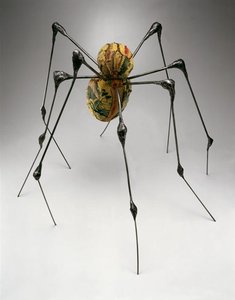
Maman (1960) autorstwa Louise Bourgeois

Maman

1960 · Bronze · Guggenheim Museum Bilbao, Bilbao

The Genesis of a Monster Louise Bourgeois’ *Maman* – “Mother” in French – isn't merely a sculpture; it’s an excavation of the artist’s deeply personal and profoundly unsettling relationship with her own mother. Created in 1999, this monumental bronze, stainless steel, and marble spider stands over nine feet tall and nearly thirteen feet wide, dominating any space it occupies. Initially conceived as part of the Unilever Series at Tate Modern…

Kontynuacja zestawienia Louise Bourgeois, od 11 do 100

11Portrait of Robert (1969) autorstwa Louise BourgeoisPortrait of Robert1969 12Woman-House (1994) autorstwa Louise BourgeoisWoman-House1994 13The view from the bottom of the well (1996) autorstwa Louise BourgeoisThe view from the bottom of the well1996 14Dangerous passage (1997) autorstwa Louise BourgeoisDangerous passage1997 15Maman (1999) autorstwa Louise BourgeoisMaman1999 16The Woven Child (2002) autorstwa Louise BourgeoisThe Woven Child2002 17Too much love (2010) autorstwa Louise BourgeoisToo much love2010 18Cell (Choisy) (1993) autorstwa Louise BourgeoisCell (Choisy)1993 19Germinal (1967) autorstwa Louise BourgeoisGerminal1967 20Eye Benches autorstwa Louise BourgeoisEye Benches 21Self-portrait autorstwa Louise BourgeoisSelf-portrait 22The Woven Child autorstwa Louise BourgeoisThe Woven Child 23I Do, I Undo and I Redo autorstwa Louise BourgeoisI Do, I Undo and I Redo 24Rabbit autorstwa Louise BourgeoisRabbitCAMUSAC Cassino Museum of Contemporary Art 25Paddle Woman (1947) autorstwa Louise BourgeoisPaddle Woman1947 26Woman-House (1947) autorstwa Louise BourgeoisWoman-House1947 27The destruction of the father (1974) autorstwa Louise BourgeoisThe destruction of the father1974 28The Blind Leading the Blind (1949) autorstwa Louise BourgeoisThe Blind Leading the Blind1949 29Woman (1960) autorstwa Louise BourgeoisWoman1960 30Characters (1965) autorstwa Louise BourgeoisCharacters1965 31Portrait (1963) autorstwa Louise BourgeoisPortrait1963 32Soft Landscape (1963) autorstwa Louise BourgeoisSoft Landscape1963 33Untitled (Germinal) (1967) autorstwa Louise BourgeoisUntitled (Germinal)1967 34Untitled (1969) autorstwa Louise BourgeoisUntitled1969 35Janus Fleuri (1968) autorstwa Louise BourgeoisJanus Fleuri1968 36Harmless Woman (1969) autorstwa Louise BourgeoisHarmless Woman1969 37Avenza Revisited II (1969) autorstwa Louise BourgeoisAvenza Revisited II1969 38Soft Landscape I (1967) autorstwa Louise BourgeoisSoft Landscape I1967 39Soft Landscape II (1967) autorstwa Louise BourgeoisSoft Landscape II1967 40Janus (1968) autorstwa Louise BourgeoisJanus1968 41End of Softness (1967) autorstwa Louise BourgeoisEnd of Softness1967 42Avenza (1969) autorstwa Louise BourgeoisAvenza1969 43Mother and Child (1970) autorstwa Louise BourgeoisMother and Child1970 44Destruction of the Father (1974) autorstwa Louise BourgeoisDestruction of the Father1974 45Partial Recall (1979) autorstwa Louise BourgeoisPartial Recall1979 46Confrontation (1978) autorstwa Louise BourgeoisConfrontation1978 47Woman-House (1983) autorstwa Louise BourgeoisWoman-House1983 48Untitled (10) (1986) autorstwa Louise BourgeoisUntitled (10)1986 49Disembodied Hands (1990) autorstwa Louise BourgeoisDisembodied Hands1990 50No Exit (1989) autorstwa Louise BourgeoisNo Exit1989 51Defiance (1991) autorstwa Louise BourgeoisDefiance1991 52Cell 3, White Marble Spheres (1993) autorstwa Louise BourgeoisCell 3, White Marble Spheres1993 53Spider II, (1995) autorstwa Louise BourgeoisSpider II,1995 54Cell (Eyes and Mirrors) (1993) autorstwa Louise BourgeoisCell (Eyes and Mirrors)1993 55The Nest (1994) autorstwa Louise BourgeoisThe Nest1994 56Cell (Glass Spheres and Hands) (1993) autorstwa Louise BourgeoisCell (Glass Spheres and Hands)1993 57Cell: You Better Grow Up (1993) autorstwa Louise BourgeoisCell: You Better Grow Up1993 58Arch of Hysteria (1993) autorstwa Louise BourgeoisArch of Hysteria1993 59Red Room (Child) (1994) autorstwa Louise BourgeoisRed Room (Child)1994 60Untitled (plate 6) from the puritan (1993) autorstwa Louise BourgeoisUntitled (plate 6) from the puritan1993 · MoMA - Museum of Modern Art 61Untitled (12) (1996) autorstwa Louise BourgeoisUntitled (12)1996 62Pink Days and Blue Days (1997) autorstwa Louise BourgeoisPink Days and Blue Days1997 63Eye Benches I (1997) autorstwa Louise BourgeoisEye Benches I1997 64The Big Bed with Quilt (1997) autorstwa Louise BourgeoisThe Big Bed with Quilt1997 65Spider (1997) autorstwa Louise BourgeoisSpider1997 66Eye Benches II (1997) autorstwa Louise BourgeoisEye Benches II1997 67Temper Tantrum (2000) autorstwa Louise BourgeoisTemper Tantrum2000 68Untitled (plate 1 from the puritan) (1993) autorstwa Louise BourgeoisUntitled (plate 1 from the puritan)1993 · MoMA - Museum of Modern Art 69The Couple (2003) autorstwa Louise BourgeoisThe Couple2003 70Spider (2003) autorstwa Louise BourgeoisSpider2003 71My hand (2002) autorstwa Louise BourgeoisMy hand2002 72Spider, (2003) autorstwa Louise BourgeoisSpider,2003 73Fragile Goddess (2002) autorstwa Louise BourgeoisFragile Goddess2002 74Couples (2001) autorstwa Louise BourgeoisCouples2001 75Cell XXVI (2003) autorstwa Louise BourgeoisCell XXVI2003 76Seven in Bed (2001) autorstwa Louise BourgeoisSeven in Bed2001 77Untitled (15) (2002) autorstwa Louise BourgeoisUntitled (15)2002 78St. Sebastien (2002) autorstwa Louise BourgeoisSt. Sebastien2002 79Sublimation (2002) autorstwa Louise BourgeoisSublimation2002 80Sublimation (2002) autorstwa Louise BourgeoisSublimation2002 81Woman-Knife (2002) autorstwa Louise BourgeoisWoman-Knife2002 82Ode to the Forgotten (2004) autorstwa Louise BourgeoisOde to the Forgotten2004 83The Cross-Eyed Woman (2004) autorstwa Louise BourgeoisThe Cross-Eyed Woman2004 84Be Calme (October 1st - 31st) (2004) autorstwa Louise BourgeoisBe Calme (October 1st - 31st)2004 85Be Calme (October 1st - 31st) (2004) autorstwa Louise BourgeoisBe Calme (October 1st - 31st)2004 86Father and Son (2005) autorstwa Louise BourgeoisFather and Son2005 87The Olive Branch (2004) autorstwa Louise BourgeoisThe Olive Branch2004 88Untitled (22) (2005) autorstwa Louise BourgeoisUntitled (22)2005 89Untitled (21) (2005) autorstwa Louise BourgeoisUntitled (21)2005 90Untitled (23) (2005) autorstwa Louise BourgeoisUntitled (23)2005 91Untitled (16) (2006) autorstwa Louise BourgeoisUntitled (16)2006 92I am looking for Mothers (2007) autorstwa Louise BourgeoisI am looking for Mothers2007 93The Fragile (2007) autorstwa Louise BourgeoisThe Fragile2007 94The Fragile (2007) autorstwa Louise BourgeoisThe Fragile2007 95Girl with Hair (2007) autorstwa Louise BourgeoisGirl with Hair2007 96The Fragile (2007) autorstwa Louise BourgeoisThe Fragile2007 97The Family (2007) autorstwa Louise BourgeoisThe Family2007 98Ode to the Bievre (2007) autorstwa Louise BourgeoisOde to the Bievre2007 99The Family (detail) (2007) autorstwa Louise BourgeoisThe Family (detail)2007 100Family (2007) autorstwa Louise BourgeoisFamily2007

Słynne obrazy Louise Bourgeois epoka po epoce

Tematy, które przyciągnęły wzrok Louise Bourgeois

Cztery motywy najczęściej powracające w tych oryginałach, z których każdy doczekał się swojego najdoskonalszego przykładu.

Muzea przechowujące oryginały Louise Bourgeois

3 muzeów, w których znajduje się najwięcej obrazów z tej strony.

Muzea Miasto Dzieła artysty Louise Bourgeois Obrazy z tej listy
MoMA - Museum of Modern Art, Nowy JorkMoMA - Museum of Modern Art Nowy Jork 4 Untitled (plate 2) from the puritan, Untitled (plate 5) from the puritan, Untitled (plate 6) from the puritan
Guggenheim Museum Bilbao, BilbaoGuggenheim Museum Bilbao Bilbao 1 Maman
CAMUSAC Cassino Museum of Contemporary Art, CassinoCAMUSAC Cassino Museum of Contemporary Art Cassino 1 Rabbit

Louise Bourgeois dekada po dekadzie: oryginały definiujące każdy okres

Dzieła według dekad

Wybierz dekadę, aby zobaczyć dzieło, które ją definiuje.

Pytania kolekcjonerów o obrazy Louise Bourgeois

Z jakiego dzieła najbardziej znany jest Louise Bourgeois?Odkryj odpowiedź

Untitled (plate 2) from the puritan (1993), MoMA - Museum of Modern Art, Nowy Jork. Następne są Maman (1960) oraz Untitled (plate 5) from the puritan (1993).

W jakim wieku był Louise Bourgeois, gdy powstało Untitled (plate 2) from the puritan?Odkryj odpowiedź

82 lat: Untitled (plate 2) from the puritan pochodzi z 1993, a Louise Bourgeois urodził(a) się w 1911.

Jakie są dziesięć najsłynniejszych obrazów, których autorem jest Louise Bourgeois?Odkryj odpowiedź

Untitled (plate 2) from the puritan, Maman, Untitled (plate 5) from the puritan, Fragile Goddess, Precious Liquid, Couple IV, Couple, When I Was Young, Take Me Right Back to the Track Jack i A girl. Powyższy ranking zawiera rok powstania oraz muzeum dla każdego z nich.

Ile obrazów pozostawił po sobie Louise Bourgeois?Odkryj odpowiedź

Nasz katalog zawiera 128 dzieł artysty Louise Bourgeois, datowanych od 1946 do 2010.

W których muzeach znajdują się arcydzieła Louise Bourgeois?Odkryj odpowiedź

W większości znajdują się w MoMA - Museum of Modern Art (Nowy Jork), Guggenheim Museum Bilbao (Bilbao) i CAMUSAC Cassino Museum of Contemporary Art (Cassino). Powyższa tabela muzeów zawiera ich pełną listę.

W których latach Louise Bourgeois namalował swoje najsłynniejsze dzieła?Odkryj odpowiedź

W 2000s: 36 z 100 dzieł na tej stronie powstało w tym czasie, w tym Couple.

Jakie są pierwsze i ostatnie słynne oryginały Louise Bourgeois?Odkryj odpowiedź

Na tej stronie najwcześniejszy to Take Me Right Back to the Track Jack (1946), a najpóźniejszy Too much love (2010).

Jakie tematy Louise Bourgeois wybierał najczęściej?Odkryj odpowiedź

Symbols (33), Nudes (12) i Women (10), w ramach 100 dzieł na tej stronie.

Której techniki Louise Bourgeois używał najczęściej?Odkryj odpowiedź

Woodcut, dla 2 z 100 dzieł na tej stronie.

Które dzieła Louise Bourgeois znajdują się w MoMA - Museum of Modern Art?Odkryj odpowiedź

Untitled (plate 2) from the puritan, Untitled (plate 5) from the puritan i Untitled (plate 6) from the puritan: MoMA - Museum of Modern Art, Nowy Jork posiada 4 dzieł widocznych na tej stronie.

Louise Bourgeois: życie i twórczość

Louise Joséphine Bourgeois: A Life Sculpted by Memory

Louise Joséphine Bourgeois, a name now synonymous with raw emotion and profound introspection in the world of art, was far more than simply a sculptor. She was a complex tapestry woven from threads of familial trauma, intellectual curiosity, and an unwavering commitment to translating her inner landscape into tangible form. Born in Paris in 1911 into a family deeply rooted in the tradition of tapestry restoration – her father and grandfather were master weavers – Bourgeois’s early life profoundly shaped her artistic vision, imbuing it with a sensitivity to texture, pattern, and the subtle power of symbolic imagery. The scent of dye, the intricate designs of woven threads, and the quiet dignity of preserving centuries-old craftsmanship became formative companions, laying the groundwork for an artistic practice that would ultimately challenge conventions and redefine the boundaries of modern sculpture. Her childhood, however, was shadowed by profound loss and emotional upheaval. The sudden death of her mother, Joséphine Valérie Fauriaux, when Louise was just eleven years old, left an indelible mark on her psyche – a wound that would become a recurring motif in her work for decades to come. This early trauma, coupled with the subsequent revelation of her father’s infidelity, fueled a lifelong exploration of themes surrounding motherhood, abandonment, and the complexities of human relationships. The family's move to Antony shortly after her mother’s death, a small village outside Paris, provided a refuge but also intensified Louise’s sense of displacement and vulnerability. The sprawling estate – encompassing a house, workshops, a greenhouse, and expansive gardens – became both a sanctuary and a stage for the unspoken dramas of her family life. It was within this environment that she began to develop her artistic skills, initially assisting in the restoration of tapestries, learning firsthand the meticulous care required to preserve beauty and repair damaged fabrics—a process that would later inform her approach to sculpture, often employing found objects and incorporating elements of decay and reconstruction into her work.

Early Influences and Artistic Development

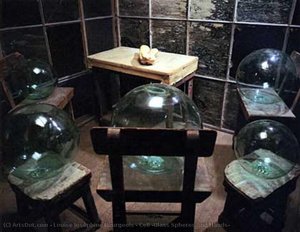
Bourgeois’s artistic journey was not a linear progression but rather a series of detours and unexpected encounters. Initially drawn to mathematics at the Sorbonne – a pursuit she valued for its inherent order and logic – she abandoned this path after her mother's death, recognizing that the precise calculations of numbers could not fully capture the complexities of human emotion. Instead, she turned to art, studying at prestigious institutions like the École des Beaux-Arts and École du Louvre, absorbing diverse artistic approaches while simultaneously seeking guidance from independent academies. Her early work was characterized by a delicate balance between abstraction and figuration, often exploring themes of childhood memory and domesticity through subtle gestures and evocative imagery. During her time in Paris, she encountered the works of artists like Fernand Léger, whose dynamic compositions and use of industrial materials influenced her own approach to sculpture. Crucially, she also spent two years working as an assistant for Yves Brayer, a prominent surrealist sculptor, gaining invaluable experience in the studio and developing a deeper understanding of the creative process. This period exposed her to a range of techniques and materials, including bronze casting and assemblage, further expanding her artistic repertoire. A pivotal moment in Bourgeois’s career arrived with her relocation to New York City in 1938, following her marriage to art historian Robert Goldwater. Immersed in the vibrant art scene of post-war America, she became associated with the Abstract Expressionist movement, yet always maintained a distinct and intensely personal voice. While sharing their emphasis on emotional intensity, Bourgeois diverged from pure abstraction, infusing her work with symbolic imagery and autobiographical references. The 1940s and 50s saw her experimenting with various mediums – wood, fabric, latex, and found objects – gradually gravitating towards sculpture as the most effective means of expressing her inner world. Her early sculptures, often constructed from found objects and wood, were imbued with a sense of fragility and vulnerability, hinting at the psychological tensions that lay beneath the surface.

Recurring Themes: A Landscape of the Psyche

The core of Bourgeois’s artistic power lies in her relentless exploration of universal human experiences through the lens of her own biography. Domesticity, often depicted as a site of both comfort and confinement, is a recurring theme, explored through sculptures that evoke the architecture of homes – rooms, cells, and towers – imbued with a sense of unease and psychological tension. *Quarantania I*, for example, embodies this exploration, presenting a fragmented domestic space that reflects the complexities of family life. Sexuality, particularly female desire and vulnerability, is another central concern, addressed in works that challenge conventional representations of the body and explore the power dynamics inherent in relationships. Perhaps most profoundly, Bourgeois grappled with themes of the unconscious, delving into personal memories, dreams, and anxieties through symbolic imagery – spiders representing protective mothers, phallic forms embodying both creation and destruction, and fragmented bodies reflecting psychological trauma. The specter of her parents loomed large in her work, particularly the complex relationship she had with her mother and the impact of childhood loss. Her sculptures often feature distorted or fragmented maternal figures, expressing a mixture of longing, resentment, and unresolved grief. The Cell series, perhaps her most iconic body of work, encapsulates these themes, creating enclosed spaces that evoke feelings of confinement, vulnerability, and psychological introspection.

Legacy and Enduring Influence

While Bourgeois exhibited throughout her career, it was in the 1980s and 90s that she experienced a significant resurgence in popularity and critical acclaim, solidifying her place as a major figure in 20th-century art. This late recognition was not merely a matter of belated appreciation; it reflected a growing cultural interest in themes of trauma, memory, and the female experience – themes that Bourgeois had been exploring for decades with unwavering honesty and courage. She paved the way for subsequent generations of female artists, challenging the male-dominated art world and demonstrating the power of personal narrative as a source of artistic innovation. Her influence extends far beyond sculpture, impacting contemporary installation art, performance art, and even feminist theory. Bourgeois’s willingness to confront difficult emotions and explore taboo subjects opened up new avenues for artistic expression, inspiring artists to embrace vulnerability and authenticity in their work. As both a French and American artist, her contributions enrich the artistic traditions of both nations. Her legacy continues to resonate today, reminding us of the enduring power of art to heal, provoke, and illuminate the complexities of the human condition.