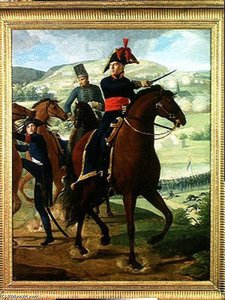
Portret Luiz Hersent

37 najsłynniejszych obrazów artysty Luiz Hersent – wybór z galerii

Aktualizacja: Październik 2026 · ranking według naszego wskaźnika popularności (liczba wyszukiwań, wizyt i zamówień dla każdego dzieła) · 37 dzieł Luiz Hersent w naszym katalogu

W skrócie

Spośród wszystkich dzieł oryginalnych, które pozostawił Luiz Hersent, najsłynniejszym jest Sophie Crouzet (1801), znajdujący się w kolekcji Cleveland Museum of Art w Cleveland. Tuż za nimi znajdują się Henri-Charles-Ferdinand of Artois Duke of Bordeaux and his Sister Louise-Marie-Therese of (1820) oraz Portrait of Madame Le Doyen (1825). Nasz katalog zawiera 37 dzieł autorstwa Luiz Hersent; galeria zachowała 37 najbardziej podziwianych na świecie prac, z których każda została przedstawiona wraz z datą powstania, informacją o muzeum oraz jej historią.

1777 – 1860, Paryż Neoclassicism Najwięcej dzieł: Musée Carnavalet

10 najlepszych obrazów artysty Luiz Hersent: wybór galerii

The Luiz Hersent selection continues, 11 to 37

Tematy, które przyciągnęły wzrok Luiz Hersent

Cztery motywy najczęściej powracające w tych oryginałach, z których każdy doczekał się swojego najdoskonalszego przykładu.

Muzea przechowujące oryginały Luiz Hersent

8 muzeów, w których znajduje się najwięcej obrazów z tej strony.

Muzeum Miasto Dzieła artysty Luiz Hersent Obrazy z tej listy
Musée Carnavalet, ParyżMusée Carnavalet Paryż 3 Portrait of Madame Arachequesne, Portrait of Romain de Bourge, General Louis Marie Turreau De Garambouville At The Gravieres Affair
Opera House, VersaillesOpera House Versailles 3 Louise-Adélaïde Desnos, Queen Maria Amalia Of The French, Delphine De Girardin
Cleveland Museum of Art, ClevelandCleveland Museum of Art Cleveland 1 Sophie Crouzet
Musée de la Vie Romantique, ParisMusée de la Vie Romantique Paris 1 Portrait of Madame Le Doyen
Zamek Wersalski, WersalZamek Wersalski Wersal 1 Portrait of Sophie Gay
Museum of the French Revolution, VizilleMuseum of the French Revolution Vizille 1 The Battle Of Landschut, 21st April
Musée Condé, ChantillyMusée Condé Chantilly 1 Marie-amelie De Bourbon -
Nationalmuseum, StockholmNationalmuseum Stockholm 1 Fénélon Returns A Stolen Cow To A Peasant

Luiz Hersent dekada po dekadzie: oryginały definiujące każdy okres

Dzieła według dekad

Wybierz dekadę, aby zobaczyć dzieło, które ją definiuje.

Pytania kolekcjonerów o obrazy Luiz Hersent

Z jakiego dzieła najbardziej znany jest Luiz Hersent?Odkryj odpowiedź

Sophie Crouzet (1801), Cleveland Museum of Art, Cleveland. Następne są Henri-Charles-Ferdinand of Artois Duke of Bordeaux and his Sister Louise-Marie-Therese of (1820) oraz Portrait of Madame Le Doyen (1825).

W jakim wieku był Luiz Hersent, gdy powstało Sophie Crouzet?Odkryj odpowiedź

24 lat: Sophie Crouzet pochodzi z 1801, a Luiz Hersent urodził(a) się w 1777.

Jakie są dziesięć najsłynniejszych obrazów, których autorem jest Luiz Hersent?Odkryj odpowiedź

Sophie Crouzet, Henri-Charles-Ferdinand of Artois Duke of Bordeaux and his Sister Louise-Marie-Therese of, Portrait of Madame Le Doyen, Portrait of Madame Arachequesne, Portrait of Sophie Gay, Portrait of Madame Demetz in a red sofa, Religieux de l'hospice du mont Saint Gothard, Portrait of Sophie Legrand, comtesse Walsh de Serrant, and her children, Self-portrait i Louise-Adélaïde Desnos. Powyższy ranking zawiera rok powstania oraz muzeum dla każdego z nich.

Ile obrazów pozostawił po sobie Luiz Hersent?Odkryj odpowiedź

Nasz katalog zawiera 37 dzieł artysty Luiz Hersent, datowanych od 1801 do 1854.

W których muzeach znajdują się arcydzieła Luiz Hersent?Odkryj odpowiedź

W większości znajdują się w Musée Carnavalet (Paryż), Opera House (Versailles) i Cleveland Museum of Art (Cleveland). Powyższa tabela muzeów zawiera ich pełną listę.

W których latach Luiz Hersent namalował swoje najsłynniejsze dzieła?Odkryj odpowiedź

W 1820s: 5 z 37 dzieł na tej stronie powstało w tym czasie, w tym Henri-Charles-Ferdinand of Artois Duke of Bordeaux and his Sister Louise-Marie-Therese of.

Jakie są pierwsze i ostatnie słynne oryginały Luiz Hersent?Odkryj odpowiedź

Na tej stronie najwcześniejszy to Sophie Crouzet (1801), a najpóźniejszy Self-portrait (1854).

Jakie tematy Luiz Hersent wybierał najczęściej?Odkryj odpowiedź

Portraiture (4), Royalty (3) i Neoclassical style (2), w ramach 37 dzieł na tej stronie.

Do jakiego nurtu artystycznego należy Luiz Hersent?Odkryj odpowiedź

Neoclassicism, sądząc po oryginałach na tej stronie.

Które dzieła Luiz Hersent znajdują się w Musée Carnavalet?Odkryj odpowiedź

Portrait of Madame Arachequesne, Portrait of Romain de Bourge i General Louis Marie Turreau De Garambouville At The Gravieres Affair: Musée Carnavalet, Paryż posiada 3 dzieł widocznych na tej stronie.

Czy mogę zamówić reprodukcję obrazu Luiz Hersent?Odkryj odpowiedź

Tak, jako reprodukcja: oryginał pozostaje w muzeum, ale każdy obraz na tej stronie może zostać namalowany ręcznie specjalnie dla Ciebie, na zamówienie, z poziomu strony danego dzieła.

Luiz Hersent: życie i twórczość

A Legacy in Portraiture: The Life and Art of Louis Hersent

Louis Hersent, a name resonating with the elegance of the French Restoration era, was more than just a painter; he was a chronicler of his time. Born in Paris in 1777, Hersent’s artistic journey unfolded against a backdrop of revolutionary upheaval and imperial grandeur, ultimately solidifying his place as a master of Neoclassical portraiture and historical painting. His canvases offer not merely likenesses but insightful glimpses into the personalities and societal currents of early 19th-century France. From an early age, Hersent demonstrated a keen aptitude for art, leading him to the studio of Jacques-Louis David – a pivotal moment that would indelibly shape his aesthetic sensibilities. David, the preeminent Neoclassical painter and official artist of Napoleon Bonaparte, instilled in Hersent a rigorous approach to draftsmanship, composition, and form. This foundational training emphasized clarity, balance, and a restrained palette—hallmarks that would define Hersent’s mature style. Winning the prestigious Prix de Rome in 1797 further cemented his commitment to classical ideals, providing him with invaluable exposure to the artistic heritage of Italy.

The Embrace of Neoclassicism and Artistic Development

Hersent's work embodies the core tenets of Neoclassicism: a reverence for antiquity, an emphasis on order and reason, and a commitment to technical precision. However, while deeply rooted in this tradition, Hersent wasn’t merely imitative. He infused his paintings with a subtle psychological depth, capturing not just the outward appearance but also the inner character of his subjects. His portraits are characterized by dignified poses, meticulous attention to detail—particularly in fabrics and textures—and a restrained emotionality that speaks volumes. He excelled at portraying members of the French aristocracy and military leaders, figures who sought to project an image of stability and authority in the wake of revolutionary turmoil. Paintings like The Duc D'Orléans, Duke Of Chartres And Nemours, exemplify this approach, presenting a commanding figure radiating both power and refinement. Hersent’s ability to translate historical events into compelling visual narratives earned him considerable acclaim and further solidified his position within the artistic establishment. He consistently exhibited at the Paris Salon, earning first-class medals in 1817 and 1819—testaments to his growing reputation and artistic prowess.

Influences and Artistic Training

Jacques-Louis David’s influence on Hersent was profound. David's unwavering dedication to classical ideals – mirroring those of Michelangelo and Raphael – served as a guiding force for Hersent’s artistic development. The meticulous draftsmanship demanded by David’s studio instilled in Hersent a discipline that would permeate his entire oeuvre. More than simply replicating stylistic conventions, Hersent absorbed David’s philosophical underpinning: the belief that art should elevate the human spirit and embody moral virtue. This conviction fueled his ambition to depict heroic figures with dignity and grace—a hallmark of Neoclassical painting. The Prix de Rome scholarship provided Hersent with unparalleled access to the artistic treasures of Italy, exposing him to the monumental sculptures of antiquity and fostering a deeper understanding of classical aesthetics. These formative experiences shaped his visual vocabulary and solidified his commitment to mastering the techniques of portraiture and historical painting.

Notable Achievements: Portraits of Distinction

Hersent’s fame rested primarily on his portraits—a genre he pursued with unwavering dedication throughout his career. He produced numerous commissions depicting prominent members of French society, capturing their likenesses with remarkable accuracy and conveying their personalities with subtle nuance. Among his most celebrated works are depictions of Henri-Charles Ferdinand, Duke Of Weimar, showcasing the aristocratic elegance of the era; André Masséna, Duke Of Rivoli, portraying a military leader with unwavering resolve; and Peter I Of Russia, depicting Tsar Peter I in a pose that conveys both grandeur and introspection. Each portrait is characterized by meticulous attention to detail—particularly in fabrics and textures—and a restrained emotionality that reveals more than mere surface appearance. Hersent’s ability to capture the essence of his subjects cemented his reputation as one of France's foremost portraitists.

A Legacy Enduring Through Time

Louis Hersent passed away in 1860, leaving behind a substantial body of work that continues to captivate and inspire. His paintings are not merely historical artifacts; they are windows into a bygone era—testaments to the enduring power of art to capture the human spirit and preserve the memory of those who came before. He consistently upheld the highest standards of artistic excellence, blending classical principles with psychological insight—a distinction that secures his place among the giants of French Neoclassicism. His legacy resides in his ability to translate historical narratives into compelling visual representations, reminding us of the importance of beauty and moral virtue within art. Hersent’s enduring influence can be seen in subsequent generations of artists who sought to emulate his technical mastery and aesthetic sensibility—a testament to the lasting impact of a singular artistic vision.

Wszystkie 37 dzieła artysty Luiz Hersent →