Portret John Martin

88 najsłynniejszych obrazów artysty John Martin – wybór z galerii

Aktualizacja: Październik 2026 · ranking według naszego wskaźnika popularności (liczba wyszukiwań, wizyt i zamówień dla każdego dzieła) · 88 dzieł John Martin w naszym katalogu

W skrócie

Spośród wszystkich dzieł oryginalnych, które pozostawił John Martin, najsłynniejszym jest The Great Day of His Wrath (1851), znajdujący się w kolekcji Tate Britain w Londyn. Tuż za nimi znajdują się The Destruction of Sodom And Gomorrah (1852) oraz The Evening of the Deluge (1828). Nasz katalog zawiera 88 dzieł autorstwa John Martin; galeria zachowała 88 najbardziej podziwianych na świecie prac, z których każda została przedstawiona wraz z datą powstania, informacją o muzeum oraz jej historią.

1789 – 1854, Haydon Bridge Romanticism Najwięcej dzieł: Yale Center for British Art

10 najlepszych obrazów artysty John Martin: wybór galerii

1
The Great Day of His Wrath (1851) autorstwa John Martin

The Great Day of His Wrath

1851 · Oil On Canvas · Tate Britain, Londyn

In the heart of the nineteenth century, few images could stir the Victorian soul with as much terror and awe as John Martin’s The Great Day of His Wrath. This monumental oil on canvas is not merely a painting; it is a visceral experience of the sublime. As the eye wanders across the vast, turbulent landscape, one is immediately struck by the sheer scale of destruction. The scene captures the…

2
The Destruction of Sodom And Gomorrah (1852) autorstwa John Martin

The Destruction of Sodom And Gomorrah

1852 · Oil On Canvas · Laing Art Gallery, Newcastle upon Tyne

The heavens do not merely darken; they fracture. A massive, swirling vortex of fiery clouds dominates the upper reaches of the canvas, a celestial furnace that seems to swallow the very air. Light does not fall from above in a gentle glow but erupts from the center of a cosmic explosion. It is a violent, directional radiance that carves the landscape into jagged silhouettes of deep black and shadowy blue.…

3
The Evening of the Deluge (1828) autorstwa John Martin

The Evening of the Deluge

1828 · Engraving · Victoria and Albert Museum, Londyn

To stand before John Martin's monumental vision, The Evening of the Deluge, is not merely to observe a painting; it is to be submerged within an epochal moment of divine wrath and human fragility. Created in 1828, this work transcends simple depiction, becoming instead a profound meditation on humanity’s place against the overwhelming power of nature. Martin, a master chronicler of the sublime, utilized his immense scale—a staggering 597 x…

4
Eve (1827) autorstwa John Martin

Eve

1827 · Akryl na płótnie · Te Papa, Wellington

John Martin (1789-1854) stands as a titan of Romantic painting, an artist who wrestled with the sublime and channeled its anxieties onto canvas in ways that continue to resonate today. His monumental print, ‘Eve,’ exemplifies this preoccupation—a chilling depiction of temptation and divine retribution rendered with meticulous detail and imbued with palpable emotion.

6
Destruction of Tyre (1840) autorstwa John Martin

Destruction of Tyre

1840 · Oil On Canvas · Muzeum Sztuki w Toledo, Toledo

John Martin's "Destruction of Tyre," completed in 1840, is not merely a depiction of a historical event; it is a visceral embodiment of Romanticism’s fascination with the sublime – that overwhelming feeling of awe and terror inspired by nature’s power. Measuring an imposing 95 x 838 cm, this oil on canvas transports the viewer directly into the heart of apocalyptic chaos. The scene, based on the biblical account in 2…

7
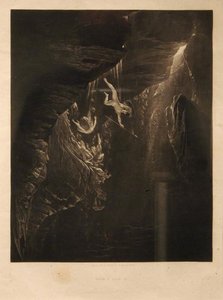
Satan in Council autorstwa John Martin

Satan in Council

Engraving

The scene unfolds through the vision of Satan in Council, a dramatic work by the English romantic painter John Martin. This composition captures a moment of intense celestial and infernal tension, pulling the viewer into a realm of shadow and light. The work is also recognized by the title Satan presiding at the Infernal Council, a name that speaks to the heavy authority commanding the assembly. It exists as a…

8
Pandemonium (1841) autorstwa John Martin

Pandemonium

1841 · Oil On Canvas

The Sublime Terror of the Infernal Capital In the annals of Romanticism, few images command the eye with such overwhelming dread and grandeur as John Martin’s Pandemonium. Painted in 1841, this oil on canvas is not merely a depiction of a scene; it is an immersive descent into the heart of cosmic chaos. The viewer is immediately confronted by the sheer, terrifying scale of Hell’s capital, where the architecture of…

9
Fall of Babylon autorstwa John Martin

Fall of Babylon

The heavens fracture as the destruction of Babylon unfolds in this dramatic vision by John Martin. The scene captures a terrifying Old Testament biblical narrative, where the once-mighty city faces its ultimate end. Chaos reigns as the landscape is swallowed by upheaval, reflecting a moment of divine judgment that feels immediate and overwhelming. The scale of the catastrophe looms large, turning the sprawling cityscape into a site of profound human…

10
Belshazzar's Feast autorstwa John Martin

Belshazzar's Feast

Oil On Canvas · Musée Carnavalet, Paryż

The scene unfolds within a vast, architectural interior where a long dining table occupies the central space. Around this table, fourteen figures are positioned in various states of repose and movement. Some individuals sit in chairs, while others kneel or stand near the edges of the gathering. The table is laden with food and drink, set against a backdrop of grand, structural elements. Above the assembly, a clock hangs upon…

The John Martin selection continues, 11 to 88

11The Plains of Heaven autorstwa John MartinThe Plains of Heaven 12The Great Day of His Wrath autorstwa John MartinThe Great Day of His Wrath 13Satan Arousing the Fallen Angels, Book 1, line 314, from John Milton, Paradise Lost (1824) autorstwa John MartinSatan Arousing the Fallen Angels, Book 1, line 314, from John Milton, Paradise Lost1824 14The Last Man (1849) autorstwa John MartinThe Last Man1849 · Walker Art Gallery 15Landscape with a Castle (1815) autorstwa John MartinLandscape with a Castle1815 · Yale Center for British Art 16Plate from autorstwa John MartinPlate fromTate Britain 17Ancestor Worship (1964) autorstwa John MartinAncestor Worship1964 · Narodowa Galeria Kanady 18Moonlight - Chepstow Castle (1815) autorstwa John MartinMoonlight - Chepstow Castle1815 · Art Gallery of South Australia 19Kraj iguanodona (1837) autorstwa John MartinKraj iguanodona1837 · Te Papa 20Sadak in Search of the Waters of Oblivion autorstwa John MartinSadak in Search of the Waters of OblivionMuseum of Fine Arts 21Kensington Garden (1815) autorstwa John MartinKensington Garden1815 · Yale Center for British Art 22Kensington Garden (1815) autorstwa John MartinKensington Garden1815 · Yale Center for British Art 23Kensington Gardens (1815) autorstwa John MartinKensington Gardens1815 · Yale Center for British Art 24Landscape, Possibly the Isle of Wight or Richmond Hill (1815) autorstwa John MartinLandscape, Possibly the Isle of Wight or Richmond Hill1815 · Yale Center for British Art 25Hyde Park (1815) autorstwa John MartinHyde Park1815 · Yale Center for British Art 26The Court of God: Paradise Lost (Book 3, Line 365) (1824) autorstwa John MartinThe Court of God: Paradise Lost (Book 3, Line 365)1824 · Narodowa Galeria Kanady 27Diogenes Throwing Away His Cup (1833) autorstwa John MartinDiogenes Throwing Away His Cup1833 28Alpheus and Arethusa (1832) autorstwa John MartinAlpheus and Arethusa1832 29The Deluge (1834) autorstwa John MartinThe Deluge1834 30Joshua Commanding the Sun to Stand Still (1840) autorstwa John MartinJoshua Commanding the Sun to Stand Still1840 · Yale Center for British Art 31The Assuaging of the Waters (1840) autorstwa John MartinThe Assuaging of the Waters1840 · Fine Arts Museums of San Francisco 32Twilight in the woodlands (1850) autorstwa John MartinTwilight in the woodlands1850 · Fitzwilliam Museum 33Landscape: View in Richmond Park (1850) autorstwa John MartinLandscape: View in Richmond Park1850 · Fitzwilliam Museum 34The Last Judgement (study) (1851) autorstwa John MartinThe Last Judgement (study)1851 · Yale Center for British Art 35Christ Stilleth the Tempest (1852) autorstwa John MartinChrist Stilleth the Tempest1852 · York Art Gallery 36F shaw brothers tannery maine autorstwa John MartinF shaw brothers tannery maineBawarskie Państwowe Zbiory Malarstwa 37Paradise Lost. Adam and Eve Driven out of Paradise autorstwa John MartinParadise Lost. Adam and Eve Driven out of Paradise 38Seventh Plague autorstwa John MartinSeventh Plague 39Gleaners in the Wheat Field autorstwa John MartinGleaners in the Wheat Field 40The Last Judgement autorstwa John MartinThe Last JudgementTate Britain 41The Isle of Man autorstwa John MartinThe Isle of Man 42The Destruction of Sodom and Gomorrah autorstwa John MartinThe Destruction of Sodom and Gomorrah 43The Valley of the Tyne, My Native Country, near Henshaw autorstwa John MartinThe Valley of the Tyne, My Native Country, near Henshaw 44Destruction of Pharaoh's Host autorstwa John MartinDestruction of Pharaoh's Host 45The Covenant autorstwa John MartinThe Covenant 46Figures Seated by a Lake in a Wooded Landscape autorstwa John MartinFigures Seated by a Lake in a Wooded Landscape 47Psalm CXXVII (by the Waters of Babylon) autorstwa John MartinPsalm CXXVII (by the Waters of Babylon) 48Moses Breaketh the Tables autorstwa John MartinMoses Breaketh the Tables 49A Man Playing a Harp with other Figures beside a Lake autorstwa John MartinA Man Playing a Harp with other Figures beside a Lake 50Ruins of an Ancient City autorstwa John MartinRuins of an Ancient CityCleveland Museum of Art 51Joshua Commanding the Sun to Stand Still upon Gibeon autorstwa John MartinJoshua Commanding the Sun to Stand Still upon Gibeon 52Landscape with a Ruined Castle autorstwa John MartinLandscape with a Ruined Castle 53Edwin and Angelina (also known as The Hermit) autorstwa John MartinEdwin and Angelina (also known as The Hermit) 54The Plains of Heaven (1851) autorstwa John MartinThe Plains of Heaven1851 · Tate Britain 55Repentance of Nineveh (1840) autorstwa John MartinRepentance of Nineveh1840 · Yale University Art Gallery 56Pandemonium - John Martin (2026) autorstwa John MartinPandemonium - John Martin2026 57Kraj iguanodonu (1837) autorstwa John MartinKraj iguanodonu1837 · Te Papa 58Plate from autorstwa John MartinPlate fromTate Britain 59Plate from autorstwa John MartinPlate fromTate Britain 60Fall of the Rebel Angels autorstwa John MartinFall of the Rebel AngelsHarvard Art Museums 61Paradise Lost. The Creation of Light autorstwa John MartinParadise Lost. The Creation of Light 62Flood at night autorstwa John MartinFlood at night 63David Spareth Saul at Hachilah autorstwa John MartinDavid Spareth Saul at Hachilah 64Fall of the Walls of Jericho autorstwa John MartinFall of the Walls of Jericho 65Fantastic Oriental Landscape autorstwa John MartinFantastic Oriental Landscape 66Fall of the Rebel Angels autorstwa John MartinFall of the Rebel Angels 67Christ's glorious coming autorstwa John MartinChrist's glorious coming 68The Assuaging of the Waters autorstwa John MartinThe Assuaging of the Waters 69Creation of Light autorstwa John MartinCreation of Light 70View on the River Wye, Looking towards Chepstow autorstwa John MartinView on the River Wye, Looking towards Chepstow 71Joshua commanding the Sun to stand still autorstwa John MartinJoshua commanding the Sun to stand still 72Eve's Dream - Satan aroused autorstwa John MartinEve's Dream - Satan aroused 73The Fallen Angels Entering Pandemonium, from Paradise Lost autorstwa John MartinThe Fallen Angels Entering Pandemonium, from Paradise LostTate Britain 74View of Dolbadern Castle, North Wales autorstwa John MartinView of Dolbadern Castle, North Wales 75A Country Graveyard, Possibly Bunhill Fields, Finsbury, A Wooded Landscape Beyond autorstwa John MartinA Country Graveyard, Possibly Bunhill Fields, Finsbury, A Wooded Landscape Beyond 76Belshazzar (1820) autorstwa John MartinBelshazzar1820 · Yale Center for British Art 77Manfred and the Alpine Witch (1837) autorstwa John MartinManfred and the Alpine Witch1837 · Whitworth Art Gallery 78Sadak in Search of the Waters of Oblivion (1812) autorstwa John MartinSadak in Search of the Waters of Oblivion1812 · Saint Louis Art Museum 79Seventh Plague of Egypt autorstwa John MartinSeventh Plague of EgyptMuseum of Fine Arts 80The Destruction of Pompeii and Herculaneum (1822) autorstwa John MartinThe Destruction of Pompeii and Herculaneum1822 81Joshua Commanding the Sun to Stand Still upon Gibeon (1816) autorstwa John MartinJoshua Commanding the Sun to Stand Still upon Gibeon1816 · National Gallery of Art 82The Eve of the Deluge (1840) autorstwa John MartinThe Eve of the Deluge1840 · Royal Collection 83Manfred on the Jungfrau (1837) autorstwa John MartinManfred on the Jungfrau1837 · Birmingham Museum and Art Gallery 84The Celestial City and the River of Bliss (1841) autorstwa John MartinThe Celestial City and the River of Bliss1841 85Macbeth autorstwa John MartinMacbeth 86The Coronation of Queen Victoria autorstwa John MartinThe Coronation of Queen VictoriaTate Britain 87The Bard (1817) autorstwa John MartinThe Bard1817 · Yale Center for British Art 88The Deluge (1834) autorstwa John MartinThe Deluge1834 · Yale Center for British Art

Słynne obrazy John Martin epoka po epoce

Tematy, które przyciągnęły wzrok John Martin

Cztery motywy najczęściej powracające w tych oryginałach, z których każdy doczekał się swojego najdoskonalszego przykładu.

Muzea przechowujące oryginały John Martin

8 muzeów, w których znajduje się najwięcej obrazów z tej strony.

Muzeum Miasto Dzieła artysty John Martin Obrazy z tej listy
Yale Center for British Art, New HavenYale Center for British Art New Haven 11 Landscape with a Castle, Kensington Garden, Kensington Garden
Tate Britain, LondynTate Britain Londyn 8 The Great Day of His Wrath, Plate from, The Last Judgement
Te Papa, WellingtonTe Papa Wellington 3 Eve, Kraj iguanodona, Kraj iguanodonu
Narodowa Galeria Kanady, OttawaNarodowa Galeria Kanady Ottawa 2 Ancestor Worship, The Court of God: Paradise Lost (Book 3, Line 365)
Museum of Fine Arts, BostonMuseum of Fine Arts Boston 2 Sadak in Search of the Waters of Oblivion, Seventh Plague of Egypt
Fitzwilliam MuseumFitzwilliam Museum 2 Twilight in the woodlands, Landscape: View in Richmond Park
Laing Art Gallery, Newcastle upon TyneLaing Art Gallery Newcastle upon Tyne 1 The Destruction of Sodom And Gomorrah
Victoria and Albert Museum, LondynVictoria and Albert Museum Londyn 1 The Evening of the Deluge

John Martin dekada po dekadzie: oryginały definiujące każdy okres

Dzieła według dekad

Wybierz dekadę, aby zobaczyć dzieło, które ją definiuje.

Pytania kolekcjonerów o obrazy John Martin

Z jakiego dzieła najbardziej znany jest John Martin?Odkryj odpowiedź

The Great Day of His Wrath (1851), Tate Britain, Londyn. Następne są The Destruction of Sodom And Gomorrah (1852) oraz The Evening of the Deluge (1828).

W jakim wieku był John Martin, gdy powstało The Great Day of His Wrath?Odkryj odpowiedź

62 lat: The Great Day of His Wrath pochodzi z 1851, a John Martin urodził(a) się w 1789.

Jakie są dziesięć najsłynniejszych obrazów, których autorem jest John Martin?Odkryj odpowiedź

The Great Day of His Wrath, The Destruction of Sodom And Gomorrah, The Evening of the Deluge, Eve, Great Day of His Wrath, Destruction of Tyre, Satan in Council, Pandemonium, Fall of Babylon i Belshazzar's Feast. Powyższy ranking zawiera rok powstania oraz muzeum dla każdego z nich.

Ile obrazów pozostawił po sobie John Martin?Odkryj odpowiedź

Nasz katalog zawiera 88 dzieł artysty John Martin, datowanych od 1812 do 1852.

W których muzeach znajdują się arcydzieła John Martin?Odkryj odpowiedź

W większości znajdują się w Yale Center for British Art (New Haven), Tate Britain (Londyn) i Te Papa (Wellington). Powyższa tabela muzeów zawiera ich pełną listę.

W których latach John Martin namalował swoje najsłynniejsze dzieła?Odkryj odpowiedź

W 1810s: 10 z 88 dzieł na tej stronie powstało w tym czasie, w tym Landscape with a Castle.

Jakie są pierwsze i ostatnie słynne oryginały John Martin?Odkryj odpowiedź

Na tej stronie najwcześniejszy to Sadak in Search of the Waters of Oblivion (1812), a najpóźniejszy The Destruction of Sodom And Gomorrah (1852).

Jakie tematy John Martin wybierał najczęściej?Odkryj odpowiedź

People (12), Landscape (11) i Mountains (7), w ramach 88 dzieł na tej stronie.

Której techniki John Martin używał najczęściej?Odkryj odpowiedź

Oil On Canvas, dla 14 z 88 dzieł na tej stronie.

Do jakiego nurtu artystycznego należy John Martin?Odkryj odpowiedź

Romanticism, sądząc po oryginałach na tej stronie.

Które dzieła John Martin znajdują się w Yale Center for British Art?Odkryj odpowiedź

Landscape with a Castle, Kensington Garden i Kensington Garden: Yale Center for British Art, New Haven posiada 11 dzieł widocznych na tej stronie.

Czy mogę zamówić reprodukcję obrazu John Martin?Odkryj odpowiedź

Tak, jako reprodukcja: oryginał pozostaje w muzeum, ale każdy obraz na tej stronie może zostać namalowany ręcznie specjalnie dla Ciebie, na zamówienie, z poziomu strony danego dzieła.

John Martin: życie i twórczość

John Martin: Mistrz Melodramatycznego Romantyzmu

John Martin (1789–1854) był znamienitym angielskim malarzem romantycznym, rytownikiem i ilustratorem, którego dramatyczne kompozycje potrafiły oczarować wiktoriańską publiczność. Urodzony 19 lipca 1789 roku w Haydon Bridge w Northumberland, wzniósł się z pokory swoich skromnych początków, by stać się jednym z najpopularniejszych artystów swoich czasów. Sławę przyniosły mu monumentalne krajobrazy zamieszkane przez mikroskopijne postaci, przedstawiające sceny biblijne oraz fantastyczne narracje z potężnym poczuciem skali i głębokim ładunkiem emocjonalnym.

Wczesne lata i artystyczny rozwój

Wczesne lata życia Martina upłynęły pod znakiem praktycznych zajęć. Jako uczeń rzemieślnika budującego powozy w Newcastle upon Tyne, zgłębiał tajniki malarstwa heraldycznego – umiejętność ta w późniejszym okresie zaowocowała jego niezwykłą, skrupulatną dbałością o detal. W 1806 roku przeniósł się do Londynu, gdzie już w wieku dziewiętnastu lat założył rodzinę, utrzymując się z udzielania lekcji rysunku oraz realizacji zleceń na akwarele i dekoracje porcelany oraz szkła. Ten okres nie tylko oszlifował jego techniczne rzemiosło, ale pozwolił mu również na eksperymentowanie z różnymi mediami artystycznymi. Jego wczesne dzieła już wtedy zdradzały rodzące się zainteresowanie dramatycznym światłocieniem i kompozycją, co stanowiło zapowiedź jego późniejszego, unikalnego stylu.

Styl artystyczny i wybitne dzieła

Wyrazisty styl Martina charakteryzuje się ogromną skalą, melodramatyczną intensywnancją oraz niezwykłą precyzją detalu. Często podejmował tematy biblijne, takie jak Zniszczenie Sodomy i Gomory czy Uczta Belshazzara, nadając im teatralny blask, który głęboko rezonował z odbiorcami. Jego pejzaże, na przykład Kościół Harnham w pobliżu Salisbury, dowodziły zdolności artysty do chwytania spokoju wiejskich scenerii przy jednoczesnym zachowaniu poczucia majestatu. Do kluczowych dzieł prezentujących jego kunszt należą:

  • Zniszczenie Sodomy i Gomory: Monumentalne przedstawienie boskiej kary, ukazujące niezwykłą biegłość Martina w portretowaniu chaosu i destrukcji na niespotykaną skalę.
  • Uczta Belshazzara: Ilustracja biblijnej opowieści z wykorzystaniem dramatycznego oświetlenia i misternych detali, podkreślająca upadek Babilonu.
  • Manfred i alpejska czarownica: Dzieło inspirowane poematem Byrona, stanowiące przykład zdolności Martina do przekładania narracji literackich na oszałamiające wizualnie kompozycje.
  • Satan budzący upadłe anioły (z „Raju utraconego”): Potężna interpretacja epickiego poematu Miltona, prezentująca talent artysty w kreowaniu dramatycznych scen literackich.
  • Pandemonium: Fantastyczna wizja stolicy Piekła, demonstrująca wyobraźnię Martina oraz jego mistrzostwo w operowaniu perspektywą.
  • Kraina Iguanodona: Wczesny przykład paleoartu, odzwierciedlający rodzące się w jego czasach zainteresowanie odkryciami naukowymi.

Uznanie i dziedzictwo

John Martin za życia osiągnął znaczące uznanie. W 1821 roku Walter Sickert określił go mianem „najpopularniejszego malarza swoich czasów”, a artysta otrzymał złoty medal od rosyjskiego cara Mikołaja I. Został również uhonorowany Orderem Leopolda przez księcia Leopolda z Saksovii-Koburgii, stając się oficjalnym malarzem historycznym księcia. Jego prace były wystawiane zarówno w National Gallery, jak i w Tate Gallery, co ugruntowało jego pozycję w brytyjskim kanonie sztuki.

Mimo okresu względnego zapomnienia po śmierci 17 lutego 1854 roku, twórczość Martina przeżywa dziś renesans. Współcześnie jego malarstwo cenione jest za unikalne połączenie romantycznego dramatyzmu, drobiazgowości i nieograniczonej wyobraźni. Jego wpływ można dostrzec w pracach późniejszych artystów, w tym Jamesa Francisa Danby'ego, który czerpał inspirację z jego dramatycznych krajobrazów. John Martin pozostaje kluczową postacią w historii sztuki brytyjskiej, celebrowaną za zdolność przenoszenia widza do epickich światów, wypełnionych zarówno zapierającym dech w piersiach pięknem, jak i przerażającą potęgą.

Wszystkie 88 dzieła artysty John Martin →