Portret Jean Clouet

The 37 Most Famous Jean Clouet Paintings, a Gallery Selection

Aktualizacja: Październik 2026 · ranking według naszego wskaźnika popularności (liczba wyszukiwań, wizyt i zamówień dla każdego dzieła) · 37 dzieł Jean Clouet w naszym katalogu

In short

Of all the originals Jean Clouet left, the most famous is Francis I of France (1494-1547), king of France (1515), in the collection of the Musée Condé, Chantilly. Close behind it come Unknown Lady (1525) and Unknown Lady (1530). Our catalog holds 37 works by Jean Clouet; the gallery has kept the 37 the world admires most, each shown with its date, its museum and its story.

1480 – 1541, Bruksela Renaissance portraiture Najwięcej dzieł: Château de Chantilly

Jean Clouet's top 10 paintings: the gallery's choice

1
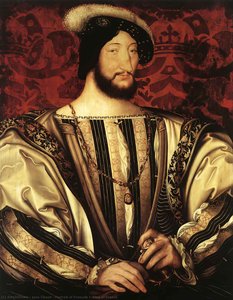
Francis I of France (1494-1547), king of France (1515) autorstwa Jean Clouet

Francis I of France (1494-1547), king of France

1515 · Oil On Panel · Musée Condé, Chantilly

The subject is positioned in a bust-length composition, facing toward the right of the frame while his gaze remains directed forward. He wears a black hat and a cloak that covers his shoulders. A cream-colored collar with a ribbed texture sits at his neck, contrasting with the dark fabric of his attire. The skin on his face appears smooth, with light coming from the upper left to define the bridge…

2
Unknown Lady (1525) autorstwa Jean Clouet

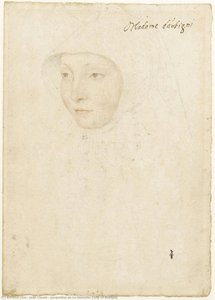
Unknown Lady

1525 · Oil On Canvas · Château de Chantilly, Chantilly

The painting "Unknown Lady," attributed to the masterful French Renaissance artist Jean Clouet, is not merely a portrait; it's an invitation into a world of subtle observation and carefully constructed mystery. Completed around 1525, this captivating drawing—a testament to Clouet’s meticulous technique and psychological acuity—holds within its delicate lines a profound sense of contained emotion. It resides in the heart of the WahooArt collection, offering a glimpse into the courtly…

3
Unknown Lady (1530) autorstwa Jean Clouet

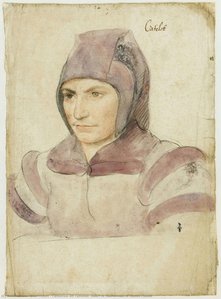
Unknown Lady

1530 · Acrylic On Canvas · Château de Chantilly, Chantilly

The world of 16th-century French portraiture is often associated with opulent courts and meticulously rendered depictions of royalty, yet within this grand tradition lies a captivating vein of quiet introspection—exemplified perfectly by Jean Clouet’s “Unknown Lady.” Painted around 1525, this drawing, now housed in a stunning reproduction, offers far more than a simple likeness; it's an invitation to contemplate the veiled emotions and subtle power dynamics inherent in Renaissance society.…

4
Portrait of Francis I (1525) autorstwa Jean Clouet

Portrait of Francis I

1525 · Oil On Panel · Luwr, Paryż

Jean Clouet's 1525-30 “Portrait of Francis I” is more than just a royal likeness; it’s a meticulously crafted embodiment of the French Renaissance at its zenith. Housed within the hallowed halls of the Louvre, this oil on panel painting transcends mere portraiture, offering a profound glimpse into the character and ambitions of King Francis I himself. Clouet, a master of courtly art, doesn't simply depict a monarch; he constructs an…

5
Guillaume Budé (1536) autorstwa Jean Clouet

Guillaume Budé

1536 · Oil On Panel · Metropolitan Museum of Art, Nowy Jork

Jean Clouet’s depiction of Guillaume Budé, completed around 1536, stands as a quintessential emblem of the Florentine Renaissance's fascination with intellectual pursuits and humanist ideals. More than just a likeness of a prominent scholar—Budé being the librarian to King Francis I—the painting embodies a carefully constructed visual narrative that speaks volumes about the era’s preoccupation with reason, virtue, and classical learning.

6
Portrait of Beatrix Pacheco, Countess of Montbel und Entremonts (1550) autorstwa Jean Clouet

Portrait of Beatrix Pacheco, Countess of Montbel und Entremonts

1550 · Oil On Panel · Städel Museum, Frankfurt nad Menem

The Countess Beatrix Pacheco sits in a quiet, poised stillness, her presence filling the space with a sense of noble composure. She turns her head slightly toward the left, her eyes meeting the viewer with a steady, penetrating look that bridges the centuries. A soft, gentle smile rests upon her lips, suggesting a woman of profound character and inner life. The light, descending from the upper left, brushes against the…

8
Portrait of a Banker (1522) autorstwa Jean Clouet

Portrait of a Banker

1522 · Oil On Panel · Saint Louis Art Museum, Saint Louis

The portrait presents a middle-aged man in a half-length composition, positioned slightly off-center. He gazes toward the left of the frame with a steady, calm expression. The subject is dressed in dark, somber clothing, featuring a black hat with sharp folds and sleeves of a warm pinkish-red hue. His pale skin tones contrast against the deep navy and black of his attire and the dark background. In his hands, he…

9
Portrait of Louis de Cleves (1530) autorstwa Jean Clouet

Portrait of Louis de Cleves

1530 · Oil On Panel · Accademia Carrara, Bergamo

In the Portrait of Louis de Cleves by Jean Clouet, a single male figure emerges from a dark forest green background. The composition is a medium close-up, capturing the man from the chest up. He is positioned slightly off-center, his gaze directed toward the left of the frame. This orientation creates a sense of quiet gravity within the space. The subject's presence is anchored by a palette of deep, saturated…

10
Madame de Canaples (Marie d'Assigny, 1502 - 58) (1525) autorstwa Jean Clouet

Madame de Canaples (Marie d'Assigny, 1502 - 58)

1525 · Oil On Panel · Scottish National Gallery, Edynburg

The artwork titled Madame de Canaples (Marie d'Assigny, 1502 - 58) is a portrait executed by the artist Jean Clouet. This oil on panel work depicts Marie d’Acigné, who is also identified as Madame de Canaples. The sitter was a lady of the court, specifically serving as a maid of honour to Queen Claude of France. The portrait was likely produced in 1525, coinciding with the year Marie d’Acigné married…

The Jean Clouet selection continues, 11 to 37

11Portrait of an unknown man (1515) autorstwa Jean ClouetPortrait of an unknown man1515 · Bawarskie Państwowe Zbiory Malarstwa 12Francis I (1494-1547), King of France. (1525) autorstwa Jean ClouetFrancis I (1494-1547), King of France.1525 13Portrait of Madeleine of France (1520–1537), 3rd Daughter of François I (1494–1537) and Claude of France (1499–1524) (1522) autorstwa Jean ClouetPortrait of Madeleine of France (1520–1537), 3rd Daughter of François I (1494–1537) and Claude of France (1499–1524)1522 14Bemberg Fondation Toulouse - Jean Bertrand, archevêque et cardinal de Sens - Capitoul - Jean CLOUET (1520) autorstwa Jean ClouetBemberg Fondation Toulouse - Jean Bertrand, archevêque et cardinal de Sens - Capitoul - Jean CLOUET1520 · Collection Bemberg 15Charles de Cossé (1506–1563), Count of Brissac (1535) autorstwa Jean ClouetCharles de Cossé (1506–1563), Count of Brissac1535 · Metropolitan Museum of Art 16Portrait of a Lady (1530) autorstwa Jean ClouetPortrait of a Lady1530 · Yale Center for British Art 17Doña Leonor Zapata (1531) autorstwa Jean ClouetDoña Leonor Zapata1531 · Château de Chantilly 18Portrait of Jean de Dinteville, Seigneur de Polisy (1533) autorstwa Jean ClouetPortrait of Jean de Dinteville, Seigneur de Polisy1533 · Musée Condé 19Renée de France, Duchess of Ferrara and Chartres (1519) autorstwa Jean ClouetRenée de France, Duchess of Ferrara and Chartres1519 · Château de Chantilly 20Jacqueline de La Queuille, Lady of Aubigny (1535) autorstwa Jean ClouetJacqueline de La Queuille, Lady of Aubigny1535 · Château de Chantilly 21Catherine dit Cathelot, dwarf or madwoman of Queen Claude (1540) autorstwa Jean ClouetCatherine dit Cathelot, dwarf or madwoman of Queen Claude1540 · Château de Chantilly 22Unknown Lady (1525) autorstwa Jean ClouetUnknown Lady1525 · Château de Chantilly 23Marguerite of France, Duchess of Berry and Savoy (1527) autorstwa Jean ClouetMarguerite of France, Duchess of Berry and Savoy1527 · Château de Chantilly 24Madeleine of France, Queen of Scotland (1524) autorstwa Jean ClouetMadeleine of France, Queen of Scotland1524 · Château de Chantilly 25Portrait of Claude of Lorraine, Duke of Guise (1528) autorstwa Jean ClouetPortrait of Claude of Lorraine, Duke of Guise1528 · Galleria Palatina 26Portrait of Marguerite of Navarre (1527) autorstwa Jean ClouetPortrait of Marguerite of Navarre1527 · Walker Art Gallery 27Gabrielle d'Estrées (1620) autorstwa Jean ClouetGabrielle d'Estrées1620 · National Trust 28Beatrice Pacheco de Silva, Countess of Entremont (1531) autorstwa Jean ClouetBeatrice Pacheco de Silva, Countess of Entremont1531 · Château de Chantilly 29Guillame Gouffier autorstwa Jean ClouetGuillame GouffierSaint Louis Art Museum 30Portrait of a Man Holding a Volume of Petrarch autorstwa Jean ClouetPortrait of a Man Holding a Volume of PetrarchRoyal Collection 31Portrait of an Unknown Man autorstwa Jean ClouetPortrait of an Unknown ManMusée Condé 32The Dauphin François, Son of François I autorstwa Jean ClouetThe Dauphin François, Son of François IKoninklijk Museum voor Schone Kunsten Antwerpen 33Jean de la Barre (1520) autorstwa Jean ClouetJean de la Barre1520 · Musée Condé 34Elisabeth of Austria in hunting costume autorstwa Jean ClouetElisabeth of Austria in hunting costume 35Marie d (1525) autorstwa Jean ClouetMarie d1525 · Château de Chantilly 36Portrait of François I, King of France (1525) autorstwa Jean ClouetPortrait of François I, King of France1525 · Luwr 37Portrait of François I as St John the Baptist (1518) autorstwa Jean ClouetPortrait of François I as St John the Baptist1518

Jean Clouet's famous paintings, period by period

The subjects that held Jean Clouet's eye

The four subjects that come back most often in these originals, each with its finest example.

The museums that keep Jean Clouet's originals

8 muzeów, w których znajduje się najwięcej obrazów z tej strony.

Muzeum Miasto Dzieła artysty Jean Clouet Obrazy z tej listy
Château de Chantilly, ChantillyChâteau de Chantilly Chantilly 11 Unknown Lady, Unknown Lady, Doña Leonor Zapata
Musée Condé, ChantillyMusée Condé Chantilly 4 Francis I of France (1494-1547), king of France, Portrait of Jean de Dinteville, Seigneur de Polisy, Portrait of an Unknown Man
Luwr, ParyżLuwr Paryż 2 Portrait of Francis I, Portrait of François I, King of France
Metropolitan Museum of Art, Nowy JorkMetropolitan Museum of Art Nowy Jork 2 Guillaume Budé, Charles de Cossé (1506–1563), Count of Brissac
Saint Louis Art Museum, Saint LouisSaint Louis Art Museum Saint Louis 2 Portrait of a Banker, Guillame Gouffier
Städel Museum, Frankfurt nad MenemStädel Museum Frankfurt nad Menem 1 Portrait of Beatrix Pacheco, Countess of Montbel und Entremonts
Minneapolis Institute of Art, MinneapolisMinneapolis Institute of Art Minneapolis 1 Portrait of Charlotte of France
Accademia Carrara, BergamoAccademia Carrara Bergamo 1 Portrait of Louis de Cleves

Jean Clouet decade by decade: the original that defines each

Dzieła według dekad

Pick a decade to see the original that defines it.

Collectors' questions about Jean Clouet's paintings

Which work is Jean Clouet most famous for?Reveal the answer

Francis I of France (1494-1547), king of France (1515), Musée Condé, Chantilly. Unknown Lady (1525) and Unknown Lady (1530) come next.

What age was Jean Clouet when Francis I of France (1494-1547), king of France was made?Reveal the answer

35 years old: Francis I of France (1494-1547), king of France dates from 1515, and Jean Clouet was born in 1480.

What are the ten most famous Jean Clouet paintings?Reveal the answer

Francis I of France (1494-1547), king of France, Unknown Lady, Unknown Lady, Portrait of Francis I, Guillaume Budé, Portrait of Beatrix Pacheco, Countess of Montbel und Entremonts, Portrait of Charlotte of France, Portrait of a Banker, Portrait of Louis de Cleves i Madame de Canaples (Marie d'Assigny, 1502 - 58). The ranking above gives each one's year and museum.

How many paintings did Jean Clouet leave?Reveal the answer

Our catalog holds 37 works by Jean Clouet, dated from 1515 to 1540.

In which museums do Jean Clouet's masterpieces hang?Reveal the answer

Mostly in Château de Chantilly (Chantilly), Musée Condé (Chantilly) i Luwr (Paryż). The museum table above lists them all.

In which years did Jean Clouet paint the most famous works?Reveal the answer

In 1520s: 16 of the 37 works on this page were made then, Unknown Lady among them.

What are the first and the last famous originals of Jean Clouet?Reveal the answer

On this page, the earliest is Francis I of France (1494-1547), king of France (1515) and the latest Catherine dit Cathelot, dwarf or madwoman of Queen Claude (1540).

Which subjects did Jean Clouet choose most often?Reveal the answer

Portrait (9), Woman (9) i Detail (7), across the 37 works on this page.

Which technique did Jean Clouet use most?Reveal the answer

Oil On Panel, for 9 of the 37 works on this page.

To which art movement does Jean Clouet belong?Reveal the answer

Renaissance portraiture i Renaissance, judging by the originals on this page.

Which Jean Clouet works hang at the Château de Chantilly?Reveal the answer

Unknown Lady, Unknown Lady i Doña Leonor Zapata: the Château de Chantilly, Chantilly holds 11 of the works on this page.

Can I commission a reproduction of a Jean Clouet painting?Reveal the answer

Yes, as a reproduction: the original stays in its museum, but any painting on this page can be painted by hand for you, made to order one at a time, from the painting's own page.

Jean Clouet: life and work

Dworska dłoń: Życie i sztuka Jeana Cloueta

Jean Clouet, imię wypowiadane z nabożną czcią wśród koneserów francuskiego renesansu, pozostaje postacią enigmatyczną mimo swojego głębokiego wpływu na rozwój portretu. Urodzony około 1480 roku, prawdopodobnie w Brukseli, w Niderlandach – choć jednoznaczne zapisy są rzadkością – artystyczna wędrówka Cloueta doprowadziła go do miana jednego z najbardziej pożądanych malarzy na dworze Franciszka I. Jego pochodzenie spowite jest tajemnicą; choć „Clouet” niekoniecznie było jego nazwiskiem rodzinnym, stało się ono synonimem wyjątkowego stylu, który uchwycił esencję epoki zdefiniowanej przez elegancję i rozkwitający humanizm. Wczesne wpływy kształtujące wizję artystyczną Cloueta pozostają w sferze spekulacji, jednak znamiona flamandzkiego szkolenia – skrupulatna dbałość o detal, subtelny światłocień i wyrafinowane poczucie realizmu – są w jego dziełach niepodważalnie obecne. Wierzy się, że mógł być związany z rodziną artystów już osiadłych w Brukseli, co dodatkowo umocniło fundamenty jego technicznej biegłości.

Wzlot na dworze francuskim

Przybycie Cloueta na dwór francuski około 1516 roku stało się punktem zwrotnym nie tylko w jego karierze, ale także w ewolucji portretu królewskiego. Franciszek I, namiętny mecenas sztuki i monarcha zdeterminowany, by naśladować włoskie dwory renesansowe, natychmiast rozpoznał wyjątkowy talent Cloueta. W przeciwieństwie do wcześniejszych malarzy dworskich, którzy często skupiali się na wielkich narracjach historycznych lub scenach religijnych, Clouet wyspecjalizował się w utrwalaniu podobizn osób z najbliższego otoczenia króla – szlachty, dworzan i członków rodziny królewskiej. Nie ograniczał się jedynie do rejestrowania rysów twarzy; on zagłębiał się w charakter, przekazując osobowość poprzez subtelne niuanse wyrazu i postawy. To przesunięcie w stronę psychologicznej głębi wyróżniło jego twórczość. Mianowany malarzem i dworskim sługą garderoby, a następnie awansujący na bardziej prestiżowe stanowiska, Clouet cieszył się przywilejami rzadko nadawanymi artystom tamtych czasów, otrzymując wynagrodzenie porównywalne z zarobkami szanowanych chirurgów – co stanowi świadectwo wysokiej estymy, jaką Franciszek I żywił dla jego umiejętności. Początkowo osiadł w Tours, by później wraz z dworem przenieść się do Fontainebleau, stając się integralną częścią tętniącej życiem atmosfery artystycznej pielęgnowanej przez króla.

Sztuka podobieństwa: Technika i styl

Mistrzostwo Jeana Cloueta nie polegało na krzykliwych pokazach barw czy dramatycznych kompozycjach, lecz na cichej, powściągliwej elegancji. Jako swój główny środek wyrazu preferował rysunek, wykorzystując szczególnie czarną i czerwoną kredę na papierze. Te rysunki nie były jedynie wstępnymi szkicami; często stanowiły same w sobie ukończone dzieła, cenione za delikatność linii, subtelne cieniowanie i niezwykłą zdolność do uchwycenia indywidualnego charakteru modela. Jego technika opierała się na skrupulatnym nakładaniu warstw kresek, budując formę z niesamowitą precyzją. Pracując w malarstwie – często stosując technikę olejną na panelach – zachowywał ten sam poziom wyrafinowania, tworząc portrety będące jednocześnie realistyczne i idealizowane. Posiadał on nadprzyrodzoną zdolność oddawania tekstury – połysku jedwabiu, ciężaru aksamitu czy delikatnej miękkości skóry – co dodawało jego pracom kolejną warstwę prawdziwości. Choć inspirowany mistrzami włoskiego renesansu, których dzieła Franciszek I gorliwie kolekcjonował, styl Cloueta pozostał wyraźnie francuski, charakteryzując się pewnym umiarem i naciskiem na ukazanie życia wewnętrznego, a nie zewnętrznego przepychu.

Dziedzictwo i trwała obecność w historii

Choć Jean Clouet zmarł około 1541 roku w Paryżu, jego artystyczne dziedzictwo wykraczało daleko poza ramy jego życia. Jego syn, François Clouet, kontynuował rodzinną tradycję, dziedzicząc zarówno kunszt ojca, jak i jego pozycję na dworze. Razem stworzyli dynastię portrecistów, którzy przez pokolenia kształtowali wizualny wizerunek francuskiego renesansu. Ponowne odkrycie bogatej kolekcji rysunków Cloueta w XIX wieku – z których wiele znajduje się w zbiorach Musée Condé w Chantilly – wznieciło odrodzone zainteresowanie jego twórczością i ugruntowało jego miejsce jako kluczowej postaci w historii sztuki. Jego wpływ można dostrzec w dziełach późniejszych portrecistów, którzy starali się naśladować jego zdolność do chwytania nie tylko fizycznego podobieństwa, ale także wewnętrznej esencji swoich podmiotów. Portrety przypisywane Clouetowi stanowią unikalne okno na świat francuskiego dworu, dostarczając bezcennych spostrzeżeń na temat osobowości i dynamiki władzy tamtej epoki. Jego rysunki pozostają cennymi skarbami w muzeach na całym świecie, nieustannie zachwycając widzów swoim pięknem, subtelnością i trwającą głębią psychologiczną. Sztuka Jeana Cloueta jest świadectwem potęgi obserwacji, kunsztu rysunkowego oraz ponadczasowej urody chwytania ludzkiego ducha na papierze i płótnie.

Wszystkie 37 dzieła artysty Jean Clouet →