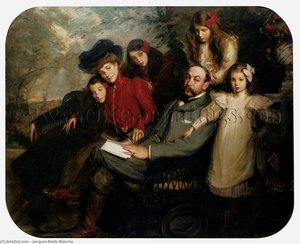
Portret Jacques-Émile Blanche

Obrazy: 100 najsłynniejszych dzieł artysty Jacques-Émile Blanche – spojrzenie galerii

Aktualizacja: Październik 2026 · ranking według naszego wskaźnika popularności (liczba wyszukiwań, wizyt i zamówień dla każdego dzieła) · 179 dzieł Jacques-Émile Blanche w naszym katalogu

W skrócie

Według opinii kuratorów galerii, najsłynniejszym obrazem Jacques-Émile Blanche jest Madame Caroline Franklin Groult (1923), którego oryginał znajduje się w Musée des Beaux-Arts de Rouen w Rouen. Eton Bridge, Windsor i Straż Książąt (1923) i Portrait of Madame Abel Hermant (1888) dopełniają trio, które zna każde oko. Z 179 dzieł Jacques-Émile Blanche w naszym katalogu, galeria prezentuje poniżej 100 najsłynniejszych prac – każda z nich jest oryginałem z podaniem roku powstania, muzeum oraz cech wyróżniających ją na tle innych.

1861 – 1942, Paryż Impressionist painting Najwięcej dzieł: Petit Palais

10 najlepszych obrazów artysty Jacques-Émile Blanche w galerii

1
Madame Caroline Franklin Groult (1923) autorstwa Jacques-Émile Blanche

Madame Caroline Franklin Groult

1923 · Akryl na płótnie · Musée des Beaux-Arts de Rouen, Rouen

Madame Caroline Franklin Groult - A Portrait of Quiet Dignity Jacques Emile Blanche’s “Madame Caroline Franklin Groult” transcends mere representation; it captures the essence of a woman defined by intellect and understated grace—a figure emblematic of Victorian society's evolving role for women. Executed in 1923, this oil painting on canvas exemplifies Blanche’s signature style: loose brushwork combined with a restrained palette dominated by muted browns and creams, creating an atmosphere…

2
Eton Bridge, Windsor i Straż Książąt (1923) autorstwa Jacques-Émile Blanche

Eton Bridge, Windsor i Straż Książąt

1923 · Akryl na płótnie · Musée des Beaux-Arts de Rouen, Rouen

Jacques-Émile Blanche: Um Ícone da Belle Époque e o Culto à Personalidade Jacques-Émile Blanche (1861-1942) foi um pintor francês impressionista celebrado por retratos elegantes da sociedade parisiense e londrina, capturando a personalidade com pinceladas soltas e influenciado por Manet e Whistler. Sua obra permanece como uma janela para uma época de refinamento artístico e intelectual, marcada pela busca pela beleza idealizada e pela expressão emocional profunda. Blanche nasceu em Paris,…

3
Portrait of Madame Abel Hermant (1888) autorstwa Jacques-Émile Blanche

Portrait of Madame Abel Hermant

1888 · Oil On Canvas · Petit Palais, Paryż

The air in the room feels heavy with the scent of old silk and soft light. Madame Abel Hermant sits before us, her presence filling the oval frame with a quiet, steady grace. She is captured in a moment of stillness, her gaze meeting the viewer with an expression that carries a hint of melancholy. Her white gown, voluminous and luminous, seems to catch a light emanating from the upper…

4
Henley House Boat na Tamizie (1923) autorstwa Jacques-Émile Blanche

Henley House Boat na Tamizie

1923 · Obraz olejny na płycie · Musée des Beaux-Arts de Rouen, Rouen

Jacques-Émile Blanche’s “Henley House Boat on the Thames” is more than just a depiction of an outdoor gathering; it's a meticulously crafted snapshot of Parisian society in 1923, filtered through the lens of Impressionism and imbued with subtle symbolic resonance. Painted during Blanche’s prolific period—a time marked by both artistic experimentation and personal hardship—the canvas captures a moment of convivial elegance against the backdrop of England’s River Thames.

5
Nijinksy in Les Orientales autorstwa Jacques-Émile Blanche

Nijinksy in Les Orientales

Oil

The scene unfolds in Nijinsky in Les Orientales, a portrait by Jacques-Émile Blanche. Within this frame, the dancer Vaslav Nijinsky appears, draped in the Siamese costume of Les Orientales. The figure holds a presence that feels immediate, as if the dancer has only just paused amidst a performance. This work captures the essence of the performer in a moment of stillness, rendered about 1910.

6
The Child with the Doll (1900) autorstwa Jacques-Émile Blanche

The Child with the Doll

1900 · Oil · Petit Palais, Paryż

A young girl sits in a dimly lit interior, her figure positioned slightly to the left of the center. She cradles a doll, a gesture that anchors the composition in a moment of quiet introspection. The lighting, appearing to originate from the upper left, casts a dramatic glow across her face, shoulder, and the heavy folds of her gown. This chiaroscuro effect leaves the surrounding environment in deep shadow, creating…

8
Young Girl after a Masked Ball (La petite masque) (1906) autorstwa Jacques-Émile Blanche

Young Girl after a Masked Ball (La petite masque)

1906 · Oil On Canvas · Städel Museum, Frankfurt nad Menem

The scene unfolds within the intimate confines of Young Girl after a Masked Ball (La petite masque), a work that captures a fleeting moment of repose. Painted by Jacques-Émile Blanche in 1906, this oil on canvas invites the viewer into a private, quiet interval. The subject rests in a state of uninhibited relaxation, her presence defined by the soft interplay of light and shadow across her form.

9
Portrait of Henri Guérard (1889) autorstwa Jacques-Émile Blanche

Portrait of Henri Guérard

1889 · Oil On Canvas · Petit Palais, Paryż

The Portrait of Henri Guérard is an oil on canvas work by the French artist Jacques-Émile Blanche. Painted in 1889, the portrait captures a man who was both an artist and a personal friend to the painter. The sitter is positioned within the quiet confines of a studio, a space where the boundaries between the creator and the subject begin to soften.

10
The Mandarin (1898) autorstwa Jacques-Émile Blanche

The Mandarin

1898 · Oil On Canvas · Petit Palais, Paryż

The Mandarin by Jacques-Émile Blanche is an oil painting created about 1898. It captures a quiet, intimate moment between a woman and two young children. The figures are gathered closely, their forms emerging from a dark, atmospheric background. This composition focuses the viewer's attention entirely on the tender connection shared between the subjects.

Obrazy artysty Jacques-Émile Blanche, uszeregowane od 11 do 100 miejsca

11The Pink Capeline (1883) autorstwa Jacques-Émile BlancheThe Pink Capeline1883 · Petit Palais 12Presumed Portrait of Henriette Chabot (1886) autorstwa Jacques-Émile BlanchePresumed Portrait of Henriette Chabot1886 · Musée de la Vie Romantique 13Portrait of John Lemoine (1887) autorstwa Jacques-Émile BlanchePortrait of John Lemoine1887 · Petit Palais 14Mademoiselle Meuriot on Her Pony (1889) autorstwa Jacques-Émile BlancheMademoiselle Meuriot on Her Pony1889 · Petit Palais 15Portrait of the painter Jules Chéret (1836-1933), in his studio (1892) autorstwa Jacques-Émile BlanchePortrait of the painter Jules Chéret (1836-1933), in his studio1892 · Musée Carnavalet 16Portrait of a Woman (1890) autorstwa Jacques-Émile BlanchePortrait of a Woman1890 17Portrait of the artist (1890) autorstwa Jacques-Émile BlanchePortrait of the artist1890 18James Joyce autorstwa Jacques-Émile BlancheJames Joyce 19Heads of Children (1896) autorstwa Jacques-Émile BlancheHeads of Children1896 · Petit Palais 20Portrait of a Woman (1897) autorstwa Jacques-Émile BlanchePortrait of a Woman1897 · Petit Palais 21Madame Paul Helleu and Her Son (1898) autorstwa Jacques-Émile BlancheMadame Paul Helleu and Her Son1898 22Portrait of Lady Michelham (1905) autorstwa Jacques-Émile BlanchePortrait of Lady Michelham1905 · Petit Palais 23Pensive woman with book on a bench (1905) autorstwa Jacques-Émile BlanchePensive woman with book on a bench1905 · Bawarskie Państwowe Zbiory Malarstwa 24Portrait of Mabel Dodge at Villa Curonia (1911) autorstwa Jacques-Émile BlanchePortrait of Mabel Dodge at Villa Curonia1911 · Petit Palais 25The Concert (1910) autorstwa Jacques-Émile BlancheThe Concert1910 · Musée d'Art Moderne et Contemporain de Strasbourg 26Portrait of Monsieur Léon Pissard young (1895) autorstwa Jacques-Émile BlanchePortrait of Monsieur Léon Pissard young1895 · Petit Palais 27Portrait of Jean Cocteau (1889-1963), writer, in the garden of Offranville (1913) autorstwa Jacques-Émile BlanchePortrait of Jean Cocteau (1889-1963), writer, in the garden of Offranville1913 · Musée Carnavalet 28Portrait of Marguerite Decazes de Glucksbierg, Princess Jean de Broglie, from Honorable Mrs Reginald Fellows (1890-1962) (1914) autorstwa Jacques-Émile BlanchePortrait of Marguerite Decazes de Glucksbierg, Princess Jean de Broglie, from Honorable Mrs Reginald Fellows (1890-1962)1914 · Musée Carnavalet 29Knightsbridge from Sloane Street, London (Fine December Morning) (1913) autorstwa Jacques-Émile BlancheKnightsbridge from Sloane Street, London (Fine December Morning)1913 30Portrait of Madeleine Pissard as Roxane (Love the Physician) (1921) autorstwa Jacques-Émile BlanchePortrait of Madeleine Pissard as Roxane (Love the Physician)1921 · Petit Palais 31Portrait of Léon Pissard (1920) autorstwa Jacques-Émile BlanchePortrait of Léon Pissard1920 · Petit Palais 32Portrait of René Crevel (1900-1935), writer (1928) autorstwa Jacques-Émile BlanchePortrait of René Crevel (1900-1935), writer1928 · Musée Carnavalet 33Tamara Karsavina, ballet dancer of the Ballets Russes (1928) autorstwa Jacques-Émile BlancheTamara Karsavina, ballet dancer of the Ballets Russes1928 34Jeanne (1901) autorstwa Jacques-Émile BlancheJeanne1901 · Dublin City Gallery The Hugh Lane 35Portrait of Ignacio Zuloaga (1901) autorstwa Jacques-Émile BlanchePortrait of Ignacio Zuloaga1901 · Petit Palais 36Fish Market (1929) autorstwa Jacques-Émile BlancheFish Market1929 37La semaine du poissen à Dieppe (1929) autorstwa Jacques-Émile BlancheLa semaine du poissen à Dieppe1929 38Portrait of James Joyce (1882-1941), Author (1934) autorstwa Jacques-Émile BlanchePortrait of James Joyce (1882-1941), Author1934 · National Gallery of Ireland 39Black Rock, Brighton, East Sussex (1938) autorstwa Jacques-Émile BlancheBlack Rock, Brighton, East Sussex1938 40Portrait of the Artist's Mother (1895) autorstwa Jacques-Émile BlanchePortrait of the Artist's Mother1895 · Musée d'Orsay 41Portrait of the Novelist Colette (1905) autorstwa Jacques-Émile BlanchePortrait of the Novelist Colette1905 · Museu Nacional d'Art de Catalunya 42Walter Richard Sickert (1898) autorstwa Jacques-Émile BlancheWalter Richard Sickert1898 43Sir Max Beerbohm (1903) autorstwa Jacques-Émile BlancheSir Max Beerbohm1903 · Ashmolean Museum of Art and Archaeology 44Portrait of Madame Emile Blanche, mother of the artist (1891) autorstwa Jacques-Émile BlanchePortrait of Madame Emile Blanche, mother of the artist1891 · Petit Palais 45Portrait of Master Errazuriz (1890) autorstwa Jacques-Émile BlanchePortrait of Master Errazuriz1890 · Art Gallery of Hamilton 46Mischief (1901) autorstwa Jacques-Émile BlancheMischief1901 · Dublin City Gallery The Hugh Lane 47Portrait of Daisy de Broglie (1912) autorstwa Jacques-Émile BlanchePortrait of Daisy de Broglie1912 · Petit Palais 48Arrival of the Pacquet Boat, Dieppe autorstwa Jacques-Émile BlancheArrival of the Pacquet Boat, Dieppe 49The poet francis viele griffin and his family autorstwa Jacques-Émile BlancheThe poet francis viele griffin and his family 50L Hôte (1892) autorstwa Jacques-Émile BlancheL Hôte1892 · Musée des Beaux-Arts de Rouen 51Contemplation (1883) autorstwa Jacques-Émile BlancheContemplation1883 · Museum of Fine Arts, St. Petersburg, Florida, USA 52Portrait of Miss Florence Pash (1890) autorstwa Jacques-Émile BlanchePortrait of Miss Florence Pash1890 · Cantor Arts Center at Stanford University 53Eugenia Huici de Errazuriz (1890) autorstwa Jacques-Émile BlancheEugenia Huici de Errazuriz1890 54FILLETTE (LUCIE ESNAULT AU PSYCHÉ) (1889) autorstwa Jacques-Émile BlancheFILLETTE (LUCIE ESNAULT AU PSYCHÉ)1889 55London, Belgrave Square The White House (1886) autorstwa Jacques-Émile BlancheLondon, Belgrave Square The White House1886 · Musée des Beaux-Arts de Rouen 56London Third View of Belgrave Square (1886) autorstwa Jacques-Émile BlancheLondon Third View of Belgrave Square1886 · Musée des Beaux-Arts de Rouen 57LIttle Girl (also known as Lucie Esnault and Reflection) (1889) autorstwa Jacques-Émile BlancheLIttle Girl (also known as Lucie Esnault and Reflection)1889 58Dieppe's Beach in August (1893) autorstwa Jacques-Émile BlancheDieppe's Beach in August1893 · Musée des Beaux-Arts de Rouen 59Aubrey Beardsley (1895) autorstwa Jacques-Émile BlancheAubrey Beardsley1895 60Le chérubin de Mozart (1904) autorstwa Jacques-Émile BlancheLe chérubin de Mozart1904 · Musée Des Beaux 61The Donkey Show (1905) autorstwa Jacques-Émile BlancheThe Donkey Show1905 62Alexandra of Denmark (1844–1925), Queen Consort of King Edward VII (1905) autorstwa Jacques-Émile BlancheAlexandra of Denmark (1844–1925), Queen Consort of King Edward VII1905 · Government Art Collection 63Portrait of Charles Conder (1904) autorstwa Jacques-Émile BlanchePortrait of Charles Conder1904 64The Chess Players autorstwa Jacques-Émile BlancheThe Chess PlayersMuzeum Sztuki Johna i Mable Ringlingów 65The reader autorstwa Jacques-Émile BlancheThe readerNational Museum of Fine Arts 66The pink rose autorstwa Jacques-Émile BlancheThe pink roseNational Gallery of Victoria 67The pink living room (1911) autorstwa Jacques-Émile BlancheThe pink living room1911 · Musée d'Orsay 68Portrait of Eugenia Huici de Errazuriz autorstwa Jacques-Émile BlanchePortrait of Eugenia Huici de Errazuriz 69Portrait of a Woman autorstwa Jacques-Émile BlanchePortrait of a Woman 70The false starts, racing at Auteuil autorstwa Jacques-Émile BlancheThe false starts, racing at Auteuil 71Self-Portrait with Raphael de Ochoa autorstwa Jacques-Émile BlancheSelf-Portrait with Raphael de OchoaCleveland Museum of Art 72Punts at Henley autorstwa Jacques-Émile BlanchePunts at Henley 73Trafalgar Square autorstwa Jacques-Émile BlancheTrafalgar Square 74Portrait of a gentleman autorstwa Jacques-Émile BlanchePortrait of a gentleman 75Portrait of a girl autorstwa Jacques-Émile BlanchePortrait of a girl 76Portrait of Degas autorstwa Jacques-Émile BlanchePortrait of DegasNorth Carolina Museum of Art 77Girl with the spool of thread autorstwa Jacques-Émile BlancheGirl with the spool of thread 78Woman with a Veil autorstwa Jacques-Émile BlancheWoman with a Veil 79Portrait of a Barrone in louis XVI Costume autorstwa Jacques-Émile BlanchePortrait of a Barrone in louis XVI Costume 80Aubrey Vincent Beardsley autorstwa Jacques-Émile BlancheAubrey Vincent BeardsleyNational Portrait Gallery 81Terrace of a Building in Rome autorstwa Jacques-Émile BlancheTerrace of a Building in Rome 82The Thaulow Family autorstwa Jacques-Émile BlancheThe Thaulow FamilyMusée d'Orsay 83The Martyrdom of Saint Sebastian autorstwa Jacques-Émile BlancheThe Martyrdom of Saint Sebastian 84Mr Arsene Alexandre autorstwa Jacques-Émile BlancheMr Arsene Alexandre 85Piccadilly Circus autorstwa Jacques-Émile BlanchePiccadilly Circus 86Portrait of Madeleine Daughter of General Chardonne autorstwa Jacques-Émile BlanchePortrait of Madeleine Daughter of General Chardonne 87Lucie Dans L'Atelier autorstwa Jacques-Émile BlancheLucie Dans L'Atelier 88Portrait Of Antonin De Mun As A Young Boy autorstwa Jacques-Émile BlanchePortrait Of Antonin De Mun As A Young Boy 89Henry James (1908) autorstwa Jacques-Émile BlancheHenry James1908 · National Portrait Gallery 90Thomas Hardy autorstwa Jacques-Émile BlancheThomas Hardy 91Thomas Hardy (1840–1928) (1906) autorstwa Jacques-Émile BlancheThomas Hardy (1840–1928)1906 92Portrait Of A Girl seated In A Landscape autorstwa Jacques-Émile BlanchePortrait Of A Girl seated In A Landscape 93Lady Marjorie Manners (1883–1946) (1909) autorstwa Jacques-Émile BlancheLady Marjorie Manners (1883–1946)1909 94Reflections autorstwa Jacques-Émile BlancheReflections 95The Coronation of George V (1911) autorstwa Jacques-Émile BlancheThe Coronation of George V1911 · Manchester Art Gallery 96Still Life Fish on a Silver Plate (1908) autorstwa Jacques-Émile BlancheStill Life Fish on a Silver Plate1908 97A Street Scene in London autorstwa Jacques-Émile BlancheA Street Scene in London 98Inwestycja Księcia Walii George'a V w Zamku Karnavon (1910) autorstwa Jacques-Émile BlancheInwestycja Księcia Walii George'a V w Zamku Karnavon1910 · Musée des Beaux-Arts de Rouen 99Crystal Palace, Sydenham, London (1907) autorstwa Jacques-Émile BlancheCrystal Palace, Sydenham, London1907 100Thomas Hardy (1906) autorstwa Jacques-Émile BlancheThomas Hardy1906

Słynne obrazy Jacques-Émile Blanche epoka po epoce

Tematy, które przyciągnęły wzrok Jacques-Émile Blanche

Cztery motywy najczęściej powracające w tych oryginałach, z których każdy doczekał się swojego najdoskonalszego przykładu.

Muzea przechowujące oryginały Jacques-Émile Blanche

8 muzeów, w których znajduje się najwięcej obrazów z tej strony.

Muzea Miasto Dzieła artysty Jacques-Émile Blanche Obrazy z tej listy
Petit Palais, ParyżPetit Palais Paryż 17 Portrait of Madame Abel Hermant, The Child with the Doll, Portrait of Henri Guérard
Musée des Beaux-Arts de Rouen, RouenMusée des Beaux-Arts de Rouen Rouen 13 Madame Caroline Franklin Groult, Eton Bridge, Windsor i Straż Książąt, Henley House Boat na Tamizie
Musée Carnavalet, ParyżMusée Carnavalet Paryż 5 Portrait of the painter Jules Chéret (1836-1933), in his studio, Portrait of Jean Cocteau (1889-1963), writer, in the garden of Offranville, Portrait of Marguerite Decazes de Glucksbierg, Princess Jean de Broglie, from Honorable Mrs Reginald Fellows (1890-1962)
Musée d'Orsay, ParyżMusée d'Orsay Paryż 6 Portrait of the Artist's Mother, The pink living room, The Thaulow Family
Dublin City Gallery The Hugh Lane, DublinDublin City Gallery The Hugh Lane Dublin 2 Jeanne, Mischief
Musée des Beaux-Arts de Rouen, RouenMusée des Beaux-Arts de Rouen Rouen 4 Dieppe's Beach in August
Government Art Collection, LondynGovernment Art Collection Londyn 4 Alexandra of Denmark (1844–1925), Queen Consort of King Edward VII
Manchester Art Gallery, ManchesterManchester Art Gallery Manchester 3 The Coronation of George V

Jacques-Émile Blanche, jedno kultowe dzieło na dekadę

Dzieła według dekad

Wybierz dekadę, aby zobaczyć dzieło, które ją definiuje.

Obrazy artysty Jacques-Émile Blanche: odpowiedzi galerii

Który obraz Jacques-Émile Blanche jest najsłynniejszy ze wszystkich?Odkryj odpowiedź

Madame Caroline Franklin Groult (1923), Musée des Beaux-Arts de Rouen, Rouen. Następne są Eton Bridge, Windsor i Straż Książąt (1923) oraz Portrait of Madame Abel Hermant (1888).

Ile lat miał Jacques-Émile Blanche, gdy ukończył Madame Caroline Franklin Groult?Odkryj odpowiedź

62 lat: Madame Caroline Franklin Groult pochodzi z 1923, a Jacques-Émile Blanche urodził(a) się w 1861.

Które to 10 najlepszych obrazów Jacques-Émile Blanche?Odkryj odpowiedź

Madame Caroline Franklin Groult, Eton Bridge, Windsor i Straż Książąt, Portrait of Madame Abel Hermant, Henley House Boat na Tamizie, Nijinksy in Les Orientales, The Child with the Doll, Full Length Portrait of Jean Cocteau, Young Girl after a Masked Ball (La petite masque), Portrait of Henri Guérard i The Mandarin. Powyższy ranking zawiera rok powstania oraz muzeum dla każdego z nich.

Ile dzieł stworzył/a Jacques-Émile Blanche?Odkryj odpowiedź

Nasz katalog zawiera 179 dzieł artysty Jacques-Émile Blanche, datowanych od 1883 do 1938.

Gdzie można znaleźć najsłynniejsze oryginały autorstwa Jacques-Émile Blanche?Odkryj odpowiedź

W większości znajdują się w Petit Palais (Paryż), Musée des Beaux-Arts de Rouen (Rouen) i Musée Carnavalet (Paryż). Powyższa tabela muzeów zawiera ich pełną listę.

Kiedy Jacques-Émile Blanche stworzył swoje najsłynniejsze obrazy?Odkryj odpowiedź

W 1900s: 19 z 100 dzieł na tej stronie powstało w tym czasie, w tym The Child with the Doll.

Które z najsłynniejszych dzieł Jacques-Émile Blanche należą do jego najwcześniejszych i najpóźniejszych prac?Odkryj odpowiedź

Na tej stronie najwcześniejszy to The Pink Capeline (1883), a najpóźniejszy Black Rock, Brighton, East Sussex (1938).

Do jakich tematów Jacques-Émile Blanche powracał najczęściej?Odkryj odpowiedź

Portraits (10), Woman (9) i Portrait (8), w ramach 100 dzieł na tej stronie.

W jakiej technice najczęściej tworzył Jacques-Émile Blanche?Odkryj odpowiedź

Oil On Canvas, dla 17 z 100 dzieł na tej stronie.

Z jakim nurtem związany jest Jacques-Émile Blanche?Odkryj odpowiedź

Impressionist painting, sądząc po oryginałach na tej stronie.

Które oryginały artysty Jacques-Émile Blanche znajdują się w zbiorach Petit Palais?Odkryj odpowiedź

Portrait of Madame Abel Hermant, The Child with the Doll i Portrait of Henri Guérard: Petit Palais, Paryż posiada 17 dzieł widocznych na tej stronie.

Jacques-Émile Blanche: artysta

Wczesne lata, rodzina i edukacja

Jacques-Émile Blanche pojawia się na scenie 1 stycznia 1861 roku w 16. dzielnicy Paryża. Jego dzieciństwo i dorastanie nierozerwalnie splatają się z atmosferą wyższych sfer paryskiej dzielnicy Passy. Wychowuje się w domu o bogatej historii, który niegdyś należał do księżniczki de Lamballe. Jego ojciec, Émile Blanche, prowadzi modną klinikę na wzgórzach Montmartre, pracując jako ceniony psychiatra. To specyficzne otoczenie sprawia, że młody artysta od samego początku zanurzony jest w uprzywilejowanym, paryskim środowisku, które będzie miało kluczowy wpływ na jego przyszłość.

Edukacja Jacques-Émile Blanche odbywa się w prestiżowym Lycée Condorcet. Choć jego formalna ścieżka akademicka wydaje się jasno wytyczona, rozwój artystyczny podąża bardziej osobliwą, nieoczywistą trajektorią. Choć pobiera nauki u takich mistrzów jak Henri Gervex oraz Pierre-Auguste Renoir, wpływ tych nauczycieli stanowi jedynie fragment jego skomplikowanej historii. Blanche czerpie wiedzę również od Ferdinanda Humberta. Mimo tych ustrukturyzowanych spotkań z wielkimi nazwiskami, artysta pozostaje w dużej mierze samoukiem, wypracowując własne, unikalne podejście techniczne, które opiera się przede wszystkim na uważnej, własnej obserwacji świata, a nie na rygorystycznej doktrynie akademickiej.

Styl artystyczny i technika

Jacques-Émile Blanche odrzuca skrupulatny realizm akademickiej tradycji, poszukując czegoś znacznie bardziej ulotnego. Zamiast dążyć do matematycznej precyzji detalu, artysta stawia na przekaz emocji i budowanie nieuchwytnej atmosfery. Jego technika opiera się na swobodnych, niemal improwizowanych pociągnięciach pędzla, gdzie wyraźna faktura definiuje formę, zastępując gładkie, idealnie wykończone powierzchnie. Takie podejście nadaje jego dziełom niezwykłą bezpośredniość, pozwalając uchwycić przemijające właściwości światła oraz głębię charakteru poprzez teksturę, a nie poprzez sztywne, konturowe linie.

Paleta barw, którą posługuje się Jacques-Émile Blanche, jest celowo powściągliwa. Unika on jaskrawych, kontrastowych odcieni, wybierając zamiast tego stonowaną gamę ochry, brązów i szarości. Ta tonalna harmonia pozwala mu skupić się na subtelnych niuansach przedstawianych postaci. Pod wpływem estetyki Edouarda Maneta oraz Jamesa McNeilla Whistlera, jego twórczość balansuje między nowoczesną spontanicznością a wyrafinowaną kontrolą koloru. Dzięki zastosowaniu tych przygaszonych tonów, jego portrety osiągają unikalną wrażliwość, odsłaniając wewnętrzną osobowość i duchową głębię modela.

Działalność w Paryżu i Londynie

Jacques-Émile Blanche z niezwykłą lekkością poruszał się między dwoma światami, czując się w Anglii równie swobodnie, jak we Francji. Z maestrią nawigował przez skomplikowane krajobrazy społeczne i artystyczne obu metropolii. W Paryżu jego obecność była nieustannie odczuwalna dzięki regularnym wystawom w prestiżowym Salonie oraz w Société Nationale des Beaux-Arts. To właśnie te fora stały się fundamentem jego rosnącej sławy jako wybitnego portrecisty. Jednak jego relacja z brytyjską stolicą wykraczała daleko poza ramy zwykłych wizyt; od 1884 roku Blanche powracał do Londynu niemal co roku, odnosząc z każdym kolejnym przyjazdem spektakularne sukcesy. Ta nieustanna wędrówka między dwiema europejskimi stolicami stała się istotą jego zawodowej tożsamości.

Jego głęboka integracja z brytyjską sceną artystyczną została przypieczętowana członkostwem w New English Art Club, co wprowadziło go w samo serce londyńskiego establishmentu sztuki. Dzięki temu zbudował karierę wykraczającą poza granice Kanału La Manche, zdobywając liczne zlecenia od najbardziej wpływowych postaci zarówno w Paryżu, jak i w Londynie. Ta niezwykła zdolność do adaptacji w tak odmiennych środowiskach pozwoliła mu utrzymać stabilną i prestiżową pozycję poszukiwanego portrecisty, który potrafił uchwycić ducha obu tych wielkich kultur.

Wybitne dzieła i tematyka

Pędzel Jacques-Émile Blanche często kierował się ku twarzom intelektualnej i towarzyskiej elity, starając się uchwycić to, co nieuchwytne. W 1895 roku artysta uwiecznił Mabel Beardsley – portret, który poprzez powściągliwą paletę barw kładzie nacisk na poczucie cichej kontemplacji. Jego niezwykła zdolność do przekładania charakteru postaci na język farby staje się w pełni widoczna w stworzonym w 1904 roku portrecie Charlesa Condera. Z czasem, około 1898 roku, jego zainteresowania zaczęły ewoluować w stronę literackich gigantów epoki, czego owocem stał się portret Henry'ego Jamesa. W późniejszych latach artysta powrócił do zgłębiania złożoności ludzkiej natury w swoich przedstawieniach Jamesa Joyce'a, nad którymi pracował w latach 1934 i 1935.

Twórczość artysty wykraczała jednak daleko poza portretowanie jednostek, sięgając po atmosferę muzyki oraz dynamikę miejskiego życia. W jego dorobku znajduje się „Sonata Kreutzerska” – dzieło próbujące uchwycić istotę emocji poprzez dźwięk. Blanche z tą samą pasją spoglądał na krajobraz i majestat metropolii. W 1923 roku namalował „Eton Bridge, Windsor and the Horse Guards”, kompozycję będącą tętniącym życiem obrazem londyńskiej codzienności – od wojskowej precyzji parad po malowniczą linię horyzontu zamku Windsor.

  • Mabel Beardsley (1895)
  • Charles Conder (1904)
  • Henry James (1908)
  • Eton Bridge, Windsor and the Horse Guards (1923)
  • James Joyce (1934 i 1935)

Kręgi towarzyskie i inspiracje

Salon ojca Jacques-Émile Blanche, wybitnego psychiatry, stanowił swoiste centrum przecinania się dróg paryskiej elity intelektualnej. To właśnie tam, podczas regularnych sobotnich spotkań, zacierały się granice między medycyną, literaturą a sztukami pięknymi. Te spotkania gromadziły prawdziwą konstelację wybitnych postaci, wśród których znajdowali się tacy twórcy jak Hector Berlioz czy Camille Corot. W tym wyrafinowanym środowisku wysokich sfer młody artysta zetknął się z Édouardem Manetem – spotkaniem, które odcisnęło trwałe piętno na jego kształtującej się estetyce. Atmosfera tych spotkań przesycona była nieustanną, intelektualną konwersacją, w której niuanse debat estetycznych i literackich stanowiły integralną część otoczenia, równie istotną jak sama sztuka.

Socjalna orbita artysty wykraczała daleko poza paryskie salony, budując mosty między światem francuskim a angielskim. Jacques-Émile Blanche swobodnie poruszał się w intymnych kręgach literackiej awangardy, utrzymując bliską więź z Marcelem Proustem. Ta bliskość z najważniejszymi pisarzami epoki znajduje potwierdzenie w jego obecności w ówczesnym krajobrazie kulturowym; artysta pojawia się nawet w The Autobiography of Alice B. Toklas autorstwa Gertrude Stein. Umiejętność poruszania się w tych elitarnych przestrzeniach pozwoliła mu uchwycić samą esencję społeczeństwa Belle Époque, w którym przyszło mu żyć.

Pod względem stylistycznym Jacques-Émile Blanche zwracał się ku przeszłości, aby zdefiniować swoje nowoczesne podejście. Jego twórczość niesie w sobie echa angielskich malarzy XVIII wieku, a w szczególności wyraźny wpływ, jaki wywarł na niego Thomas Gainsborough. Ta więź z angielską tradycją przejawia się w sposobie, w jaki artysta operuje światłem i kreśli charakter postaci, łącząc kontynentalną wrażliwość ze specyficzną, wyrafinowaną gracją. Jacques-Émile Blanche nie ogranicza się jedynie do dokumentowania swoich modeli; on chłonie atmosferę wnętrz oraz osobowości ludzi, którzy definiują jego świat.

Dziedzictwo i miejsca, w których można podziwiać jego dzieła

Jacques-Émile Blanche odszedł 30 września 1942 roku, lecz jego obecność w świecie sztuki trwa nieprzerwanie dzięki fizycznym pozostałościom jego płócien, które spoczywają w licznych instytucjach publicznych na terenie całej Europy. To właśnie w Musée des Beaux-Arts w Rouen można odnaleźć imponującą kolekcję jego prac, stanowiącą żywy zapis wizualnej historii jego niezwykłej kariery. W Wielkiej Brytanii natomiast Manchester Art Gallery skrywa kilka jego dzieł, w tym subtelne Mrs Sickert oraz Miss Winny MacEwan. Obrazy te pozostają dostępne dla badaczy pragnących zgłębić niuanse jego portretu oraz unikalną zdolność do chwytania samej esencji duszy portretowanych osób.

Zasięg jego twórczości sięga aż do zbiorów Tate, gdzie znajduje się dzieło August Morning. Umiejętność poruszania się w skomplikowanych krajobrazach społecznych zarówno Paryża, jak i Londynu, znajduje swoje odzwierciedlenie w rozproszeniu jego malarstwa pomiędzy tymi dwoma odmiennymi centrami kulturowymi. Dzięki tym instytucjonalnym zbiorom kolekcjonerzy i historycy sztuki wciąż mogą odkrywać jego specyficzne, pełne światła i głębi podejście do kreowania postaci.

  • Mrs Sickert
  • Miss Winny MacEwan
  • August Morning