Portret Johann Heinrich Füssli

Obrazy: 100 najsłynniejszych dzieł artysty Johann Heinrich Füssli – spojrzenie galerii

Aktualizacja: Listopad 2026 · ranking według naszego wskaźnika popularności (liczba wyszukiwań, wizyt i zamówień dla każdego dzieła) · 161 dzieł Johann Heinrich Füssli w naszym katalogu

W skrócie

Według opinii kuratorów galerii, najsłynniejszym obrazem Johann Heinrich Füssli jest Koszmar (1781), którego oryginał znajduje się w Detroit Institute of Arts w Detroit. Tytania i Ślepiec z Głową Osła i The Nightmare (1790) dopełniają trio, które zna każde oko. Z 161 dzieł Johann Heinrich Füssli w naszym katalogu, galeria prezentuje poniżej 100 najsłynniejszych prac – każda z nich jest oryginałem z podaniem roku powstania, muzeum oraz cech wyróżniających ją na tle innych.

1741 – 1825, Zurych Romantic baroque Najwięcej dzieł: Kunsthaus Zürich

10 najlepszych obrazów artysty Johann Heinrich Füssli w galerii

1
Koszmar (1781) autorstwa Johann Heinrich Füssli

Koszmar

1781 · Obraz olejny na płótnie · Detroit Institute of Arts, Detroit

„Koszmar” Henry’ego Fuzelie to ikoniczne dzieło, które w sposób doskonały oddaje istotę gotyckiego horroru i romantyzmu. Powstały w 1781 roku obraz olejny stanowi głęboką eksplorację podświadomości, łącząc dramatyczną kompozycję z bogatą symboliką, aby wywołać u widza poczucie niepokoju oraz fascynacji.

2
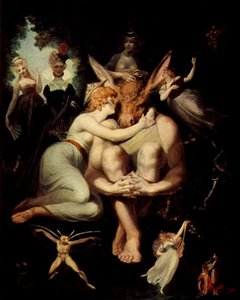
Tytania i Ślepiec z Głową Osła autorstwa Johann Heinrich Füssli

Tytania i Ślepiec z Głową Osła

Obraz olejny na płótnie

W mrocznych, skąpanych w świetle księżyca głębiach prastarego lasu, Johann Heinrich Füssli zaprasza nas do krainy, w której granice między tym, co ludzkie, a tym, co nadprzyrodzone, całkowicie się zacierają. Jego arcydzieło, Tytania i Bottom z głową osła, uchwyciło kluczowy moment przemiany ze Snu nocy letniej Williama Shakespeare'a. Kompozycja ta jest zapierającym dech w piersiach wirunem ruchu i tajemnicy, skupionym wokzą eterycznej Królowej Tytany, spoczywającej pośród morza trzepoczących skrzydeł wróżek.…

3
The Nightmare (1790) autorstwa Johann Heinrich Füssli

The Nightmare

1790 · Oil On Canvas · Goethe-Museum, Frankfurt

In the shadowy realm of Johann Heinrich Füssli, the boundaries between sleep and wakefulness dissolve into a haunting spectacle of terror and desire. His seminal work, The Nightmare, stands as a profound exploration of the human psyche, capturing that breathless moment when the terrors of the unconscious manifest in the physical world. The painting presents a woman lying prostrate in bed, her limbs cast downward in a state of vulnerable,…

4
Lady Macbeth with the Daggers (1812) autorstwa Johann Heinrich Füssli

Lady Macbeth with the Daggers

1812 · Oil On Canvas · Tate Gallery, Londyn

To stand before this depiction of Lady Macbeth is to confront the very precipice of human ambition curdled by guilt. Johann Heinrich Friesli’s masterful rendering captures not merely a scene from Shakespeare, but the suffocating aftermath of moral transgression. The air in the painting feels thick, heavy with unspoken secrets and the metallic tang of spilled blood. It is an intensely dramatic tableau, steeped in the Romantic fascination with the…

6
Artyści zdesperowany przed wielkością ruin antycznych (1778) autorstwa Johann Heinrich Füssli

Artyści zdesperowany przed wielkością ruin antycznych

1778 · Kreda · Kunsthaus Zürich, Zurych

Johann Heinrich Füssli i Jego „Rozpaczącego Artysty Przed Wielkością Ruin” „Rozpaczącego Artystę Przed Wielkością Ruin” (1778–79) – obraz johanna heinricha füssli, szkic czerwonego kredki na ściernej tonerze, wymiary 415 x 355 cm przechowywany w Kunsthaus Zürich. Henry Fuseli, młody szwajcarski malarz i poeta urodzony w Zurychu w 1741 roku, przedstawiono go jako człowieka przytłoczonego przez rozległość pozostałości Rzymu. Jego ośmioletnie studia w mieście niewątpliwie zawyżono, ale jednocześnie były przepowiednią potężnych…

7
Hamlet and his father's Ghost (1785) autorstwa Johann Heinrich Füssli

Hamlet and his father's Ghost

1785 · Drawing

In this drawing from 1785, we find ourselves drawn into a moment of profound psychological unrest. The scene captures a dramatic encounter, likely inspired by the tension of Shakespearean tragedy, where the boundary between the living and the supernatural dissolves. A central figure, arms outstretched, appears caught in a state of sudden, violent realization. Around this focal point, other figures react with a mixture of struggle and silent observation, their…

8
The Night-Hag Visiting Lapland Witches (1796) autorstwa Johann Heinrich Füssli

The Night-Hag Visiting Lapland Witches

1796 · Oil On Canvas · Metropolitan Museum of Art, Nowy Jork

Henry Fuseli's "The Night-Hag Visiting Lapland Witches," painted in 1796, isn’t merely a depiction of a scene; it’s an immersion into the shadowed heart of human psychology. This arresting oil on canvas, currently residing within the hallowed halls of The Metropolitan Museum of Art in New York City, pulsates with a potent blend of gothic horror and nascent Romanticism – a visual embodiment of fear, superstition, and the unsettling allure…

9
Portrait of a Young Woman (1781) autorstwa Johann Heinrich Füssli

Portrait of a Young Woman

1781 · Oil On Canvas · Detroit Institute of Arts, Detroit

The Portrait of a Young Woman by Henry Fuseli is a formal portrait of a woman that captures a quiet, contemplative presence. Painted in 1781, this oil on canvas work presents the subject in a way that invites a closer, more personal inspection of her features and expression. It is a piece that reflects the artist's specific interest in the psychological nuances of his sitters.

10
Scene of Witches, from The Masque of Queens by Ben Jonson (1785) autorstwa Johann Heinrich Füssli

Scene of Witches, from The Masque of Queens by Ben Jonson

1785 · Painting · Yale Center for British Art, New Haven

In the shadowy corridors of art history, few names evoke as much intrigue and nocturnal wonder as Johann Heinrich Füssli. Known to the English-speaking world as Henry Fuseli, this Swiss master was a pioneer of the Romantic movement, a painter who dared to venture into the deepest recesses of the human psyche. His work, particularly his depictions of the supernatural, serves as a bridge between the rational Enlightenment and the…

Obrazy artysty Johann Heinrich Füssli, uszeregowane od 11 do 100 miejsca

11Head of a Damned Soul from Dante's "Inferno," (verso) (1774) autorstwa Johann Heinrich FüssliHead of a Damned Soul from Dante's "Inferno," (verso)1774 · Art Institute of Chicago 12The insane Kate (1807) autorstwa Johann Heinrich FüssliThe insane Kate1807 13Deutsch Titania liebkost den eselköpfigen Bottom (1794) autorstwa Johann Heinrich FüssliDeutsch Titania liebkost den eselköpfigen Bottom1794 · Kunsthaus Zürich 14Leonora Discovers Alonzo’s Dagger (1792) autorstwa Johann Heinrich FüssliLeonora Discovers Alonzo’s Dagger1792 · Nationalmuseum 15Celadon and Amelia (1801) autorstwa Johann Heinrich FüssliCeladon and Amelia1801 · Staatliche Kunsthalle Karlsruhe 16John Milton's Paradise Lost, Satan and the Birth of Sin (Book II, 746-758)  Painting no. 6 from The Milton Gallery (1785) autorstwa Johann Heinrich FüssliJohn Milton's Paradise Lost, Satan and the Birth of Sin (Book II, 746-758) Painting no. 6 from The Milton Gallery1785 · Dallas Museum of Art 17Study for the three witches in Macbeth (1783) autorstwa Johann Heinrich FüssliStudy for the three witches in Macbeth1783 · Auckland Art Gallery Toi o Tāmaki 18Euphrosyne before the Imagination and the Temperance (1800) autorstwa Johann Heinrich FüssliEuphrosyne before the Imagination and the Temperance1800 · Kurpfälzisches Museum 19Sketch for "Oath on the Rütli," Female Figure (verso) (1779) autorstwa Johann Heinrich FüssliSketch for "Oath on the Rütli," Female Figure (verso)1779 · Art Institute of Chicago 20The Dream of Queen Katherine (from William Shakespeare's 'Henry VIII', Act IV, Scene 2) (1781) autorstwa Johann Heinrich FüssliThe Dream of Queen Katherine (from William Shakespeare's 'Henry VIII', Act IV, Scene 2)1781 · Victoria and Albert Museum 21Prince Arthur and the Fairy Queen. (1788) autorstwa Johann Heinrich FüssliPrince Arthur and the Fairy Queen.1788 · Kunstmuseum Basel 22Tekemessa and Eurysake (1805) autorstwa Johann Heinrich FüssliTekemessa and Eurysake1805 · Yale Center for British Art 23Thetis asks Hephaistos to forge armor for her son Achilles (1803) autorstwa Johann Heinrich FüssliThetis asks Hephaistos to forge armor for her son Achilles1803 · Kunsthaus Zürich 24Satan and Death with Sin Intervening (1792) autorstwa Johann Heinrich FüssliSatan and Death with Sin Intervening1792 · Bawarskie Państwowe Zbiory Malarstwa 25Ariadne Watching the Struggle of Theseus with the Minotaur (1820) autorstwa Johann Heinrich FüssliAriadne Watching the Struggle of Theseus with the Minotaur1820 · Yale Center for British Art 26Erotic Scene with a man and three women autorstwa Johann Heinrich FüssliErotic Scene with a man and three women 27Danaë and Perseus on Seriphos (?) (1787) autorstwa Johann Heinrich FüssliDanaë and Perseus on Seriphos (?)1787 · Yale University Art Gallery 28The Erinyes Drive Alcmaeon from the Corpse of his Mother, Eriphyle, Whom He Has Killed. (1821) autorstwa Johann Heinrich FüssliThe Erinyes Drive Alcmaeon from the Corpse of his Mother, Eriphyle, Whom He Has Killed.1821 · Kunsthaus Zürich 29Satan Starting from the Touch of Ithuriels Spear autorstwa Johann Heinrich FüssliSatan Starting from the Touch of Ithuriels Spear 30The Weird Sisters -The Three Witches autorstwa Johann Heinrich FüssliThe Weird Sisters -The Three Witches 31Christ Disappearing at Emmaus (1792) autorstwa Johann Heinrich FüssliChrist Disappearing at Emmaus1792 · Yale Center for British Art 32A Shakespearean Subject (1785) autorstwa Johann Heinrich FüssliA Shakespearean Subject1785 33Psyche walks past the Fates undeterred (1780) autorstwa Johann Heinrich FüssliPsyche walks past the Fates undeterred1780 34Laying Nude and piano player (1799) autorstwa Johann Heinrich FüssliLaying Nude and piano player1799 · Kunstmuseum Basel 35Paolo Malatesta and Francesca da Polenta surprised by Gianciotto Malatesta (1785) autorstwa Johann Heinrich FüssliPaolo Malatesta and Francesca da Polenta surprised by Gianciotto Malatesta1785 · Aargauer Kunsthaus 36The Three Conspirators Swear an Oath on the Rüthli Meadow (1779) autorstwa Johann Heinrich FüssliThe Three Conspirators Swear an Oath on the Rüthli Meadow1779 · Kunsthaus Zürich 37Portrait of Joseph Priestley (1783) autorstwa Johann Heinrich FüssliPortrait of Joseph Priestley1783 38The nightmare, Detroit Institute of (1781) autorstwa Johann Heinrich FüssliThe nightmare, Detroit Institute of1781 39Selling of Cupids (1776) autorstwa Johann Heinrich FüssliSelling of Cupids1776 · Yale Center for British Art 40The Daughters of Pandareos (1795) autorstwa Johann Heinrich FüssliThe Daughters of Pandareos1795 · Kunsthaus Zürich 41The Vision of the Deluge (1800) autorstwa Johann Heinrich FüssliThe Vision of the Deluge1800 42The loneliness at dawn (1796) autorstwa Johann Heinrich FüssliThe loneliness at dawn1796 43A Scene from 'The Wife of Bath's Tale' (from Geoffrey Chaucer's, 'Canterbury Tales') (recto); Falstaff in the Laundry Basket mocked by Five Women (?) (verso) (1812) autorstwa Johann Heinrich FüssliA Scene from 'The Wife of Bath's Tale' (from Geoffrey Chaucer's, 'Canterbury Tales') (recto); Falstaff in the Laundry Basket mocked by Five Women (?) (verso)1812 · Petworth House 44Puck (1810) autorstwa Johann Heinrich FüssliPuck1810 45Untitled (AQR9W9) (1812) autorstwa Johann Heinrich FüssliUntitled (AQR9W9)1812 46Kriemhild sees the dead Siegfried in a dream (1805) autorstwa Johann Heinrich FüssliKriemhild sees the dead Siegfried in a dream1805 47Portrait of a Lady (1781) autorstwa Johann Heinrich FüssliPortrait of a Lady1781 · Detroit Institute of Arts 48The Serpent tempting Eve (Satan's first address to Eve) (1802) autorstwa Johann Heinrich FüssliThe Serpent tempting Eve (Satan's first address to Eve)1802 · Auckland Art Gallery Toi o Tāmaki 49Henry V' Act II Scene 2 Discovering the Conspirators (1790) autorstwa Johann Heinrich FüssliHenry V' Act II Scene 2 Discovering the Conspirators1790 · Kolekcja Royal Shakespeare Company 50The Infant Shakespeare Between Tragedy and Comedy (1805) autorstwa Johann Heinrich FüssliThe Infant Shakespeare Between Tragedy and Comedy1805 · University of London 51Ezzelin and Meduna (1779) autorstwa Johann Heinrich FüssliEzzelin and Meduna1779 · Sir John Soane's Museum 52Silence (1799) autorstwa Johann Heinrich FüssliSilence1799 · Kunsthaus Zürich 53Titania, Bottom and the Fairies (1794) autorstwa Johann Heinrich FüssliTitania, Bottom and the Fairies1794 · Kunsthaus Zürich 54The Shepherd's Dream (1793) autorstwa Johann Heinrich FüssliThe Shepherd's Dream1793 · Tate Gallery 55The Incubus Leaving Two Sleeping Women (1793) autorstwa Johann Heinrich FüssliThe Incubus Leaving Two Sleeping Women1793 56Macbeth' Act I Scene 3 The Weird Sisters (1783) autorstwa Johann Heinrich FüssliMacbeth' Act I Scene 3 The Weird Sisters1783 · Kolekcja Royal Shakespeare Company 57Woman Sitting, Curled up (1778) autorstwa Johann Heinrich FüssliWoman Sitting, Curled up1778 · National Gallery of Denmark 58The Shepherd (1786) autorstwa Johann Heinrich FüssliThe Shepherd1786 · Albertina 59Portrait of the Artist (1790) autorstwa Johann Heinrich FüssliPortrait of the Artist1790 · Szépművészeti Múzeum 60Dante and Virgil on the Ice of Kocythos (1774) autorstwa Johann Heinrich FüssliDante and Virgil on the Ice of Kocythos1774 · Kunsthaus Zürich 61Untitled (AQR9WB) (2006) autorstwa Johann Heinrich FüssliUntitled (AQR9WB)2006 62The Death of Cardinal Beaufort autorstwa Johann Heinrich FüssliThe Death of Cardinal Beaufort 63Huon and Amanda with the Dead Alphonso autorstwa Johann Heinrich FüssliHuon and Amanda with the Dead Alphonso 64Teiresias Foretells the Future to Odysseus, 1780-1785 (1785) autorstwa Johann Heinrich FüssliTeiresias Foretells the Future to Odysseus, 1780-17851785 · Albertina 65Bust Portrait of a Woman with Bonnet autorstwa Johann Heinrich FüssliBust Portrait of a Woman with BonnetKupferstichkabinett 66Swiss; practiced in England, ) (1741) autorstwa Johann Heinrich FüssliSwiss; practiced in England, )1741 67Deutsch Der Feuerkönig English The Fire King Русский Король огня (1810) autorstwa Johann Heinrich FüssliDeutsch Der Feuerkönig English The Fire King Русский Король огня1810 68The Great Father and Ancient Night autorstwa Johann Heinrich FüssliThe Great Father and Ancient Night 69King Lear Banishing Cordelia (1784) autorstwa Johann Heinrich FüssliKing Lear Banishing Cordelia1784 70Dispute between Hotspur, Glendower, Mortimer and Worcester (from Shakespeare's Henry IV Part 1) (1784) autorstwa Johann Heinrich FüssliDispute between Hotspur, Glendower, Mortimer and Worcester (from Shakespeare's Henry IV Part 1)1784 · Birmingham Museums And Art Gallery 71The Italian Count (also known as Ezzelin Bracciaferro, Musing over Meduna, Destroyed by him for Disloyalty) (1780) autorstwa Johann Heinrich FüssliThe Italian Count (also known as Ezzelin Bracciaferro, Musing over Meduna, Destroyed by him for Disloyalty)1780 72Untitled (AQR9VM) (1790) autorstwa Johann Heinrich FüssliUntitled (AQR9VM)1790 · Museum of All Saints 73Hagen and the Nymphs of the Danube (1802) autorstwa Johann Heinrich FüssliHagen and the Nymphs of the Danube1802 · Metropolitan Museum of Art 74German Gertrud, Hamlet und der Geist des Vaters (1793) autorstwa Johann Heinrich FüssliGerman Gertrud, Hamlet und der Geist des Vaters1793 75Milton Dictating to His Daughter (1794) autorstwa Johann Heinrich FüssliMilton Dictating to His Daughter1794 · Art Institute of Chicago 76The Elf Queen Titania and labels, the weavers with donkey's head (1794) autorstwa Johann Heinrich FüssliThe Elf Queen Titania and labels, the weavers with donkey's head1794 77Macbeth, Banquo and the Witches ('Macbeth' Act I Scene 3) (1794) autorstwa Johann Heinrich FüssliMacbeth, Banquo and the Witches ('Macbeth' Act I Scene 3)1794 · Petworth House 78Mamillius Conjuring up Sprites and Goblins for His Mother (1786) autorstwa Johann Heinrich FüssliMamillius Conjuring up Sprites and Goblins for His Mother1786 79Deutsch Belindas Traum English Dream of Belinda Русский Сон Белинды (1790) autorstwa Johann Heinrich FüssliDeutsch Belindas Traum English Dream of Belinda Русский Сон Белинды1790 80Titania is leevtallig met Bottom met de daare Eselkopp (1794) autorstwa Johann Heinrich FüssliTitania is leevtallig met Bottom met de daare Eselkopp1794 81Deutsch Das Erwachen der Elfenkönigin Titania English The Awakening of the Fairy Queen Titania (1790) autorstwa Johann Heinrich FüssliDeutsch Das Erwachen der Elfenkönigin Titania English The Awakening of the Fairy Queen Titania1790 82Milton When a Boy Instructed by His Mother (1799) autorstwa Johann Heinrich FüssliMilton When a Boy Instructed by His Mother1799 83The Ladies of Hastings (1800) autorstwa Johann Heinrich FüssliThe Ladies of Hastings1800 84Horseman attacked by a giant snake (1800) autorstwa Johann Heinrich FüssliHorseman attacked by a giant snake1800 85Deutsch Das Schweigen English The Silence Русский Тишина (1801) autorstwa Johann Heinrich FüssliDeutsch Das Schweigen English The Silence Русский Тишина1801 86Kriemhild is haunted by her remorse (1805) autorstwa Johann Heinrich FüssliKriemhild is haunted by her remorse1805 87La débutante (1807) autorstwa Johann Heinrich FüssliLa débutante1807 88Brunhilde Observing Gunther, Whom She Has Tied to the Ceiling (1807) autorstwa Johann Heinrich FüssliBrunhilde Observing Gunther, Whom She Has Tied to the Ceiling1807 · City Museum and Art Gallery 89Kriemhild zeigt Gunther im Gefängnis den Nibelungenring (1807) autorstwa Johann Heinrich FüssliKriemhild zeigt Gunther im Gefängnis den Nibelungenring1807 90The fairy queen Titania finds the magic ring on the beach (1805) autorstwa Johann Heinrich FüssliThe fairy queen Titania finds the magic ring on the beach1805 91Kriemhild zeigt Hagen das Haupt Gunthers (1805) autorstwa Johann Heinrich FüssliKriemhild zeigt Hagen das Haupt Gunthers1805 92The Fire King (1810) autorstwa Johann Heinrich FüssliThe Fire King1810 93Deutsch Cerasimus und Huon fliehen vor dem Elfenkönig Oberon (1805) autorstwa Johann Heinrich FüssliDeutsch Cerasimus und Huon fliehen vor dem Elfenkönig Oberon1805 94Kriemhild throws herself on the dead Siegfried (1817) autorstwa Johann Heinrich FüssliKriemhild throws herself on the dead Siegfried1817 95Leonore Discovering the Dagger Left by Alonzo autorstwa Johann Heinrich FüssliLeonore Discovering the Dagger Left by Alonzo 96Portrait of Magdalena Hess from Zurich autorstwa Johann Heinrich FüssliPortrait of Magdalena Hess from Zurich 97The Enchanted Island. Before the Cell of Prospero autorstwa Johann Heinrich FüssliThe Enchanted Island. Before the Cell of Prospero 98PERSEUS RETURNING THE EYE OF THE GRAII autorstwa Johann Heinrich FüssliPERSEUS RETURNING THE EYE OF THE GRAII 99Die Hexe autorstwa Johann Heinrich FüssliDie Hexe 100Puck autorstwa Johann Heinrich FüssliPuck

Słynne obrazy Johann Heinrich Füssli epoka po epoce

Tematy, które przyciągnęły wzrok Johann Heinrich Füssli

Cztery motywy najczęściej powracające w tych oryginałach, z których każdy doczekał się swojego najdoskonalszego przykładu.

Muzea przechowujące oryginały Johann Heinrich Füssli

8 muzeów, w których znajduje się najwięcej obrazów z tej strony.

Muzea Miasto Dzieła artysty Johann Heinrich Füssli Obrazy z tej listy
Kunsthaus Zürich, ZurychKunsthaus Zürich Zurych 12 Artyści zdesperowany przed wielkością ruin antycznych, Deutsch Titania liebkost den eselköpfigen Bottom, Thetis asks Hephaistos to forge armor for her son Achilles
Yale Center for British Art, New HavenYale Center for British Art New Haven 7 Scene of Witches, from The Masque of Queens by Ben Jonson, Tekemessa and Eurysake, Ariadne Watching the Struggle of Theseus with the Minotaur
Detroit Institute of Arts, DetroitDetroit Institute of Arts Detroit 3 Koszmar, Portrait of a Young Woman, Portrait of a Lady
Art Institute of Chicago, ChicagoArt Institute of Chicago Chicago 3 Head of a Damned Soul from Dante's "Inferno," (verso), Sketch for "Oath on the Rütli," Female Figure (verso), Milton Dictating to His Daughter
Metropolitan Museum of Art, Nowy JorkMetropolitan Museum of Art Nowy Jork 3 The Night-Hag Visiting Lapland Witches, Hagen and the Nymphs of the Danube
Tate Gallery, LondynTate Gallery Londyn 2 Lady Macbeth with the Daggers, The Shepherd's Dream
Auckland Art Gallery Toi o Tāmaki, AucklandAuckland Art Gallery Toi o Tāmaki Auckland 2 Study for the three witches in Macbeth, The Serpent tempting Eve (Satan's first address to Eve)
Kunstmuseum Basel, BazyleaKunstmuseum Basel Bazylea 2 Prince Arthur and the Fairy Queen., Laying Nude and piano player

Johann Heinrich Füssli, jedno kultowe dzieło na dekadę

Dzieła według dekad

Wybierz dekadę, aby zobaczyć dzieło, które ją definiuje.

Obrazy artysty Johann Heinrich Füssli: odpowiedzi galerii

Który obraz Johann Heinrich Füssli jest najsłynniejszy ze wszystkich?Odkryj odpowiedź

Koszmar (1781), Detroit Institute of Arts, Detroit. Następne są Tytania i Ślepiec z Głową Osła oraz The Nightmare (1790).

Ile lat miał Johann Heinrich Füssli, gdy ukończył Koszmar?Odkryj odpowiedź

40 lat: Koszmar pochodzi z 1781, a Johann Heinrich Füssli urodził(a) się w 1741.

Które to 10 najlepszych obrazów Johann Heinrich Füssli?Odkryj odpowiedź

Koszmar, Tytania i Ślepiec z Głową Osła, The Nightmare, Lady Macbeth with the Daggers, The incubus leaving two young women, Artyści zdesperowany przed wielkością ruin antycznych, Hamlet and his father's Ghost, The Night-Hag Visiting Lapland Witches, Portrait of a Young Woman i Scene of Witches, from The Masque of Queens by Ben Jonson. Powyższy ranking zawiera rok powstania oraz muzeum dla każdego z nich.

Ile dzieł stworzył/a Johann Heinrich Füssli?Odkryj odpowiedź

Nasz katalog zawiera 161 dzieł artysty Johann Heinrich Füssli, datowanych od 1774 do 1821.

Gdzie można znaleźć najsłynniejsze oryginały autorstwa Johann Heinrich Füssli?Odkryj odpowiedź

W większości znajdują się w Kunsthaus Zürich (Zurych), Yale Center for British Art (New Haven) i Detroit Institute of Arts (Detroit). Powyższa tabela muzeów zawiera ich pełną listę.

Kiedy Johann Heinrich Füssli stworzył swoje najsłynniejsze obrazy?Odkryj odpowiedź

W 1790s: 25 z 100 dzieł na tej stronie powstało w tym czasie, w tym The Nightmare.

Które z najsłynniejszych dzieł Johann Heinrich Füssli należą do jego najwcześniejszych i najpóźniejszych prac?Odkryj odpowiedź

Na tej stronie najwcześniejszy to Head of a Damned Soul from Dante's "Inferno," (verso) (1774), a najpóźniejszy The Erinyes Drive Alcmaeon from the Corpse of his Mother, Eriphyle, Whom He Has Killed. (1821).

Do jakich tematów Johann Heinrich Füssli powracał najczęściej?Odkryj odpowiedź

Woman (21), Shadows (16) i Man (16), w ramach 100 dzieł na tej stronie.

W jakiej technice najczęściej tworzył Johann Heinrich Füssli?Odkryj odpowiedź

Oil On Canvas, dla 36 z 100 dzieł na tej stronie.

Z jakim nurtem związany jest Johann Heinrich Füssli?Odkryj odpowiedź

Romantic baroque, sądząc po oryginałach na tej stronie.

Które oryginały artysty Johann Heinrich Füssli znajdują się w zbiorach Kunsthaus Zürich?Odkryj odpowiedź

Artyści zdesperowany przed wielkością ruin antycznych, Deutsch Titania liebkost den eselköpfigen Bottom i Thetis asks Hephaistos to forge armor for her son Achilles: Kunsthaus Zürich, Zurych posiada 9 dzieł widocznych na tej stronie.

Johann Heinrich Füssli: artysta

Wczesne lata, rodzina i edukacja

Johann Heinrich Füssli przyszedł na świat 7 lutego 1741 roku w Zurychu, w Szwajcarii. Dorastał w licznej, pełnej życia rodzinie, będąc drugim z osiemnastu dzieci. Jego ojciec, Johann Caspar Füssli, był człowiekiem o dwóch wielkich pasjach – posługiwał się zarówno pędzlem, jak i piórem, tworząc portrety i pejzaże, a jednocześnie będąc autorem dzieła Lives of the Helvetic Painters. To właśnie to artystyczne, choć pełne gwaru, środowisko stworzyło tło dla jego najwcześniejszych lat.

Edukacja artysty przebiegała według ściśle określonego schematu w Collegium Carolinum w Zurychu, gdzie zgłębiał tajniki klasyki. To formalne wykształcenie w zakresie języków i historii miało w przyszłości nadać głębię i specyficzny koloryt tematom, które wybierał na płótno. Jednak droga ku sztuce nie była dla niego oczywista ani bezpośrednia. W 1761 roku przyjął święcenia i przez pewien czas oddawał się służbie jako pastor.

Droga duchownego nie okazała się jednak jego ostatecznym przeznaczeniem. Wczesne lata życia Füssliego naznaczone były napięciem między życiem religijnym, do którego został przygotowany, a wizualnym, pełnym barw światem jego ojca. Ten okres studiów i służby stał się intelektualnym fundamentem, który ostatecznie podtrzymał jego późniejsze, niezwykle dramatyczne i pełne pasji zainteresowania sztuką.

Artystyczny rozwój w Anglii i Italii

W 1765 roku przybył do Anglii, szukając środków do życia poprzez różnorodne zajęcia literackie. To właśnie w tym czasie los zetknął go z Sir Joshua Reynolds. Po zapoznaniu się z jego szkicami, Reynolds zasugerował, aby porzucił dotychczasowe poszukiwania i w pełni poświęcił się malarstwu. Ta rada stała się momentem zwrotnym, który nieodwracalnie wyznaczył jego dalszą drogę artystyczną.

W 1770 roku wyruszył w artystyczną pielgrzymkę do Włoch, gdzie pozostał aż do 1778 roku. Mieszkając w Rzymie, spędzał większość czasu na kontemplacji dzieł Michała Anioła oraz marmurowych posągów z Monte Cavallo. To właśnie podczas tych włoskich lat zdecydował się na zmianę swojego nazwiska, porzucając brzmienie Füssli na rzecz bardziej melodyjnego, włoskiego Fuseli.

Kariera w Wielkiej Brytanii i Royal Academy

Po powrocie do Wielkiej Brytanii na początku 1779 roku, Henry Fuseli znalazł swoje miejsce na londyńskiej scenie artystycznej dzięki zleceniu od radnego Johna Boydella. Praca ta wiązała się z udziałem w tworzeniu Galerii Szekspira – projekcie, który pozwolił mu przełożyć dramatyczną literaturę na język wizualny. Jego pozycja w mieście systematycznie rosła, gdy wspinał się po szczeblach hierarchii Royal Academy; w 1788 roku został mianowany członkiem stowarzyszenia, a już w 1790 roku uzyskał status pełnoprawnego akademika.

Wpływ artysty w obrębie Akademii wykraczał daleko poza jego własne płótna. Sprawował on istotne funkcje administracyjne i dydaktyczne, służąc jako kustosz, a później profesor malarstwa. Role te postawiły go w samym centrum brytyjskiego kształcenia artystycznego. Jego życie w Londynie zostało naznaczone tymi oficjalnymi obowiązkami oraz małżeństwem z Sophią Rawlins, która była jedną z jego modelek. Przez wiele lat pozostawał on nieodłącznym filarem struktur Akademii.

Kluczowe dzieła i tematyka

Większość twórczości Henry Fuseli zwraca się ku mrocznym zakamarkom ludzkiej psychiki. W swoim obrazie powstałym około 1781 roku, Koszmar, artysta zgłębia ciężar i niepokojący ciężar snów oraz podświadomości. Często kierował swoją uwagę ku dramatycznemu napięciu obecnemu w literaturze. Stworzył wiele dzieł dla Galerii Szekspira Johna Boydella, koncentrując się przede wszystkim na dramatach Williama Szekspira. Jego fascynacja opowieściami Bardu skłoniła go do przedstawiania scen takich jak te z Makbeta, w których po mistrzowsku oddał psychiczne wycieńczenie bohaterów.

Poza światem teatralnych scen, czerpał on inspirację z antyku oraz sfery sacrum. Jego płótna często interpretują mityczne i biblijne opowieści, wykorzystując idealizację skali, aby potęgować poczucie fantastyki. Artysta poświęcił również czas na opracowanie serii obrazów opartych na dziełach Johna Miltona, starając się przełożyć epickie wizje poety na język wizualny. Te tematy pozwoliły mu na swobodne poruszanie się między sferą boską a tym, co groteskowe.

Dziedzictwo i wpływ

Henry Fuseli nie tylko uczestniczył w ruchu romantycznym; on pomógł go rozniecić. Jego twórczość odeszła od surowej logiki Oświecenia, zwracając się ku temu, co instynktowne i głęboko emocjonalne. Ta zmiana paradygmatu utorowała drogę dla zupełnie nowego języka wizualnego w Wielkiej Brytanii. Jego obsesja na punkcie podświadomości i tego, co irracjonalne, odcisnęła trwałe piętno na krajobrazie brytyjskiej sztuki, kształtując kierunki, w których podążyli wielu młodszych artystów w kolejnych dekadach.

Cień jego twórczości można dostrzec w dziełach Williama Blake'a, który podzielał podobną fascynację wizyjnością i intensywnością przekazu. Zdolność Henry'ego Fuseli do wydobywania motywów z mrocznych głębin snów oraz sfery nadprzyrodzonej stała się wzorcem dla eksploracji ludzkiej psychiki za pomocą farby. Nawet dzisiaj jego skupienie na tym, co niepokojące i fantastyczne, nieustannie przyciąga odbiorców. Jego zainteresowanie tym, jak koszmar jest odczuwany, a nie tylko jak wygląda, pozostaje kluczowym elementem jego obecności w historii sztuki.

  • The Nightmare
  • Dante and Virgil on the Ice of Kocythos
  • Lady Macbeth with the Daggers