Portret Hedda Sterne

21 najsłynniejszych obrazów artysty Hedda Sterne – wybór z galerii

Aktualizacja: Październik 2026 · ranking według naszego wskaźnika popularności (liczba wyszukiwań, wizyt i zamówień dla każdego dzieła) · 21 dzieł Hedda Sterne w naszym katalogu

W skrócie

Z wszystkich oryginałów pozostawionych przez Hedda Sterne, najsłynniejszym jest Untitled (1941). Tuż za nimi znajdują się Katsonarock (Portrait of V.X.) (1941) oraz Untitled (August 13, 2001) (2001). Nasz katalog zawiera 21 dzieł autorstwa Hedda Sterne; galeria zachowała 21 najbardziej podziwianych na świecie prac, z których każda została przedstawiona wraz z datą powstania, informacją o muzeum oraz jej historią.

1910 – 2011, Bukareszt Abstract expressionism Najwięcej dzieł: MoMA - Museum of Modern Art

10 najlepszych obrazów artysty Hedda Sterne: wybór galerii

4
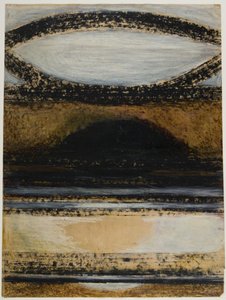
Signs III (1981) autorstwa Hedda Sterne

Signs III

1981 · Graphite Pencil · MoMA - Museum of Modern Art, Nowy Jork

Hedda Sterne’s “Signs III,” created in 1981, stands as a striking testament to the enduring power of abstraction and its ability to convey profound emotional resonance. More than just a depiction of snow or sand—though those elements dominate the canvas—the artwork embodies a complex interplay of visual language and philosophical contemplation.

5
Untitled from Metaphores and Metamorphoses (1967) autorstwa Hedda Sterne

Untitled from Metaphores and Metamorphoses

1967 · Ink On Paper · MoMA - Museum of Modern Art, Nowy Jork

In this work, titled Untitled from Metaphores and Metamorphoses, we encounter the precise, meditative language of Hedda Sterne. Created in 1967, the piece belongs to the Abstract Expressionism movement, a period where the artist explored the boundaries between form and the internal landscape. Sterne, who lived from 1910 to 2011, brought a unique perspective to the New York School, often navigating the space between different artistic philosophies.

6
Untitled (D2WW32) (1953) autorstwa Hedda Sterne

Untitled (D2WW32)

1953 · Oil On Canvas · Metropolitan Museum of Art, Nowy Jork

Hedda Sterne’s 1953 painting, “Untitled (D2WW32),” isn’t merely a depiction of a room; it’s an immersion. It’s a carefully constructed echo of memory and emotion, rendered in the rich, earthy palette of a bygone era. The canvas breathes with a quiet intensity, inviting the viewer to lose themselves within its layered complexity. This work, born from the heart of the New York School of painters, stands as a testament to…

The Hedda Sterne selection continues, 11 to 21

Tematy, które przyciągnęły wzrok Hedda Sterne

Cztery motywy najczęściej powracające w tych oryginałach, z których każdy doczekał się swojego najdoskonalszego przykładu.

Muzea przechowujące oryginały Hedda Sterne

8 muzeów, w których znajduje się najwięcej obrazów z tej strony.

Muzeum Miasto Dzieła artysty Hedda Sterne Obrazy z tej listy
MoMA - Museum of Modern Art, Nowy JorkMoMA - Museum of Modern Art Nowy Jork 2 Signs III, Untitled from Metaphores and Metamorphoses
Metropolitan Museum of Art, Nowy JorkMetropolitan Museum of Art Nowy Jork 1 Untitled (D2WW32)
Nelson-Atkins Museum of Art, Kansas CityNelson-Atkins Museum of Art Kansas City 1 Airport #1
Krannert Art Museum, ChampaignKrannert Art Museum Champaign 1 N.Y. 1 (Road #4)
Smithsonian American Art Museum, WaszyngtonSmithsonian American Art Museum Waszyngton 1 Cauliflower
Art Institute of Chicago, ChicagoArt Institute of Chicago Chicago 1 New York
Harvard Art Museums, CambridgeHarvard Art Museums Cambridge 1 Untitled
Bonnefanten Museum, MaastrichtBonnefanten Museum Maastricht 1 New York, VIII

Hedda Sterne dekada po dekadzie: oryginały definiujące każdy okres

Dzieła według dekad

Wybierz dekadę, aby zobaczyć dzieło, które ją definiuje.

Pytania kolekcjonerów o obrazy Hedda Sterne

Z jakiego dzieła najbardziej znany jest Hedda Sterne?Odkryj odpowiedź

Untitled (1941). Następne są Katsonarock (Portrait of V.X.) (1941) oraz Untitled (August 13, 2001) (2001).

W jakim wieku był Hedda Sterne, gdy powstało Untitled?Odkryj odpowiedź

31 lat: Untitled pochodzi z 1941, a Hedda Sterne urodził(a) się w 1910.

Jakie są dziesięć najsłynniejszych obrazów, których autorem jest Hedda Sterne?Odkryj odpowiedź

Untitled, Katsonarock (Portrait of V.X.), Untitled (August 13, 2001), Signs III, Untitled from Metaphores and Metamorphoses, Untitled (D2WW32), Composition, The Ballerina, Figure and Black Mantle i Airport #1. Powyższy ranking zawiera rok powstania oraz muzeum dla każdego z nich.

Ile obrazów pozostawił po sobie Hedda Sterne?Odkryj odpowiedź

Nasz katalog zawiera 21 dzieł artysty Hedda Sterne, datowanych od 1941 do 2001.

W których muzeach znajdują się arcydzieła Hedda Sterne?Odkryj odpowiedź

W większości znajdują się w MoMA - Museum of Modern Art (Nowy Jork), Metropolitan Museum of Art (Nowy Jork) i Nelson-Atkins Museum of Art (Kansas City). Powyższa tabela muzeów zawiera ich pełną listę.

W których latach Hedda Sterne namalował swoje najsłynniejsze dzieła?Odkryj odpowiedź

W 1950s: 6 z 21 dzieł na tej stronie powstało w tym czasie, w tym Untitled (D2WW32).

Jakie są pierwsze i ostatnie słynne oryginały Hedda Sterne?Odkryj odpowiedź

Na tej stronie najwcześniejszy to Untitled (1941), a najpóźniejszy Untitled (August 13, 2001) (2001).

Jakie tematy Hedda Sterne wybierał najczęściej?Odkryj odpowiedź

Geometric forms (3) i Urban chaos (2), w ramach 21 dzieł na tej stronie.

Której techniki Hedda Sterne używał najczęściej?Odkryj odpowiedź

Oil On Canvas, dla 3 z 21 dzieł na tej stronie.

Do jakiego nurtu artystycznego należy Hedda Sterne?Odkryj odpowiedź

Abstract expressionism i Surrealism, sądząc po oryginałach na tej stronie.

Które dzieła Hedda Sterne znajdują się w MoMA - Museum of Modern Art?Odkryj odpowiedź

Signs III i Untitled from Metaphores and Metamorphoses: MoMA - Museum of Modern Art, Nowy Jork posiada 2 dzieł widocznych na tej stronie.

Hedda Sterne: życie i twórczość

A Life Bridging Worlds: The Artistic Journey of Hedda Sterne

Hedda Sterne, born Hedwig Lindenberg in Bucharest, Romania, in 1910, was an artist whose life and work embodied a fascinating intersection of cultures, movements, and personal philosophies. Her journey from the vibrant avant-garde scene of pre-war Europe to the heart of the New York School is a testament to her resilience, intellectual curiosity, and unwavering dedication to artistic exploration. Growing up in a household that valued both music and languages – her brother became a renowned conductor – Sterne received a broad education that fostered an appreciation for nuance and expression. This early exposure, coupled with a burgeoning interest in art history and German philosophical texts, laid the groundwork for a deeply thoughtful and conceptually driven practice. Initially encouraged towards a musical path, she skillfully navigated familial expectations to pursue her true calling: painting. Her formal training began in 1918 under the tutelage of Frederic Storck, a sculptor who had taught her instructor Max Hermann Maxy, setting her on a course that would see her engage with some of the most pivotal artistic currents of the twentieth century.

From Bucharest to New York: A Surrealist Foundation

The intellectual and artistic ferment of Bucharest in the 1920s proved crucial in Sterne’s formative years. She became immersed in a thriving avant-garde community, working alongside Dada co-founder Marcel Janco and forging close friendships with artists like Victor Brauner. This period instilled in her an early affinity for Surrealism, which she described as something she “grew up with.” Frequent travels to Vienna, where she studied ceramics, and Paris, where she briefly attended ateliers of Fernand Léger and André Lhote, broadened her artistic horizons and exposed her to the latest developments in European Modernism. These experiences were not merely technical exercises; they were opportunities to absorb different approaches to form, color, and composition, all while deepening her understanding of Surrealist principles like automatism – a technique she would later employ in creating unique collages. The looming shadow of war forced a difficult decision in 1939 when Sterne returned to Bucharest from France for what would be the last time before the outbreak of World War II. The subsequent years were marked by increasing political unrest and, tragically, witnessing the horrors of the Bucharest pogrom in January 1941. After months of struggle securing visas, she finally embarked on a perilous journey to New York aboard the S.S. Excambion in October 1941, leaving behind a life irrevocably altered by conflict.

The New York School and Beyond: Finding Her Voice

Arriving in New York, Sterne reunited with her estranged husband, Fritz Stern (later Frederick Stafford), though they would soon adopt the surname “Stafford.” However, she quickly established herself as "Hedda Sterne," subtly reclaiming a connection to her European past while forging a new identity within the burgeoning American art scene. Her proximity to Peggy Guggenheim’s gallery on Beekman Place proved pivotal, reintroducing her to many of the Surrealist artists she had known in Paris – André Breton, Marcel Duchamp, and Max Ernst among them. She also formed a close friendship with Antoine de Saint-Exupéry, even offering crucial advice that influenced his iconic illustrations for *The Little Prince*. Sterne’s work during this period reflected her unique position as an outsider looking in, grappling with the complexities of American culture while retaining a distinctly European sensibility. She became associated with the Abstract Expressionist movement and famously appeared in the 1951 *Life* magazine photograph of “The Irascibles,” though she was the only woman included in the group—a subtle but significant acknowledgment of her presence within this influential circle. However, Sterne resisted easy categorization, consistently pushing boundaries and refusing to be confined by stylistic labels.

A Visual Diary: Themes and Techniques

Hedda Sterne’s art is often described as a visual diary, reflecting not only external observations but also internal states of mind and philosophical inquiries. Her paintings, collages, and drawings explore themes of displacement, memory, and the search for meaning in a rapidly changing world. She was particularly fascinated by the interplay between order and chaos, often employing layered textures, fragmented forms, and ambiguous spaces to create works that are both visually compelling and intellectually stimulating. The influence of Surrealism is evident in her early collages, which utilize chance encounters and unexpected juxtapositions to evoke a sense of dreamlike disorientation. Later, she experimented with industrial materials like aerosol spray paint, embracing the immediacy and fluidity of this medium to capture the energy and dynamism of urban life. Her paintings frequently feature abstracted landscapes, architectural motifs, and enigmatic figures, inviting viewers to engage in their own interpretive journeys. Third Avenue El, for example, powerfully conveys the chaotic rhythm of New York City, while her *Tondo* series demonstrates a continued exploration of form and space through circular compositions. Throughout her long career, Sterne remained committed to pushing the boundaries of artistic expression, creating a body of work that is both deeply personal and universally resonant.

Legacy and Historical Significance

Hedda Sterne’s contribution to twentieth-century art extends beyond her individual paintings and collages. She served as a vital bridge between European Modernism and the American avant-garde, bringing with her a unique perspective shaped by a life lived across continents and cultures. Her unwavering commitment to artistic independence and her refusal to conform to prevailing trends paved the way for future generations of artists who challenged conventional norms. While she achieved recognition during her lifetime, including exhibitions at prominent galleries and museums, Sterne’s work has gained increasing attention in recent years as scholars and curators reassess the contributions of women artists within the Abstract Expressionist movement. The establishment of the Hedda Sterne Foundation ensures that her legacy will continue to inspire and challenge audiences for years to come, solidifying her place as a significant figure in the history of modern art—an artist who fearlessly navigated a world in flux, transforming personal experience into enduring visual poetry.

Wszystkie 21 dzieła artysty Hedda Sterne →