Portret Giovanni Del Biondo

26 najsłynniejszych obrazów artysty Giovanni Del Biondo – wybór z galerii

Aktualizacja: Listopad 2026 · ranking według naszego wskaźnika popularności (liczba wyszukiwań, wizyt i zamówień dla każdego dzieła) · 28 dzieł Giovanni Del Biondo w naszym katalogu

W skrócie

Spośród wszystkich dzieł oryginalnych, które pozostawił Giovanni Del Biondo, najsłynniejszym jest Virgin Annunciate (1356), znajdujący się w kolekcji Detroit Institute of Arts w Detroit. Tuż za nimi znajdują się Madonna enthroned with saints (1340) oraz Angel Annunciate (1356). Nasz katalog zawiera 28 dzieł autorstwa Giovanni Del Biondo; galeria zachowała 26 najbardziej podziwianych na świecie prac, z których każda została przedstawiona wraz z datą powstania, informacją o muzeum oraz jej historią.

1356 – 1399, Pratovecchio Gothic Najwięcej dzieł: Detroit Institute of Arts

10 najlepszych obrazów artysty Giovanni Del Biondo: wybór galerii

1
Virgin Annunciate (1356) autorstwa Giovanni Del Biondo

Virgin Annunciate

1356 · Tempera On Panel · Detroit Institute of Arts, Detroit

A single figure occupies the center of this vertical space. The Virgin Annunciate sits within an ornate, gilded frame that mimics the sharp, pointed architecture of a Gothic niche or shrine. This golden structure encloses her, creating a sense of sacred enclosure. A descending dove, the symbol of the Holy Spirit, enters the scene from above to meet her in this moment of quiet devotion.

2
Madonna enthroned with saints (1340) autorstwa Giovanni Del Biondo

Madonna enthroned with saints

1340 · Tempera On Panel · Bonnefanten Museum, Maastricht

In Giovanni Del Biondo's "Madonna enthroned with saints," the viewer meets a scene framed within a tall, vertically oriented pointed ogival arch. This Gothic structure dictates the rhythm of the entire panel, using sharp, upward-reaching lines that direct the eye toward the heavens. At the heart of this sacred architecture, the Virgin Mary sits upon an ornate throne. She holds the Christ Child close in her arms, creating a central…

3
Angel Annunciate (1356) autorstwa Giovanni Del Biondo

Angel Annunciate

1356 · Tempera On Panel · Detroit Institute of Arts, Detroit

Angel Annunciate is a religious painting created by the artist Giovanni Del Biondo. This work is dated 1356. The object is a painting that depicts an angel associated with the Annunciation, a subject matter likely representing the Archangel Gabriel. The figure is captured in a moment of sacred significance within the iconographic tradition of the period.

4
Christ and the Virgin Enthroned, with Allegories of the Old and New Testament (1365) autorstwa Giovanni Del Biondo

Christ and the Virgin Enthroned, with Allegories of the Old and New Testament

1365 · Tempera On Panel · Yale University Art Gallery, Nowe Havane

This religious panel painting, titled Christ and the Virgin Enthroned, with Allegories of the Old and New Testament, represents a significant work by the Florentine Master Giovanni Del Biondo. Created about 1365, the piece emerges from a period of profound transition in Tuscany. It captures a moment where the formal elegance of the Gothic tradition began to meet the nascent vitality of the early Renaissance. The work is a product…

5
Rinuccini Polyptych (1379) autorstwa Giovanni Del Biondo

Rinuccini Polyptych

1379 · Tempera On Panel

The Rinuccini Polyptych rises from the shadows of the Santa Croce in Florence like a mountain of gold and pigment. It is a structure of wood and light, a multi-tiered assembly of sacred figures held within a complex, pointed Gothic frame. At its heart, the Virgin and Child sit enthroned, a central stillness around which the rest of the divine assembly orbits. The gold leaf does not merely decorate; it…

6
Three parts of a predella (1365) autorstwa Giovanni Del Biondo

Three parts of a predella

1365 · Tempera On Panel · Gemäldegalerie, Berlin

Gold leaf catches the light in a shallow, gilded space, holding three distinct moments of a sacred narrative. In the upper panel, the weight of death rests upon a central figure, the body of Christ, as mourning figures press close against a solid, unyielding gold background. This is a scene of quiet, heavy stillness. Below, the composition breaks into movement and landscape. To the left, the verticality of the cross…

7
The Angel Gabriel (1387) autorstwa Giovanni Del Biondo

The Angel Gabriel

1387 · Tempera On Panel · Royal Collection, Londyn

This late Gothic religious panel painting, dating to 1387, depicts the Archangel Gabriel in profile. The figure is presented in a kneeling or hovering posture, facing toward the right. The angel is characterized by large, expressive wings featuring vibrant red and dark teal or black feathering. Draped over a long, flowing cream-colored robe is a red mantle. In the hand, the figure holds a delicate, thin stem adorned with small…

8
The Virgin Annunciate (1387) autorstwa Giovanni Del Biondo

The Virgin Annunciate

1387 · Tempera On Panel · Royal Collection, Londyn

The Virgin Annunciate is an artwork by the Italian artist Giovanni Del Biondo. This panel painting, which dates to 1356, depicts the subject of the Annunciation and focuses on themes of religious devotion. The work is executed using gilt and tempera on a wood panel.

9
Incoronazione della Vergine e santi (1372) autorstwa Giovanni Del Biondo

Incoronazione della Vergine e santi

1372 · Fresco · Fondazione Magnani-Rocca, Traversole

Created in 1372, this large-scale fresco captures the coronation of Mary as Queen of Heaven. The composition organizes a dense assembly of figures, ranging from celestial angels to various saints, within a structured sacred space. Figures occupy multiple planes, with some positioned in the immediate foreground to engage the viewer, while others recede into the background to establish depth. The scene is punctuated by specific liturgical objects, including a book…

10
The Virgin of the Apocalypse with Saints and Angels (1391) autorstwa Giovanni Del Biondo

The Virgin of the Apocalypse with Saints and Angels

1391 · Tempera On Panel · Pinakoteca Watykańska, Watykan

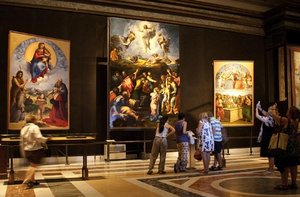
The painting is a religious artwork featuring the Virgin Mary holding her child Jesus. The scene includes several other figures, including angels and saints, surrounding them. There are at least 13 people in total, with some of them standing closer to the foreground while others are positioned further back. The Virgin Mary is wearing a blue dress and holds her child close to her chest. The baby Jesus appears to…

Kontynuacja zestawienia Giovanni Del Biondo, od 11 do 26

Słynne obrazy Giovanni Del Biondo epoka po epoce

Tematy, które przyciągnęły wzrok Giovanni Del Biondo

Cztery motywy najczęściej powracające w tych oryginałach, z których każdy doczekał się swojego najdoskonalszego przykładu.

Muzea przechowujące oryginały Giovanni Del Biondo

8 muzeów, w których znajduje się najwięcej obrazów z tej strony.

Muzea Miasto Dzieła artysty Giovanni Del Biondo Obrazy z tej listy
Detroit Institute of Arts, DetroitDetroit Institute of Arts Detroit 2 Virgin Annunciate, Angel Annunciate
Bonnefanten Museum, MaastrichtBonnefanten Museum Maastricht 2 Madonna enthroned with saints, Saint Stephen
Royal Collection, LondynRoyal Collection Londyn 2 The Angel Gabriel, The Virgin Annunciate
Fondazione Magnani-Rocca, TraversoleFondazione Magnani-Rocca Traversole 2 Incoronazione della Vergine e santi, Incoronazione della Vergine e santi
Yale University Art Gallery, Nowe HavaneYale University Art Gallery Nowe Havane 1 Christ and the Virgin Enthroned, with Allegories of the Old and New Testament
Gemäldegalerie, BerlinGemäldegalerie Berlin 1 Three parts of a predella
Pinakoteca Watykańska, WatykanPinakoteca Watykańska Watykan 1 The Virgin of the Apocalypse with Saints and Angels
Bawarskie Państwowe Zbiory Malarstwa, MonachiumBawarskie Państwowe Zbiory Malarstwa Monachium 1 Compianto

Giovanni Del Biondo dekada po dekadzie: oryginały definiujące każdy okres

Dzieła według dekad

Wybierz dekadę, aby zobaczyć dzieło, które ją definiuje.

Pytania kolekcjonerów o obrazy Giovanni Del Biondo

Z jakiego dzieła najbardziej znany jest Giovanni Del Biondo?Odkryj odpowiedź

Virgin Annunciate (1356), Detroit Institute of Arts, Detroit. Następne są Madonna enthroned with saints (1340) oraz Angel Annunciate (1356).

Jakie są dziesięć najsłynniejszych obrazów, których autorem jest Giovanni Del Biondo?Odkryj odpowiedź

Virgin Annunciate, Madonna enthroned with saints, Angel Annunciate, Christ and the Virgin Enthroned, with Allegories of the Old and New Testament, Rinuccini Polyptych, Three parts of a predella, The Angel Gabriel, The Virgin Annunciate, Incoronazione della Vergine e santi i The Virgin of the Apocalypse with Saints and Angels. Powyższy ranking zawiera rok powstania oraz muzeum dla każdego z nich.

Ile obrazów pozostawił po sobie Giovanni Del Biondo?Odkryj odpowiedź

Nasz katalog zawiera 28 dzieł artysty Giovanni Del Biondo, datowanych od 1365 do 1391.

W których muzeach znajdują się arcydzieła Giovanni Del Biondo?Odkryj odpowiedź

W większości znajdują się w Detroit Institute of Arts (Detroit), Bonnefanten Museum (Maastricht) i Royal Collection (Londyn). Powyższa tabela muzeów zawiera ich pełną listę.

W których latach Giovanni Del Biondo namalował swoje najsłynniejsze dzieła?Odkryj odpowiedź

W 1370s: 4 z 26 dzieł na tej stronie powstało w tym czasie, w tym Rinuccini Polyptych.

Jakie są pierwsze i ostatnie słynne oryginały Giovanni Del Biondo?Odkryj odpowiedź

Na tej stronie najwcześniejszy to Christ and the Virgin Enthroned, with Allegories of the Old and New Testament (1365), a najpóźniejszy The Virgin of the Apocalypse with Saints and Angels (1391).

Jakie tematy Giovanni Del Biondo wybierał najczęściej?Odkryj odpowiedź

Gold background (7), Saints (6) i Angels (4), w ramach 26 dzieł na tej stronie.

Której techniki Giovanni Del Biondo używał najczęściej?Odkryj odpowiedź

Tempera On Panel, dla 9 z 26 dzieł na tej stronie.

Do jakiego nurtu artystycznego należy Giovanni Del Biondo?Odkryj odpowiedź

Gothic, sądząc po oryginałach na tej stronie.

Które dzieła Giovanni Del Biondo znajdują się w Detroit Institute of Arts?Odkryj odpowiedź

Virgin Annunciate i Angel Annunciate: Detroit Institute of Arts, Detroit posiada 2 dzieł widocznych na tej stronie.

Giovanni Del Biondo: życie i twórczość

Florentyński mistrz w cieniu gigantów

Historia Giovanni Del Biondo jest nierozerwalnie spleciona z samą tkanką czternastowiecznego Florencji, okresu głębokich przemian, w którym sztywna elegancja tradycji gotyku zaczęła oddychać rodzącą się witalnością wczesnego renesansu. Urodzony około 1356 roku, prawdopodobnie w regionie Casentino, Del Biondo wyłonił się jako postać, której życie zostało utrwalone w skrupulatnych rejestrach podatkowych jego przybranego domu, choć jego osobista biografia pozostaje częściowo spowita tajemnicą. Gdy uzyskał obywatelstwo florentyńskie pod imieniem Iohannes Biondi de Casentino pictor, wkroczył w tętniący życiem ekosystem artystyczny, sytuując się w linii mistrzów, którzy przez pokolenia definiowali estetykę Toskanii.

Choć dokładne szczegóły jego wczesnej edukacji są przedmiotem naukowych sporów, echa wielkości są nie do pomylenia w jego pociągnięciach pędzla. Powszechnie wierzy się, że Del Biondo doskonalił swój kunszt w prestiżowych warsztatach Andrei di Cione i Nardo di Cione, pod wpływem Bernarda Daddiego. Dzięki tym kontaktom przyswoił rewolucyjny język Giotta – styl, który stawiał na rezonans emocjonalny, przestrzenną realistyczność i świadomą prostotę formy. To fundamentalne wykształcenie pozwoliło mu poruszać się między zmieniającymi się prądami artystycznymi jego epoki, płynnie przechodząc od duchowej powagi gotyckiej ikonografii ku rodzącemu się naturalizmowi, który wkrótce miał zdefiniować renesans.

Ewolucja formy i koloru

Artystyczna droga Del Biondo charakteryzuje się fascynującą ewolucją mediów i technik. Jego pierwsze kroki w świecie malarstwa wiązały się z techniką fresku, w której wykazał się natychmiastowym mistrzostwem w oddawaniu Giotto-owskiego podejścia do ludzkich emocji. Te wczesne dzieła cechowały się świetlistymi kolorami i uderzającym unikaniem nadmiernej ornamentyki, skupiając się zamiast tego na surowej, duchowej sile narracji. W miarę postępów w karierze, artysta przeszedł w stronę bardziej delikatnego i szczegółowego medium, jakim była tempera na panelu, co pozwoliło mu na eksplorację większej złożoności teksturalnej i subtelnych gradacji tonalnych.

W tych późniejszych malowidłach tablicowych można zaobserwować niezwykłe rozszerzenie wizji artystycznej. Pod wpływem wizjonerskich przedstawień życia miejskiego i alegorii moralnych obecnych w dziełach Ambrosio Lorenzetti, Del Biondo zaczął nadawać swoim kompozycjom bardziej wyrafinowane poczucie głębi. Jego figury, które początkowo pojawiały się w prostych, jasnych układach, stopniowo nabierały bardziej naturalistycznego wyglądu, stając się bardziej spontanicznymi i misternie szczegółowymi. Rozwój ten nie był jedynie techniczny, lecz głęboko intelektualny, gdyż artysta dążył do zbalansowania ustanowionych tradycji swoich poprzedników z nowym, bardziej uważnym podejściem do świata fizycznego.

Dziedzictwo i sztuka poliptychu

Prawdziwe znaczenie Giovanni Del Biondo tkwi w jego zdolności do zachowania odrębnego, rozpoznawalnego stylu pośród morza zmieniających się wpływów. Nawet gdy jego kompozycje stawały się coraz bardziej złożone, pewne manieryzmy pozostawały znakiem rozpoznawczym jego ręki: niepokorne proporcje, ostre i spiczaste rysy oraz potężne poczucie kompozycji, które przykuwało uwagę widza. Większość jego zachowanych prac stanowiły pierwotnie wielkoformatowe poliptychy ołtarzowe – monumentalne struktury religijne zaprojektowane tak, by budzić zachwyt i pobożność w świętych przestrzeniach florentyńskich kościołów.

Choć korzystanie z pomocy asystentów w późniejszych latach okresowo prowadziło do wahań w precyzji jego prac, jego wkład w szkołę florentyńską pozostaje niezatarty. Stoi on jako kluczowy most między dwoma światami – stylizowaną, symboliczną domeną gotyku a antropocentryczną, obserwacyjną erą renesansu. Poprzez swoje tematy religijne i freski, Del Biondo uchwycił duchowy zeitgeist czternastowiecznych Włoch, pozostawiając po sobie dziedzictwo piękna, które wciąż rezonuje z głęboką głębią emocjonalną i technicznym geniuszem mistrza w procesie przemiany.