Portret George Edgar Ohr (Mad Potter z Biloxi)

56 najsłynniejszych obrazów artysty George Edgar Ohr (Mad Potter z Biloxi), każdy niepowtarzalny

Aktualizacja: Listopad 2026 · ranking według naszego wskaźnika popularności (liczba wyszukiwań, wizyt i zamówień dla każdego dzieła) · 56 dzieł George Edgar Ohr (Mad Potter z Biloxi) w naszym katalogu

W skrócie

Vase with Handles to obraz autorstwa George Edgar Ohr (Mad Potter z Biloxi), który przyciąga najwięcej spojrzeń; oryginał znajduje się w Ohr–O'Keefe Museum Of Art, Biloxi. Następnie wzrok kieruje się na Assortment of Burned Babies i Puzzle Mug. Spośród 56 dzieł George Edgar Ohr (Mad Potter z Biloxi) w naszym katalogu, tych 56 jest najbardziej znanych – każde z nich to unikatowy oryginał, przedstawiony wraz z rokiem powstania, muzeum oraz powodem, dla którego przetrwało próbę czasu.

1857 – 1918, Biloxi American abstract expressionism Najwięcej dzieł: Ohr–O'Keefe Museum Of Art

10 najlepszych obrazów autorstwa George Edgar Ohr (Mad Potter z Biloxi) według oka galerii

1
Vase with Handles autorstwa George Edgar Ohr (Mad Potter z Biloxi)

Vase with Handles

Ceramic · Ohr–O'Keefe Museum Of Art, Biloxi

The "Vase with Handles" emerges as a singular presence, a vessel that carries the unmistakable imprint of its creator, George Edgar Ohr. This ceramic work exists as a physical manifestation of a vision that refused to conform to the quiet expectations of traditional pottery. Every curve and texture tells the story of a maker who lived on the edge of the known, shaping clay into something that feels immediate, as…

2
Assortment of Burned Babies autorstwa George Edgar Ohr (Mad Potter z Biloxi)

Assortment of Burned Babies

Photography · Ohr–O'Keefe Museum Of Art, Biloxi

The Assortment of Burned Babies by George Edgar Ohr consists of ceramic vessels that bear the marks of fire. George Edgar Ohr was born on July 12, 1857, in Biloxi, United States of America, and he passed away on April 7, 1918. He was known by the moniker "the Mad Potter of Biloxi." This specific collection of objects includes pieces that survived a fire that destroyed his workshop in 1894.…

3
Puzzle Mug autorstwa George Edgar Ohr (Mad Potter z Biloxi)

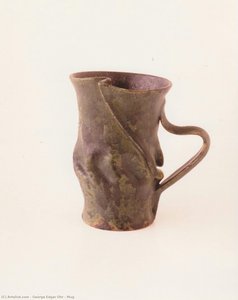
Puzzle Mug

Ceramic · Ohr–O'Keefe Museum Of Art, Biloxi

The Puzzle Mug is a ceramic work by the American artist George Edgar Ohr. Born in 1857, Ohr lived a life shaped by the coastal air of Biloxi, Mississippi, where he eventually passed away in 1918. This specific vessel carries the mark of a man who saw clay as something living, something that could be twisted and pulled into new, singular shapes.

4
Creamer autorstwa George Edgar Ohr (Mad Potter z Biloxi)

Creamer

Acrylic On Canvas · Ohr–O'Keefe Museum Of Art, Biloxi

A Dance of Fire and Clay: Unveiling George Edgar Ohr’s “Creamer” George Edgar Ohr, affectionately dubbed the "Mad Potter of Biloxi," wasn't merely a ceramicist; he was a revolutionary, a provocateur who shattered conventional notions of form and function within the world of art. His work, particularly pieces like “Creamer,” embodies this spirit – a vibrant explosion of texture, color, and unapologetic experimentation that foreshadowed much of 20th-century abstract expressionism.…

5
Wyeksponowana Waza autorstwa George Edgar Ohr (Mad Potter z Biloxi)

Wyeksponowana Waza

The image before you presents a captivating study in color and form—a tiered vase by George Edgar Ohr, a name that echoes through the annals of American ceramics as synonymous with audacious experimentation and unapologetic artistic freedom. More than just a vessel, this piece embodies the spirit of a man who dared to defy convention, earning him the moniker “The Mad Potter of Biloxi.” Crafted during his prolific period from…

6
Dzban autorstwa George Edgar Ohr (Mad Potter z Biloxi)

Dzban

Akryl na płótnie · Ohr–O'Keefe Museum Of Art, Biloxi

George Edgar Ohr – Pionier Absolutnej Wolności Ceramicznej George Edgar Ohr, urodzony w Biloxi, Mississippi, 12 lipca 1857 roku, był postacią niezwykłą i zapamiętaną dla amerykańskiej ceramiki. Jego rodzice, niemieccy imigranci szukający nowych możliwości, przekazali mu umiejętność pracy i pewną świadomość kultury europejską – elementy które miały ogromny wpływ na jego twórczość. Jednak właśnie wyjątkowe otoczenie Biloxi, miasta bogatego w kulturę i oferującego łatwo dostępną glinę, stało się prawdziwym siedliskiem…

7
Pitcher autorstwa George Edgar Ohr (Mad Potter z Biloxi)

Pitcher

Ceramic · Ohr–O'Keefe Museum Of Art, Biloxi

The Pitcher by George Edgar Ohr emerges from the shadows of a dark, neutral background, demanding immediate attention. This ceramic piece, created about 1900, presents itself as a singular still life. It sits centrally, a quiet but commanding presence that captures the eye through its irregular, textured surface. The object exists in a moment of stillness, its form defined by the way light catches the uneven ridges of its clay…

8
Bowle autorstwa George Edgar Ohr (Mad Potter z Biloxi)

Bowle

Ceramika · Ohr–O'Keefe Museum Of Art, Biloxi

George Edgar Ohr – Pionier Absolutnej Wolności Ceramicznej George Edgar Ohr, urodzony w Biloxi, Mississippi, 12 lipca 1857 roku, był postacią niezwykłą i kontrowersyjną dla amerykańskiej ceramiki końca XIX wieku. Jego rodzice, niemieccy imigranci szukający lepszego życia, przekazali mu podstawową wiedzę zawodową oraz pewien wpływ kultury europejskiej – elementy które miały ogromne znaczenie w kształtowaniu jego indywidualnego stylu twórczego. Jednak prawdziwym środowiskiem sprzyjającym rozwinięciu jego talentu stała się sama Biloxi…

9
Bowl autorstwa George Edgar Ohr (Mad Potter z Biloxi)

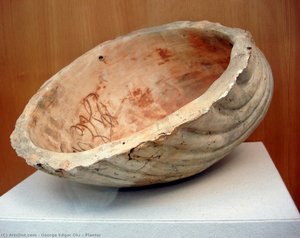
Bowl

Ceramics · Ohr–O'Keefe Museum Of Art, Biloxi

In the quiet, salt-misted atmosphere of Biloxi, Mississippi, a revolution was quietly being molded by hands that refused to follow the rules. George Edgar Ohr, famously known as the "Mad Potter of Biloxi," did not merely create vessels; he breathed life into the very earth itself. His Bowl stands as a profound testament to this radical philosophy, where the beauty of the piece is found not in the precision of…

10
Vase autorstwa George Edgar Ohr (Mad Potter z Biloxi)

Vase

Ceramic · Ohr–O'Keefe Museum Of Art, Biloxi

The Vase by George Edgar Ohr emerges from the shadows of history, a singular creation that carries the unmistakable imprint of its maker. Born on July 12, 1857, in the coastal landscape of Biloxi, Mississippi, the artist spent his life reshaping the very nature of clay. He was a man who embraced the title of the "Mad Potter of Biloxi," a name that speaks to his restless and unconventional spirit.…

Słynne obrazy artysty George Edgar Ohr (Mad Potter z Biloxi), od 11 do 56

11Vase autorstwa George Edgar Ohr (Mad Potter z Biloxi)VaseOhr–O'Keefe Museum Of Art 12Vase autorstwa George Edgar Ohr (Mad Potter z Biloxi)VaseOhr–O'Keefe Museum Of Art 13Bank autorstwa George Edgar Ohr (Mad Potter z Biloxi)BankOhr–O'Keefe Museum Of Art 14Vase autorstwa George Edgar Ohr (Mad Potter z Biloxi)VaseOhr–O'Keefe Museum Of Art 15Face Vase autorstwa George Edgar Ohr (Mad Potter z Biloxi)Face VaseOhr–O'Keefe Museum Of Art 16Mug autorstwa George Edgar Ohr (Mad Potter z Biloxi)MugOhr–O'Keefe Museum Of Art 17Candle Holder autorstwa George Edgar Ohr (Mad Potter z Biloxi)Candle HolderOhr–O'Keefe Museum Of Art 18Pitcher autorstwa George Edgar Ohr (Mad Potter z Biloxi)PitcherOhr–O'Keefe Museum Of Art 19Monumental Urn autorstwa George Edgar Ohr (Mad Potter z Biloxi)Monumental UrnOhr–O'Keefe Museum Of Art 20Vase autorstwa George Edgar Ohr (Mad Potter z Biloxi)VaseOhr–O'Keefe Museum Of Art 21Vase autorstwa George Edgar Ohr (Mad Potter z Biloxi)VaseOhr–O'Keefe Museum Of Art 22Vase autorstwa George Edgar Ohr (Mad Potter z Biloxi)VaseOhr–O'Keefe Museum Of Art 23Vase autorstwa George Edgar Ohr (Mad Potter z Biloxi)VaseOhr–O'Keefe Museum Of Art 24Two-handled Corseted Vase autorstwa George Edgar Ohr (Mad Potter z Biloxi)Two-handled Corseted VaseOhr–O'Keefe Museum Of Art 25Corseted Vase autorstwa George Edgar Ohr (Mad Potter z Biloxi)Corseted VaseOhr–O'Keefe Museum Of Art 26Vase with Double-looped Handles autorstwa George Edgar Ohr (Mad Potter z Biloxi)Vase with Double-looped HandlesOhr–O'Keefe Museum Of Art 27Torso Vase autorstwa George Edgar Ohr (Mad Potter z Biloxi)Torso VaseOhr–O'Keefe Museum Of Art 28Three-Handled Vase autorstwa George Edgar Ohr (Mad Potter z Biloxi)Three-Handled Vase 29Vase with In-body Twist autorstwa George Edgar Ohr (Mad Potter z Biloxi)Vase with In-body TwistOhr–O'Keefe Museum Of Art 30Biloxi Lighthouse Pot autorstwa George Edgar Ohr (Mad Potter z Biloxi)Biloxi Lighthouse PotOhr–O'Keefe Museum Of Art 31Bulbous Bottom Vase autorstwa George Edgar Ohr (Mad Potter z Biloxi)Bulbous Bottom VaseOhr–O'Keefe Museum Of Art 32Pedestal Vase autorstwa George Edgar Ohr (Mad Potter z Biloxi)Pedestal VaseOhr–O'Keefe Museum Of Art 33Vase autorstwa George Edgar Ohr (Mad Potter z Biloxi)VaseOhr–O'Keefe Museum Of Art 34Pitcher autorstwa George Edgar Ohr (Mad Potter z Biloxi)PitcherOhr–O'Keefe Museum Of Art 35Creamer autorstwa George Edgar Ohr (Mad Potter z Biloxi)CreamerOhr–O'Keefe Museum Of Art 36Vase autorstwa George Edgar Ohr (Mad Potter z Biloxi)VaseOhr–O'Keefe Museum Of Art 37Miniature Pitcher autorstwa George Edgar Ohr (Mad Potter z Biloxi)Miniature PitcherOhr–O'Keefe Museum Of Art 38Petticoat Vase autorstwa George Edgar Ohr (Mad Potter z Biloxi)Petticoat VaseOhr–O'Keefe Museum Of Art 39Teapot autorstwa George Edgar Ohr (Mad Potter z Biloxi)TeapotOhr–O'Keefe Museum Of Art 40Tyg autorstwa George Edgar Ohr (Mad Potter z Biloxi)TygOhr–O'Keefe Museum Of Art 41Teapot autorstwa George Edgar Ohr (Mad Potter z Biloxi)TeapotOhr–O'Keefe Museum Of Art 42Tuxedo Vase autorstwa George Edgar Ohr (Mad Potter z Biloxi)Tuxedo VaseOhr–O'Keefe Museum Of Art 43Vase autorstwa George Edgar Ohr (Mad Potter z Biloxi)VaseOhr–O'Keefe Museum Of Art 44Vase autorstwa George Edgar Ohr (Mad Potter z Biloxi)VaseOhr–O'Keefe Museum Of Art 45Bowl autorstwa George Edgar Ohr (Mad Potter z Biloxi)BowlOhr–O'Keefe Museum Of Art 46Inkwell autorstwa George Edgar Ohr (Mad Potter z Biloxi)InkwellOhr–O'Keefe Museum Of Art 47Vase autorstwa George Edgar Ohr (Mad Potter z Biloxi)VaseOhr–O'Keefe Museum Of Art 48Bowl autorstwa George Edgar Ohr (Mad Potter z Biloxi)BowlOhr–O'Keefe Museum Of Art 49Vase autorstwa George Edgar Ohr (Mad Potter z Biloxi)VaseOhr–O'Keefe Museum Of Art 50Planter autorstwa George Edgar Ohr (Mad Potter z Biloxi)PlanterOhr–O'Keefe Museum Of Art 51Hat Vase autorstwa George Edgar Ohr (Mad Potter z Biloxi)Hat VaseOhr–O'Keefe Museum Of Art 52Puzzle Mug autorstwa George Edgar Ohr (Mad Potter z Biloxi)Puzzle MugOhr–O'Keefe Museum Of Art 53Bowl autorstwa George Edgar Ohr (Mad Potter z Biloxi)BowlOhr–O'Keefe Museum Of Art 54Zmielony Krem autorstwa George Edgar Ohr (Mad Potter z Biloxi)Zmielony KremOhr–O'Keefe Museum Of Art 55Vase with In-body Twist autorstwa George Edgar Ohr (Mad Potter z Biloxi)Vase with In-body TwistOhr–O'Keefe Museum Of Art 56Czaj autorstwa George Edgar Ohr (Mad Potter z Biloxi)CzajOhr–O'Keefe Museum Of Art

Tematy, które przyciągnęły wzrok George Edgar Ohr (Mad Potter z Biloxi)

Cztery motywy najczęściej powracające w tych oryginałach, z których każdy doczekał się swojego najdoskonalszego przykładu.

Muzea przechowujące oryginały George Edgar Ohr (Mad Potter z Biloxi)

Muzeum, w którym znajduje się najwięcej obrazów prezentowanych na tej stronie.

Muzea Miasto Dzieła artysty George Edgar Ohr (Mad Potter z Biloxi) Obrazy z tej listy
Ohr–O'Keefe Museum Of Art, BiloxiOhr–O'Keefe Museum Of Art Biloxi 55 Vase with Handles, Assortment of Burned Babies, Puzzle Mug

Obrazy artysty George Edgar Ohr (Mad Potter z Biloxi): pytania do galerii

Jakie jest najsłynniejsze dzieło artysty George Edgar Ohr (Mad Potter z Biloxi)?Odkryj odpowiedź

Vase with Handles, Ohr–O'Keefe Museum Of Art, Biloxi. Następne są Assortment of Burned Babies oraz Puzzle Mug.

Które dziesięć obrazów George Edgar Ohr (Mad Potter z Biloxi) jest najbardziej znanych?Odkryj odpowiedź

Vase with Handles, Assortment of Burned Babies, Puzzle Mug, Creamer, Wyeksponowana Waza, Dzban, Pitcher, Bowle, Bowl i Vase. Powyższy ranking zawiera rok powstania oraz muzeum dla każdego z nich.

Ile znanych dzieł stworzył George Edgar Ohr (Mad Potter z Biloxi)?Odkryj odpowiedź

Nasz katalog zawiera 56 dzieł autorstwa George Edgar Ohr (Mad Potter z Biloxi).

Gdzie można zobaczyć najsłynniejsze oryginały George Edgar Ohr (Mad Potter z Biloxi)?Odkryj odpowiedź

W większości znajdują się w Ohr–O'Keefe Museum Of Art (Biloxi). Powyższa tabela muzeów zawiera ich pełną listę.

Jakie tematy preferował George Edgar Ohr (Mad Potter z Biloxi)?Odkryj odpowiedź

Pottery (7), Ceramics (7) i Ceramic art (4), w ramach 56 dzieł na tej stronie.

Jakich materiałów George Edgar Ohr (Mad Potter z Biloxi) używał najczęściej?Odkryj odpowiedź

Ceramic, dla 4 z 56 dzieł na tej stronie.

Do jakiego nurtu należy twórczość George Edgar Ohr (Mad Potter z Biloxi)?Odkryj odpowiedź

American abstract expressionism, sądząc po oryginałach na tej stronie.

Jakie oryginały George Edgar Ohr (Mad Potter z Biloxi) można zobaczyć w Ohr–O'Keefe Museum Of Art?Odkryj odpowiedź

Vase with Handles, Assortment of Burned Babies i Puzzle Mug: Ohr–O'Keefe Museum Of Art, Biloxi posiada 55 dzieł widocznych na tej stronie.

George Edgar Ohr (Mad Potter z Biloxi): portret artysty

The Singular Vision of George Edgar Ohr: The Mad Potter of Biloxi

George Edgar Ohr, a name now synonymous with audacious innovation and delightfully eccentric artistry in the realm of American ceramics, was born on July 12, 1857, within the sun-drenched coastal city of Biloxi, Mississippi. His parents, German immigrants driven by the promise of opportunity, instilled in him a strong work ethic – a foundation built upon their heritage – and perhaps a subtle echo of the Old World’s artistic sensibilities. However, it was the unique, vibrant atmosphere of Biloxi itself—a bustling confluence of cultures, a place where the bounty of the sea met the rich soil, providing an abundance of clay—that truly nurtured his burgeoning talent. Ohr wasn't merely a potter; he was a revolutionary explorer, relentlessly pushing against the established boundaries of form, texture, and glaze, determined to redefine what ceramic art could become. He embraced the moniker “Mad Potter of Biloxi,” not as a dismissive label, but as a proud declaration of his unconventional approach, his unwavering dedication to artistic freedom, and his refusal to be constrained by convention.

Early Influences and Artistic Awakening

Ohr’s journey into ceramics began with a touch of serendipity. After a restless youth spent navigating various trades in New Orleans—a period marked by experimentation and a search for purpose—he found himself apprenticed to Joseph Fortune Meyer, a potter connected to the burgeoning Arts & Crafts movement. This apprenticeship provided Ohr with a crucial grounding in traditional techniques – the fundamentals of wheel throwing, kiln firing, and glaze application. Yet, it was his subsequent travels—a remarkable sixteen-state odyssey across America’s potteries—that truly ignited his creative spark. He immersed himself in diverse methods and styles, absorbing the wisdom of countless artisans, but he wasn't content to simply replicate; he sought to transcend convention, to synthesize these influences into something entirely new.

Upon his return to Biloxi, determined to forge his own path, Ohr established “Biloxi Art and Novelty Pottery,” a space where he could fully realize his artistic vision. The clay from the nearby Tchoutacabouffa River became his medium—a rich, pliable substance that responded directly to his touch. His hands, instruments of transformation, coaxed form from the earth, shaping vessels that were both functional and profoundly expressive. He wasn’t simply creating objects; he was engaging in a dialogue with the clay itself, imbuing it with emotion and personality.

A Revolution in Clay: Technique and Innovation

Ohr’s work stands apart due to its radical departure from prevailing ceramic norms. While many potters of his era focused on functionality and symmetrical forms—producing pieces designed for everyday use—Ohr embraced asymmetry, distortion, and a deliberate rejection of perfection. He pioneered techniques that seemed almost impossible – twisting the clay into improbable shapes, crumpling it with abandon, folding it upon itself, and stretching it to an astonishing degree. His glazes were equally experimental, vibrant, unpredictable, and often resembling molten metal or iridescent jewels. He wasn’t interested in simply decorating pottery; he was sculpting with color and light, transforming the mundane into the extraordinary. He thinned his walls to an almost impossible degree, achieving a delicacy rarely seen in ceramics—a testament to his skill and daring. This audacious approach, combined with his unique glazes, resulted in pieces that were both visually stunning and structurally audacious – defying gravity and challenging expectations.

Years of Isolation and Rediscovery

Despite his innovative spirit, Ohr struggled for recognition during his lifetime. The public wasn’t always receptive to his radical designs, and he often found himself at odds with prevailing tastes. Frustrated by the lack of appreciation and unwilling to compromise his artistic integrity, he ceased production around 1910, meticulously packing away thousands of pieces in his studio—a silent testament to his vision. He requested that his family leave the collection untouched for fifty years after his death, believing that future generations would be more receptive to his work. Sadly, Ohr passed away on April 7, 1918, during the influenza pandemic—a tragic loss for the art world. It wasn’t until the late 1960s and early 1970s that his genius was finally recognized. James Carpenter, an antiques dealer, discovered the hidden trove of pottery, recognizing its extraordinary value and significance, and began to champion Ohr's work, introducing it to a wider audience.

Legacy and Enduring Influence

Today, George Edgar Ohr is celebrated as one of the most important figures in American ceramic history. His pioneering spirit continues to inspire artists around the world. His work can be found in major museums, including the Smithsonian Institution and the Metropolitan Museum of Art, and a dedicated museum – the Ohr–O'Keefe Museum of Art in Biloxi—stands as a vibrant testament to his enduring legacy. Ohr’s influence extends beyond ceramics; his willingness to challenge conventions resonates with artists across disciplines. He demonstrated that true artistic expression requires courage, independence, and an unwavering commitment to one’s vision. The “Mad Potter of Biloxi” may have been ahead of his time, but his work continues to speak volumes about the power of innovation, the beauty of imperfection, and the enduring allure of a truly singular artistic voice.