


1


Aktualizacja: Listopad 2026 · ranking według naszego wskaźnika popularności (liczba wyszukiwań, wizyt i zamówień dla każdego dzieła) · 30 dzieł Frits Van Den Berghe w naszym katalogu
W skrócie
Lente. De actrice Stella van de Wiele (1887-1954) (1915) to obraz autorstwa Frits Van Den Berghe, który przyciąga najwięcej spojrzeń. Następnie wzrok kieruje się na Maleperduis (1920) i The realm of nature (1920). Spośród 30 dzieł Frits Van Den Berghe w naszym katalogu, tych 27 jest najbardziej znanych – każde z nich to unikatowy oryginał, przedstawiony wraz z rokiem powstania, muzeum oraz powodem, dla którego przetrwało próbę czasu.


 The Singing Statue1928 · Museum of Fine Arts Ghent (MSK)
12
 Sitting pink nude1928 · Museum of Fine Arts Ghent (MSK)
13
 Life1924 · Królewskie Muzeum Sztuk Pięknych Antwerpia
14
 Neptune1932
15
 Three characters1930 · Museum of Fine Arts Ghent (MSK)
16
 Man in the Universe1933 · Museum of Fine Arts Ghent (MSK)
17
 Seated nudes1930 · Museum of Fine Arts Ghent (MSK)
18
 Tree in Bloom1930 · Królewskie Muzeum Sztuk Pięknych Antwerpia
19
 Distances1935 · Królewskie Muzeum Sztuk Pięknych Antwerpia
20
 DECAY Study for 'De schilder',1915 · Groninger Museum
21
 Fishing for Stars1920 · Museum of Fine Arts Ghent (MSK)
22
 Double Portrait of P. G. Van Hecke and Norine1924 · Królewskie Muzeum Sztuk Pięknych Antwerpia
23
 The Eternal Wanderer1925 · Mu.zee
24
 People and Bodies1929 · Museum of Fine Arts Ghent (MSK)
25
 Flowers over the City II1929 · Mu.zee
26
 The Fall of the Saints1933 · Museum of Fine Arts Ghent (MSK)
27
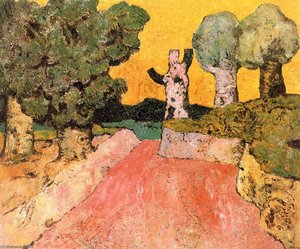 The Hollow Road1931 · Musées Royaux Des Beaux
6 muzeów, w których znajduje się najwięcej obrazów z tej strony.
| Muzea | Miasto | Dzieła artysty Frits Van Den Berghe | Obrazy z tej listy |
|---|---|---|---|
 Museum of Fine Arts Ghent (MSK) |
Gandawa | 13 | Maleperduis, Self-Portrait, Portrait of Fortuna Brulez |
 Mu.zee |
Ostenda | 4 | The realm of nature, Portrait of Constant Permeke, The Eternal Wanderer |
 Królewskie Muzeum Sztuk Pięknych Antwerpia |
Antwerpia | 4 | Life, Tree in Bloom, Distances |
 Groeningemuseum |
Brugia | 1 | Lovers in the village |
 Groninger Museum |
Groningen | 1 | DECAY Study for 'De schilder', |
 Musées Royaux Des Beaux |
Bruksela | 1 | The Hollow Road |
Wybierz dekadę, aby zobaczyć dzieło, które ją definiuje.
Lente. De actrice Stella van de Wiele (1887-1954) (1915). Następne są Maleperduis (1920) oraz The realm of nature (1920).
32 lat: Lente. De actrice Stella van de Wiele (1887-1954) pochodzi z 1915, a Frits Van Den Berghe urodził(a) się w 1883.
Lente. De actrice Stella van de Wiele (1887-1954), Maleperduis, The realm of nature, Self-Portrait, Portrait of Fortuna Brulez, De jonge toverheks, Lovers in the village, Portrait of Constant Permeke, The Monster i The Idiot by the Pond. Powyższy ranking zawiera rok powstania oraz muzeum dla każdego z nich.
Nasz katalog zawiera 30 dzieł artysty Frits Van Den Berghe, datowanych od 1915 do 1935.
W większości znajdują się w Museum of Fine Arts Ghent (MSK) (Gandawa), Mu.zee (Ostenda) i Królewskie Muzeum Sztuk Pięknych Antwerpia (Antwerpia). Powyższa tabela muzeów zawiera ich pełną listę.
W 1920s: 15 z 27 dzieł na tej stronie powstało w tym czasie, w tym Maleperduis.
Na tej stronie najwcześniejszy to Lente. De actrice Stella van de Wiele (1887-1954) (1915), a najpóźniejszy Distances (1935).
Expressionism, sądząc po oryginałach na tej stronie.
Maleperduis, Self-Portrait i Portrait of Fortuna Brulez: Museum of Fine Arts Ghent (MSK), Gandawa posiada 13 dzieł widocznych na tej stronie.
Born in Ghent, Belgium, in 1883, Frits Van den Berghe’s life was a tapestry woven from artistic passion, personal turmoil, and a profound engagement with the shifting currents of early 20th-century European art. His father, a librarian at the University of Ghent, instilled in him a love for literature and learning – an environment that fostered a contemplative spirit deeply intertwined with his later artistic explorations. Van den Berghe’s journey began within the established framework of the Royal Academy of Fine Arts, where he studied under Jean Delvin, absorbing the foundational principles of academic painting. However, it was his encounter with the burgeoning Latemse School in 1904 that truly ignited his creative fire, a movement characterized by its bold experimentation and rejection of traditional artistic conventions.
The Latemse School, nestled in the picturesque village of Sint-Martens-Latem, became a crucible for artistic innovation. Here, Van den Berghe found himself immersed in a collective of like-minded artists – Albert Servaes, Gustave De Smet, and Constant Permeke – all driven by a desire to break free from the constraints of realism and explore the depths of human emotion through their art. Under the guidance of Alfons Dessenis, who championed his talent, Van den Berghe began to develop a distinctive style marked by intense color palettes, distorted forms, and a palpable sense of psychological unease. This period witnessed the genesis of his signature surrealist tendencies, foreshadowing the dreamlike landscapes and unsettling imagery that would define much of his later work.
Van den Berghe’s artistic development was shaped by a confluence of influences. Initially, he benefited from the rigorous training provided by Jean Delvin at the Royal Academy, grounding him in classical techniques and compositional principles. However, it was his time with the Latemse School that truly broadened his horizons. The collective's emphasis on emotional expression and subjective experience paved the way for his exploration of the subconscious mind. The writings of Sigmund Freud exerted a particularly powerful impact, prompting Van den Berghe to delve into the realm of dreams, hallucinations, and repressed desires – themes he would repeatedly revisit in his paintings.
Furthermore, his association with Paul-Gustave van Hecke, a prominent journalist and art promoter, proved invaluable. Van Hecke’s unwavering support provided Van den Berghe with crucial exposure and access to the artistic circles of Brussels and Ghent. This patronage not only sustained his career but also fostered a deeper understanding of the evolving art market and the critical discourse surrounding modern art movements.
Van den Berghe’s personal life was as turbulent as his artistic output. His marriage in 1907 brought both joy and heartache, culminating in a complex and ultimately destructive relationship with the actress Stella van de Wiele. The upheaval caused by World War I forced him into exile in the Netherlands, where he joined forces with De Smet and other Belgian artists seeking refuge from the conflict. This period of displacement profoundly impacted his artistic vision, exposing him to new influences and prompting a reevaluation of his creative priorities.
Following the war, Van den Berghe returned to Belgium but continued to grapple with personal challenges. His relationship with Stella van de Wiele remained fraught with difficulty, leading to a period of isolation and self-reflection. Despite these difficulties, he persevered in his artistic pursuits, establishing himself as a respected figure within the Belgian art scene.
In the 1930s, Van den Berghe’s work underwent a significant transformation, embracing a more overtly surrealist style. His paintings became increasingly dreamlike, populated by bizarre figures, distorted landscapes, and unsettling juxtapositions of imagery. He also turned his attention to illustration, creating hundreds of evocative images for the socialist newspaper *Vooruit*, often depicting social commentary with a subtle yet poignant touch. Notably, he collaborated on a comic strip series with Jean Ray, further demonstrating his versatility as an artist.
His final years were marked by a renewed interest in exploring the subconscious through visual narratives. The influence of Freudian psychoanalysis was particularly evident in these late works, which delved into themes of anxiety, desire, and mortality. Frits Van den Berghe died in Ghent in 1939, leaving behind a rich and complex body of work that continues to captivate viewers with its haunting beauty and psychological depth. His legacy endures as one of the most significant figures of the Belgian Expressionist movement.
