Portret Fra Filippo Lippi

100 najsłynniejszych obrazów artysty Fra Filippo Lippi, każdy niepowtarzalny

Aktualizacja: Październik 2026 · ranking według naszego wskaźnika popularności (liczba wyszukiwań, wizyt i zamówień dla każdego dzieła) · 277 dzieł Fra Filippo Lippi w naszym katalogu

W skrócie

Madonna z Dzieciątkiem i Aniołami (1460) to obraz autorstwa Fra Filippo Lippi, który przyciąga najwięcej spojrzeń. Następnie wzrok kieruje się na Adoration of the Magi (1445) i The Annunciation (1435). Spośród 277 dzieł Fra Filippo Lippi w naszym katalogu, tych 100 jest najbardziej znanych – każde z nich to unikatowy oryginał, przedstawiony wraz z rokiem powstania, muzeum oraz powodem, dla którego przetrwało próbę czasu.

1406 – 1469, Florencja Wczesny renesans Najwięcej dzieł: Duomo

10 najlepszych obrazów autorstwa Fra Filippo Lippi według oka galerii

1
Madonna z Dzieciątkiem i Aniołami (1460) autorstwa Fra Filippo Lippi

Madonna z Dzieciątkiem i Aniołami

1460 · Farba olejna

Madonna z Dzieciątkiem i Aniołami to zachwycające dzieło stworzone w 1460 roku przez znamienitego włoskiego artystę, Fra Filippo Lippiego. To piękne płótno stanowi świadectwo niezwykłego talentu i mistrzostwa twórcy w zakresie stylu wczesnego renesansu. Obraz przedstawia Matkę Bożą trzymającą swoje dziecko, w otoczeniu dwóch aniołów, co tworzy niezwykle kojącą i pełną pokoju atmosferę. Artysta i jego styl Fra Filippo Lippi był karmelitańskim zakonnikiem i wybitnym malarzem, który wykształcił wielu następców,…

2
Adoration of the Magi (1445) autorstwa Fra Filippo Lippi

Adoration of the Magi

1445 · Tempera On Panel · National Gallery of Art, Waszyngton

In the heart of the Florentine Renaissance, a masterpiece emerged that would bridge the gap between the ethereal spirituality of the Middle Ages and the burgeoning humanism of a new era. The Adoration of the Magi is not merely a painting; it is a breathtaking visual symphony, a circular tondo that captures the very moment the divine intersects with the earthly. As your eyes wander through this complex composition, you…

3
The Annunciation (1435) autorstwa Fra Filippo Lippi

The Annunciation

1435 · Oil · National Gallery of Art, Waszyngton

Fra Filippo Lippi's 1435 tempera painting, “The Annunciation,” is more than just a depiction of a pivotal biblical moment; it’s a profound exploration of faith, humility, and the burgeoning humanism of the early Renaissance. Housed within the National Gallery of Art in Washington D.C., this work transcends its historical context to resonate with viewers centuries later, offering a glimpse into the artist's exceptional skill and deeply considered vision.

4
The Annunciation - tempera on wood - (1440) autorstwa Fra Filippo Lippi

The Annunciation - tempera on wood -

1440 · Tempera

The Divine Encounter: An Exploration of Lippi's Annunciation To stand before The Annunciation by Fra Filippo Lippi is to step across the threshold of time and into a moment suspended between the earthly and the divine. This exquisite work, executed in 1440 using the delicate medium of tempera on wood, captures the pivotal instant when the Archangel Gabriel announces to Mary that she shall conceive the Son of God. It…

5
Madonna and Child Enthroned with Saints (detail) (1430) autorstwa Fra Filippo Lippi

Madonna and Child Enthroned with Saints (detail)

1430 · Oil On Canvas · Museo della Collegiata, Empoli

To gaze upon this detail from Filippo di Tommaso Lippi’s Madonna and Child Enthroned with Saints is to step directly into the luminous heart of the early Renaissance. The scene unfolds with an almost palpable sense of reverence, drawing the viewer into a sacred moment captured in oil paint. At the core, the Virgin Mary presides with serene majesty, her presence anchoring the entire composition. Before her kneels a figure,…

6
Madonna della Cintola (detail) (1455) autorstwa Fra Filippo Lippi

Madonna della Cintola (detail)

1455 · Oil On Panel · Museo Civico, Prato

To stand before a detail from Filippo di Tommaso Lippi’s Madonna della Cintola is to step directly into the luminous, deeply spiritual atmosphere of the early Italian Renaissance. This painting, executed around 1455, is not merely a depiction of sacred figures; it is a profound meditation on faith, lineage, and divine grace. The composition immediately draws the eye to the central grouping—the venerable male figure holding his staff, flanked by…

7
Coronation of the Virgin (detail) (18) (1467) autorstwa Fra Filippo Lippi

Coronation of the Virgin (detail) (18)

1467 · Acrylic On Canvas · Duomo, Spoleto

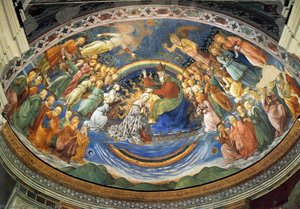
Filippo di Tommaso Lippi's “Coronation of the Virgin,” painted in 1467, isn’t merely a depiction of a religious scene; it’s an immersive experience, a window into the heart of Renaissance Florence and the fervent spirituality of its artists. This exquisite fresco, currently housed within the Uffizi Gallery in Florence, captures a pivotal moment – Mary's divine coronation – with a breathtaking blend of realism, symbolic richness, and masterful technique. Lippi,…

8
Coronation of the Virgin (detail) (1441) autorstwa Fra Filippo Lippi

Coronation of the Virgin (detail)

1441 · Tempera On Panel · Galleria degli Uffizi, Florencja

The Coronation of the Virgin is a renowned painting by the Italian artist Fra Filippo Lippi, created in 1441. This tempera on panel artwork is housed at the Galleria degli Uffizi in Florence, Italy, and is considered one of the most significant works of the Early Renaissance. The Painting's Composition and Style The painting depicts a religious scene with a group of figures dressed in medieval clothing, including angels, saints,…

9
Funeral of St Jerome (1460) autorstwa Fra Filippo Lippi

Funeral of St Jerome

1460 · Tempera · Duomo, Prato

To stand before Fra Filippo Lippi’s Funeral of St. Jerome is to step across the threshold of time and into a moment suspended by profound reverence. This monumental canvas, executed in 1460, does more than merely depict a funeral; it captures the very essence of spiritual transition—the solemn passage from earthly life to eternal rest. The scene unfolds with an almost palpable weight, drawing the viewer into the hushed gathering…

10
Madonna Enthroned with Saints (detail) (1445) autorstwa Fra Filippo Lippi

Madonna Enthroned with Saints (detail)

1445 · Tempera On Panel · Galleria degli Uffizi, Florencja

In this detail from the 1445 panel, the Virgin Mary occupies the central space, seated upon a monumental throne. Her face is rendered with a soft, rounded form, and she holds the infant Jesus against her chest. Behind her, two men are positioned in a vertical arrangement. One figure stands closely behind the throne, while another man appears further back, creating a sense of layered depth within the religious scene.…

Słynne obrazy artysty Fra Filippo Lippi, od 11 do 100

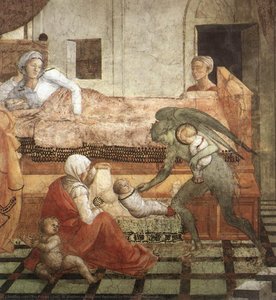
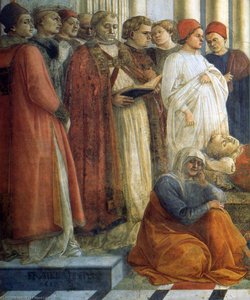
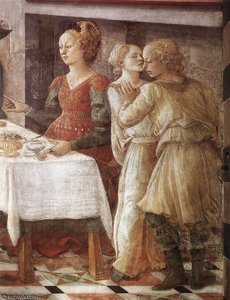
11Madonna Enthroned with Saints (detail) (1445) autorstwa Fra Filippo LippiMadonna Enthroned with Saints (detail)1445 · Galleria degli Uffizi 12Annunciation (detail) (1443) autorstwa Fra Filippo LippiAnnunciation (detail)1443 · Alte Pinakothek 13The Beheading of John the Baptist (1452) autorstwa Fra Filippo LippiThe Beheading of John the Baptist1452 · Duomo 14Adoration of the Magi (detail) (1445) autorstwa Fra Filippo LippiAdoration of the Magi (detail)1445 · National Gallery of Art 15Madonna with Child and Two Angels (1465) autorstwa Fra Filippo LippiMadonna with Child and Two Angels1465 · Galleria degli Uffizi 16Coronation of the Virgin (detail) (13) (1441) autorstwa Fra Filippo LippiCoronation of the Virgin (detail) (13)1441 · Galleria degli Uffizi 17Madonna Enthroned (1437) autorstwa Fra Filippo LippiMadonna Enthroned1437 · Galleria Nazionale d'Arte Antica 18St Michael (detail) (1456) autorstwa Fra Filippo LippiSt Michael (detail)1456 · Cleveland Museum of Art 19Coronation of the Virgin (detail) (15) (1441) autorstwa Fra Filippo LippiCoronation of the Virgin (detail) (15)1441 · Galleria degli Uffizi 20Annunciation (1445) autorstwa Fra Filippo LippiAnnunciation1445 · Bazylika San Lorenzo w Florencji 21Madonna and Child (detail) (1440) autorstwa Fra Filippo LippiMadonna and Child (detail)1440 · National Gallery of Art 22Madonna and Child Enthroned with Two Angels (detail) (1437) autorstwa Fra Filippo LippiMadonna and Child Enthroned with Two Angels (detail)1437 · Metropolitan Museum of Art 23Coronation of the Virgin (detail) (11) (1441) autorstwa Fra Filippo LippiCoronation of the Virgin (detail) (11)1441 · Galleria degli Uffizi 24Koronacja Marii Panny (1467) autorstwa Fra Filippo LippiKoronacja Marii Panny1467 · Duomo 25Madonna Enthroned with Saints (detail) (1445) autorstwa Fra Filippo LippiMadonna Enthroned with Saints (detail)1445 · Galleria degli Uffizi 26Virgin and Child Surrounded by Angels with St. Frediano and St. Augustine (The Barbadori Altarpiece) (1437) autorstwa Fra Filippo LippiVirgin and Child Surrounded by Angels with St. Frediano and St. Augustine (The Barbadori Altarpiece)1437 · Luwr 27Madonna i Dzieciątko na Tronie Mądrości (1437) autorstwa Fra Filippo LippiMadonna i Dzieciątko na Tronie Mądrości1437 · Metropolitan Museum of Art 28Coronation of the Virgin (detail) (17) (1467) autorstwa Fra Filippo LippiCoronation of the Virgin (detail) (17)1467 · Duomo 29Annunciation (detail) (14) (1443) autorstwa Fra Filippo LippiAnnunciation (detail) (14)1443 · Alte Pinakothek 30Annunciation (detail) (18) (1445) autorstwa Fra Filippo LippiAnnunciation (detail) (18)1445 · Bazylika San Lorenzo w Florencji 31Annunciation (1445) autorstwa Fra Filippo LippiAnnunciation1445 · Bazylika San Lorenzo w Florencji 32Death of the Virgin (1467) autorstwa Fra Filippo LippiDeath of the Virgin1467 · Duomo 33Coronation of the Virgin (detail) (1441) autorstwa Fra Filippo LippiCoronation of the Virgin (detail)1441 · Galleria degli Uffizi 34Spoleto-Coronation of the Virgin (1469) autorstwa Fra Filippo LippiSpoleto-Coronation of the Virgin1469 35Vision of St Augustine in his Cell (1438) autorstwa Fra Filippo LippiVision of St Augustine in his Cell1438 · Galleria degli Uffizi 36Herod's Banquet (1452) autorstwa Fra Filippo LippiHerod's Banquet1452 · Duomo 37Coronation of the Virgin (detail) (16) (1441) autorstwa Fra Filippo LippiCoronation of the Virgin (detail) (16)1441 · Galleria degli Uffizi 38of a Man and a Woman (1450) autorstwa Fra Filippo Lippiof a Man and a Woman1450 39Madonna with Child, saints and angels, known as (Madonna Trivulzio) (1432) autorstwa Fra Filippo LippiMadonna with Child, saints and angels, known as (Madonna Trivulzio)1432 · Zamek Sforzów 40Madonna and Child Enthroned with Saints (detail) (1430) autorstwa Fra Filippo LippiMadonna and Child Enthroned with Saints (detail)1430 · Museo della Collegiata 41Female Figure (Prophetess.) (1430) autorstwa Fra Filippo LippiFemale Figure (Prophetess.)1430 · Harvard University Art Museum 42Sts Augustine and Ambrose (detail) (1437) autorstwa Fra Filippo LippiSts Augustine and Ambrose (detail)1437 · Albertina Academy of Fine Arts 43Female Saint with a Flail (Saint Walburga?) (1450) autorstwa Fra Filippo LippiFemale Saint with a Flail (Saint Walburga?)1450 · Courtauld Gallery 44Death of the Virgin (detail) (1467) autorstwa Fra Filippo LippiDeath of the Virgin (detail)1467 · Duomo 45Virgin and Child with Angels (1460) autorstwa Fra Filippo LippiVirgin and Child with Angels1460 · Cleveland Museum of Art 46Panel from a Triptych: St. Anthony Abbot (1458) autorstwa Fra Filippo LippiPanel from a Triptych: St. Anthony Abbot1458 · Cleveland Museum of Art 47Saint Dominic (1460) autorstwa Fra Filippo LippiSaint Dominic1460 · Courtauld Gallery 48Saint James the Less (1460) autorstwa Fra Filippo LippiSaint James the Less1460 · Courtauld Gallery 49Saint Peter (1460) autorstwa Fra Filippo LippiSaint Peter1460 · Courtauld Gallery 50The enthroned St. Francis presents the rule of the order to St. Clare (1467) autorstwa Fra Filippo LippiThe enthroned St. Francis presents the rule of the order to St. Clare1467 · Gemäldegalerie 51Mary as the Mother of Mercy / Protective Mantle Madonna (1460) autorstwa Fra Filippo LippiMary as the Mother of Mercy / Protective Mantle Madonna1460 · Gemäldegalerie 52Saint Jerome in the Desert with Saints John the Baptist and Ansanus (1455) autorstwa Fra Filippo LippiSaint Jerome in the Desert with Saints John the Baptist and Ansanus1455 · Harvard Art Museums 53St Alberto of Trapani (1452) autorstwa Fra Filippo LippiSt Alberto of Trapani1452 · Duomo 54Disputation in the Synagogue (detail) (1452) autorstwa Fra Filippo LippiDisputation in the Synagogue (detail)1452 · Duomo 55The Funeral of St Stephen (1460) autorstwa Fra Filippo LippiThe Funeral of St Stephen1460 · Duomo 56Funeral of St Jerome (detail) (1460) autorstwa Fra Filippo LippiFuneral of St Jerome (detail)1460 · Duomo 57St Stephen is Born and Replaced by Another Child (detail) (1452) autorstwa Fra Filippo LippiSt Stephen is Born and Replaced by Another Child (detail)1452 · Duomo 58The Funeral of St Stephen (detail) (1460) autorstwa Fra Filippo LippiThe Funeral of St Stephen (detail)1460 · Duomo 59Madonna della Cintola (detail) (1455) autorstwa Fra Filippo LippiMadonna della Cintola (detail)1455 · Museo Civico 60Madonna i Dzieciątko z św. Fredrikiem i św. Augustynem (1437) autorstwa Fra Filippo LippiMadonna i Dzieciątko z św. Fredrikiem i św. Augustynem1437 · Luwr 61Adoration of the Magi (detail) (1445) autorstwa Fra Filippo LippiAdoration of the Magi (detail)1445 · National Gallery of Art 62Tester bed (601) autorstwa Fra Filippo LippiTester bed601 63Annunciation (detail) (17) (1445) autorstwa Fra Filippo LippiAnnunciation (detail) (17)1445 · Bazylika San Lorenzo w Florencji 64Funeral of St Jerome (detail) (1460) autorstwa Fra Filippo LippiFuneral of St Jerome (detail)1460 · Duomo 65Madonna with the Child and Scenes from the Life of St Anne (1452) autorstwa Fra Filippo LippiMadonna with the Child and Scenes from the Life of St Anne1452 66Madonna and Child Enthroned with Saints (1430) autorstwa Fra Filippo LippiMadonna and Child Enthroned with Saints1430 · Museo della Collegiata 67Swiętych Gregoria i Jerzego (detal) (1437) autorstwa Fra Filippo LippiSwiętych Gregoria i Jerzego (detal)1437 · Albertina Academy of Fine Arts 68Disputation in the Synagogue (detail) (8) (1452) autorstwa Fra Filippo LippiDisputation in the Synagogue (detail) (8)1452 · Duomo 69Madonna della Cintola (detail) (1455) autorstwa Fra Filippo LippiMadonna della Cintola (detail)1455 · Museo Civico 70Head of a Woman (1452) autorstwa Fra Filippo LippiHead of a Woman1452 · Galleria degli Uffizi 71Herod's Banquet (detail) (1452) autorstwa Fra Filippo LippiHerod's Banquet (detail)1452 · Duomo 72Figure study (1452) autorstwa Fra Filippo LippiFigure study1452 · Galleria degli Uffizi 73Confirmation of the Carmelite Rule (detail) (1432) autorstwa Fra Filippo LippiConfirmation of the Carmelite Rule (detail)1432 · Museo di Santa Maria del Carmine 74The Nativity (1445) autorstwa Fra Filippo LippiThe Nativity1445 75of the Virgin (detail) (1440) autorstwa Fra Filippo Lippiof the Virgin (detail)1440 76Saints (1440) autorstwa Fra Filippo LippiSaints1440 77The Adoration of the Magi (1445) autorstwa Fra Filippo LippiThe Adoration of the Magi1445 78Virgin and Child (1445) autorstwa Fra Filippo LippiVirgin and Child1445 79the annunciation - - (1440) autorstwa Fra Filippo Lippithe annunciation - -1440 80The Funeral of St Stephen (detail) (9) (1460) autorstwa Fra Filippo LippiThe Funeral of St Stephen (detail) (9)1460 · Duomo 81Prato-The Saint's Funeral (1466) autorstwa Fra Filippo LippiPrato-The Saint's Funeral1466 82Prato-Birth and Naming St John (1466) autorstwa Fra Filippo LippiPrato-Birth and Naming St John1466 83Prato-St Stephen is Born and Replaced by Another Child (1466) autorstwa Fra Filippo LippiPrato-St Stephen is Born and Replaced by Another Child1466 84St Alberto of Trapani (1452) autorstwa Fra Filippo LippiSt Alberto of Trapani1452 · Duomo 85Prato-Disputation in the Synagogue (detail) (1466) autorstwa Fra Filippo LippiPrato-Disputation in the Synagogue (detail)1466 86Prato-Herod's Banquet (1466) autorstwa Fra Filippo LippiPrato-Herod's Banquet1466 87Madonna and Child with Angels - - (1465) autorstwa Fra Filippo LippiMadonna and Child with Angels - -1465 88Herod's Banquet (detail) (1452) autorstwa Fra Filippo LippiHerod's Banquet (detail)1452 · Duomo 89Prato-View of the fresco cycle (1466) autorstwa Fra Filippo LippiPrato-View of the fresco cycle1466 90Prato-Herod's Banquet (detail)3 (1466) autorstwa Fra Filippo LippiPrato-Herod's Banquet (detail)31466 91The Funeral of St Stephen (detail) (1460) autorstwa Fra Filippo LippiThe Funeral of St Stephen (detail)1460 · Duomo 92Prato-Herod's Banquet (detail) (1466) autorstwa Fra Filippo LippiPrato-Herod's Banquet (detail)1466 93St John Taking Leave of His Parents (1452) autorstwa Fra Filippo LippiSt John Taking Leave of His Parents1452 · Duomo 94View of the Apse of the Cathedral (1467) autorstwa Fra Filippo LippiView of the Apse of the Cathedral1467 · Cathedral 95Birth and Naming St John (detail) (1452) autorstwa Fra Filippo LippiBirth and Naming St John (detail)1452 · Duomo 96View of the left (north) wall of the main chapel (1452) autorstwa Fra Filippo LippiView of the left (north) wall of the main chapel1452 · Duomo 97The Martyrdom of St Stephen (1460) autorstwa Fra Filippo LippiThe Martyrdom of St Stephen1460 · Duomo 98Prato-Disputation in the Synagogue (detail)2 (1466) autorstwa Fra Filippo LippiPrato-Disputation in the Synagogue (detail)21466 99St John Taking Leave of his Parents (detail) (1452) autorstwa Fra Filippo LippiSt John Taking Leave of his Parents (detail)1452 · Duomo 100Madonna with the Child and Scenes from the Life of St Anne (detail) (1452) autorstwa Fra Filippo LippiMadonna with the Child and Scenes from the Life of St Anne (detail)1452

Słynne obrazy Fra Filippo Lippi epoka po epoce

Tematy, które przyciągnęły wzrok Fra Filippo Lippi

Cztery motywy najczęściej powracające w tych oryginałach, z których każdy doczekał się swojego najdoskonalszego przykładu.

Muzea przechowujące oryginały Fra Filippo Lippi

8 muzeów, w których znajduje się najwięcej obrazów z tej strony.

Muzea Miasto Dzieła artysty Fra Filippo Lippi Obrazy z tej listy
Duomo, PratoDuomo Prato 34 Funeral of St Jerome, The Beheading of John the Baptist, Herod's Banquet
Galleria degli Uffizi, FlorencjaGalleria degli Uffizi Florencja 17 Coronation of the Virgin (detail), Madonna Enthroned with Saints (detail), Madonna Enthroned with Saints (detail)
National Gallery of Art, WaszyngtonNational Gallery of Art Waszyngton 8 Adoration of the Magi, The Annunciation, Adoration of the Magi (detail)
Duomo, SpoletoDuomo Spoleto 8 Coronation of the Virgin (detail) (18), Koronacja Marii Panny, Coronation of the Virgin (detail) (17)
Bazylika San Lorenzo w Florencji, FlorencjaBazylika San Lorenzo w Florencji Florencja 5 Annunciation, Annunciation (detail) (18), Annunciation
Courtauld Gallery, LondynCourtauld Gallery Londyn 4 Female Saint with a Flail (Saint Walburga?), Saint Dominic, Saint James the Less
Museo Civico, PratoMuseo Civico Prato 7 Madonna della Cintola (detail), Madonna della Cintola (detail), Madonna della Cintola (detail)
Cleveland Museum of Art, ClevelandCleveland Museum of Art Cleveland 5 St Michael (detail), Virgin and Child with Angels, Panel from a Triptych: St. Anthony Abbot

Fra Filippo Lippi na przestrzeni dekad: jeden unikatowy oryginał dla każdego

Dzieła według dekad

Wybierz dekadę, aby zobaczyć dzieło, które ją definiuje.

Obrazy artysty Fra Filippo Lippi: pytania do galerii

Jakie jest najsłynniejsze dzieło artysty Fra Filippo Lippi?Odkryj odpowiedź

Madonna z Dzieciątkiem i Aniołami (1460). Następne są Adoration of the Magi (1445) oraz The Annunciation (1435).

W jakim wieku Fra Filippo Lippi stworzył/a Madonna z Dzieciątkiem i Aniołami?Odkryj odpowiedź

54 lat: Madonna z Dzieciątkiem i Aniołami pochodzi z 1460, a Fra Filippo Lippi urodził(a) się w 1406.

Które dziesięć obrazów Fra Filippo Lippi jest najbardziej znanych?Odkryj odpowiedź

Madonna z Dzieciątkiem i Aniołami, Adoration of the Magi, The Annunciation, The Annunciation - tempera on wood -, Madonna and Child Enthroned with Saints (detail), Madonna della Cintola (detail), Coronation of the Virgin (detail) (18), Coronation of the Virgin (detail), Funeral of St Jerome i Madonna Enthroned with Saints (detail). Powyższy ranking zawiera rok powstania oraz muzeum dla każdego z nich.

Ile znanych dzieł stworzył Fra Filippo Lippi?Odkryj odpowiedź

Nasz katalog zawiera 277 dzieł artysty Fra Filippo Lippi, datowanych od 1430 do 1469.

Gdzie można zobaczyć najsłynniejsze oryginały Fra Filippo Lippi?Odkryj odpowiedź

W większości znajdują się w Duomo (Prato), Galleria degli Uffizi (Florencja) i National Gallery of Art (Waszyngton). Powyższa tabela muzeów zawiera ich pełną listę.

W jakim okresie Fra Filippo Lippi stworzył/a swoje najsłynniejsze obrazy?Odkryj odpowiedź

W 1460s: 33 z 100 dzieł na tej stronie powstało w tym czasie, w tym Madonna z Dzieciątkiem i Aniołami.

Który z najsłynniejszych obrazów artysty Fra Filippo Lippi powstał najwcześniej, a który najpóźniej?Odkryj odpowiedź

Na tej stronie najwcześniejszy to Madonna and Child Enthroned with Saints (detail) (1430), a najpóźniejszy Spoleto-Coronation of the Virgin (1469).

Jakie tematy preferował Fra Filippo Lippi?Odkryj odpowiedź

Renaissance (21), Virgin mary (21) i Renaissance art (15), w ramach 100 dzieł na tej stronie.

Jakich materiałów Fra Filippo Lippi używał najczęściej?Odkryj odpowiedź

Tempera On Panel, dla 29 z 100 dzieł na tej stronie.

Do jakiego nurtu należy twórczość Fra Filippo Lippi?Odkryj odpowiedź

Wczesny renesans, sądząc po oryginałach na tej stronie.

Jakie oryginały Fra Filippo Lippi można zobaczyć w Duomo?Odkryj odpowiedź

Funeral of St Jerome, The Beheading of John the Baptist i Herod's Banquet: Duomo, Prato posiada 21 dzieł widocznych na tej stronie.

Fra Filippo Lippi: portret artysty

A Florentine Rebel: The Life and Art of Filippo Lippi

Filippo di Tommaso Lippi, znany jako Fra Filippo Lippi, był postacią zarówno błogosławioną dla artystycznego geniuszu, jak i naznaczoną życiem pełnym skandali i niestandardowych wyborów. Urodził się we Florencji w 1406 roku w rodzinie rzemieślniczej, a jego wczesne lata były naznaczone stratą – zaledwie dwu lat życia został pośmiertnie podopiecznym swojej ciotki, Mona Lapaccy. To właśnie ona zapewniła mu opiekę i umieściła go w celi karmelitańskiej – ścieżka ta miała nie tylko ukształtować jego rozwój artystyczny, ale także zdefiniować złożoność jego charakteru. W tych skromnych murach młody Filippo rozpoczął edukację i, co najważniejsze, odkrył swoją pasję do malarstwa. Wpływ tego środowiska jest widoczny w wielu jego dziełach – delikatna równowaga między duchową pobożnością a rosnącą humanizacją.

Od Obietnicy Religijnej do Innowacji Artystycznych

Wejście Lippi do zakonu karmelitańskiego w 1420 roku nie było jedynie wypadkowym zdarzeniem, ale wydawało się zapalać w nim gorliwą siłę artystyczną. Przyjął obietnice w wieku szesnaściu lat i został sprowadzony do stanu kapłańskiego około 1425 roku, pozostając w klasztorze aż do 1432 roku. To właśnie wtedy historyk sztuki Giorgio Vasari przypomina, że Lippi został oczarowany impresjami Masaccio w kościele Brancacci – spotkanie to okazało się kluczowe. Wpływ naturalizmu i innowacyjnego wykorzystania światła przez Masaccio jest wyraźnie widoczny w wczesnych dziełach Lippi, takich jak *Madonna Tarquinia*, gdzie pojawia się nowo odkryta realizm. Jednak Lippi nie był jedynie podopiecznym – szybko rozwinął własny, charakterystyczny styl, cechujący się liryczną gracją, delikatnymi kolorami i subtelną emocjonalną głębią, która odróżniała go od swoich współczesnych. Zaczął włączać religijne sceny z poczuciem intymności i połączenia z ludźmi, oddalając się od bardziej sztywnej formy charakterystycznej dla wcześniejszego sztuki dewocyjnej.

Mistrz Kompozycji i Kontrowersji

Kariera artystyczna Lippi rozkwitła we Florencji, przyciągając zamówienia od wpływowych rodzin, takich jak Medici. Dzieła takie jak *Aniel zwiastująca i siedmiu świętych* demonstrują jego zdolność do tworzenia złożonych kompozycji pełnych symbolizmu i eleganckiego detalu. *Koroncja Najświętszej Panny*, ukończona w 1441 roku dla sióstr Sant'Ambrogio, jest szczególnie godna uwagi – zawiera ona pół-figurę, którą wielu uważa za portret samego Lippi – odważne stwierdzenie tożsamości artystycznej w kontekście religijnym. Jednak jego życie nie było spokojne. Często był wplątany w trudności finansowe, spory prawne i oskarżenia o fałszerstwo. Najbardziej sensacyjną epizodą była jego porwanie Lucrezii Buti, siostry zakonu z Prato, z którą ostatecznie zawarł małżeństwo po latach skandali i kontrowersji. Ten akt, choć szokujący dla tamtych czasów, mówi o buntowniczym duchu Lippi i jego gotowości do poddawania się społecznym normom w poszukiwaniu osobistego szczęścia.

Dziedzictwo i Wpływ

Pomimo burzliwego przebiegu życia, Filippo Lippi pozostawił niezapomniane dziedzictwo dla sztuki renesansu. Był bardzo poszukiwanym malarzem, a jego warsztat stał się miejscem rozwoju dla przyszłych mistrzów. Do jego najbardziej wybitnych uczniów należeli Sandro Botticelli i Francesco di Pesello (Pesellino), obaj z których osiągnęli znaczną sławę w swoich własnych prawach. Wpływ Lippi można dostrzec w lirycznej urodzie i emocjonalnej ekspresji, które charakteryzują wiele dzieł sztuki florentyńskiej w późnym Quattrocento. Połączył on naturalizm renesansu we wczesnej fazie z bardziej wyrafinowaną estetyką renesansu wysokiego, otwierając drogę dla nowej generacji artystów do badania możliwości ludzkiej formy i emocji. Jego zdolność do łączenia religijnej pobożności z realiami świata, połączona z innowacyjnymi kompozycjami i wyrafinowaną techniką, umocniła jego pozycję jako jednego z najważniejszych i najbardziej fascynujących postaci włoskiego renesansu. Zmarł w Spoleto w 1469 roku, pozostawiając za sobą dziedzictwo, które nadal inspiruje podziw i zachwyt na wieki. Jego sztuka jest świadectwem siły ludycznej kreatywności i trwałego uroku piękna.

Wpływy i Inspiracje

Lippi czerpał inspirację z wielu źródeł, w tym z dzieł Masaccio, które wywarły na nim ogromny wpływ. Jego prace często odzwierciedlają naturalizm, realizm i głębię emocjonalną, charakterystyczne dla sztuki renesansu we Włoszech. Lippi był również pod wpływem tradycji artystycznych średniowiecza, co można dostrzec w jego bogatych kolorach, detalu i ornamentacji. Jego prace często przedstawiają sceny religijne z elementami ludzkiego życia, co czyni je bardziej osobistymi i emocjonalnie angażującymi.

Główne Dzieła

* **Madonna Tarquinia (ok. 1430):** Wczesny przykład naturalizmu Lippi, charakteryzujący się realistycznym przedstawieniem postaci i subtelnym użyciem światła. * **Aniel zwiastująca i siedmiu świętych (1438-1441):** Kompozycja pełna symboliki, ukazująca relacje między świętymi i ich oddanie religijne. * **Koroncja Najświętszej Panny (1441):** Pół-figurka Lippi samego siebie, która stanowiła odważny gest artystycznej tożsamości w kontekście religijnym. * **Ostatnia Wieczerza (ok. 1450):** Dzieło ukazujące dramaturgię i emocje związane z wydarzeniem biblijnym.