Portret Felix Nussbaum

Obrazy: 49 najsłynniejszych dzieł artysty Felix Nussbaum – spojrzenie galerii

Aktualizacja: Październik 2026 · ranking według naszego wskaźnika popularności (liczba wyszukiwań, wizyt i zamówień dla każdego dzieła) · 49 dzieł Felix Nussbaum w naszym katalogu

W skrócie

Według opinii kuratorów galerii, najsłynniejszym obrazem Felix Nussbaum jest Fish Market (1936), którego oryginał znajduje się w Kulturgeschichtliche Museum Osnabrück w Osnabrück. Fishing Boats with Island (1933) i Loneliness (1942) dopełniają trio, które zna każde oko. Z 49 dzieł Felix Nussbaum w naszym katalogu, galeria prezentuje poniżej 49 najsłynniejszych prac – każda z nich jest oryginałem z podaniem roku powstania, muzeum oraz cech wyróżniających ją na tle innych.

1904 – 1944, Osnabrück Surrealist expressionism Najwięcej dzieł: Kulturgeschichtliche Museum Osnabrück

10 najlepszych obrazów artysty Felix Nussbaum w galerii

2
Fishing Boats with Island (1933) autorstwa Felix Nussbaum

Fishing Boats with Island

1933 · Gouache

The water holds the light in a pale, steady grip. In this 1933 gouache on paper, the sea is a surface of calm, interrupted only by the presence of two boats. One vessel rests near the left edge, while another sits further back, drifting toward the right. Between them, two figures stand close together on the shore. They are small against the expanse, mere silhouettes of companionship amidst the blue…

5
Memory of Norderney (1929) autorstwa Felix Nussbaum

Memory of Norderney

1929 · Oil On Canvas · Kulturgeschichtliche Museum Osnabrück, Osnabrück

In the hauntingly beautiful oil on canvas, Memory of Norderney, Felix Nussbaum invites us into a world that feels simultaneously vibrant and ghostly. Painted in 1929, this large-scale masterpiece captures a moment of serene leisure, yet it is imbued with a profound sense of nostalgia that transcends its literal subject matter. The scene unfolds before a stately building, perhaps a grand hotel or a coastal mansion, characterized by its classical…

Obrazy artysty Felix Nussbaum, uszeregowane od 11 do 49 miejsca

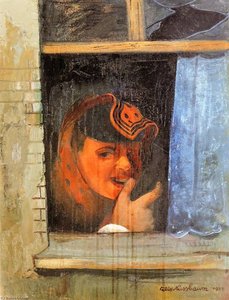
11Self-Portrait in a Shroud (Group picture) (1942) autorstwa Felix NussbaumSelf-Portrait in a Shroud (Group picture)1942 · Berlinische Galerie 12Self-Portrait with Jewish Identity Card (1943) autorstwa Felix NussbaumSelf-Portrait with Jewish Identity Card1943 13Man with Flower (1939) autorstwa Felix NussbaumMan with Flower1939 14Evening (unfinished) (also known as Self Portrait with Felka Platek) (1942) autorstwa Felix NussbaumEvening (unfinished) (also known as Self Portrait with Felka Platek)1942 · Kulturgeschichtliche Museum Osnabrück 15Jaqui in the Street (1944) autorstwa Felix NussbaumJaqui in the Street1944 · Kulturgeschichtliche Museum Osnabrück 16Drawbridge across a Moorland Ditch (1927) autorstwa Felix NussbaumDrawbridge across a Moorland Ditch1927 · Kulturgeschichtliche Museum Osnabrück 17Gypsy Woman (1927) autorstwa Felix NussbaumGypsy Woman1927 · Kulturgeschichtliche Museum Osnabrück 18The Hakenhof in Kommenderiestrasse in Onasbrück (1927) autorstwa Felix NussbaumThe Hakenhof in Kommenderiestrasse in Onasbrück1927 19Men Mending Nets in a Street in Ostend (1928) autorstwa Felix NussbaumMen Mending Nets in a Street in Ostend1928 20Fairground (1925) autorstwa Felix NussbaumFairground1925 21Group Portrait (1930) autorstwa Felix NussbaumGroup Portrait1930 22Gallows (also known as Funeral) (1930) autorstwa Felix NussbaumGallows (also known as Funeral)1930 · Berlinische Galerie 23Fisherman's House (1933) autorstwa Felix NussbaumFisherman's House1933 · Kulturgeschichtliche Museum Osnabrück 24The Hurdy Gurdy Man (1931) autorstwa Felix NussbaumThe Hurdy Gurdy Man1931 · Berlinische Galerie 25Narcussus (1932) autorstwa Felix NussbaumNarcussus1932 · Kulturgeschichtliche Museum Osnabrück 26Harbor Scene (1935) autorstwa Felix NussbaumHarbor Scene1935 · Kulturgeschichtliche Museum Osnabrück 27Interior with Still Life (1935) autorstwa Felix NussbaumInterior with Still Life1935 28Landscape (also known as Tree Behind a Wall) (1935) autorstwa Felix NussbaumLandscape (also known as Tree Behind a Wall)1935 29Locomotive (1936) autorstwa Felix NussbaumLocomotive1936 · Kulturgeschichtliche Museum Osnabrück 30Man behind the Window (also known as Self Portrait after Adriaen van Ostade) (1937) autorstwa Felix NussbaumMan behind the Window (also known as Self Portrait after Adriaen van Ostade)1937 · Kulturgeschichtliche Museum Osnabrück 31Don Quixote and the Windmills (1938) autorstwa Felix NussbaumDon Quixote and the Windmills1938 · Kulturgeschichtliche Museum Osnabrück 32Dover Ferry (1935) autorstwa Felix NussbaumDover Ferry1935 · Kulturgeschichtliche Museum Osnabrück 33Nightly view from the workshop with dishcloth. (1940) autorstwa Felix NussbaumNightly view from the workshop with dishcloth.1940 34The Refugee (1939) autorstwa Felix NussbaumThe Refugee1939 35The Kitchen in Hiding (1943) autorstwa Felix NussbaumThe Kitchen in Hiding1943 · Kulturgeschichtliche Museum Osnabrück 36Man with Withered Leaf (1941) autorstwa Felix NussbaumMan with Withered Leaf1941 37Stillleben mit Schachteln (Still life with boxes) (1941) autorstwa Felix NussbaumStillleben mit Schachteln (Still life with boxes)1941 38Hurdy Gurdy Man in a Surreal Landscape (1939) autorstwa Felix NussbaumHurdy Gurdy Man in a Surreal Landscape1939 · Kulturgeschichtliche Museum Osnabrück 39Jew by the Window (1943) autorstwa Felix NussbaumJew by the Window1943 · Niedersächsisches Landesmuseum Für Kunst Und Kulturgeschichte Oldenburg 40Manikins (1943) autorstwa Felix NussbaumManikins1943 · Kulturgeschichtliche Museum Osnabrück 41Group of Three (1944) autorstwa Felix NussbaumGroup of Three1944 42Felka Platek Painting (1935) autorstwa Felix NussbaumFelka Platek Painting1935 · Jüdisches Museum Rendsburg 43In the camp (1940) autorstwa Felix NussbaumIn the camp1940 · Deutsches Historisches Museum 44Gypsy (1928) autorstwa Felix NussbaumGypsy1928 · Kulturgeschichtliche Museum Osnabrück 45Moja Matka (1926) autorstwa Felix NussbaumMoja Matka1926 · Kulturgeschichtliche Museum Osnabrück 46Untitled (AQQJ26) autorstwa Felix NussbaumUntitled (AQQJ26) 47Masquerade (1927) autorstwa Felix NussbaumMasquerade1927 48Death Triumphant (1944) autorstwa Felix NussbaumDeath Triumphant1944 49Self-Portrait in the Camp (1940) autorstwa Felix NussbaumSelf-Portrait in the Camp1940 · Neue Galerie

Słynne obrazy Felix Nussbaum epoka po epoce

Tematy, które przyciągnęły wzrok Felix Nussbaum

Cztery motywy najczęściej powracające w tych oryginałach, z których każdy doczekał się swojego najdoskonalszego przykładu.

Muzea przechowujące oryginały Felix Nussbaum

7 muzeów, w których znajduje się najwięcej obrazów z tej strony.

Muzea Miasto Dzieła artysty Felix Nussbaum Obrazy z tej listy
Kulturgeschichtliche Museum Osnabrück, OsnabrückKulturgeschichtliche Museum Osnabrück Osnabrück 21 Fish Market, Fear (also known as Self Portrait with His Niece Marianna), Memory of Norderney
Berlinische Galerie, BerlinBerlinische Galerie Berlin 4 The mad square, Self-Portrait in a Shroud (Group picture), Gallows (also known as Funeral)
Muzeum Żydowskie w Berlinie, BerlinMuzeum Żydowskie w Berlinie Berlin 2 Loneliness, Self-Portrait With Painters Cloth
Niedersächsisches Landesmuseum Für Kunst Und Kulturgeschichte Oldenburg, OldenburgNiedersächsisches Landesmuseum Für Kunst Und Kulturgeschichte Oldenburg Oldenburg 1 Jew by the Window
Jüdisches Museum Rendsburg, RendsburgJüdisches Museum Rendsburg Rendsburg 1 Felka Platek Painting
Deutsches Historisches Museum, BerlinDeutsches Historisches Museum Berlin 1 In the camp
Neue Galerie, Nowy JorkNeue Galerie Nowy Jork 1 Self-Portrait in the Camp

Felix Nussbaum, jedno kultowe dzieło na dekadę

Dzieła według dekad

Wybierz dekadę, aby zobaczyć dzieło, które ją definiuje.

Obrazy artysty Felix Nussbaum: odpowiedzi galerii

Który obraz Felix Nussbaum jest najsłynniejszy ze wszystkich?Odkryj odpowiedź

Fish Market (1936), Kulturgeschichtliche Museum Osnabrück, Osnabrück. Następne są Fishing Boats with Island (1933) oraz Loneliness (1942).

Ile lat miał Felix Nussbaum, gdy ukończył Fish Market?Odkryj odpowiedź

32 lat: Fish Market pochodzi z 1936, a Felix Nussbaum urodził(a) się w 1904.

Które to 10 najlepszych obrazów Felix Nussbaum?Odkryj odpowiedź

Fish Market, Fishing Boats with Island, Loneliness, Fear (also known as Self Portrait with His Niece Marianna), Memory of Norderney, Entombment (also known as Organ Grinders at the Roman Forum), Lovers, The mad square, Self-Portrait With Painters Cloth i Masks and Cat. Powyższy ranking zawiera rok powstania oraz muzeum dla każdego z nich.

Ile dzieł stworzył/a Felix Nussbaum?Odkryj odpowiedź

Nasz katalog zawiera 49 dzieł artysty Felix Nussbaum, datowanych od 1925 do 1944.

Gdzie można znaleźć najsłynniejsze oryginały autorstwa Felix Nussbaum?Odkryj odpowiedź

W większości znajdują się w Kulturgeschichtliche Museum Osnabrück (Osnabrück), Berlinische Galerie (Berlin) i Muzeum Żydowskie w Berlinie (Berlin). Powyższa tabela muzeów zawiera ich pełną listę.

Kiedy Felix Nussbaum stworzył swoje najsłynniejsze obrazy?Odkryj odpowiedź

W 1930s: 22 z 49 dzieł na tej stronie powstało w tym czasie, w tym Fish Market.

Które z najsłynniejszych dzieł Felix Nussbaum należą do jego najwcześniejszych i najpóźniejszych prac?Odkryj odpowiedź

Na tej stronie najwcześniejszy to Fairground (1925), a najpóźniejszy Jaqui in the Street (1944).

Do jakich tematów Felix Nussbaum powracał najczęściej?Odkryj odpowiedź

Men (5), Woman (4) i People (4), w ramach 49 dzieł na tej stronie.

W jakiej technice najczęściej tworzył Felix Nussbaum?Odkryj odpowiedź

Oil, dla 3 z 49 dzieł na tej stronie.

Z jakim nurtem związany jest Felix Nussbaum?Odkryj odpowiedź

Surrealist expressionism, sądząc po oryginałach na tej stronie.

Które oryginały artysty Felix Nussbaum znajdują się w zbiorach Kulturgeschichtliche Museum Osnabrück?Odkryj odpowiedź

Fish Market, Fear (also known as Self Portrait with His Niece Marianna) i Memory of Norderney: Kulturgeschichtliche Museum Osnabrück, Osnabrück posiada 21 dzieł widocznych na tej stronie.

Felix Nussbaum: artysta

Felix Nussbaum (1904-1944) – A Life Etched in Exile: The Haunting Vision of Art Born From Suffering

Felix Nussbaum’s story is a profoundly moving testament to the transformative power of art born from unimaginable suffering. Born in Osnabrück, Germany, in 1904, his life unfolded against the backdrop of escalating nationalism and persecution, culminating in the horrors of the Holocaust – an experience that irrevocably shaped his artistic vision and cemented his place as one of the most poignant voices of the era. He wasn’t merely a victim *of* history; he was an artist who meticulously documented its impact on his soul, creating a body of work that stands as both a personal lament and a universal warning – a perspective often absent from broader historical narratives. His father, Philipp Nussbaum, a World War I veteran with an early passion for painting himself, recognized and nurtured his son’s talent, providing encouragement that would prove vital in the darkening years to come. This initial support fostered a lifelong dedication to art, even as political realities increasingly constricted his path.

Early Life and Artistic Influences: Seeds of Surrealism

Nussbaum’s artistic journey began with formal studies in Hamburg and Berlin in 1920, continuing for as long as circumstances allowed. His formative years were marked by an unwavering fascination with the avant-garde movements of his time – particularly Surrealism and New Objectivity. The influence of Vincent van Gogh and Henri Rousseau was palpable in his early canvases; their expressive brushwork and vibrant color palettes instilled a foundational understanding of artistic technique that would inform his subsequent explorations. However, Nussbaum wasn’t content with mere imitation. He actively sought out new inspirations, drawn to the unsettling dreamscapes of Giorgio de Chirico and Carlo Carrà – pioneers of *pittura metafisica* who challenged conventional perceptions of reality. The careful attention to color demonstrated by Carl Hofer's expressionist paintings also left a lasting impression on Nussbaum’s approach—a stylistic hallmark that would characterize his entire oeuvre. These diverse influences coalesced into what would become known as his “New Objectivity” style – a deliberate fusion of realism and surrealism, characterized by meticulous detail, unsettling compositions, and a pervasive sense of alienation.

The Rise of Nazism and Artistic Exile

The ascent of Adolf Hitler to power in 1933 irrevocably altered Nussbaum’s trajectory. Studying on a scholarship at the Berlin Academy of the Arts when the Nazi regime seized control, he witnessed firsthand the chilling pronouncements of Goebbels regarding artistic values – glorification of heroism and the Aryan race. Recognizing that as a Jew, he could not remain within this ideological framework, Nussbaum made the courageous decision to abandon the academy and embark on a perilous journey toward exile. He relocated to Paris in 1935, where he continued his artistic pursuits amidst growing anxieties about antisemitism—a period marked by intense creative energy and experimentation. Shortly thereafter, he married Felka Platek, establishing a life rooted in shared passion for art and unwavering commitment to intellectual freedom. Despite the looming threat of Nazi persecution, Nussbaum persevered, producing some of his most celebrated works during this time – including *The Great Disaster*, which powerfully conveyed his apprehension about the impending war.

Major Achievements: Surrealist Visions Amidst Darkness

Nussbaum’s artistic output during World War II was marked by a profound engagement with the psychological realities of displacement and trauma. His paintings—such as *Masquerade* and *Gypsy*, imbued with symbolic imagery and unsettling perspectives—became poignant reflections of the human condition under duress. He tirelessly documented the horrors of Auschwitz, capturing the dehumanizing effects of Nazi oppression through unflinching depictions of suffering and despair – an endeavor that solidified his reputation as one of the most courageous artists of his generation. His final masterpieces—particularly *Self Portrait with Jewish Identity Card* (1943) and *Triumph of Death* (1944)—represent a culmination of his artistic explorations, embodying both meticulous realism and haunting surrealism. These works stand as enduring symbols of resilience and defiance in the face of unimaginable adversity.

Legacy: An Artist’s Voice Against Fascism

Felix Nussbaum's legacy extends far beyond his artistic achievements. He served as an unwavering advocate for humanist values—a beacon of intellectual integrity amidst the barbarity of Nazi ideology. His art continues to resonate with audiences today, prompting reflection on themes of identity, persecution, and the enduring importance of confronting injustice. The Felix Nussbaum Haus in Osnabrück serves as a testament to his life’s work—preserving his paintings and fostering dialogue about his artistic vision and its profound contribution to our understanding of history's darkest chapters. His inclusion in documentaries like *Eyewitness* ensures that Nussbaum’s voice continues to inspire generations to come, reminding us that art can serve as both a lament for lost innocence and a courageous assertion of human dignity.