Portret Eileen Agar

16 najsłynniejszych obrazów artysty Eileen Agar – wybór z galerii

Aktualizacja: Październik 2026 · ranking według naszego wskaźnika popularności (liczba wyszukiwań, wizyt i zamówień dla każdego dzieła) · 16 dzieł Eileen Agar w naszym katalogu

W skrócie

Spośród wszystkich dzieł oryginalnych, które pozostawił Eileen Agar, najsłynniejszym jest An Abstract Composition with Two Anthropomorphic Figures (1940), znajdujący się w kolekcji National Trust w Londyn. Tuż za nimi znajdują się Eileen Agar (1927) oraz The Autobiography of an Embryo (1933). Nasz katalog zawiera 16 dzieł autorstwa Eileen Agar; galeria zachowała 16 najbardziej podziwianych na świecie prac, z których każda została przedstawiona wraz z datą powstania, informacją o muzeum oraz jej historią.

1899 – 1991, Buenos Aires Surrealism Najwięcej dzieł: Tate Modern

10 najlepszych obrazów artysty Eileen Agar: wybór galerii

1
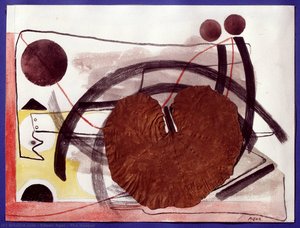
An Abstract Composition with Two Anthropomorphic Figures (1940) autorstwa Eileen Agar

An Abstract Composition with Two Anthropomorphic Figures

1940 · Acrylic On Canvas · National Trust, Londyn

Eileen Agar: Bridging Surrealism and Observation Eileen Agar (1899 – 1991) stands as an enigmatic figure in the annals of British art, simultaneously rooted in the intellectual currents of Surrealism and driven by a profound engagement with the natural world. Her artistic journey began amidst the vibrant cultural landscape of Buenos Aires, Argentina, where she absorbed influences from both European avant-garde movements and her own familial heritage—a blend that would…

5
Figures in a Garden (1981) autorstwa Eileen Agar

Figures in a Garden

1981 · Oil On Canvas · Tate Modern, Londyn

In the enchanting realm of Eileen Agar’s Figures in a Garden, the boundaries between reality and the subconscious dissolve into a vibrant tapestry of color and shape. This 1981 masterpiece serves as a breathtaking window into a surrealist Eden, where the natural world is reimagined through a lens of playful abstraction. The viewer is immediately greeted by an explosion of saturated hues—electric yellows, deep blues, and soft pinks—that dance across…

The Eileen Agar selection continues, 11 to 16

Tematy, które przyciągnęły wzrok Eileen Agar

Cztery motywy najczęściej powracające w tych oryginałach, z których każdy doczekał się swojego najdoskonalszego przykładu.

Muzea przechowujące oryginały Eileen Agar

4 muzeów, w których znajduje się najwięcej obrazów z tej strony.

Muzeum Miasto Dzieła artysty Eileen Agar Obrazy z tej listy
Tate Modern, LondynTate Modern Londyn 3 Figures in a Garden, The Reaper, Marine Object
National Trust, LondynNational Trust Londyn 1 An Abstract Composition with Two Anthropomorphic Figures
2 Willow Road2 Willow Road 1 Ernö Goldfinger (Budapest 1902 - 1987)
Government Art Collection, LondynGovernment Art Collection Londyn 1 Guardian of Memories

Eileen Agar dekada po dekadzie: oryginały definiujące każdy okres

Dzieła według dekad

Wybierz dekadę, aby zobaczyć dzieło, które ją definiuje.

Pytania kolekcjonerów o obrazy Eileen Agar

Z jakiego dzieła najbardziej znany jest Eileen Agar?Odkryj odpowiedź

An Abstract Composition with Two Anthropomorphic Figures (1940), National Trust, Londyn. Następne są Eileen Agar (1927) oraz The Autobiography of an Embryo (1933).

W jakim wieku był Eileen Agar, gdy powstało An Abstract Composition with Two Anthropomorphic Figures?Odkryj odpowiedź

41 lat: An Abstract Composition with Two Anthropomorphic Figures pochodzi z 1940, a Eileen Agar urodził(a) się w 1899.

Jakie są dziesięć najsłynniejszych obrazów, których autorem jest Eileen Agar?Odkryj odpowiedź

An Abstract Composition with Two Anthropomorphic Figures, Eileen Agar, The Autobiography of an Embryo, Ernö Goldfinger (Budapest 1902 - 1987), Figures in a Garden, Three Symbols, The Autobiography of an Embryo, Three Symbols, Untitled i Angel of Anarchy. Powyższy ranking zawiera rok powstania oraz muzeum dla każdego z nich.

Ile obrazów pozostawił po sobie Eileen Agar?Odkryj odpowiedź

Nasz katalog zawiera 16 dzieł artysty Eileen Agar, datowanych od 1927 do 1981.

W których muzeach znajdują się arcydzieła Eileen Agar?Odkryj odpowiedź

W większości znajdują się w Tate Modern (Londyn), National Trust (Londyn) i 2 Willow Road. Powyższa tabela muzeów zawiera ich pełną listę.

W których latach Eileen Agar namalował swoje najsłynniejsze dzieła?Odkryj odpowiedź

W 1930s: 9 z 16 dzieł na tej stronie powstało w tym czasie, w tym The Autobiography of an Embryo.

Jakie są pierwsze i ostatnie słynne oryginały Eileen Agar?Odkryj odpowiedź

Na tej stronie najwcześniejszy to Eileen Agar (1927), a najpóźniejszy Figures in a Garden (1981).

Jakie tematy Eileen Agar wybierał najczęściej?Odkryj odpowiedź

Organic forms (2), Biomorphic forms (2) i Geometric design (2), w ramach 16 dzieł na tej stronie.

Do jakiego nurtu artystycznego należy Eileen Agar?Odkryj odpowiedź

Surrealism, sądząc po oryginałach na tej stronie.

Które dzieła Eileen Agar znajdują się w Tate Modern?Odkryj odpowiedź

Figures in a Garden, The Reaper i Marine Object: Tate Modern, Londyn posiada 3 dzieł widocznych na tej stronie.

Eileen Agar: życie i twórczość

A Life Bridging Worlds: The Surrealist Vision of Eileen Agar

Eileen Forrester Agar, born in the vibrant city of Buenos Aires in 1899 to a Scottish father and American mother, was an artist whose life and work embodied a fascinating interplay of cultures and artistic movements. Her early years were marked by a nomadic existence, moving with her family to London in 1911—a relocation that would profoundly shape her artistic trajectory. Though initially exposed to the refined aesthetics of artists like Edmund Dulac and Arthur Rackham, it was the burgeoning avant-garde spirit of the 20th century that truly ignited her creative fire. Agar’s formal training began at Heathfield St Mary's School, followed by studies at the Byam Shaw School of Art in 1919 and later, the prestigious Slade School of Fine Art from 1925 to 1926. A period of study in Paris between 1928 and 1930 proved pivotal, exposing her to the intellectual ferment that would soon define Surrealism. This wasn’t merely an academic pursuit; it was a journey into the subconscious, a quest for new modes of expression that resonated deeply with Agar's own evolving artistic sensibilities.

Embracing the Unconscious: Surrealist Affiliations and Artistic Experimentation

The late 1920s marked a turning point in Agar’s career as she became increasingly drawn into the orbit of the Surrealist movement. Encounters with key figures like André Breton and Paul Éluard during her time in Paris opened up new avenues for artistic exploration. She formally joined the London Group in 1934, solidifying her position within the British avant-garde. However, Agar’s approach to Surrealism was uniquely her own—less concerned with strict adherence to manifestos and more focused on a playful, intuitive engagement with the unconscious mind. Her work during the 1930s often centered around natural objects, imbued with a lightheartedness evident in photographs like “Bum-Thumb Rock.” This period saw Agar boldly experimenting with automatic techniques, incorporating photography, collage, and object making into her practice—a testament to her willingness to push boundaries and challenge conventional artistic norms. A particularly fruitful collaboration with Paul Nash during the mid-1930s resulted in works such as "Seashore Monster at Swanage," a striking example of how found objects could be transformed into evocative symbols within a Surrealist framework.

A Kaleidoscope of Forms: Key Works and Artistic Style

Agar’s artistic style is instantly recognizable for its blend of biomorphic forms, personal symbolism, and dreamlike imagery. “The Flying Pillar/Three Symbols” (1930) stands as an early example of her engagement with Breton’s manifesto, while "Angel of Anarchy" (1936-40)—a plaster head adorned with fabric and various media—demonstrates her innovative use of materials and remains a cornerstone of the Tate collection. Her compositions are often layered with references to mythology, nature, and autobiography, creating a rich tapestry of meaning that invites multiple interpretations. Agar skillfully combined painting, collage, photography, and object-making, refusing to be confined by traditional artistic categories. This willingness to embrace diverse media allowed her to create truly unique and evocative works—pieces that felt both deeply personal and universally resonant. She wasn’t simply depicting reality; she was constructing alternate realities, populated by strange and wonderful forms born from the depths of her imagination.

Resilience and Recognition: Later Career and Lasting Legacy

Following World War II, Agar experienced a renewed period of artistic productivity, marked by numerous solo exhibitions beginning in 1946. Her later works explored tachist painting techniques while retaining the surrealist elements that had become her signature. In 1988, she published her autobiography, A Look at My Life, offering invaluable insights into her creative process and the vibrant artistic milieu she inhabited. A crowning achievement came in 1990 with her election as a Royal Academy Associate—a testament to her enduring contribution to British art. Today, Eileen Agar’s work is celebrated for its pioneering role in shaping British Surrealism and her innovative approach to materials and imagery. She was the only British woman to exhibit at the influential International Surrealist Exhibition in London in 1936, a remarkable feat that underscored her significance within the movement. Her legacy continues to inspire artists today, reminding us of the power of imagination, experimentation, and the courage to challenge artistic conventions. Agar’s work stands as a testament to the enduring allure of Surrealism and its ability to unlock new realms of creative expression.

Wszystkie 16 dzieła artysty Eileen Agar →