Portret Edgar Degas

Edgar Degas Paintings: The 100 Most Famous, Through a Gallery's Eye

Aktualizacja: Październik 2026 · ranking według naszego wskaźnika popularności (liczba wyszukiwań, wizyt i zamówień dla każdego dzieła) · 1 074 dzieł Edgar Degas w naszym katalogu

In short

To the gallery's eye, Edgar Degas's most famous painting is "La Absinthe Drinker" – „Picnik z absinthą” (1876), whose original hangs in the Musée d'Orsay, Paryż. Woman Drying Herself and The Dance Class (1873) complete the trio every eye recognises. Of the 1,074 works by Edgar Degas in our catalog, the gallery presents the 100 most famous below, each original with its year, its museum and what makes it unique.

1834 – 1917, Paryż Impresjonizm Najwięcej dzieł: Metropolitan Museum of Art

The gallery's top 10 Edgar Degas paintings

1
"La Absinthe Drinker" – „Picnik z absinthą” (1876) autorstwa Edgar Degas

"La Absinthe Drinker" – „Picnik z absinthą”

1876 · Obraz olejny na płótnie · Musée d'Orsay, Paryż

Edgar Degas i jego dzieło „La Absinthe Drinker” – „Picnik z absinthą” (1876) to przejmujący portret kultury paryskich kawiarni, który w sposób niezwykle czuły oddaje samotność i introspekcję wpisaną w życie miejskie XIX wieku. To arcydzieło zaprasza widza w progi chwili pełnej cichej kontemplacji, w której dwie postacie siedzą obok siebie, a jednak dzieli je cały świat, gdyż każda z nich jest całkowicie pochłonięta własnymi, wewnętrznymi przeżyciami.

2
Woman Drying Herself autorstwa Edgar Degas

Woman Drying Herself

Acrylic On Canvas · National Gallery, Londyn

A Moment of Intimate Repose: Exploring Degas’ “Woman Drying Herself” Edgar Degas's "Woman Drying Herself" is a captivating pastel drawing that embodies the spirit of Impressionism and, more specifically, the *Intimist* movement. This work isn’t merely a depiction of a nude; it’s an exploration of private moments, vulnerability, and the quiet beauty of everyday life – themes central to Degas' artistic vision. The artwork invites us into a fleeting, personal…

3
The Dance Class (1873) autorstwa Edgar Degas

The Dance Class

1873 · Oil On Canvas · Musée d'Orsay, Paryż

To step into Edgar Degas’s “The Dance Class” is to transcend the boundaries of time and enter a sanctuary of disciplined grace. Painted around 1873, this masterpiece does not merely present a scene of balletic rehearsal; it offers an intimate, almost voyeuristic window into the quiet intensity of the dance studio. Unlike the grand, staged spectacles often associated with the opera, Degas directs our gaze toward the unvarnished reality of…

4
The Bellelli Family autorstwa Edgar Degas

The Bellelli Family

Oil On Canvas · Musée d'Orsay, Paryż

In the quiet, shadowed corners of a Parisian room, Edgar Degas captures something far more profound than a mere family gathering. The Bellelli Family, painted between 1858 and 1867, stands as an exquisite masterwork that transcends the boundaries of traditional portraiture. It is not simply a record of faces, but a psychological landscape where every gaze and posture whispers of unspoken tensions and deep-seated emotions. As one gazes upon this…

5
Interior (also known as The Rape) (1868) autorstwa Edgar Degas

Interior (also known as The Rape)

1868 · Obraz olejny na płótnie · Philadelphia Museum of Art, Filadelfia

Edgar Degas’s “Interior,” often referred to as “The Rape,” is not merely a painting; it's an experience—a carefully constructed tableau of psychological tension and unspoken drama. Completed in 1868, this grisaille masterpiece resides within the Philadelphia Museum of Art, yet its power transcends its physical location, resonating with viewers long after they’ve turned away. It’s a work that invites speculation, prompting us to confront uncomfortable truths about human relationships and…

6
Portraits in a New Orleans Cotton Office autorstwa Edgar Degas

Portraits in a New Orleans Cotton Office

Portraits in a New Orleans Cotton Office Edgar Degas, one of the most celebrated artists of the Impressionist movement, gifted us Portraits in a New Orleans Cotton Office, an oil painting that encapsulates the very essence of his uncle’s cotton brokerage business during its calamitous bankruptcy. Completed in 1873, this masterpiece transcends mere visual representation; it stands as a testament to Degas' unparalleled skill and occupies a significant place within…

7
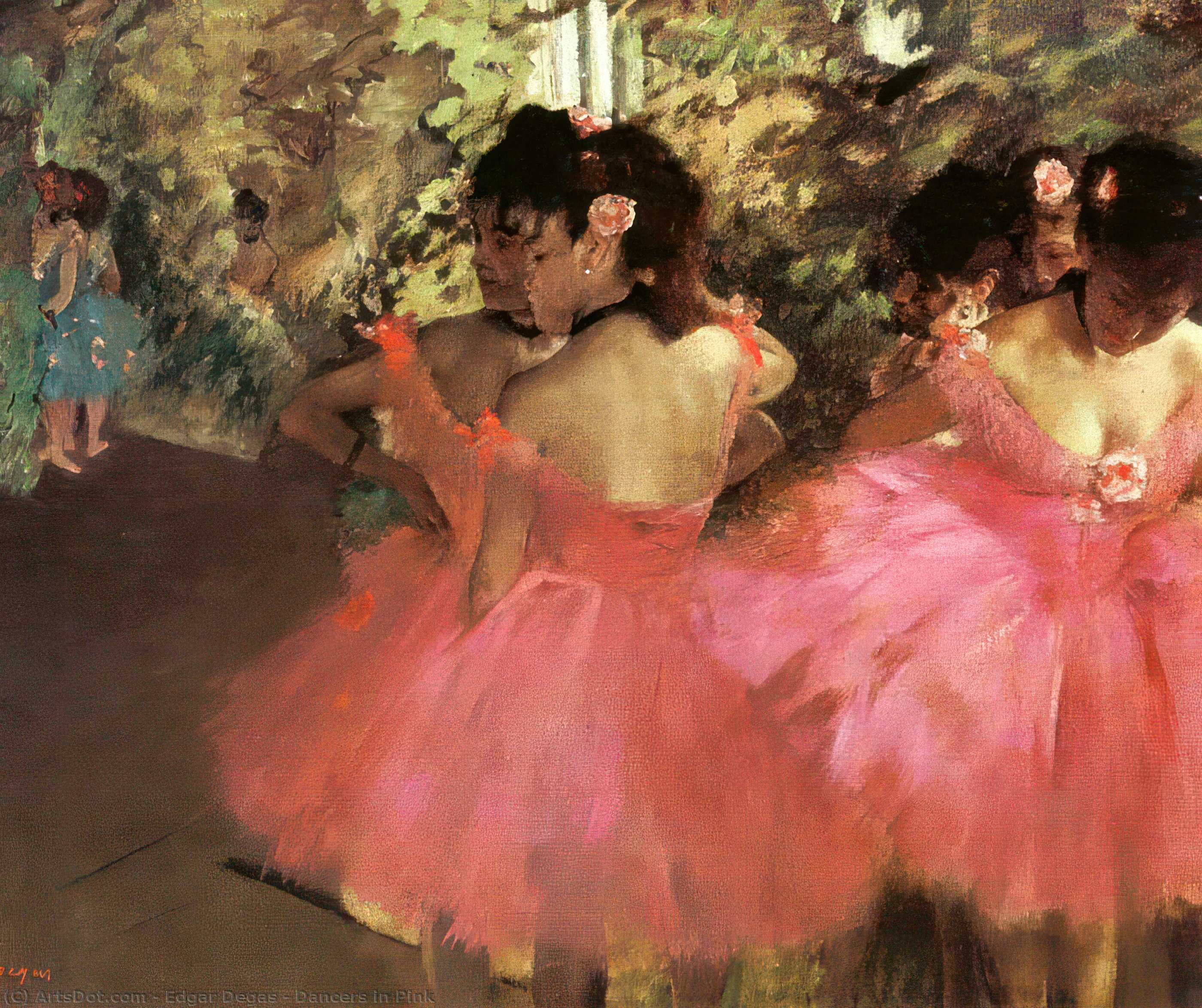
Tancerze w różu (1885) autorstwa Edgar Degas

Tancerze w różu

1885 · Obraz olejny na płótnie · Hill-Stead Museum, Farmington

„Dancerzy w Płytkich Różach” to obraz, który zdaje się uchwycić esencję baletu – jego delikatność, dynamikę i ulotną piękno. Wykonany przez Edgara Degasa w 1885 roku, ten monumentalny obraz nie jest jedynie przedstawieniem grupy tancerzy; to raczej portret chwili, momentu zamrożonego w czasie, gdzie ruch staje się formą sztuki. Degas, choć często postrzegany jako realista, w tym dziele doskonale oddaje ducha epoki, wprowadzając do malarstwa elementy impresjonizmu, które sprawiają, że…

8
Tancerz z bukietem kwiatów (Gwiazda baletu) (1878) autorstwa Edgar Degas

Tancerz z bukietem kwiatów (Gwiazda baletu)

1878 · Akryl na płótnie

„Tancerka z bukietem kwiatów” (znana również jako „Gwiazda baletu”) to nie tylko obraz; to uchwycony moment, zaklęcie ruchu i emocji. Zaprojektowany przez Edgara Degasa w 1878 roku, ten monumentalny portret baletnicy przenosi nas do serca paryskiej sceny baletowej końca XIX wieku – świata elegancji, poświęcenia i subtelnej siły. Degas, choć często postrzegany jako przedstawiciel impresjonizmu, zafascynowany był obserwacją ludzkiego ciała w dynamicznym ruchu, a ta pragnęciowość wyraża się w każdym…

9
Miss Lola na Cirku Fernando (1879) autorstwa Edgar Degas

Miss Lola na Cirku Fernando

1879 · Obraz olejny na płótnie

Dzieło Edgara Degasa „Miss Lola, au Cirque Fernando” to mistrzowskie przedstawienie cyrkowej akrobatki w samym środku występu. Ta pełna życia kompozycja chwyta energię i grację Miss Loli, która przyciąga całą uwagę widzów w kulminacyjnym momencie swojego aktu. Dynamiczna struktacja obrazu wciąga obserwatora w głął sceny, tworząc immersyjne doświadczenie, które podkreśla niezwykłe umiejętności oraz odwagę artystki.

10
Tancerze na pręcie (1888) autorstwa Edgar Degas

Tancerze na pręcie

1888 · Obraz olejny na płótnie · The Phillips Collection, Waszyngton

Edgar Degas’s “Dancers at the Barre 1,” painted in 1888, isn't merely a depiction of ballerinas; it’s an intimate window into a world of rigorous discipline, fleeting beauty, and the quiet intensity of artistic creation. The pastel hues—soft blues, gentle grays, and muted pinks—evoke a dreamlike atmosphere, transporting us to a rehearsal room bathed in diffused light, where the air hums with the promise of performance. Degas masterfully captures not…

Edgar Degas paintings, ranked 11 to 100

11Koncert w Kawiarni (Pieśń Psa) (1877) autorstwa Edgar DegasKoncert w Kawiarni (Pieśń Psa)1877 12Kobieta kątająca się (1892) autorstwa Edgar DegasKobieta kątająca się1892 13Pielęgniarka (1873) autorstwa Edgar DegasPielęgniarka1873 14W kawiarni, również nazywane autorstwa Edgar DegasW kawiarni, również nazywaneGrand Palais 15Dancerzy (1898) autorstwa Edgar DegasDancerzy1898 16Klasę taneczną (1874) autorstwa Edgar DegasKlasę taneczną1874 · Metropolitan Museum of Art 17Wyścigi konne w Longchamp (1874) autorstwa Edgar DegasWyścigi konne w Longchamp1874 · Museum of Fine Arts 18Tancerka na scenie (1880) autorstwa Edgar DegasTancerka na scenie1880 · Hamburger Kunsthalle 19Two Dancers in Their Dressing Room (1880) autorstwa Edgar DegasTwo Dancers in Their Dressing Room1880 · National Gallery 20The Star autorstwa Edgar DegasThe Star 21Two Dancers Entering the Stage (1878) autorstwa Edgar DegasTwo Dancers Entering the Stage1878 22Ballerina i dama z parasolem (1885) autorstwa Edgar DegasBallerina i dama z parasolem1885 23The Ballet Rehearsal on Stage (1874) autorstwa Edgar DegasThe Ballet Rehearsal on Stage1874 24Head of a Woman (1874) autorstwa Edgar DegasHead of a Woman1874 · National Gallery 25Two harlequins (1886) autorstwa Edgar DegasTwo harlequins1886 26Fan Mount: Ballet Girls (1879) autorstwa Edgar DegasFan Mount: Ballet Girls1879 · Metropolitan Museum of Art 27Siedząca kobieta czesząca włosy (1890) autorstwa Edgar DegasSiedząca kobieta czesząca włosy1890 · Musée d'Orsay 28Yellow Dancers (In the Wings) (1875) autorstwa Edgar DegasYellow Dancers (In the Wings)1875 · Art Institute of Chicago 29Café Singer (1879) autorstwa Edgar DegasCafé Singer1879 · Art Institute of Chicago 30The Milliners (1882) autorstwa Edgar DegasThe Milliners1882 · Muzeum J. Paula Getty'ego 31Women Combing Their Hair (1876) autorstwa Edgar DegasWomen Combing Their Hair1876 · The Phillips Collection 32Three Dancers Preparing for Class (1878) autorstwa Edgar DegasThree Dancers Preparing for Class1878 · Metropolitan Museum of Art 33A Roman Beggar Woman (1857) autorstwa Edgar DegasA Roman Beggar Woman1857 · Birmingham Museum and Art Gallery 34At the Ballet (1881) autorstwa Edgar DegasAt the Ballet1881 35Dancer in Her Dressing Room (1879) autorstwa Edgar DegasDancer in Her Dressing Room1879 36The Blue Dancers autorstwa Edgar DegasThe Blue Dancers 37Seated Nude Combing Her Hair (1890) autorstwa Edgar DegasSeated Nude Combing Her Hair1890 38Tancerka w swojej garderobie (1879) autorstwa Edgar DegasTancerka w swojej garderobie1879 · Norton Simon Museum 39Tuileries, the woman with a parasol (1877) autorstwa Edgar DegasTuileries, the woman with a parasol1877 · Burrell Collection 40Orchestra of the Opera (1869) autorstwa Edgar DegasOrchestra of the Opera1869 41The Bather (La Baigneuse) (1895) autorstwa Edgar DegasThe Bather (La Baigneuse)1895 · Reading Public Museum 42Russian Dancers (1899) autorstwa Edgar DegasRussian Dancers1899 43A Cotton Office in New Orleans (1873) autorstwa Edgar DegasA Cotton Office in New Orleans1873 44Woman in Blue (Portrait of Mlle. Helene Rouart) (1886) autorstwa Edgar DegasWoman in Blue (Portrait of Mlle. Helene Rouart)1886 45Manet at the Races (1870) autorstwa Edgar DegasManet at the Races1870 46Singer in Green (1884) autorstwa Edgar DegasSinger in Green1884 · Metropolitan Museum of Art 47Three Dancers, Blue Skirts, Red Blouses (1903) autorstwa Edgar DegasThree Dancers, Blue Skirts, Red Blouses1903 48Kobieta Szczotkująca Włosy (1894) autorstwa Edgar DegasKobieta Szczotkująca Włosy1894 · Metropolitan Museum of Art 49Danseuse rajustant son chausson (1880) autorstwa Edgar DegasDanseuse rajustant son chausson1880 50Three Dancers in Purple Skirts (1898) autorstwa Edgar DegasThree Dancers in Purple Skirts1898 51Woman at a Window (1872) autorstwa Edgar DegasWoman at a Window1872 · Courtauld Gallery 52Ballet Scene (1880) autorstwa Edgar DegasBallet Scene1880 · Dixon Gallery and Gardens 53Four Dancers (1902) autorstwa Edgar DegasFour Dancers1902 54A Carriage at the Races (1872) autorstwa Edgar DegasA Carriage at the Races1872 · Museum of Fine Arts 55Lady with a Parasol (1871) autorstwa Edgar DegasLady with a Parasol1871 · Courtauld Gallery 56Ballet Rehearsal on Stage, oil on canvas, Musée (1874) autorstwa Edgar DegasBallet Rehearsal on Stage, oil on canvas, Musée1874 57Singer with a glove (1878) autorstwa Edgar DegasSinger with a glove1878 58Mme Jacques Fourchy (1883) autorstwa Edgar DegasMme Jacques Fourchy1883 59Field of Flax (1892) autorstwa Edgar DegasField of Flax1892 60The Return of the Herd (1896) autorstwa Edgar DegasThe Return of the Herd1896 · New Walk Museum - Art Gallery 61Kobieta Siedząca na Canape (1872) autorstwa Edgar DegasKobieta Siedząca na Canape1872 62Taneczna Rozgrzewka w Studio Operowym (1895) autorstwa Edgar DegasTaneczna Rozgrzewka w Studio Operowym1895 · Norton Simon Museum 63Woman Tying the Ribbons of Her Hat (1882) autorstwa Edgar DegasWoman Tying the Ribbons of Her Hat1882 64Group of Dancers (1905) autorstwa Edgar DegasGroup of Dancers1905 65Standing Female Figure with Bared Torso (1868) autorstwa Edgar DegasStanding Female Figure with Bared Torso1868 · Kunstmuseum Basel 66Dancer with Bouquet (1877) autorstwa Edgar DegasDancer with Bouquet1877 67Conversation (1895) autorstwa Edgar DegasConversation1895 · Yale University Art Gallery 68The Rehearsal of the Ballet on Stage (1874) autorstwa Edgar DegasThe Rehearsal of the Ballet on Stage1874 · Metropolitan Museum of Art 69Two Dancers (1898) autorstwa Edgar DegasTwo Dancers1898 · Staatliche Kunstsammlungen Dresden 70Spanish dance (2018) autorstwa Edgar DegasSpanish dance2018 · Asociación Española de Pintores y Escultores 71On the Stage (1880) autorstwa Edgar DegasOn the Stage1880 72Horses and Jockeys (1886) autorstwa Edgar DegasHorses and Jockeys1886 73The Dancers (1885) autorstwa Edgar DegasThe Dancers1885 · Metropolitan Museum of Art 74Four dancers, ca National Galler (1899) autorstwa Edgar DegasFour dancers, ca National Galler1899 · National Gallery of Art 75Dancer Tilting (1883) autorstwa Edgar DegasDancer Tilting1883 76Ballet Scene autorstwa Edgar DegasBallet SceneDixon Gallery and Gardens 77Melancholy (1874) autorstwa Edgar DegasMelancholy1874 78Dancer's Dressing Room (1878) autorstwa Edgar DegasDancer's Dressing Room1878 79Trzy Bailerki, Jedna z Głęboko Purpurową Talii (1899) autorstwa Edgar DegasTrzy Bailerki, Jedna z Głęboko Purpurową Talii1899 80M. and Mme Edouard Manet (1869) autorstwa Edgar DegasM. and Mme Edouard Manet1869 81Dancers Practicing at the Barre (1877) autorstwa Edgar DegasDancers Practicing at the Barre1877 · Metropolitan Museum of Art 82Woman in a Café (1877) autorstwa Edgar DegasWoman in a Café1877 83Dancers (1895) autorstwa Edgar DegasDancers1895 84Dancer Looking at the Sole of Her Right Foot (1921) autorstwa Edgar DegasDancer Looking at the Sole of Her Right Foot1921 · Muzeum Sztuki w Tel Awiwie 85Kobieta Szczotkowująca Włosy Przed Lustrem (1877) autorstwa Edgar DegasKobieta Szczotkowująca Włosy Przed Lustrem1877 · Norton Simon Museum 86Dancers in the Wings (1885) autorstwa Edgar DegasDancers in the Wings1885 87Cztery Tancerzki (1900) autorstwa Edgar DegasCztery Tancerzki1900 · National Gallery of Art 88Kąpiel (1889) autorstwa Edgar DegasKąpiel1889 89Before the Curtain Call (1892) autorstwa Edgar DegasBefore the Curtain Call1892 90Dancer on Stage with a Bouquet (1876) autorstwa Edgar DegasDancer on Stage with a Bouquet1876 91Woman with a Bandage (1873) autorstwa Edgar DegasWoman with a Bandage1873 · Detroit Institute of Arts 92Dancers (8) (1900) autorstwa Edgar DegasDancers (8)1900 93Cafe-Concert Singer (1878) autorstwa Edgar DegasCafe-Concert Singer1878 94The Rehearsal (1878) autorstwa Edgar DegasThe Rehearsal1878 · Dumbarton Oaks 95Dancers Practicing at the Barre (1877) autorstwa Edgar DegasDancers Practicing at the Barre1877 96Russian Dancer (1895) autorstwa Edgar DegasRussian Dancer1895 97Olive Trees against a Mountainous Background (1893) autorstwa Edgar DegasOlive Trees against a Mountainous Background1893 98View of Saint-Valery-sur-Somme (1898) autorstwa Edgar DegasView of Saint-Valery-sur-Somme1898 · Metropolitan Museum of Art 99Leon Bonnat (1863) autorstwa Edgar DegasLeon Bonnat1863 100Two Dancers in the Studio (Dance School) (1875) autorstwa Edgar DegasTwo Dancers in the Studio (Dance School)1875

Edgar Degas's famous paintings, period by period

The subjects that held Edgar Degas's eye

The four subjects that come back most often in these originals, each with its finest example.

The museums that keep Edgar Degas's originals

8 muzeów, w których znajduje się najwięcej obrazów z tej strony.

Muzeum Miasto Dzieła artysty Edgar Degas Obrazy z tej listy
Metropolitan Museum of Art, Nowy JorkMetropolitan Museum of Art Nowy Jork 52 Klasę taneczną, Fan Mount: Ballet Girls, Three Dancers Preparing for Class
Musée d'Orsay, ParyżMusée d'Orsay Paryż 55 "La Absinthe Drinker" – „Picnik z absinthą”, The Dance Class, The Bellelli Family
National Gallery, LondynNational Gallery Londyn 18 Woman Drying Herself, Two Dancers in Their Dressing Room, Head of a Woman
Norton Simon Museum, PasadenaNorton Simon Museum Pasadena 5 Tancerka w swojej garderobie, Taneczna Rozgrzewka w Studio Operowym, Kobieta Szczotkowująca Włosy Przed Lustrem
National Gallery of Art, WaszyngtonNational Gallery of Art Waszyngton 28 Four dancers, ca National Galler, Cztery Tancerzki
Museum of Fine Arts, BostonMuseum of Fine Arts Boston 10 Wyścigi konne w Longchamp, A Carriage at the Races
Art Institute of Chicago, ChicagoArt Institute of Chicago Chicago 8 Yellow Dancers (In the Wings), Café Singer
Courtauld Gallery, LondynCourtauld Gallery Londyn 7 Woman at a Window, Lady with a Parasol

Edgar Degas, one signature painting per decade

Dzieła według dekad

Pick a decade to see the original that defines it.

Edgar Degas's paintings: the gallery answers

Which Edgar Degas painting is the most famous of all?Reveal the answer

"La Absinthe Drinker" – „Picnik z absinthą” (1876), Musée d'Orsay, Paryż. Woman Drying Herself and The Dance Class (1873) come next.

How old was Edgar Degas on completing "La Absinthe Drinker" – „Picnik z absinthą”?Reveal the answer

42 years old: "La Absinthe Drinker" – „Picnik z absinthą” dates from 1876, and Edgar Degas was born in 1834.

Which are Edgar Degas's top 10 paintings?Reveal the answer

"La Absinthe Drinker" – „Picnik z absinthą”, Woman Drying Herself, The Dance Class, The Bellelli Family, Interior (also known as The Rape), Portraits in a New Orleans Cotton Office, Tancerze w różu, Tancerz z bukietem kwiatów (Gwiazda baletu), Miss Lola na Cirku Fernando i Tancerze na pręcie. The ranking above gives each one's year and museum.

How many works did Edgar Degas create?Reveal the answer

Our catalog holds 1,074 works by Edgar Degas, dated from 1857 to 1905.

Where do Edgar Degas's most famous originals hang?Reveal the answer

Mostly in Metropolitan Museum of Art (Nowy Jork), Musée d'Orsay (Paryż) i National Gallery (Londyn). The museum table above lists them all.

When did Edgar Degas create the most famous paintings?Reveal the answer

In 1870s: 40 of the 100 works on this page were made then, "La Absinthe Drinker" – „Picnik z absinthą” among them.

Which are Edgar Degas's earliest and latest famous works?Reveal the answer

On this page, the earliest is A Roman Beggar Woman (1857) and the latest Group of Dancers (1905).

Which subjects did Edgar Degas return to most?Reveal the answer

Ballet (17), Dance (13) i Dancers (12), across the 100 works on this page.

Which medium did Edgar Degas work in most?Reveal the answer

Oil On Canvas, for 27 of the 100 works on this page.

Which movement is Edgar Degas associated with?Reveal the answer

Impresjonizm, judging by the originals on this page.

Which Edgar Degas originals does the Metropolitan Museum of Art hold?Reveal the answer

Klasę taneczną, Fan Mount: Ballet Girls i Three Dancers Preparing for Class: the Metropolitan Museum of Art, Nowy Jork holds 9 of the works on this page.

Can I have a Edgar Degas painting reproduced by hand?Reveal the answer

Yes, as a reproduction: the original stays in its museum, but any painting on this page can be painted by hand for you, made to order one at a time, from the painting's own page.

Edgar Degas: the artist

Życie Edgara Degas

Paryż, 1834 rok. W dość zamożnej rodzinie Hilaire-Germain-Edgar De Gas przychodzi na świat dziecko. Imię, które z czasem uprości do formy Edgar Degas, wyznacza początek życia naznaczonego nieustannym napięciem między społecznymi oczekiwaniami a artystyczną obsesją. Dorasta w wyrafinowanej atmosferze francuskiej stolicy – scenerii, która w przyszłości stanie się tłem dla jego wnikliwych obserwacji nowoczesnego życia.

Lata mijają w zawrotnym tempie, wypełnione nauką i zmieniającymi się zainteresowaniami. Artysta ewoluuje, przechodząc od uporządkowanego środowiska swojego wychowania ku surowej rzeczywistości miejskich przestrzeni roboczych. Nie szuka on jednak światła słonecznego na zewnątrz; zamiast tego woli kontrolowane, sztuczne oświetlenie pracowni i teatru. Jego wzrok spoczywa na tancerkach, praczach i wyścigowych koniach Paryża, chwytając fizyczne wycieńczenie pracy oraz ulotne ruchy sceniczne. Pozaje człowiekiem pełnym sprzeczności, który często odrzuca etykiety nakładane przez współczesnych, uparcie trzymając się swojej tożsamości jako realista.

Koniec następuje w Paryżu 27 września 1917 roku. Pozostawia po sobie ogromny dorobek artystyczny obejmujący wiele dekad, w tym takie dzieła jak:

Wczesne lata, rodzina i szkolenie

Paryż, rok 1834. Jako syn bankiera i Célestine Musson De Gas, kobiety pochodzącej z kreolskiej rodziny z Nowego Orleanu w Luizjanie, Hilaire-Germain-Edgar De Gas wkracza w świat mieszczańskiej stabilizacji. W wieku jedenastu lat zostaje zapisany do Lycée Louis-le-Grand. Choć ścieżka akademicka wydaje się już wytyczona, myśli chłopca nieustannie ulatują ku korytarzom Luwru. Do 1853 roku, po ukończeniu Lycée z maturą z literatury, odrzuca oczekiwania ojca dotyczące kariery prawniczej. Zamiast tego, rejestruje się jako kopista w Luwrze, spędzając długie godziny na odtwarzaniu linii wielkich mistrzów.

Szkolenie nabiera tempa w paryskiej École des Beaux-Arts. Przechodzi przez rygor klasycznego wykształcenia, szlifując precyzję, która zdefiniuje jego późniejszą twórczość. W 1855 roku dochodzi do spotkania, które trwale odmieni jego rozwój: Edgar Degas poznaje Jeana-Auguste-Dominique'a Ingresa. To spotkanie utwierdza w nim szacunek do rysunku i znaczenia linii, nawet gdy zaczyna on zwracać się ku nowoczesnym tematom, które ostatecznie zdefiniują jego artystyczną drogę.

Technika i styl artystyczny

Edgar Degas odrzuca etykietę impresjonisty. Woli określenie „realista”, co determinuje jego całe podejście do płótna. Unika plenerowego pejzażu oraz luźnych, migotliwych pociągnięć pędzla, tak lubianych przez jego współczesnych. Zamiast tego wycofuje się w kontrolowane środowisko pracowni. To właśnie tutaj, poprzez rygorystyczny warsztat rysunkowy, osiąga mistrzostwo w oddawaniu ludzkiej formy. Jest genialnym rysownikiem, posiadającym specyficzną, techniczną biegłość w przedstawianiu ruchu. Nie czeka na to, aż słońce oświetli wybrany obiekt; on konstruuje swoje sceny poprzez uważne studia wykonane ołówkiem lub pastelami. Takie przygotowanie pozwala mu zamrozić ulotną chwilę ruchu z niemal anatomiczną precyzją.

Światło w kompozycjach, które tworzy Edgar Degas, rzadko jest naturalne. Wykorzystuje on światło sztuczne, aby podkreślić sylwetki postaci, tworząc wrażenie teatralności i głębi. Jedną z jego charakterystycznych metod jest contre-jour, czyli technika pod światło, w której umieszcza on temat w cieniu, podczas gdy tło pozostaje jaskrawo oświetlone. Ta metoda izoluje figurę, wysuwając ją na pierwszy plan przed otoczenie. Rezultatem jest napięcie między podmiotem a przestrzenią, którą zamieszkuje, co często odsłania fizyczny wysiłek lub cichą, niepozowaną rzeczywistość nowoczesnego życia.

Kluczowe dzieła i tematyka

Scena teatralna oraz stajnie dominują w jego wizualnym świecie. Ponad połowa jego dorobku skupia się na tancerkach, które artysta chwyta w ulotnych momentach prób oraz spektakli. Jego pędzel wędruje między gracją piruetu a fizycznym wysiłkiem, jaki niesie ze sobą lekcja tańca. Poza światem teatru, Edgar Degas kieruje swoje spojrzenie ku prędkości wyścigów, dokumentując konie wyścigowe oraz dżokejów, którzy na nich jeżdżą. Te tematy nie mają charakteru czysto dekoracyjnego; są to głębokie studia napięcia i ruchu.

Twórczość artysty sięga jednak znacznie głębiej, w sferę prywatną i psychologiczną. Tworzy portrety, które odsłaniają złożone życie wewnętrzne, często wykorzystując niekonwencjonalne kąty widzenia, aby wyizolować swoje podmioty. Ta fascynacja ludzką formą nie ogranicza się jedynie do malarstwa olejnego na płótnie. Edgar Degas eksperymentuje z różnorodnymi mediami, w tym z grafiką, rysunkiem oraz rzeźbą w wosku. Jego niezwykła zdolność do oddawania ludzkiej figury jest widoczna w licznych studiach kobiecych postaci, w których często skupia się na ciele w intymnych, niepozornych momentach.

  • The Dancing Class, około 1874
  • The Dance Class, 1874
  • The Ballet Class, 1874–1876
  • Interior, 1868–1869
  • Scena z wyścigu przeszkodowego: The Fallen Jockey, 1866

Dziedzictwo i trwały wpływ

Przełom w sztuce późnego XIX wieku znajduje swoją centralną postać w twórczości, którą pozostawił Edgar Degas. Choć sam niechętnie przyjmował narzucone mu etykiety, jego obecność pomogła położyć fundamenty pod impresjonizm. Odwrócił się od sztywnych, historycznych tematów akademizmu, wybierając zamiast tego dokumentowanie surowości i wdzięku nowoczesnego życia Paryża. To odejście od tradycji utorowało drogę przyszłym pokoleniom artystów, pozwalając im na zgłębianie nieprzefiltrowanej rzeczywistości ludzkiej kondycji.

Jego wpływ wykracza daleko poza pierwotne kręgi impresjonistów. Strukturalne innowacje i niekonwencjonalne kompozycje, które wypracował, odcisnęły trwałe piętno na trajektorii rozwoju sztuki nowoczesnej. W szczególności jego podejście do formy i ruchu można dostrzec w późniejszych dziełach, których autorami są Pablo Picasso oraz Henri Matisse. Nauczył on świat sztuki patrzeć na rzeczywistość przez pryzmat asymetrycznych kątów i nieoczekiwanych kadrów, przekształcając prywatne, ulotne chwile tancerki czy praczki w nieśmiertelne studia ruchu.

  • The Dance Class
  • The Ballet Class
  • Interior

Gdzie dziś można podziwiać jego dzieła

Ślady niezwykłej uważności, jaką wykazywał Edgar Degas, pozostają rozproszone w najważniejszych instytucjach świata, zachowane w cichych salach Paryża i daleko poza jego granicami. We Francji Musée d'Orsay skrywa znaczące kolekcje jego prac, które w niemal namacalny sposób oddają ruch, który artysta studiował przez całe swoje życie. Sztuka Degasa znajduje się również w Luwrze, podczas gdy Bibliothèque Nationale de France w Paryżu przechowuje jego dzieła w swoich prestiżowych archiwach. Kolekcje te oferują bezpośredni wgląd w techniczną precyzję oraz głębokie studium formy, które zdefiniowały jego niezwykłą karierę.

Po drugiej stronie Atlantyku wizja artysty sięga aż do Stanów Zjednoczonych. Metropolitan Museum of Art w Nowym Jorku posiada jego obrazy, stanowiąc okno na nowoczesne życie, które Edgar Degas portretował z taką skrupulatnością. W Filadelfii Philadelphia Museum of Art przechowuje jego dzieła, dbając o to, by jego wpływ pozostawał dostępny dla międzynarodowej publiczności. Miejsca te służą jako fizyczne kotwice jego dziedzictwa, w których linie i światło, nad którymi tak mistrzowsko panował, wciąż pozostają żywe i widoczne dla współczesnego oka.

Wszystkie 1074 dzieła artysty Edgar Degas →