Portret Archip Kuindży

100 najsłynniejszych obrazów artysty Archip Kuindży, każdy niepowtarzalny

Aktualizacja: Listopad 2026 · ranking według naszego wskaźnika popularności (liczba wyszukiwań, wizyt i zamówień dla każdego dzieła) · 252 dzieł Archip Kuindży w naszym katalogu

W skrócie

Rosyjska «Ночь на Днепре» Księżycowa noc na Dnieprze Alternatywne tytuły (ros.) Русский Лунная ночь на Днепре (1882) to obraz autorstwa Archip Kuindży, który przyciąga najwięcej spojrzeń; oryginał znajduje się w Państwowy Rosyjski Muzeum w Sankt Petersburgu, Sankt Petersburg. Następnie wzrok kieruje się na Księżycowa noc nad Dnieprem (1880) i Christ in the Garden of Gethsemane (1901). Spośród 252 dzieł Archip Kuindży w naszym katalogu, tych 100 jest najbardziej znanych – każde z nich to unikatowy oryginał, przedstawiony wraz z rokiem powstania, muzeum oraz powodem, dla którego przetrwało próbę czasu.

1841 – 1910, Mariupol Realism Najwięcej dzieł: Państwowy Rosyjski Muzeum w Sankt Petersburgu

10 najlepszych obrazów autorstwa Archip Kuindży według oka galerii

1
Rosyjska «Ночь на Днепре» Księżycowa noc na Dnieprze Alternatywne tytuły (ros.) Русский Лунная ночь на Днепре (1882) autorstwa Archip Kuindży

Rosyjska «Ночь на Днепре» Księżycowa noc na Dnieprze Alternatywne tytuły (ros.) Русский Лунная ночь на Днепре

1882 · Obraz olejny na płótnie · Państwowy Rosyjski Muzeum w Sankt Petersburgu, Sankt Petersburg

W dziele Rosyjska «Ночь на Днепре» Księżycowa noc na Dnieprze Alternatywne tytuły (ros.) Русский Лунная ночь на Днепре, Arkhip Kuindzhi stosuje silnie obniżoną linię horyzontu, aby nadać priorytet nocnemu niebu. Ten zabieg strukturalny sprawia, że niebiańska przestrzeń zajmuje ogromną część płótna. Kompozycja koncentruje się na brzegach rzeki Dniepr podczas pełni księżyca, gdzie światło wchodzi w interakcję z krajobrazem poprzez ekstremalne kontrasty tonalne. Większość przestrzeni malarskiej dominuje bardzo ciemne pigmenty, tworząc…

2
Księżycowa noc nad Dnieprem (1880) autorstwa Archip Kuindży

Księżycowa noc nad Dnieprem

1880 · Obraz olejny na płótnie

Obraz przedstawia nocny widok brzegów Dniepru pod wpływem pełni księżyca. Niska linia horyzontu sprawia, że niebo zajmuje znaczną część płótna. W tej górnej przestrzeni chmury przemieszczają się przez mroczną atmosferę, przez którą przesącza się światło księżyca, tworząc plamy jasności. Poniżej powierzchnia rzeki odbija ten lunarny blask, tworząc jasną, świetlistą ścieżkę przecinającą ciemniejsze wody. Na pierwszym planie widnieje sylwetka małej łodzi dryfującej na spokojnej rzece, natomiast w oddali zarysy budynków zdają…

4
Sunset in the winter. A coast of the sea (1890) autorstwa Archip Kuindży

Sunset in the winter. A coast of the sea

1890 · Oil On Canvas

The oil on canvas work titled Sunset in the winter. A coast of the sea was created by Arkhip Kuindzhi. This painting, dating from about 1890, represents a specific moment of light over a coastal environment during the winter season. The composition focuses on the intersection of the sea and the sky during the transition of the sun.

5
Winter. Spots of Light on Cottage Roof (1895) autorstwa Archip Kuindży

Winter. Spots of Light on Cottage Roof

1895 · Oil

In this work, titled Winter. Spots of Light on Cottage Roof, Arkhip Kuindzhi presents a quiet, realistic depiction of a snowy landscape. Created about 1895, the painting captures a moment of stillness within a wintry setting. Small houses are scattered throughout the scene, their white roofs standing out against the heavy, snow-covered ground. It is a scene that feels lived-in, yet momentarily paused by the cold.

6
Sunset in the forest (1878) autorstwa Archip Kuindży

Sunset in the forest

1878 · Oil On Canvas

The painting titled Sunset in the forest is a landscape created by Arkhip Kuindzhi. It captures a specific moment where the sun retreats behind a dense collection of trees. This work dates to about 1878. The scene focuses on the interplay between the silhouettes of the timber and the fading light of the day.

7
Cypresses on a Seashore. The Crimea (1887) autorstwa Archip Kuindży

Cypresses on a Seashore. The Crimea

1887 · Oil On Canvas

Tall, dark cypress trees pierce the horizon, their narrow forms reaching toward a sky that holds the weight of the sea. Along the Crimean coast, the land meets the water in a quiet collision of earth and salt. A small boat rests near the edge, a tiny speck of human presence against the vast, rhythmic movement of the tide. The trees stand in various positions, some anchored deep in the…

8
The Sea. The Crimea (1908) autorstwa Archip Kuindży

The Sea. The Crimea

1908 · Oil On Canvas

The Sea. The Crimea is a work by Arkhip Kuindzhi, executed in 1908. The artist, born in 1841 in Mariupol uyezd, Russian Empire, focused his later years on the specificities of light and atmosphere within the natural landscape. He died in 1910, leaving behind a body of work defined by a rigorous study of color and perception.

10
A Birch Grove.1901 autorstwa Archip Kuindży

A Birch Grove.1901

Oil On Canvas

A Birch Grove.1901 is a work by Arkhip Kuindzhi. The artist was born in the Mariupol uyezd, Russian Empire, in 1841 or 1842. His lineage traces back to Greek ancestors who sought refuge near the Azov Sea during the reign of Catherine II. This heritage shaped the multicultural background of his early life.

Słynne obrazy artysty Archip Kuindży, od 11 do 100

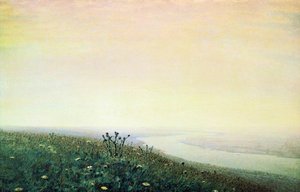
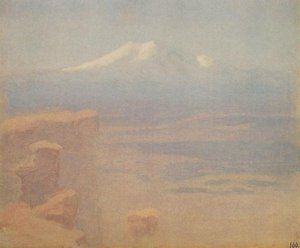
11Steppe. Cornfield (1875) autorstwa Archip KuindżySteppe. Cornfield1875 12Winter (1895) autorstwa Archip KuindżyWinter1895 13Moonlight Night on the Dnieper (1908) autorstwa Archip KuindżyMoonlight Night on the Dnieper1908 14Elbrus day autorstwa Archip KuindżyElbrus day 15Dali. Crimea autorstwa Archip KuindżyDali. Crimea 16Sunrise autorstwa Archip KuindżySunrise 17Sunset 2 autorstwa Archip KuindżySunset 2 18Snow tops (1895) autorstwa Archip KuindżySnow tops1895 19Evening in Ukraine (1878) autorstwa Archip KuindżyEvening in Ukraine1878 · Państwowy Rosyjski Muzeum w Sankt Petersburgu 20Sea with sailing ships autorstwa Archip KuindżySea with sailing ships 21Dnepr in the morning autorstwa Archip KuindżyDnepr in the morning 22Forest (1870) autorstwa Archip KuindżyForest1870 23View of the Isaac Cathedral at Moonlight Night (1869) autorstwa Archip KuindżyView of the Isaac Cathedral at Moonlight Night1869 24View of the Isaac Cathedral at Moonlight Night (1869) autorstwa Archip KuindżyView of the Isaac Cathedral at Moonlight Night1869 25Autumn. Stormy day over the steppe (1875) autorstwa Archip KuindżyAutumn. Stormy day over the steppe1875 · Galeria Tratykowa 26Forgotten Village (1873) autorstwa Archip KuindżyForgotten Village1873 27Forest near the water (1872) autorstwa Archip KuindżyForest near the water1872 28Wild grass (1875) autorstwa Archip KuindżyWild grass1875 29Roofs. Winter (1876) autorstwa Archip KuindżyRoofs. Winter1876 · Państwowy Rosyjski Muzeum w Sankt Petersburgu 30Poplar trees (1874) autorstwa Archip KuindżyPoplar trees1874 31Sea. Gloomy Day (1878) autorstwa Archip KuindżySea. Gloomy Day1878 · Państwowy Rosyjski Muzeum w Sankt Petersburgu 32Clouds (1875) autorstwa Archip KuindżyClouds1875 33Night on the Dnieper (1882) autorstwa Archip KuindżyNight on the Dnieper1882 34Birch Grove (1879) autorstwa Archip KuindżyBirch Grove1879 · Państwowy Rosyjski Muzeum w Sankt Petersburgu 35Birch Grove (1880) autorstwa Archip KuindżyBirch Grove1880 · Państwowy Rosyjski Muzeum w Sankt Petersburgu 36Evening on the Steppe (1883) autorstwa Archip KuindżyEvening on the Steppe1883 · Państwowy Rosyjski Muzeum w Sankt Petersburgu 37Night at the Don (1882) autorstwa Archip KuindżyNight at the Don1882 · Kijowska Narodowa Galeria Obrazów 38Ukraine (1879) autorstwa Archip KuindżyUkraine1879 39A Birch Grove (1880) autorstwa Archip KuindżyA Birch Grove1880 40Sea coast. View of Mount Demerdzhi (1880) autorstwa Archip KuindżySea coast. View of Mount Demerdzhi1880 41View of the beach and sea from the mountains. Crimea (1880) autorstwa Archip KuindżyView of the beach and sea from the mountains. Crimea1880 42A Birch Grove (1879) autorstwa Archip KuindżyA Birch Grove1879 43Night (1880) autorstwa Archip KuindżyNight1880 44A Birch Grove (1880) autorstwa Archip KuindżyA Birch Grove1880 45View of the Kremlin from the Zamoskvorechye District (1882) autorstwa Archip KuindżyView of the Kremlin from the Zamoskvorechye District1882 46A Birch Grove (1879) autorstwa Archip KuindżyA Birch Grove1879 47After a Rain (1879) autorstwa Archip KuindżyAfter a Rain1879 48After a Rain (1879) autorstwa Archip KuindżyAfter a Rain1879 49Russian «Ночь на Днепре» Moonlit Night on the Dniepr (1882) autorstwa Archip KuindżyRussian «Ночь на Днепре» Moonlit Night on the Dniepr1882 · Galeria Tratykowa 50Breakers on a rainy day (1890) autorstwa Archip KuindżyBreakers on a rainy day1890 · Państwowy Rosyjski Muzeum w Sankt Petersburgu 51Roofs (1887) autorstwa Archip KuindżyRoofs1887 · Państwowy Rosyjski Muzeum w Sankt Petersburgu 52Mountain Valley. Crimea (1890) autorstwa Archip KuindżyMountain Valley. Crimea1890 · Państwowy Rosyjski Muzeum w Sankt Petersburgu 53Moonlit Night (1890) autorstwa Archip KuindżyMoonlit Night1890 · Państwowy Rosyjski Muzeum w Sankt Petersburgu 54Seashore (1890) autorstwa Archip KuindżySeashore1890 55Forest Lake. Cloud (1890) autorstwa Archip KuindżyForest Lake. Cloud1890 · Państwowy Rosyjski Muzeum w Sankt Petersburgu 56Seashore (1887) autorstwa Archip KuindżySeashore1887 57The Crimea. The Southern Shore (1887) autorstwa Archip KuindżyThe Crimea. The Southern Shore1887 · Państwowy Rosyjski Muzeum w Sankt Petersburgu 58Autumn (1890) autorstwa Archip KuindżyAutumn1890 59Winter. Sunlight on The Hoar Frost (1890) autorstwa Archip KuindżyWinter. Sunlight on The Hoar Frost1890 · Państwowy Rosyjski Muzeum w Sankt Petersburgu 60Sunset Effect (1890) autorstwa Archip KuindżySunset Effect1890 61Landscape in Crimea (1896) autorstwa Archip KuindżyLandscape in Crimea1896 · Finnish National Gallery 62Landscape. Steppe (1895) autorstwa Archip KuindżyLandscape. Steppe1895 63Winter (1895) autorstwa Archip KuindżyWinter1895 64Twilight (1895) autorstwa Archip KuindżyTwilight1895 65Portrait of an unknown man (1895) autorstwa Archip KuindżyPortrait of an unknown man1895 · Państwowy Rosyjski Muzeum w Sankt Petersburgu 66Volga (1895) autorstwa Archip KuindżyVolga1895 67Winter. Fog (1895) autorstwa Archip KuindżyWinter. Fog1895 68Snow tops (1895) autorstwa Archip KuindżySnow tops1895 69Noon. Herd in the steppe (1895) autorstwa Archip KuindżyNoon. Herd in the steppe1895 · Państwowy Rosyjski Muzeum w Sankt Petersburgu 70The head of a Ukrainian peasant in a straw hat (1895) autorstwa Archip KuindżyThe head of a Ukrainian peasant in a straw hat1895 71Snowy mountain peaks. Caucasus. (1895) autorstwa Archip KuindżySnowy mountain peaks. Caucasus.1895 72Sunrise (1895) autorstwa Archip KuindżySunrise1895 73A Birch Grove. Spots of sunlight (1895) autorstwa Archip KuindżyA Birch Grove. Spots of sunlight1895 · Państwowy Rosyjski Muzeum w Sankt Petersburgu 74Oaks (1900) autorstwa Archip KuindżyOaks1900 · Państwowy Rosyjski Muzeum w Sankt Petersburgu 75Dnieper (1901) autorstwa Archip KuindżyDnieper1901 76Clouds (1905) autorstwa Archip KuindżyClouds1905 · Państwowy Rosyjski Muzeum w Sankt Petersburgu 77Rainbow (1900) autorstwa Archip KuindżyRainbow1900 78Elbrus (1900) autorstwa Archip KuindżyElbrus1900 79Crimea (1905) autorstwa Archip KuindżyCrimea1905 · Państwowy Rosyjski Muzeum w Sankt Petersburgu 80Fishing on the Black Sea (1900) autorstwa Archip KuindżyFishing on the Black Sea1900 81Clouds (1905) autorstwa Archip KuindżyClouds1905 82In the Crimea (1905) autorstwa Archip KuindżyIn the Crimea1905 83Oaks (1905) autorstwa Archip KuindżyOaks1905 84A Birch Grove (9) (1901) autorstwa Archip KuindżyA Birch Grove (9)1901 85Red Sunset on the Dnieper (1905) autorstwa Archip KuindżyRed Sunset on the Dnieper1905 86Ploughing on oxen autorstwa Archip KuindżyPloughing on oxen 87Portrait of N.A. Jaroshenko autorstwa Archip KuindżyPortrait of N.A. Jaroshenko 88Portrait of Ivan Kramskoi autorstwa Archip KuindżyPortrait of Ivan Kramskoi 89Men's head in a straw hat autorstwa Archip KuindżyMen's head in a straw hat 90Forest. Burdock (1908) autorstwa Archip KuindżyForest. Burdock1908 91Sunset autorstwa Archip KuindżySunset 92Fog in the mountains. Caucasus (1908) autorstwa Archip KuindżyFog in the mountains. Caucasus1908 93Crescent moon at sunset (1908) autorstwa Archip KuindżyCrescent moon at sunset1908 94Forest expanse (1908) autorstwa Archip KuindżyForest expanse1908 95Forest Glade. Fog (1908) autorstwa Archip KuindżyForest Glade. Fog1908 · Państwowy Rosyjski Muzeum w Sankt Petersburgu 96The top of Mount Elbrus in the Sunlight (1908) autorstwa Archip KuindżyThe top of Mount Elbrus in the Sunlight1908 97Red sunset (1908) autorstwa Archip KuindżyRed sunset1908 98Grove (1908) autorstwa Archip KuindżyGrove1908 · Państwowy Rosyjski Muzeum w Sankt Petersburgu 99Elbrus in the Evening (1908) autorstwa Archip KuindżyElbrus in the Evening1908 100Coast of the sea with a rock (1908) autorstwa Archip KuindżyCoast of the sea with a rock1908

Tematy, które przyciągnęły wzrok Archip Kuindży

Cztery motywy najczęściej powracające w tych oryginałach, z których każdy doczekał się swojego najdoskonalszego przykładu.

Muzea przechowujące oryginały Archip Kuindży

4 muzeów, w których znajduje się najwięcej obrazów z tej strony.

Muzea Miasto Dzieła artysty Archip Kuindży Obrazy z tej listy
Państwowy Rosyjski Muzeum w Sankt Petersburgu, Sankt PetersburgPaństwowy Rosyjski Muzeum w Sankt Petersburgu Sankt Petersburg 44 Rosyjska «Ночь на Днепре» Księżycowa noc na Dnieprze Alternatywne tytuły (ros.) Русский Лунная ночь на Днепре, Evening in Ukraine, Roofs. Winter
Galeria Tratykowa, MoskwaGaleria Tratykowa Moskwa 11 Autumn. Stormy day over the steppe, Russian «Ночь на Днепре» Moonlit Night on the Dniepr
Kijowska Narodowa Galeria Obrazów, KijówKijowska Narodowa Galeria Obrazów Kijów 1 Night at the Don
Finnish National Gallery, HelsinkiFinnish National Gallery Helsinki 1 Landscape in Crimea

Archip Kuindży na przestrzeni dekad: jeden unikatowy oryginał dla każdego

Dzieła według dekad

Wybierz dekadę, aby zobaczyć dzieło, które ją definiuje.

Obrazy artysty Archip Kuindży: pytania do galerii

Jakie jest najsłynniejsze dzieło artysty Archip Kuindży?Odkryj odpowiedź

Rosyjska «Ночь на Днепре» Księżycowa noc na Dnieprze Alternatywne tytuły (ros.) Русский Лунная ночь на Днепре (1882), Państwowy Rosyjski Muzeum w Sankt Petersburgu, Sankt Petersburg. Następne są Księżycowa noc nad Dnieprem (1880) oraz Christ in the Garden of Gethsemane (1901).

W jakim wieku Archip Kuindży stworzył/a Rosyjska «Ночь на Днепре» Księżycowa noc na Dnieprze Alternatywne tytuły (ros.) Русский Лунная ночь на Днепре?Odkryj odpowiedź

41 lat: Rosyjska «Ночь на Днепре» Księżycowa noc na Dnieprze Alternatywne tytuły (ros.) Русский Лунная ночь на Днепре pochodzi z 1882, a Archip Kuindży urodził(a) się w 1841.

Które dziesięć obrazów Archip Kuindży jest najbardziej znanych?Odkryj odpowiedź

Rosyjska «Ночь на Днепре» Księżycowa noc na Dnieprze Alternatywne tytuły (ros.) Русский Лунная ночь на Днепре, Księżycowa noc nad Dnieprem, Christ in the Garden of Gethsemane, Sunset in the winter. A coast of the sea, Winter. Spots of Light on Cottage Roof, Sunset in the forest, Cypresses on a Seashore. The Crimea, The Sea. The Crimea, Moonlight Night on the River i A Birch Grove.1901. Powyższy ranking zawiera rok powstania oraz muzeum dla każdego z nich.

Ile znanych dzieł stworzył Archip Kuindży?Odkryj odpowiedź

Nasz katalog zawiera 252 dzieł artysty Archip Kuindży, datowanych od 1869 do 1908.

Gdzie można zobaczyć najsłynniejsze oryginały Archip Kuindży?Odkryj odpowiedź

W większości znajdują się w Państwowy Rosyjski Muzeum w Sankt Petersburgu (Sankt Petersburg), Galeria Tratykowa (Moskwa) i Kijowska Narodowa Galeria Obrazów (Kijów). Powyższa tabela muzeów zawiera ich pełną listę.

W jakim okresie Archip Kuindży stworzył/a swoje najsłynniejsze obrazy?Odkryj odpowiedź

W 1890s: 25 z 100 dzieł na tej stronie powstało w tym czasie, w tym Sunset in the winter. A coast of the sea.

Który z najsłynniejszych obrazów artysty Archip Kuindży powstał najwcześniej, a który najpóźniej?Odkryj odpowiedź

Na tej stronie najwcześniejszy to View of the Isaac Cathedral at Moonlight Night (1869), a najpóźniejszy The Sea. The Crimea (1908).

Jakie tematy preferował Archip Kuindży?Odkryj odpowiedź

Forests (20), Mountains (16) i Landscape (15), w ramach 100 dzieł na tej stronie.

Jakich materiałów Archip Kuindży używał najczęściej?Odkryj odpowiedź

Oil On Canvas, dla 13 z 100 dzieł na tej stronie.

Do jakiego nurtu należy twórczość Archip Kuindży?Odkryj odpowiedź

Realism, sądząc po oryginałach na tej stronie.

Jakie oryginały Archip Kuindży można zobaczyć w Państwowy Rosyjski Muzeum w Sankt Petersburgu?Odkryj odpowiedź

Rosyjska «Ночь на Днепре» Księżycowa noc na Dnieprze Alternatywne tytuły (ros.) Русский Лунная ночь на Днепре, Evening in Ukraine i Roofs. Winter: Państwowy Rosyjski Muzeum w Sankt Petersburgu, Sankt Petersburg posiada 22 dzieł widocznych na tej stronie.

Archip Kuindży: portret artysty

Arkhip Kuindzhi: A Master of Light and Ukrainian Soul

Arkhip Ivanovich Kuindzhi, a name synonymous with the shimmering golden light of Ukrainian sunsets and the mystical glow of moonlit nights, remains one of Russia’s most beloved landscape painters. Born in 1842 – though the precise date remains shrouded in subtle mystery – in Mariupol, Ukraine, his origins were deeply rooted in the region's rich cultural tapestry. Of Greek descent, tracing his lineage back to ancestors who sought refuge near the Azov Sea during Catherine II’s reign, Kuindzhi’s early life was shaped by a blend of diverse influences and modest beginnings. Orphaned at a young age, he navigated a childhood marked by labor – constructing church facades, tending livestock, and assisting in a corn merchant's shop. Yet, even amidst these challenging circumstances, an innate artistic inclination began to blossom, nurtured by the guidance of a Greek family friend who provided him with rudimentary education. This early exposure to both the practical realities of life and the nascent seeds of learning would profoundly shape his unique artistic vision.

From Icon Retouching to Artistic Innovation

Kuindzhi’s path to becoming a celebrated artist wasn't paved by formal academic training, at least not initially. His early career began with an apprenticeship under the renowned marine painter Ivan Aivazovsky in Feodosia, where he honed his technical skills – particularly in paint mixing and color theory – but perhaps lacked the broader artistic direction he would later seek. He then further refined his craft under Adolf Fessler, a student of Aivazovsky’s, before venturing into the burgeoning field of photography as a retoucher in Taganrog. This seemingly unrelated experience proved surprisingly crucial; it instilled within him an acute understanding of light and shadow, composition, and the meticulous detail required to capture reality – skills he would later masterfully translate onto canvas. His attempt to establish his own photographic studio ultimately proved unsuccessful, prompting a pivotal move to Saint Petersburg in 1865. There, he enrolled at the Imperial Academy of Arts, pursuing studies independently while gaining recognition as a free-lance artist by 1868 and eventually achieving full membership in 1893.

The Alchemy of Light: Kuindzhi’s Artistic Development

Kuindzhi's artistic development was characterized by an unwavering pursuit of capturing the expressive power of light. He wasn’t merely depicting landscapes; he was attempting to *recreate* the very experience of being immersed in nature, bathed in its radiant glow. Early works like “Autumn Weather” (1870) and “Lake Ladoga” (1870), while demonstrating his technical skill, hinted at a deeper ambition. It was with paintings such as "Deserted Village" (1874) and “The Chumak Road” (1875) that he began to address social themes, aligning himself with the realist-minded Society for Traveling Art Exhibitions. However, Kuindzhi soon transcended purely social commentary, embarking on a path of “pure poetry,” as some critics described it. His breakthrough came with "Ukrainian Night" (1876), followed by the breathtaking “Birch Grove” (1879) and the iconic “Moonlit Night on the Dnieper” (1880). These works weren’t simply representations of scenes; they were immersive experiences, achieved through innovative techniques. He employed composite methods – meticulously layering multiple paintings to create panoramic views that enveloped the viewer – and experimented with pigments to achieve an unparalleled luminosity. The effect was often described as almost supernatural, drawing crowds eager to witness his mastery of light. His meticulous approach involved creating a series of smaller paintings which were then combined into larger works, a technique he perfected over years of experimentation.

Themes and Influences: A Ukrainian Perspective

Kuindzhi’s artistic vision was deeply intertwined with his Ukrainian heritage. He frequently depicted landscapes of his native region – the rolling hills of the Dnepr River valley, the vast expanses of the Crimean steppes, and the serene beauty of Valaam Island – imbuing them with a sense of nostalgia and romanticism. His work wasn’t simply about portraying these locations; it was about conveying their spirit, their atmosphere, and the emotional resonance they held for him. Influenced by the Romantic movement's emphasis on emotion and nature, Kuindzhi also drew inspiration from Caspar David Friedrich, a German landscape painter known for his evocative depictions of solitary figures in vast natural settings. The influence of Friedrich is particularly evident in Kuindzhi’s use of dramatic lighting and atmospheric perspective. Furthermore, he was deeply affected by the works of Ivan Aivazovsky, whose mastery of capturing the effects of light on water inspired him to explore similar techniques in his landscapes.

Legacy and Recognition: An Enduring Master

Despite a period of relative obscurity following the height of his fame, Arkhip Kuindzhi’s legacy continues to grow. His paintings are now recognized as masterpieces of Russian landscape art, celebrated for their technical brilliance, emotional depth, and evocative use of light. He was appointed a member of the Imperial Academy of Arts in 1893, solidifying his place within the established artistic circles of Saint Petersburg. Kuindzhi’s work has been exhibited extensively both in Russia and abroad, and his paintings are held in prominent museums around the world. His influence can be seen in the works of subsequent generations of Russian landscape painters, who sought to emulate his innovative techniques and his ability to capture the essence of nature. Kuindzhi's story is a testament to the power of artistic vision, perseverance, and the enduring beauty of the Ukrainian landscape. He wasn’t just painting landscapes; he was painting emotions, memories, and the very soul of nature itself.