Portret Albert Anker

The 83 Most Famous Albert Anker Paintings, a Gallery Selection

Aktualizacja: Październik 2026 · ranking według naszego wskaźnika popularności (liczba wyszukiwań, wizyt i zamówień dla każdego dzieła) · 83 dzieł Albert Anker w naszym katalogu

In short

Of all the originals Albert Anker left, the most famous is Writing lessons (also known as Schreibunterricht) (1865). Close behind it come The Prodigal Son (1858) and Sunday afternoon (1862). Our catalog holds 83 works by Albert Anker; the gallery has kept the 83 the world admires most, each shown with its date, its museum and its story.

1831 – 1910, Ins Realism Najwięcej dzieł: Kunsthaus Zürich

Albert Anker's top 10 paintings: the gallery's choice

The Albert Anker selection continues, 11 to 83

11The Milk Soup at Kappel (1869) autorstwa Albert AnkerThe Milk Soup at Kappel1869 · Kunsthaus Zürich 12Bathers (1865) autorstwa Albert AnkerBathers1865 13The song of the homeland (1874) autorstwa Albert AnkerThe song of the homeland1874 14The little knitters (1875) autorstwa Albert AnkerThe little knitters1875 · Kunst Museum Winterthur | Reinhart am Stadtgarten 15Porträt der Emilie Weiss (1874) autorstwa Albert AnkerPorträt der Emilie Weiss1874 16An Old Huguenot (1875) autorstwa Albert AnkerAn Old Huguenot1875 17Young mother contemplating her sleeping child in candlelight (1875) autorstwa Albert AnkerYoung mother contemplating her sleeping child in candlelight1875 18The artist's daughter Louise (1874) autorstwa Albert AnkerThe artist's daughter Louise1874 · Kunst Museum Winterthur | Reinhart am Stadtgarten 19Queen Bertha and the Spinners (1881) autorstwa Albert AnkerQueen Bertha and the Spinners1881 · Musée cantonal des Beaux-Arts 20Children at Breakfast (1879) autorstwa Albert AnkerChildren at Breakfast1879 · Kunstmuseum Basel 21Girl with a cat (1881) autorstwa Albert AnkerGirl with a cat1881 22Boy in a red waistcoat (1885) autorstwa Albert AnkerBoy in a red waistcoat1885 23Knitting girl watching the toddler in a cradle (1885) autorstwa Albert AnkerKnitting girl watching the toddler in a cradle1885 24Portrait of a girl (1885) autorstwa Albert AnkerPortrait of a girl1885 25Schoolgirl doing homework (1879) autorstwa Albert AnkerSchoolgirl doing homework1879 26The Genius of Death (1890) autorstwa Albert AnkerThe Genius of Death1890 27Fleissig / Appliquée (1886) autorstwa Albert AnkerFleissig / Appliquée1886 28Knitting girl (1888) autorstwa Albert AnkerKnitting girl1888 29Girl playing with cat (1887) autorstwa Albert AnkerGirl playing with cat1887 30Girl peeling potatoes (1886) autorstwa Albert AnkerGirl peeling potatoes1886 31Girl Braiding Her Hair (1887) autorstwa Albert AnkerGirl Braiding Her Hair1887 32Civil marriage (1887) autorstwa Albert AnkerCivil marriage1887 · Kunsthaus Zürich 33Portrait of a Girl in Bernese Costume (1897) autorstwa Albert AnkerPortrait of a Girl in Bernese Costume1897 34The Poor Man's Soup (1893) autorstwa Albert AnkerThe Poor Man's Soup1893 · Kunstmuseum Bern 35Girl eating soup (1898) autorstwa Albert AnkerGirl eating soup1898 36Bertha Gugger with daughter (1898) autorstwa Albert AnkerBertha Gugger with daughter1898 37The Zaeslin siblings (1896) autorstwa Albert AnkerThe Zaeslin siblings1896 38Old Man drinking Herbal Tea (1895) autorstwa Albert AnkerOld Man drinking Herbal Tea1895 39Reading Girl (1905) autorstwa Albert AnkerReading Girl1905 40Old man eating Mid-Morning Snack (Gyp) (1901) autorstwa Albert AnkerOld man eating Mid-Morning Snack (Gyp)1901 41Boy with Slate Tablet (1910) autorstwa Albert AnkerBoy with Slate Tablet1910 42Girl with Loaf of Bread (1910) autorstwa Albert AnkerGirl with Loaf of Bread1910 43Reading Old Farmer (1910) autorstwa Albert AnkerReading Old Farmer1910 44Girl with Slate Tablet (1910) autorstwa Albert AnkerGirl with Slate Tablet1910 45The Convalescent (1908) autorstwa Albert AnkerThe Convalescent1908 46Boy with a hat eating (1910) autorstwa Albert AnkerBoy with a hat eating1910 47Old farmer at the table (22 April 1907) (1907) autorstwa Albert AnkerOld farmer at the table (22 April 1907)1907 48Still Life: Two Glass of Red Wine, a Bottle of Wine, a Corkscrew and a Plate of Biscuits on a Tray autorstwa Albert AnkerStill Life: Two Glass of Red Wine, a Bottle of Wine, a Corkscrew and a Plate of Biscuits on a Tray 49The LIttle Musician (1873) autorstwa Albert AnkerThe LIttle Musician1873 50The Whistle Carver (1858) autorstwa Albert AnkerThe Whistle Carver1858 51An Interior with Mother and Children (1870) autorstwa Albert AnkerAn Interior with Mother and Children1870 52Still-life: Tea and Melted Bread (1873) autorstwa Albert AnkerStill-life: Tea and Melted Bread1873 53Still life with coffee setting and cognac bottle (1882) autorstwa Albert AnkerStill life with coffee setting and cognac bottle1882 54Sierre (1880) autorstwa Albert AnkerSierre1880 55Farmhouse parlor with green stove (1883) autorstwa Albert AnkerFarmhouse parlor with green stove1883 56Portrait of a Young Boy (1890) autorstwa Albert AnkerPortrait of a Young Boy1890 57Still life: Tasteful tea (1897) autorstwa Albert AnkerStill life: Tasteful tea1897 58Still Life with Wine and Chestnuts (1897) autorstwa Albert AnkerStill Life with Wine and Chestnuts1897 59Still-Life with Coffee, Milk and Potatoes (1896) autorstwa Albert AnkerStill-Life with Coffee, Milk and Potatoes1896 · Kunstmuseum Bern 60Der alte Feissli mit Kind auf Ofenbank (1898) autorstwa Albert AnkerDer alte Feissli mit Kind auf Ofenbank1898 61Still life, herrings (1899) autorstwa Albert AnkerStill life, herrings1899 62Strickende junge Frau mit Blumenstrauss (1903) autorstwa Albert AnkerStrickende junge Frau mit Blumenstrauss1903 63Der Schaffner (1899) autorstwa Albert AnkerDer Schaffner1899 64At the cemetery autorstwa Albert AnkerAt the cemetery 65Knitting Bernese woman with child autorstwa Albert AnkerKnitting Bernese woman with child 66Sitting bioy peeling vegetables autorstwa Albert AnkerSitting bioy peeling vegetables 67Portrait of a Girl autorstwa Albert AnkerPortrait of a Girl 68Portrait of a girl autorstwa Albert AnkerPortrait of a girl 69Sleeping girl on a wooden bench autorstwa Albert AnkerSleeping girl on a wooden bench 70Farmer reading in Bed I autorstwa Albert AnkerFarmer reading in Bed I 71Unterwalden (traditional costumes after Josef Reinhart) autorstwa Albert AnkerUnterwalden (traditional costumes after Josef Reinhart) 72A Farmer's Wife, Sewing autorstwa Albert AnkerA Farmer's Wife, Sewing 73Portrait of boy autorstwa Albert AnkerPortrait of boy 74Farmer with his cap holding his pen in his mouth and reading a letter autorstwa Albert AnkerFarmer with his cap holding his pen in his mouth and reading a letter 75Portrait of a Young Girl autorstwa Albert AnkerPortrait of a Young Girl 76Child at a Table (1908) autorstwa Albert AnkerChild at a Table1908 77Portrait of a girl with red necklace autorstwa Albert AnkerPortrait of a girl with red necklace 78Two Girls on the Stove Bench (1895) autorstwa Albert AnkerTwo Girls on the Stove Bench1895 · Kunsthaus Zürich 79Corner of a Room with Laundry Basket autorstwa Albert AnkerCorner of a Room with Laundry Basket 80Peasant Woman autorstwa Albert AnkerPeasant Woman 81A Seated Farmer with a Pipe autorstwa Albert AnkerA Seated Farmer with a Pipe 82Portrait of a girl autorstwa Albert AnkerPortrait of a girl 83Creche (1890) autorstwa Albert AnkerCreche1890 · Kunst Museum Winterthur | Reinhart am Stadtgarten

The subjects that held Albert Anker's eye

The four subjects that come back most often in these originals, each with its finest example.

The museums that keep Albert Anker's originals

7 muzeów, w których znajduje się najwięcej obrazów z tej strony.

Muzeum Miasto Dzieła artysty Albert Anker Obrazy z tej listy
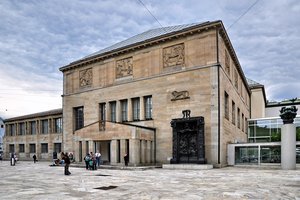
Kunsthaus Zürich, ZurychKunsthaus Zürich Zurych 3 The Milk Soup at Kappel, Civil marriage, Two Girls on the Stove Bench
Kunst Museum Winterthur | Reinhart am Stadtgarten, WinterthurKunst Museum Winterthur | Reinhart am Stadtgarten Winterthur 3 The little knitters, The artist's daughter Louise, Creche
Musée d'Art et d'Histoire, NeuchâtelMusée d'Art et d'Histoire Neuchâtel 2 Sunday afternoon, The Bourbakis
Kunstmuseum Bern, BernoKunstmuseum Bern Berno 2 The Poor Man's Soup, Still-Life with Coffee, Milk and Potatoes
Palais des Beaux-Arts de Lille, LillePalais des Beaux-Arts de Lille Lille 1 In the Woods
Musée cantonal des Beaux-Arts, LozannaMusée cantonal des Beaux-Arts Lozanna 1 Queen Bertha and the Spinners
Kunstmuseum Basel, BazyleaKunstmuseum Basel Bazylea 1 Children at Breakfast

Albert Anker decade by decade: the original that defines each

Dzieła według dekad

Pick a decade to see the original that defines it.

Collectors' questions about Albert Anker's paintings

Which work is Albert Anker most famous for?Reveal the answer

Writing lessons (also known as Schreibunterricht) (1865). The Prodigal Son (1858) and Sunday afternoon (1862) come next.

What age was Albert Anker when Writing lessons (also known as Schreibunterricht) was made?Reveal the answer

34 years old: Writing lessons (also known as Schreibunterricht) dates from 1865, and Albert Anker was born in 1831.

What are the ten most famous Albert Anker paintings?Reveal the answer

Writing lessons (also known as Schreibunterricht), The Prodigal Son, Sunday afternoon, The Bourbakis, In the Woods, The Wine Festival, Betende im Beinhaus von Stans, Baptism, Boy at table II i Girl, drinking coffee. The ranking above gives each one's year and museum.

How many paintings did Albert Anker leave?Reveal the answer

Our catalog holds 83 works by Albert Anker, dated from 1858 to 1910.

In which museums do Albert Anker's masterpieces hang?Reveal the answer

Mostly in Kunsthaus Zürich (Zurych), Kunst Museum Winterthur | Reinhart am Stadtgarten (Winterthur) i Musée d'Art et d'Histoire (Neuchâtel). The museum table above lists them all.

In which years did Albert Anker paint the most famous works?Reveal the answer

In 1890s: 16 of the 83 works on this page were made then, The Genius of Death among them.

What are the first and the last famous originals of Albert Anker?Reveal the answer

On this page, the earliest is The Prodigal Son (1858) and the latest Boy with Slate Tablet (1910).

Which subjects did Albert Anker choose most often?Reveal the answer

Rural life (3), Swiss art (3) i Portraits (3), across the 83 works on this page.

To which art movement does Albert Anker belong?Reveal the answer

Realism i Contemporary realism, judging by the originals on this page.

Which Albert Anker works hang at the Kunsthaus Zürich?Reveal the answer

The Milk Soup at Kappel, Civil marriage i Two Girls on the Stove Bench: the Kunsthaus Zürich, Zurych holds 3 of the works on this page.

Can I commission a reproduction of a Albert Anker painting?Reveal the answer

Yes, as a reproduction: the original stays in its museum, but any painting on this page can be painted by hand for you, made to order one at a time, from the painting's own page.

Albert Anker: life and work

Wczesne Lata i Początki Artystyczne

Albert Samuel Anker, nazwisko nierozerwalnie związane z idyllicznymi szwajcarskimi krajobrazami i sercemińskimi przedstawieniami życia wiejskiego, urodził się 1 kwietnia 1831 roku w małym miasteczku Ens w Szwajcarii. Jego ojciec, Samuel Anker, był szanowanym weterynarzem, który pełnił również funkcje polityczne jako członek zgromadzenia kantonu Berno. To połączenie praktycznego podejścia naukowego i zaangażowania obywatelskiego subtelnie wpłynęło na losy młodego Alberta. Rodzina przeniosła się do Neuchâtel w 1836 roku, co dało jego rozwijającym się wrażliwościom nowy pejzaż. To tam Anker po raz pierwszy wykazał talent artystyczny, otrzymując wstępne wskazówki od Frédérica-Wilhelma Moritza, rozpoczynając pasję, która zdefiniuje całe jego życie zawodowe. Kontynuował formalną edukację obok Auguste Bachelina pod kierunkiem Louisa Wallinger’a w latach 1845–1848, zdobywając solidne podstawy w rysunku i obserwacji. Ambicje Ankera nie ograniczały się jednak tylko do sztuki; po ukończeniu Matury w 1851 roku podjął studia teologiczne na Uniwersytetach w Bernie i Halle w Niemczech. To podczas tych akademickich lat, otoczony bogatymi zbiorami sztuki, jego oddanie malarstwu się umocniło, a w 1854 roku uzyskał błogosławieństwo ojca, aby podjąć karierę artysty.

Wpływy Paryskie i Kształtowanie Się Wyrazistego Stylu

Decyzja o poświęceniu się sztuce doprowadziła Ankera do Paryża, epicentrum artystycznych innowacji w połowie XIX wieku. Zapisując się na prestiżową École nationale supérieure des Beaux-Arts, studiował pod kierunkiem Charlesa Gleyre’a. Ten okres okazał się przełomowy dla jego rozwoju, wystawiając go na współczesne francuskie trendy i umacniając umiejętności techniczne. Chłonąc wpływy realizmu – reakcji na romantyzm, która kładła nacisk na przedstawianie życia takim, jakim jest – Anker nie ograniczał się jedynie do naśladowania jego zasad. Wypracował charakterystyczny styl charakteryzujący się skrupulatnym detalem, subtelnym wyrazem emocjonalnym i niezachwianym skupieniem na codziennych scenach szwajcarskiego życia wiejskiego. Nie interesowały go wielkie narracje historyczne ani dramatyczne alegorie; jego płótno stało się oknem do cichej godności chłopskiego życia. Prace Ankera odzwierciedlają głęboką aprobatę dla prostoty i autentyczności, przedstawiając dzieci, rolników i wnętrza domowe z niezwykłą realizmem i czułością. Wpływ holenderskich mistrzów, takich jak Johannes Vermeer, jest wyczuwalny w jego dbałości o światło, kompozycję oraz intymne przedstawienie przestrzeni wewnętrznych – cecha nadająca malowidłom Ankera ponadczasowy spokój.

Motywy, Główne Dzieła i Artystyczna Spuścizna

Albert Anker zyskał uznanie za uchwycenie esencji XIX-wiecznego szwajcarskiego życia wiejskiego, co zapewniło mu przydomek „narodowego malarza” Szwajcarii. Jego płótna zamieszkane są przez sceny rezonujące poczuciem nostalgii i autentycznej sympatii do jego bohaterów. Jednym z jego najbardziej ukochanych dzieł jest "Mały Muzyk", urocze przedstawienie młodego chłopca pochłoniętego graniem na skrzypcach – świadectwo umiejętności Ankera w oddawaniu młodzieńczego niewinności i koncentracji. Podobnie, "Portret Młodej Dziewczyny" prezentuje jego talent w portretowaniu delikatnych rysów twarzy i przekazywaniu wewnętrznych emocji. „Żona Rolnika, Szyjąca” to przejmujące studium domowego spokoju, ukazujące piękno w codziennych czynnościach. Poza tymi kultowymi obrazami, poświęcenie Ankera dokumentacji szwajcarskiego dziedzictwa kulturowego jest widoczne w pracach takich jak „Unterwalden (tradycyjne stroje po Józefie Reinharcie)”, serii akwareli starannie zachowujących tradycyjny strój. Jego działalność artystyczna wykraczała poza malarstwo i obejmowała portrety, martwe natury i sceny rodzajowe odzwierciedlające wartości i estetykę jego czasów. Nawet jego studie węglem "Stary Rolnik przy Stole (22 kwietnia 1907)” demonstrują mistrzostwo linii i formy, przekazując bogactwo charakteru przy użyciu minimalnych środków. Powtarzające się motywy w twórczości Ankera – dzieciństwo, życie rodzinne, tradycje wiejskie i piękno szwajcarskiego krajobrazu – są splecione ze sobą, tworząc spójną wizję harmonijnego świata.

Uznanie i Trwałe Znaczenie

Albert Samuel Anker cieszył się przez całe życie znacznym uznaniem, wystawiając swoje prace na licznych krajowych i międzynarodowych wystawach oraz zdobywając uznanie krytyków. Został mianowany kawalerem Legii Honorowej w 1878 roku, co umocniło jego reputację weuropejskim świecie sztuki. Jego obrazy odegrały kluczową rolę w kształtowaniu wizerunku XIX-wiecznej Szwajcarii, oferując zarówno romantyzowany, jak i realistyczny obraz życia wiejskiego, który głęboko rezonował z odbiorcami. Wkład Ankera w szwajcarski realizm był znaczący, wpływając na kolejne pokolenia artystów, którzy dążyli do przedstawienia własnych tożsamości narodowych i krajobrazów kulturowych. Pełnił funkcję członka Szwajcarskiej Federalnej Komisji ds. Sztuki w latach 1889–1893 oraz ponownie w latach 1895–1898, co dodatkowo świadczyło o jego zaangażowaniu we wspieranie rozwoju artystycznego w swoim kraju. W 1900 roku otrzymał doktorat honoris causa Uniwersytetu w Bernie. Pomimo że udar ograniczył jego zdolność do malowania w późniejszych latach, jego spuścizna pozostała bezpieczna. Albert Samuel Anker zmarł 16 lipca 1910 roku w Ens w Szwajcarii, pozostawiając po sobie dorobek, który nadal jest podziwiany za umiejętności techniczne, głębię emocjonalną i trwałe znaczenie historyczne – świadectwo potęgi sztuki w uchwyceniu ducha narodu i piękna codziennego życia.

Wszystkie 83 dzieła artysty Albert Anker →