Portret Théophile Steinlen

58 najsłynniejszych obrazów artysty Théophile Steinlen, każdy niepowtarzalny

Aktualizacja: Listopad 2026 · ranking według naszego wskaźnika popularności (liczba wyszukiwań, wizyt i zamówień dla każdego dzieła) · 58 dzieł Théophile Steinlen w naszym katalogu

W skrócie

Tournee Du Chat Noir to obraz autorstwa Théophile Steinlen, który przyciąga najwięcej spojrzeń. Następnie wzrok kieruje się na Chat sur un fauteuil i Le baiser. Spośród 58 dzieł Théophile Steinlen w naszym katalogu, tych 58 jest najbardziej znanych – każde z nich to unikatowy oryginał, przedstawiony wraz z rokiem powstania, muzeum oraz powodem, dla którego przetrwało próbę czasu.

1859 – 1923, Lozanna Art nouveau Najwięcej dzieł: Musée Alphonse-georges Poulain

10 najlepszych obrazów autorstwa Théophile Steinlen według oka galerii

1
Tournee Du Chat Noir autorstwa Théophile Steinlen

Tournee Du Chat Noir

A Glimpse into Montmartre's Soul: "Tournee Du Chat Noir" by Steinlen Theophile Alexandre Steinlen’s “Tournee Du Chat Noir” is more than just a striking image; it's a vibrant window into the bohemian heart of late 19th-century Paris. This captivating work, rendered in a distinctive Art Nouveau style, depicts a watchful black cat perched atop a bold red background. The cat’s wide, alert eyes draw the viewer immediately into its gaze,…

2
Chat sur un fauteuil autorstwa Théophile Steinlen

Chat sur un fauteuil

Oil On Canvas

A single cat rests upon an armchair, its body a soft curve of repose. The scene is small, intimate, and hushed. It captures a fleeting second of domestic stillness, where the weight of the animal meets the structure of the chair. The light is diffused, filtering into the room without the violence of harsh shadows. It settles upon the fur and the fabric, creating a sense of warmth and solitude.…

3
Le baiser autorstwa Théophile Steinlen

Le baiser

Oil On Canvas

A tender embrace defines this composition, centering two figures caught in a private moment of closeness. The scene is vertically oriented, drawing the eye upward along the contours of the embracing couple. Set against a blurred, indistinct background of foliage and soft light, the figures emerge from a darker, enclosed space. This shallow perspective creates a sense of seclusion, isolating the pair from the surrounding environment.

4
Zwei Katzen autorstwa Théophile Steinlen

Zwei Katzen

Print

Two cats share a private moment, suspended in a warm, brown void that feels both intimate and infinite. One cat sits low to the ground, its body settled in a posture of stillness, while the other stands above, creating a subtle vertical tension between them. They are locked in a gaze, a silent exchange of glances that suggests a conversation known only to them. The simplicity of the scene pulls…

5
July 14 (1889) autorstwa Théophile Steinlen

July 14

1889 · Oil · Petit Palais, Paryż

July 14 is a large-scale oil painting from 1889 that captures a vibrant and bustling night scene, depicting a crowded, celebratory gathering such as a street festival or parade. The composition is dense and panoramic, utilizing a wide horizontal format to portray a massive, moving crowd. The scene is characterized by a dark, moody color palette of deep blues, blacks, and browns, which is punctuated by bright highlights of white,…

6
La Feuille, no. 14 (1898) autorstwa Théophile Steinlen

La Feuille, no. 14

1898 · Woodcut

This black and white woodcut print from 1898 presents a crowded, somber composition centered on a funeral procession. The image functions as a journalistic illustration, characterized by a flattened perspective and bold, graphic lines. At the heart of the scene, a group of figures gathers around a body being carried through a dense crowd. The typography at the top of the frame reads "Rochefort est mort!", indicating the subject matter…

8
The Poor People (1903) autorstwa Théophile Steinlen

The Poor People

1903 · Oil On Canvas · Musée Victor Hugo, Paryż

The room is thick with a heavy, hushed stillness. A man and a woman lean inward, their bodies forming a protective arc over a bed where two small children sleep. The air feels weighted by the dimness of the chamber, yet a soft, directional light spills across the scene, catching the stark white of the linens and the gentle curves of the children's faces. This light acts as a silent…

9
The Laundresses (1899) autorstwa Théophile Steinlen

The Laundresses

1899 · Oil On Canvas · National Gallery of Art, Waszyngton

Night descends upon a European city, casting long shadows across cobblestone streets. Under the artificial glow of gas lamps, a group of women moves through the darkness, their bodies bent under the weight of heavy loads. The scene captures a moment of quiet resignation, where the grit of the urban environment meets the repetitive nature of manual toil. There is a palpable sense of hardship in their postures, a physical…

Słynne obrazy artysty Théophile Steinlen, od 11 do 58

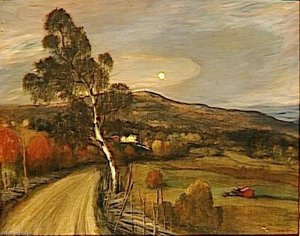
11Tour of Rodolphe Salis' Chat Noir (1896) autorstwa Théophile SteinlenTour of Rodolphe Salis' Chat Noir1896 · Zimmerli Art Museum at Rutgers University 12La Feuille, no. 6 (1898) autorstwa Théophile SteinlenLa Feuille, no. 61898 13La Feuille, no. 7 (1898) autorstwa Théophile SteinlenLa Feuille, no. 71898 14Dans la rue, (Gigolots et Gigolettes) (1895) autorstwa Théophile SteinlenDans la rue, (Gigolots et Gigolettes)1895 15Paris la Niut (1903) autorstwa Théophile SteinlenParis la Niut1903 16The elements autorstwa Théophile SteinlenThe elementsMusée des Arts Décoratifs 17The application of the decoration autorstwa Théophile SteinlenThe application of the decorationMusée des Arts Décoratifs 18Night party autorstwa Théophile SteinlenNight partyMusée des Arts Décoratifs 19Woman in white blouse autorstwa Théophile SteinlenWoman in white blouseMusée Toulouse-Lautrec 20Allégorie du Grand Morin autorstwa Théophile SteinlenAllégorie du Grand Morin 21L'enfant à la poupée autorstwa Théophile SteinlenL'enfant à la poupée 22Femme portant un enfant dans ses bras autorstwa Théophile SteinlenFemme portant un enfant dans ses bras 23Poilu autorstwa Théophile SteinlenPoilu 24Soldat convalescent assis autorstwa Théophile SteinlenSoldat convalescent assis 25Maisons dans un village autorstwa Théophile SteinlenMaisons dans un village 26Colette sur un fond de jardin autorstwa Théophile SteinlenColette sur un fond de jardin 27Les trieuses de charbon autorstwa Théophile SteinlenLes trieuses de charbon 28Grand nu féminin sur un lit autorstwa Théophile SteinlenGrand nu féminin sur un lit 29Profil de jeune fille autorstwa Théophile SteinlenProfil de jeune fille 30Les Permissionnaires autorstwa Théophile SteinlenLes PermissionnairesMusée Alphonse-georges Poulain 31Petite étude de nu assis sur fond sombre autorstwa Théophile SteinlenPetite étude de nu assis sur fond sombre 32PORTRAIT DE JEUNE FILLE DE FACE autorstwa Théophile SteinlenPORTRAIT DE JEUNE FILLE DE FACE 33Jehan Rictus autorstwa Théophile SteinlenJehan Rictus 34Le coup de vent autorstwa Théophile SteinlenLe coup de vent 35La pierreuse autorstwa Théophile SteinlenLa pierreuse 36Vision de Paris autorstwa Théophile SteinlenVision de Paris 37Petit nu sur un lit autorstwa Théophile SteinlenPetit nu sur un lit 38Portrait d'un peintre autorstwa Théophile SteinlenPortrait d'un peintre 39Femme assise dans canapé autorstwa Théophile SteinlenFemme assise dans canapé 40Ouvriers du bâtiment autorstwa Théophile SteinlenOuvriers du bâtiment 41World War I autorstwa Théophile SteinlenWorld War I 42Lion en cage autorstwa Théophile SteinlenLion en cageMusée Alphonse-georges Poulain 43Journée Serbe autorstwa Théophile SteinlenJournée Serbe 44Dans la rue autorstwa Théophile SteinlenDans la rue 45Cocorico autorstwa Théophile SteinlenCocorico 46Musée D'orsay autorstwa Théophile SteinlenMusée D'orsayMusée d'Orsay 47Boulevard De La Chapelle autorstwa Théophile SteinlenBoulevard De La Chapelle 48Zeitgenössisches Gemälde autorstwa Théophile SteinlenZeitgenössisches Gemälde 49Il n’y est pas! Sûr c’est un lapin autorstwa Théophile SteinlenIl n’y est pas! Sûr c’est un lapin 50Vue sur les toits autorstwa Théophile SteinlenVue sur les toits 51Paysage d'usines autorstwa Théophile SteinlenPaysage d'usines 52Prochainement autorstwa Théophile SteinlenProchainement 53Deux lionnes marchant de profil gauche autorstwa Théophile SteinlenDeux lionnes marchant de profil gaucheMusée Alphonse-georges Poulain 54Vue de Belmont près de Lausanne, paysage automnal autorstwa Théophile SteinlenVue de Belmont près de Lausanne, paysage automnal 55Vue de Belmont près de Lausanne, paysage matinal autorstwa Théophile SteinlenVue de Belmont près de Lausanne, paysage matinal 56Deux chats mangeant du mou autorstwa Théophile SteinlenDeux chats mangeant du mouMusée Alphonse-georges Poulain 57Paysage urbain autorstwa Théophile SteinlenPaysage urbain 58Paysage de Norvège autorstwa Théophile SteinlenPaysage de Norvège

Tematy, które przyciągnęły wzrok Théophile Steinlen

Cztery motywy najczęściej powracające w tych oryginałach, z których każdy doczekał się swojego najdoskonalszego przykładu.

Muzea przechowujące oryginały Théophile Steinlen

8 muzeów, w których znajduje się najwięcej obrazów z tej strony.

Muzea Miasto Dzieła artysty Théophile Steinlen Obrazy z tej listy
Musée Alphonse-georges Poulain, VernonMusée Alphonse-georges Poulain Vernon 4 Les Permissionnaires, Lion en cage, Deux lionnes marchant de profil gauche
Musée des Arts Décoratifs, ParyżMusée des Arts Décoratifs Paryż 3 The elements, The application of the decoration, Night party
Petit Palais, ParyżPetit Palais Paryż 1 July 14
Musée Victor Hugo, ParyżMusée Victor Hugo Paryż 1 The Poor People
National Gallery of Art, WaszyngtonNational Gallery of Art Waszyngton 1 The Laundresses
Zimmerli Art Museum at Rutgers University, New BrunswickZimmerli Art Museum at Rutgers University New Brunswick 1 Tour of Rodolphe Salis' Chat Noir
Musée Toulouse-Lautrec, AlbiMusée Toulouse-Lautrec Albi 1 Woman in white blouse
Musée d'Orsay, ParyżMusée d'Orsay Paryż 1 Musée D'orsay

Théophile Steinlen na przestrzeni dekad: jeden unikatowy oryginał dla każdego

Dzieła według dekad

Wybierz dekadę, aby zobaczyć dzieło, które ją definiuje.

Obrazy artysty Théophile Steinlen: pytania do galerii

Jakie jest najsłynniejsze dzieło artysty Théophile Steinlen?Odkryj odpowiedź

Tournee Du Chat Noir. Następne są Chat sur un fauteuil oraz Le baiser.

Które dziesięć obrazów Théophile Steinlen jest najbardziej znanych?Odkryj odpowiedź

Tournee Du Chat Noir, Chat sur un fauteuil, Le baiser, Zwei Katzen, July 14, La Feuille, no. 14, Letter from a Striker (Lettre d'un Gréviste), The Poor People, The Laundresses i Portrait Drawing Of Suzanne Valadon. Powyższy ranking zawiera rok powstania oraz muzeum dla każdego z nich.

Ile znanych dzieł stworzył Théophile Steinlen?Odkryj odpowiedź

Nasz katalog zawiera 58 dzieł artysty Théophile Steinlen, datowanych od 1889 do 1903.

Gdzie można zobaczyć najsłynniejsze oryginały Théophile Steinlen?Odkryj odpowiedź

W większości znajdują się w Musée Alphonse-georges Poulain (Vernon), Musée des Arts Décoratifs (Paryż) i Petit Palais (Paryż). Powyższa tabela muzeów zawiera ich pełną listę.

W jakim okresie Théophile Steinlen stworzył/a swoje najsłynniejsze obrazy?Odkryj odpowiedź

W 1890s: 7 z 58 dzieł na tej stronie powstało w tym czasie, w tym La Feuille, no. 14.

Który z najsłynniejszych obrazów artysty Théophile Steinlen powstał najwcześniej, a który najpóźniej?Odkryj odpowiedź

Na tej stronie najwcześniejszy to July 14 (1889), a najpóźniejszy The Poor People (1903).

Jakie tematy preferował Théophile Steinlen?Odkryj odpowiedź

Melancholy (3), Cat (2) i Poster (2), w ramach 58 dzieł na tej stronie.

Jakich materiałów Théophile Steinlen używał najczęściej?Odkryj odpowiedź

Oil On Canvas, dla 4 z 58 dzieł na tej stronie.

Do jakiego nurtu należy twórczość Théophile Steinlen?Odkryj odpowiedź

Art nouveau, sądząc po oryginałach na tej stronie.

Jakie oryginały Théophile Steinlen można zobaczyć w Musée Alphonse-georges Poulain?Odkryj odpowiedź

Les Permissionnaires, Lion en cage i Deux lionnes marchant de profil gauche: Musée Alphonse-georges Poulain, Vernon posiada 4 dzieł widocznych na tej stronie.

Théophile Steinlen: portret artysty

Dusza Montmartre: Życie i dziedzictwo Théophile'a Steinlena

Théophile Alexandre Steinlen był kimś znacznie więcej niż tylko ilustratorem; był wizualnym poetą Belle Époque, człowiekiem, którego pędzel i litograficzny kamień potrafiły uchwycić samo tętno Paryża. Urodzony w 1859 roku w Lozannie, w Szwajcarii, przeszedł drogę od spokojnych krajobrazów swojej szwajcarskiej młodości do zadymionych, tętniących życiem kabaretów Montmartre, co stanowi kwintesencję opowieści o artystycznym przeznaczeniu. Jego wczesne lata naznaczone były zdyscyplinowanym podejściem do projektowania, szlifowanym podczas pracy w fabrykach tekstyliów w Mulhouse. Ten okres praktycznej nauki zawczasu zaszczepił w nim niezwykłą precyzję i oko do wzorów, które później stały się znakiem rozpoznawczym jego ikonicznych plakatów. Jednak wezwanie awangardy było nieodpartą siłą, która poprowadziła go do bohemy francuskiego epicentrum, gdzie ostatecznie wplótł się w samą tkankę kultury paryskiej.

Po przybyciu do Paryża Steinlen znalazł się w samym wirze twórczej energii. Zainspirowany legendarnymi kręgami artystycznymi skupionymi wokół Le Chat Noir, poruszał się wśród ówczesnych luminarzy, nawiązując głębokie relacje z postacydami takimi jak Adolphe Willette czy François Bocion. To właśnie w atmosferze radykalnych eksperymentów zaczął kształtować się jego styl. Posiadał on unikalną zdolność łączenia delikatnych, płynnych linii ruchu Art Nouveau z surowym, pełnym empatii realizmem. Podczas gdy wielu jego współczesnych skupiało się wyłącznie na tym, co eteryczne lub arystokratyczne, Steinlen skierował swój wzrok na ulice, odnajdując głębokie piękno w tym, co pomijane: w ulicznych artystach, klasie robotniczej i nocnych wędrowcach miasta.

Mistrzostwo linii i sztuka plakatu

Techniczna biegłość Steinlena najpełniej objawiła się w jego mistrzostwie grafiki warsztatowej i litografii. Rozumiał on, być może lepiej niż jakikolwiek inny artysta jego pokolenia, potęgę plakatu jako medium masowej komunikacji i wyrazu zbiorowych emocji. Jego prace dla legendarnych produkcji kabaretowych Aristide'a Bruanta przekształciły reklamę w sztukę wysoką, wykorzystując odważne sylwetki i uderzające palety barw, aby przyciągnąć uwagę każdego przechodnia na paryskich bulwarach. Dzieła te nie były jedynie ogłoszeniami; stanowiły okna do świata pełnego buntu, romansu i rytmicznej witalności.

Poza komercyjnym urokiem jego plakatów, twórczość Steinlena charakteryzuje się niezwykłą wszechstronnością tematyczną:

  • Elegancja natury: Jego wczesne pejzaże i studia florystyczne odzwierciedlały impresjonistyczną wrażliwość na światło oraz ulotne piękno świata przyrody.
  • Kocia muza: Zyskał światową sławę dzięki urocłym, często fantazyjnym ilustracjom kotów, wykorzystując płynną grację tych zwierząt do odzwiercielenia estetycznych krzywizn secesji.
  • Empatia społeczna: Jego szkice paryskiego ludu służyły jako przejmujący komentarz społeczny, chwytając godność i trud miejskiej biedoty z nieustępliwą, a zarazem czułą ręką.

Trwałe piętno w historii sztuki

Historyczne znaczenie Théophile'a Steinlena tkwi w jego zdolności do budowania mostów między sztuką wysoką a kulturą popularną. Podniósł on efemeryczną naturę ulicznych plakatów do rangi arcydzieł godnych muzeów, zapewniając, że duch Belle Époque przetrwa długo po tym, jak sama era przeminęła. Jego twórczość pozostaje kluczowym punktem odniesienia dla zrozumienia przejścia od romantyzmu XIX wieku do nowoczesnej wrażliwości graficznej XX wieku.

Nawet dzisiaj wpływ Steinlena jest wyczuwalny w sposobie, w jaki postrzegamy przenikanie się designu i emocji. Nauczył nas on, że sztuka nie należy wyłącznie do pozłacanych galerii, lecz żyje na ulicach, w cieniach kabaretu i w cichym spojrzeniu bezdomnego kota. Poprzez swoją niezwykle płodną twórczość pozostawił po sobie wizualne dziedzictwo, które nieustannie zachwyca, przypominając nam o czasach, gdy Paryż był niekwestionowanym centrum artystycznego wszechświata, a każda nakreślona linia mogła opowiedzieć historię ludzkiego porozumienia i miejskiej magii.