Portret Stefan Lochner

Obrazy: 36 najsłynniejszych dzieł artysty Stefan Lochner – spojrzenie galerii

Aktualizacja: Październik 2026 · ranking według naszego wskaźnika popularności (liczba wyszukiwań, wizyt i zamówień dla każdego dzieła) · 36 dzieł Stefan Lochner w naszym katalogu

W skrócie

Według opinii kuratorów galerii, najsłynniejszym obrazem Stefan Lochner jest Madonna of the Rose Bush (1440), którego oryginał znajduje się w Wallraf-Richartz-Museum w Kolonia. The Last Judgment (1435) i The Crucifixion (1440) dopełniają trio, które zna każde oko. Z 36 dzieł Stefan Lochner w naszym katalogu, galeria prezentuje poniżej 36 najsłynniejszych prac – każda z nich jest oryginałem z podaniem roku powstania, muzeum oraz cech wyróżniających ją na tle innych.

1410 – 1451, Meersburg International gothic Najwięcej dzieł: Städel Museum

10 najlepszych obrazów artysty Stefan Lochner w galerii

1
Madonna of the Rose Bush (1440) autorstwa Stefan Lochner

Madonna of the Rose Bush

1440 · Oil On Panel · Wallraf-Richartz-Museum, Kolonia

Stephan Lochner's Madonna of the Rose Bush, painted around 1440 in Cologne, Germany, isn’t merely a depiction of the Virgin Mary; it’s an immersive experience—a carefully constructed world brimming with symbolism and echoing the profound spirituality of its time. This panel painting transcends simple religious iconography, offering a glimpse into the artistic sensibilities and cultural values of late medieval Europe. Lochner, a prominent figure in Cologne's art scene, masterfully blended…

2
The Last Judgment (1435) autorstwa Stefan Lochner

The Last Judgment

1435 · Wallraf-Richartz-Museum, Kolonia

Stephan Lochner’s “The Last Judgment,” painted in 1435, isn't merely a depiction of biblical narrative; it’s a profound meditation on mortality, divine justice, and the eternal consequences of earthly actions. Emerging from the late Gothic period in Cologne, Germany, this monumental panel transcends its historical context to resonate with an enduring power—a testament to the artist’s skill and his ability to capture both the drama and the solemnity of humanity's…

3
The Crucifixion (1440) autorstwa Stefan Lochner

The Crucifixion

1440 · Oil On Canvas · Germanisches Nationalmuseum, Norymberga

To stand before this depiction of The Crucifixion by Stephan Lochner is to be enveloped in an atmosphere of profound, almost unbearable solemnity. It is not merely a historical recounting; it is a visceral confrontation with sacrifice. At the heart of the composition, Christ hangs upon the cross, his outstretched arms forming a powerful, tragic geometry against the backdrop of human grief and divine mystery. The scene pulses with narrative…

4
Mary Magdalen (1400) autorstwa Stefan Lochner

Mary Magdalen

1400 · Tempera On Panel · Museum Boijmans Van Beuningen, Rotterdam

This painting, titled Mary Magdalen, is a religious work by the German master Stefan Lochner. It offers a quiet study of the saint, rendered with the delicate precision characteristic of the late International Gothic period. The subject is presented in a moment of contemplative grace, her presence defined by a sense of stillness and devotion.

5
The Virgin Crowned by Angels (1450) autorstwa Stefan Lochner

The Virgin Crowned by Angels

1450 · Tempera On Panel · Cleveland Museum of Art, Cleveland

In this sacred scene, The Virgin Crowned by Angels emerges from the quietude of the mid-fifteenth century. Painted by Stefan Lochner about 1450, the work presents a moment of profound religious devotion. The Virgin Mary stands as the central figure, cradling the Christ Child in a gesture of maternal grace. This depiction of the Madonna and Child invites the viewer into a space of quiet contemplation and spiritual presence.

6
Mary with the Christ-child next to a plant trough (1440) autorstwa Stefan Lochner

Mary with the Christ-child next to a plant trough

1440 · Oil · Bawarskie Państwowe Zbiory Malarstwa, Monachium

The painting titled Mary with the Christ-child next to a plant trough is a work by Stefan Lochner. Created about 1440, this devotional piece captures a quiet moment of divinity. The central figures of the Madonna and Child are framed by a lush, green garden setting. Small flowers emerge from the earth near a plant trough, grounding the celestial scene in a tangible, botanical reality.

7
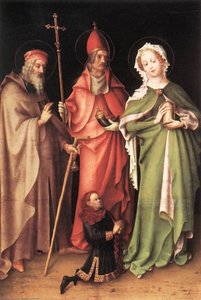
Sts. Catherine, Hubert and Quirinus (Last-Judgement-Altar) (1445) autorstwa Stefan Lochner

Sts. Catherine, Hubert and Quirinus (Last-Judgement-Altar)

1445 · Oil On Panel · Bawarskie Państwowe Zbiory Malarstwa, Monachium

The presence of Sts. Catherine, Hubert and Quirinus (Last-Judgement-Altar) commands the space, a solemn Late Gothic altarpiece panel that emerges from the shadows of history. Painted by Stefan Lochner, this work carries the weight of a sacred vision. It dates to 1445, capturing a moment of profound spiritual stillness. The figures exist within a realm of deep color and intense devotion, frozen in a state of eternal grace.

8
John the Evangelist (1440) autorstwa Stefan Lochner

John the Evangelist

1440 · Tempera On Panel · Museum Boijmans Van Beuningen, Rotterdam

This painting depicts John the Evangelist, a work executed by the artist Stefan Lochner. The subject is rendered in a profile or three-quarter view, oriented toward the right side of the panel. He is shown holding a chalice within his hands. The figure is positioned against a solid gold background that occupies the majority of the space behind the subject.

9
Saints Ambrose, Cecilia and Augustine (1447) autorstwa Stefan Lochner

Saints Ambrose, Cecilia and Augustine

1447 · Tempera On Panel · Wallraf-Richartz-Museum, Kolonia

In this late Gothic religious altarpiece panel, the figures of Saints Ambrose, Cecilia and Augustine emerge from a shallow architectural space. Painted by Stefan Lochner, the work captures a moment of divine presence through its formal and symmetrical arrangement. The three saints dominate the frame, their presence felt through the heavy, sculptural folds of their drapery and the steady gaze of their faces. A smaller donor figure kneels in the…

Obrazy artysty Stefan Lochner, uszeregowane od 11 do 36 miejsca

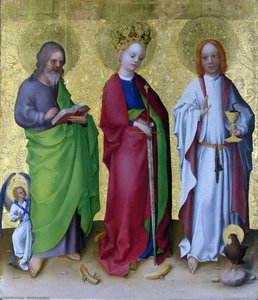
11Sts Anthony the Hermit, Cornelius and Mary Magdalen with a Donor (1445) autorstwa Stefan LochnerSts Anthony the Hermit, Cornelius and Mary Magdalen with a Donor1445 · Alte Pinakothek 12Martyrdom of the Twelve Apostles (Altarpiece for the Church of the Holy Apostles in Cologne, left wing) (1435) autorstwa Stefan LochnerMartyrdom of the Twelve Apostles (Altarpiece for the Church of the Holy Apostles in Cologne, left wing)1435 · Städel Museum 13Martyrdom of the Apostles: Martyrdom of Saint Thomas autorstwa Stefan LochnerMartyrdom of the Apostles: Martyrdom of Saint ThomasStädel Museum 14Martyrdom of the Apostles: Martyrdom of Saint Philip autorstwa Stefan LochnerMartyrdom of the Apostles: Martyrdom of Saint PhilipStädel Museum 15Martyrdom of the Apostles: Martyrdom of Saint Peter autorstwa Stefan LochnerMartyrdom of the Apostles: Martyrdom of Saint PeterStädel Museum 16Martyrdom of the Apostles: Martyrdom of St Paul autorstwa Stefan LochnerMartyrdom of the Apostles: Martyrdom of St PaulStädel Museum 17Martyrdom of the Apostles: Martyrdom of Saint Matthias autorstwa Stefan LochnerMartyrdom of the Apostles: Martyrdom of Saint MatthiasStädel Museum 18Martyrdom of the Apostles: Martyrdom of Saint Matthew autorstwa Stefan LochnerMartyrdom of the Apostles: Martyrdom of Saint MatthewStädel Museum 19Martyrdom of the Apostles: Martyrdom of Saint James the Younger autorstwa Stefan LochnerMartyrdom of the Apostles: Martyrdom of Saint James the YoungerStädel Museum 20Martyrdom of the Apostles: Martyrdom of St James the Elder autorstwa Stefan LochnerMartyrdom of the Apostles: Martyrdom of St James the ElderStädel Museum 21Martyrdom of the Apostles: Martyrdom of Saint Bartholomew autorstwa Stefan LochnerMartyrdom of the Apostles: Martyrdom of Saint BartholomewStädel Museum 22Martyrdom of the Apostles: Martyrdom of Saint Andrew autorstwa Stefan LochnerMartyrdom of the Apostles: Martyrdom of Saint AndrewStädel Museum 23Martyrdom of the Apostles: Martyrdom of Saints Simon and Judas autorstwa Stefan LochnerMartyrdom of the Apostles: Martyrdom of Saints Simon and JudasStädel Museum 24Presentation of Christ in the Temple (detail) autorstwa Stefan LochnerPresentation of Christ in the Temple (detail) 25Presentation of Christ in the Temple (detail) autorstwa Stefan LochnerPresentation of Christ in the Temple (detail) 26Hl. Ursula Mit Gefährten (The Dombild Altarpiece, left wing) (1445) autorstwa Stefan LochnerHl. Ursula Mit Gefährten (The Dombild Altarpiece, left wing)1445 27Adoration of the Magi (The Dombild Altarpiece, central part) (1445) autorstwa Stefan LochnerAdoration of the Magi (The Dombild Altarpiece, central part)1445 28Altarpiece of the Patron Saints of Cologne autorstwa Stefan LochnerAltarpiece of the Patron Saints of Cologne 29Triptych with the Virgin and Child in an Enclosed garden autorstwa Stefan LochnerTriptych with the Virgin and Child in an Enclosed garden 30Adoration of the Magi autorstwa Stefan LochnerAdoration of the Magi 31Presentation of Christ in the Temple autorstwa Stefan LochnerPresentation of Christ in the Temple 32Three saints autorstwa Stefan LochnerThree saintsNational Gallery 33St. Jerome in His Study autorstwa Stefan LochnerSt. Jerome in His Study 34Annunciation (1440) autorstwa Stefan LochnerAnnunciation1440 35Presentation of Christ in the Temple (1445) autorstwa Stefan LochnerPresentation of Christ in the Temple1445 · Fundacja Calouste Gulbenkian 36Adoration of the Child Jesus (1445) autorstwa Stefan LochnerAdoration of the Child Jesus1445 · Alte Pinakothek

Słynne obrazy Stefan Lochner epoka po epoce

Tematy, które przyciągnęły wzrok Stefan Lochner

Cztery motywy najczęściej powracające w tych oryginałach, z których każdy doczekał się swojego najdoskonalszego przykładu.

Muzea przechowujące oryginały Stefan Lochner

8 muzeów, w których znajduje się najwięcej obrazów z tej strony.

Muzea Miasto Dzieła artysty Stefan Lochner Obrazy z tej listy
Städel Museum, Frankfurt nad MenemStädel Museum Frankfurt nad Menem 12 Martyrdom of the Twelve Apostles (Altarpiece for the Church of the Holy Apostles in Cologne, left wing), Martyrdom of the Apostles: Martyrdom of Saint Thomas, Martyrdom of the Apostles: Martyrdom of Saint Philip
Wallraf-Richartz-Museum, KoloniaWallraf-Richartz-Museum Kolonia 4 Madonna of the Rose Bush, The Last Judgment, Saints Ambrose, Cecilia and Augustine
Museum Boijmans Van Beuningen, RotterdamMuseum Boijmans Van Beuningen Rotterdam 2 Mary Magdalen, John the Evangelist
Bawarskie Państwowe Zbiory Malarstwa, MonachiumBawarskie Państwowe Zbiory Malarstwa Monachium 2 Mary with the Christ-child next to a plant trough, Sts. Catherine, Hubert and Quirinus (Last-Judgement-Altar)
Alte Pinakothek, MonachiumAlte Pinakothek Monachium 2 Sts Anthony the Hermit, Cornelius and Mary Magdalen with a Donor, Adoration of the Child Jesus
Germanisches Nationalmuseum, NorymbergaGermanisches Nationalmuseum Norymberga 1 The Crucifixion
Cleveland Museum of Art, ClevelandCleveland Museum of Art Cleveland 1 The Virgin Crowned by Angels
National Gallery, LondynNational Gallery Londyn 1 Three saints

Stefan Lochner, jedno kultowe dzieło na dekadę

Dzieła według dekad

Wybierz dekadę, aby zobaczyć dzieło, które ją definiuje.

Obrazy artysty Stefan Lochner: odpowiedzi galerii

Który obraz Stefan Lochner jest najsłynniejszy ze wszystkich?Odkryj odpowiedź

Madonna of the Rose Bush (1440), Wallraf-Richartz-Museum, Kolonia. Następne są The Last Judgment (1435) oraz The Crucifixion (1440).

Ile lat miał Stefan Lochner, gdy ukończył Madonna of the Rose Bush?Odkryj odpowiedź

30 lat: Madonna of the Rose Bush pochodzi z 1440, a Stefan Lochner urodził(a) się w 1410.

Które to 10 najlepszych obrazów Stefan Lochner?Odkryj odpowiedź

Madonna of the Rose Bush, The Last Judgment, The Crucifixion, Mary Magdalen, The Virgin Crowned by Angels, Mary with the Christ-child next to a plant trough, Sts. Catherine, Hubert and Quirinus (Last-Judgement-Altar), John the Evangelist, Saints Ambrose, Cecilia and Augustine i Sts Mark, Barbara and Luke. Powyższy ranking zawiera rok powstania oraz muzeum dla każdego z nich.

Ile dzieł stworzył/a Stefan Lochner?Odkryj odpowiedź

Nasz katalog zawiera 36 dzieł artysty Stefan Lochner, datowanych od 1435 do 1450.

Gdzie można znaleźć najsłynniejsze oryginały autorstwa Stefan Lochner?Odkryj odpowiedź

W większości znajdują się w Städel Museum (Frankfurt nad Menem), Wallraf-Richartz-Museum (Kolonia) i Museum Boijmans Van Beuningen (Rotterdam). Powyższa tabela muzeów zawiera ich pełną listę.

Kiedy Stefan Lochner stworzył swoje najsłynniejsze obrazy?Odkryj odpowiedź

W 1440s: 13 z 36 dzieł na tej stronie powstało w tym czasie, w tym Madonna of the Rose Bush.

Które z najsłynniejszych dzieł Stefan Lochner należą do jego najwcześniejszych i najpóźniejszych prac?Odkryj odpowiedź

Na tej stronie najwcześniejszy to The Last Judgment (1435), a najpóźniejszy The Virgin Crowned by Angels (1450).

Do jakich tematów Stefan Lochner powracał najczęściej?Odkryj odpowiedź

Saints (4), Medieval art (3) i Religious art (3), w ramach 36 dzieł na tej stronie.

W jakiej technice najczęściej tworzył Stefan Lochner?Odkryj odpowiedź

Tempera On Panel, dla 5 z 36 dzieł na tej stronie.

Z jakim nurtem związany jest Stefan Lochner?Odkryj odpowiedź

International gothic i Late gothic, sądząc po oryginałach na tej stronie.

Które oryginały artysty Stefan Lochner znajdują się w zbiorach Städel Museum?Odkryj odpowiedź

Martyrdom of the Twelve Apostles (Altarpiece for the Church of the Holy Apostles in Cologne, left wing), Martyrdom of the Apostles: Martyrdom of Saint Thomas i Martyrdom of the Apostles: Martyrdom of Saint Philip: Städel Museum, Frankfurt nad Menem posiada 12 dzieł widocznych na tej stronie.

Stefan Lochner: artysta

Stephan Lochner: Pomost między gotyckim przepychem a innowacją Północnego Renesansu

Urodzony około 1410 roku w malowniczym niemieckim Meersburg – miejscu przesiąkniętym legendami, położonym nad brzegiem zachwycającego Jeziora Bodenckiego – Stephan Lochner odszedł tragicznie w Kolonii około 1451 roku. Mimo krótkiej kariery, ten enigmatyczny malarz pozostawił niezatarty ślad w świecie sztuki, po mistrzowsku łącząc bogate tradycje gotyku międzynarodowego z rodzącym się realizmem i nowatorską ikonografią charakterystyczną dla wczesnego Północnego Renesansu. Dziedzictwo Lochnera tkwi nie tylko w pięknie jego poszczególłych dzieł, ale także w jego wpływie na kolejne pokolenia artystów, zwłaszcza na Rogiera van der Weydena i Hansa Memlinga – malarzy, którzy przejęli elementy jego wyjątkowego stylu.

O wczesnych latach życia Lochnera wiemy niewiele. Konsensus historyków sztuki sugeruje, że część swoich lat formacyjnych spędził na praktykach w Niderlandach, co głęboko ukształtowało jego wrażliwość artystyczną. Kontakt z żywymi kolorami, misternym detalem i ewoluującą ikonografią dominującą w malarstwie flamandzkim bez wątpienia wpłynął na jego podejście do kompozycji, palety barw oraz przedstawiania postaci religijnych. Uważa się, że to międzynarodowe doświadczenie było kluczowym czynnikiem w unikalnej syntezie stylów odnajdywanej w całym jego dorobku.

Mistrz koloru i tekstury: Styl artystyczny i wybitne dzieła

Obrazy Lochnera można rozpoznać natychmiast dzięki uderzającemu użyciu koloru, dynamicznym, płynnym liniom oraz niezwykle wirtuerskiej fakturze powierzchni. Artysta unikał przygaszonych tonów często kojarzonych z wcześniejszym gotykiem, wybierając jaśniejszą, bardziej świetlistą paletę – cechę, która silnie sytuuje go w kręgu rodzącej się estetyki renesansowej. Jego prace często prezentują bogate czerwienie, błękity i złota, nakładane z mistrzowskim zrozumieniem światła i cienia, co pozwala stworzyć wrażenie głębi oraz dramatyzmu.

Wśród jego najsławniejszych dzieł znajduje się „Madonna przy krzewie róży” (51 x 40 cm, Muzeum Wallraf-Richartz w Kolonii), arcydzieło będące ucieleśnieniem technicznej biegłości i ekspresywnej siły Lochnera. Obraz ten ukazuje jego zdolność do nasycania tematów religijnych niemal namacalnym poczuciem emocji i duchowości. „Święty Hieronim w swojej pracowni” (30 x 39 cm, olej na desce) dodatkowo dowodzi jego umiejętności chwytania istoty podmiotu – cichej kontemplacji oddanej z niezwykłą szczegółowością i psychologiczną głębią. Z kolei „Trzej święci”, złożona kompozycja pełna wdzięku i spokoju, podkreśla kunszt Lochnera w przedstawianiu wielu postaci w jednej ramie, tworząc dynamiczną i angażującą narrację wizualną.

Innym istotnym dziełem jest „Ołtarz z katedry w Kolonii” (znany jako Kölner Dombild), pierwotnie zamówiony dla katedry w Kolonii. Ten monumentalny tryptyk, znajdujący się obecnie w kaplicy Marienkapelle w tej katedrze, pozostaje jednym z najważniejszych przykładów jego twórczości i świadectwem artystycznej wizji. Zawiłe detale ołtarza, żywe barwy i symboliczna obrazowość nieustannie fascynują współczesnych widzów.

Wpływ i dziedzictwo: Pomost między stylami

Wpływ Stephana Lochnera na kolejne pokolenia północnoeuropejskich artystów był ogromny. Jego charakterystyczny styl – cechujący się płynnymi liniami, świetlistymi kolorami i skupieniem na ekspresji emocjonalnej – głęboko rezonował z jego współczesnymi, inspirując ich do włączania elementów jego podejścia do własnych prac. Uważa się, że Rogier van der Weyden został szczególnie mocno zainspirowany sposobem użycia koloru i kompozycji przez Lochnera, podczas gdy Hans Memling podobnie przejął aspekty jego stylu w swoich panelach wotywnych.

Ołtarz Dombild stanowi wyjątkowo przekonujący przykład oddziaływania Lochnera. Jego nowatorskie podejście do przedstawiania narracji religijnych – łączące gotycką elegancję z rodzącym się renesansowym realizmem – utorowało drogę przyszłym rozwojom w malarstwie północnoeuropejskim. Zawiłe detale i symboliczna warstwa ołtarza służyły jako wzór dla niezliczonych artystów, umacniając pozycję Lochnera jako kluczowej postaci w procesie przejścia od późnego gotyku do wczesnego renesansu.

Kolekcje muzealne i nieustająca estymacja

Dzieła Lochnera są cenionymi skarbami w wielu prestiżowych muzeach na całym świecie. Muzeum Wallraf-Richartz w Kolonii posiada „Madonnę przy krzewie róży”, oferując zwiedzającym bezpośrednie spotkanie z tym ikonicznym obrazem. Muzeum Städel we Frankfurcie prezentuje „Panele Flémalle” (68 x 160 cm, dąb), ukazując mistrzostwo Lochnera w malarstwie tablicowym oraz jego zdolność do tworzenia złożonych kompozycji wypełnionych detalem i symbolizmem. Poza tymi kluczowymi instytucjami, fragmenty jego prac można odnaleźć w różnych kolekcjach, co sprawia, że jego artystyczne dziedzictwo jest nieustannie doceniane przez miłośników sztuki na całym świecie.

Dziś malarstwo Stephana Lochnera celebrowane jest za piękno, kunszt techniczny i głęboki rezonans emocjonalny. Jego zdolność do płynnego połączenia tradycji gotyku międzynarodowego z innowacjami wczesnego Północnego Renesansu ugruntowała jego miejsce jako artysty prawdziwie wyjątkowego – mistrza, który połączył dwie odrębne epoki artystyczne i pozostawił trwałe dziedzictwo w świecie sztuki.