Portret Stanisław Żukowski

83 najsłynniejszych obrazów artysty Stanisław Żukowski – wybór z galerii

Aktualizacja: Listopad 2026 · ranking według naszego wskaźnika popularności (liczba wyszukiwań, wizyt i zamówień dla każdego dzieła) · 83 dzieł Stanisław Żukowski w naszym katalogu

W skrócie

Z wszystkich oryginałów pozostawionych przez Stanisław Żukowski, najsłynniejszym jest The Last Asters (1912). Tuż za nimi znajdują się Old Library (1916) oraz Before the masquerade (1923). Nasz katalog zawiera 83 dzieł autorstwa Stanisław Żukowski; galeria zachowała 83 najbardziej podziwianych na świecie prac, z których każda została przedstawiona wraz z datą powstania, informacją o muzeum oraz jej historią.

1873 – 1944, Jendrychaŭcy Impressionism Najwięcej dzieł: Muzeum Narodowe w Warszawie

10 najlepszych obrazów artysty Stanisław Żukowski: wybór galerii

1
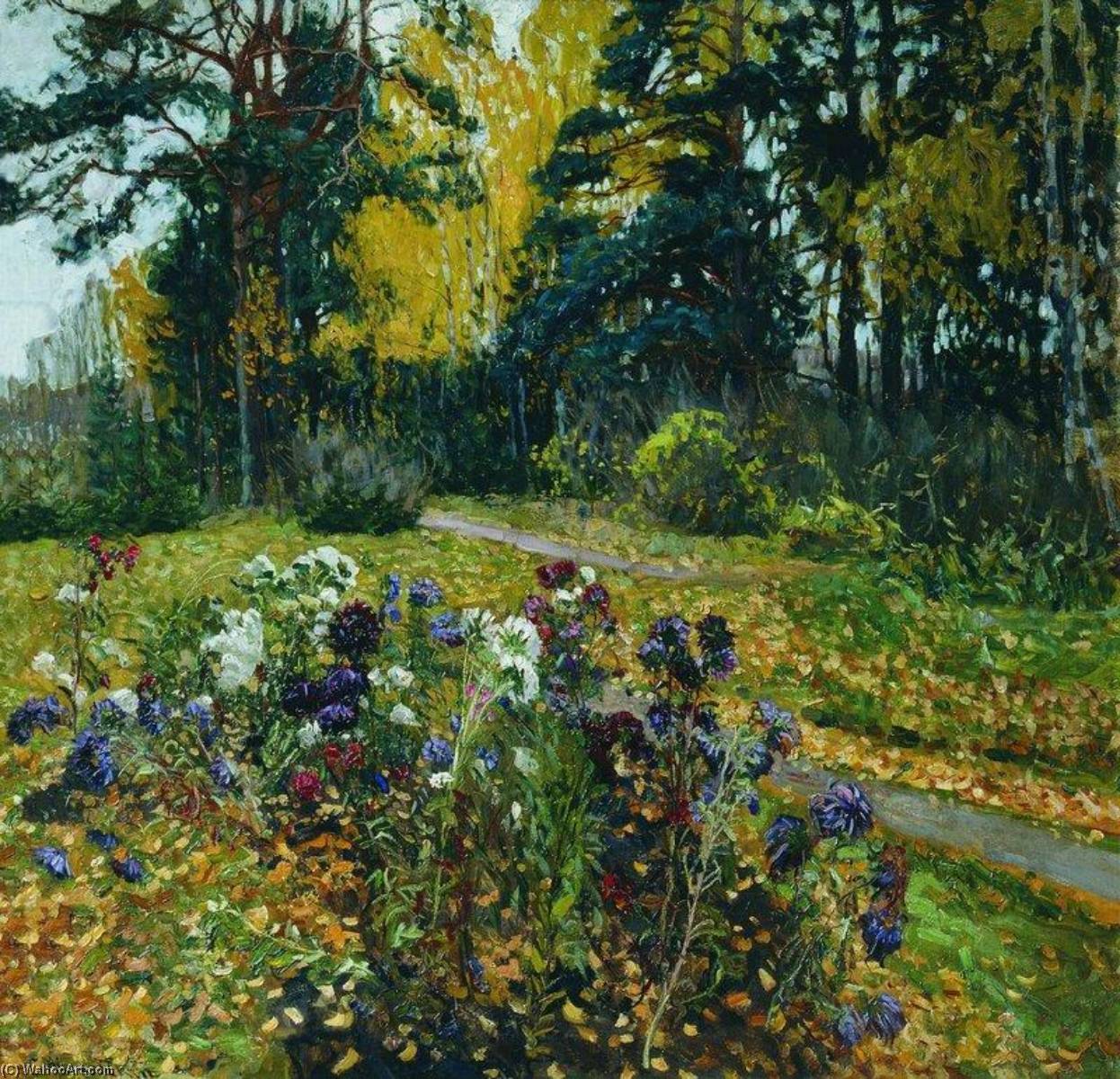
The Last Asters (1912) autorstwa Stanisław Żukowski

The Last Asters

1912 · Oil

The air feels heavy with the scent of damp earth and the cooling breath of autumn. In this corner of a garden, the season is making its final, colorful protest. A path winds through a landscape of deepening shadows and soft light, leading the eye toward a cluster of trees that stand as silent sentinels against the changing sky. Near the center, a solitary bench sits empty, waiting for a…

2
Old Library (1916) autorstwa Stanisław Żukowski

Old Library

1916 · Oil · Muzeum Narodowe w Krakowie, Kraków

In this 1916 oil painting, we find ourselves standing at the threshold of a private sanctuary. The scene captures a spacious, classical library where the air feels heavy with the scent of aged paper and polished wood. Sunlight streams through high windows, cutting through the stillness to cast sharp, geometric patches of brilliance across a reflective floor. This interplay of light and shadow creates a profound sense of depth, drawing…

3
Before the masquerade (1923) autorstwa Stanisław Żukowski

Before the masquerade

1923 · Oil On Canvas · Muzeum Narodowe w Warszawie, Warszawa

In Before the masquerade, Stanisław Żukowski presents a moment of preparation within an elegant, dimly lit interior. The composition centers on a woman in a red evening gown positioned before a tall, ornate red mirror. This arrangement directs the viewer's attention toward her reflection, creating a focal point that explores themes of vanity and anticipation. The scene is captured from a straight-on perspective, placing the observer directly within the quietude…

4
Landscape (1895) autorstwa Stanisław Żukowski

Landscape

1895 · Oil On Canvas · Muzeum Narodowe w Warszawie, Warszawa

There is a certain stillness in this 1895 landscape that suggests the world has paused for a moment of breath. The composition is structured through soft, horizontal bands, leading the eye from a meadow in bloom toward a dark, distant treeline, all beneath a vast and heavy sky. It is an impressionistic study of light and atmosphere, where the subject is less the geography itself and more the way the…

5
Landscape with a Road (1897) autorstwa Stanisław Żukowski

Landscape with a Road

1897 · Oil On Canvas

The painting presents a landscape defined by a dirt road that cuts through the terrain. This central path is flanked by trees on both sides, creating a corridor of organic forms. A secondary path runs parallel to the main road, offering a distinct route through the scenery. In the background, several buildings are situated among the trees, providing a sense of scale and human presence within the natural setting. Near…

6
Haystacks (study) (1897) autorstwa Stanisław Żukowski

Haystacks (study)

1897 · Oil On Canvas

The sun hangs low, casting a soft, diffused light across a quiet rural landscape. In this study, the air feels heavy with the scent of dried grass and the warmth of a fading afternoon. Haystacks rise from the field like silent sentinels, their rounded forms catching the amber glow of the sun. Figures move through the meadow, their shapes softened by the hazy atmosphere, appearing almost as ghosts of labor…

7
The Monastery Wall (1896) autorstwa Stanisław Żukowski

The Monastery Wall

1896 · Oil On Canvas

In "The Monastery Wall" by Stanisław Żukowski, the viewer is positioned before a weathered stone archway that acts as the central anchor of the composition. This architectural element functions as a threshold, drawing the eye through the opening and into a quiet, rural landscape. In the foreground, a dirt path winds through patches of grass, establishing a sense of grounded reality. A small, fortified structure rises within the scene, marked…

8
Melting Snow on the Slopes (1898) autorstwa Stanisław Żukowski

Melting Snow on the Slopes

1898 · Painting

In this 1898 landscape, we find ourselves observing a hillside caught in a moment of seasonal change. The snow is no longer a heavy, uniform blanket; instead, it is retreating, revealing the textures of the earth beneath. A small stream winds through the center of the composition, cutting a path through the melting white to add a sense of movement and depth to the terrain. Trees are scattered across the…

9
Lilac Bushes (1898) autorstwa Stanisław Żukowski

Lilac Bushes

1898 · Oil

The sun warms a wide, grassy expanse where the air feels heavy with the scent of blooming flora. In the foreground, two prominent lilac bushes anchor the scene, their presence commanding attention as they frame the view. To the left and right, these shrubs reach out, their textures suggesting a soft, living weight against the landscape. A solitary tree rises near the center, acting as a quiet sentinel amidst the…

Kontynuacja zestawienia Stanisław Żukowski, od 11 do 83

11Midday (1905) autorstwa Stanisław ŻukowskiMidday1905 12Landscape with a Hut (1904) autorstwa Stanisław ŻukowskiLandscape with a Hut1904 13Forest River (1899) autorstwa Stanisław ŻukowskiForest River1899 14Evening in March (1904) autorstwa Stanisław ŻukowskiEvening in March1904 15Moonlit Night in Winter (1901) autorstwa Stanisław ŻukowskiMoonlit Night in Winter1901 16In the Park (1904) autorstwa Stanisław ŻukowskiIn the Park1904 17Evening in Autumn (study) (1905) autorstwa Stanisław ŻukowskiEvening in Autumn (study)1905 18In May (1899) autorstwa Stanisław ŻukowskiIn May1899 19The Mansion (1900) autorstwa Stanisław ŻukowskiThe Mansion1900 20Haystacks in the Field (1900) autorstwa Stanisław ŻukowskiHaystacks in the Field1900 21Evening in Autumn (1905) autorstwa Stanisław ŻukowskiEvening in Autumn1905 22The Homestead (1899) autorstwa Stanisław ŻukowskiThe Homestead1899 23Khotkovo (study) (1903) autorstwa Stanisław ŻukowskiKhotkovo (study)1903 24Moonlit Night (1899) autorstwa Stanisław ŻukowskiMoonlit Night1899 25Winter forest (1900) autorstwa Stanisław ŻukowskiWinter forest1900 · Dagestan Museum of Fine Arts named after P. S. Gamzatova 26Easter (1911) autorstwa Stanisław ŻukowskiEaster1911 27Lake Moldino (1909) autorstwa Stanisław ŻukowskiLake Moldino1909 28Garden with House (1906) autorstwa Stanisław ŻukowskiGarden with House1906 29Manor House in Autumn (1909) autorstwa Stanisław ŻukowskiManor House in Autumn1909 30Early Spring in the Park (1910) autorstwa Stanisław ŻukowskiEarly Spring in the Park1910 31The Last Flowers (1908) autorstwa Stanisław ŻukowskiThe Last Flowers1908 32Forest Lake (1910) autorstwa Stanisław ŻukowskiForest Lake1910 33Landscape (1916) autorstwa Stanisław ŻukowskiLandscape1916 · Muzeum Narodowe w Warszawie 34The First Frost (1912) autorstwa Stanisław ŻukowskiThe First Frost1912 35Interior with a Piano (1917) autorstwa Stanisław ŻukowskiInterior with a Piano1917 36The First Snow (1916) autorstwa Stanisław ŻukowskiThe First Snow1916 37Mountain Landscape (1914) autorstwa Stanisław ŻukowskiMountain Landscape1914 38Easter Still Life (1915) autorstwa Stanisław ŻukowskiEaster Still Life1915 39In Front of the Terrace (1913) autorstwa Stanisław ŻukowskiIn Front of the Terrace1913 40In the Old House (1912) autorstwa Stanisław ŻukowskiIn the Old House1912 41Interior in Brasovo (1916) autorstwa Stanisław ŻukowskiInterior in Brasovo1916 42Interior of an Old House (1912) autorstwa Stanisław ŻukowskiInterior of an Old House1912 43Winter landscape. Vyatka (1921) autorstwa Stanisław ŻukowskiWinter landscape. Vyatka1921 · Państwowe Muzeum Sztuki Republiki Białorusi 44Midnight (1922) autorstwa Stanisław ŻukowskiMidnight1922 · Muzeum Narodowe w Warszawie 45Remote Russian north – Vyatka (1920) autorstwa Stanisław ŻukowskiRemote Russian north – Vyatka1920 · Muzeum Narodowe w Warszawie 46The Lake (1919) autorstwa Stanisław ŻukowskiThe Lake1919 47Mansion in Winter (1918) autorstwa Stanisław ŻukowskiMansion in Winter1918 48Lake at Night (1919) autorstwa Stanisław ŻukowskiLake at Night1919 49In the Room (1920) autorstwa Stanisław ŻukowskiIn the Room1920 50Interior (1920) autorstwa Stanisław ŻukowskiInterior1920 51Early Spring in the Forest (1925) autorstwa Stanisław ŻukowskiEarly Spring in the Forest1925 52Forest Clearing (1928) autorstwa Stanisław ŻukowskiForest Clearing1928 53Frost (1928) autorstwa Stanisław ŻukowskiFrost1928 54Landscape with Haystacks (1926) autorstwa Stanisław ŻukowskiLandscape with Haystacks1926 55Lilacs in the Park (1930) autorstwa Stanisław ŻukowskiLilacs in the Park1930 56Moonlit Night. Jasmine and Peonies (1929) autorstwa Stanisław ŻukowskiMoonlit Night. Jasmine and Peonies1929 57Garden Path (1938) autorstwa Stanisław ŻukowskiGarden Path1938 58Foxgloves in a Summer Garden (1941) autorstwa Stanisław ŻukowskiFoxgloves in a Summer Garden1941 59Interior of a Salon in Brasovo (1916) autorstwa Stanisław ŻukowskiInterior of a Salon in Brasovo1916 60Evening Interior (1909) autorstwa Stanisław ŻukowskiEvening Interior1909 61May (1912) autorstwa Stanisław ŻukowskiMay1912 62Easter Night autorstwa Stanisław ŻukowskiEaster Night 63Landscape with River autorstwa Stanisław ŻukowskiLandscape with River 64The Forest Stream autorstwa Stanisław ŻukowskiThe Forest Stream 65March autorstwa Stanisław ŻukowskiMarch 66Evening autorstwa Stanisław ŻukowskiEvening 67Grey Day autorstwa Stanisław ŻukowskiGrey Day 68Moonlit Interior autorstwa Stanisław ŻukowskiMoonlit Interior 69Forest autorstwa Stanisław ŻukowskiForest 70Landscape with a Church autorstwa Stanisław ŻukowskiLandscape with a Church 71Flooding of the Neiman River autorstwa Stanisław ŻukowskiFlooding of the Neiman River 72Interior of a Library autorstwa Stanisław ŻukowskiInterior of a Library 73Landscape autorstwa Stanisław ŻukowskiLandscapeTver Regional Picture Gallery 74Interior. Sunny Day autorstwa Stanisław ŻukowskiInterior. Sunny Day 75Ferns in the Forest (1895) autorstwa Stanisław ŻukowskiFerns in the Forest1895 76Fading Asters (1910) autorstwa Stanisław ŻukowskiFading Asters1910 77Early Spring (1902) autorstwa Stanisław ŻukowskiEarly Spring1902 78Interior with Samovar (1914) autorstwa Stanisław ŻukowskiInterior with Samovar1914 79The Fresh Snow (1912) autorstwa Stanisław ŻukowskiThe Fresh Snow1912 80Indian Summer (1899) autorstwa Stanisław ŻukowskiIndian Summer1899 81Lake Moldino autorstwa Stanisław ŻukowskiLake Moldino 82Interior of the Picture Gallery, Pavlovsk autorstwa Stanisław ŻukowskiInterior of the Picture Gallery, Pavlovsk 83Summer Meadow, Pobojka autorstwa Stanisław ŻukowskiSummer Meadow, Pobojka

Słynne obrazy Stanisław Żukowski epoka po epoce

Tematy, które przyciągnęły wzrok Stanisław Żukowski

Cztery motywy najczęściej powracające w tych oryginałach, z których każdy doczekał się swojego najdoskonalszego przykładu.

Muzea przechowujące oryginały Stanisław Żukowski

5 muzeów, w których znajduje się najwięcej obrazów z tej strony.

Muzea Miasto Dzieła artysty Stanisław Żukowski Obrazy z tej listy
Muzeum Narodowe w Warszawie, WarszawaMuzeum Narodowe w Warszawie Warszawa 5 Before the masquerade, Landscape, Landscape
Muzeum Narodowe w Krakowie, KrakówMuzeum Narodowe w Krakowie Kraków 1 Old Library
Dagestan Museum of Fine Arts named after P. S. Gamzatova, MachaczkałaDagestan Museum of Fine Arts named after P. S. Gamzatova Machaczkała 1 Winter forest
Państwowe Muzeum Sztuki Republiki Białorusi, MińskPaństwowe Muzeum Sztuki Republiki Białorusi Mińsk 1 Winter landscape. Vyatka
Tver Regional Picture Gallery, TverTver Regional Picture Gallery Tver 1 Landscape

Stanisław Żukowski dekada po dekadzie: oryginały definiujące każdy okres

Dzieła według dekad

Wybierz dekadę, aby zobaczyć dzieło, które ją definiuje.

Pytania kolekcjonerów o obrazy Stanisław Żukowski

Z jakiego dzieła najbardziej znany jest Stanisław Żukowski?Odkryj odpowiedź

The Last Asters (1912). Następne są Old Library (1916) oraz Before the masquerade (1923).

W jakim wieku był Stanisław Żukowski, gdy powstało The Last Asters?Odkryj odpowiedź

39 lat: The Last Asters pochodzi z 1912, a Stanisław Żukowski urodził(a) się w 1873.

Jakie są dziesięć najsłynniejszych obrazów, których autorem jest Stanisław Żukowski?Odkryj odpowiedź

The Last Asters, Old Library, Before the masquerade, Landscape, Landscape with a Road, Haystacks (study), The Monastery Wall, Melting Snow on the Slopes, Lilac Bushes i The Moonrise. Powyższy ranking zawiera rok powstania oraz muzeum dla każdego z nich.

Ile obrazów pozostawił po sobie Stanisław Żukowski?Odkryj odpowiedź

Nasz katalog zawiera 83 dzieł artysty Stanisław Żukowski, datowanych od 1895 do 1941.

W których muzeach znajdują się arcydzieła Stanisław Żukowski?Odkryj odpowiedź

W większości znajdują się w Muzeum Narodowe w Warszawie (Warszawa), Muzeum Narodowe w Krakowie (Kraków) i Dagestan Museum of Fine Arts named after P. S. Gamzatova (Machaczkała). Powyższa tabela muzeów zawiera ich pełną listę.

W których latach Stanisław Żukowski namalował swoje najsłynniejsze dzieła?Odkryj odpowiedź

W 1910s: 23 z 83 dzieł na tej stronie powstało w tym czasie, w tym The Last Asters.

Jakie są pierwsze i ostatnie słynne oryginały Stanisław Żukowski?Odkryj odpowiedź

Na tej stronie najwcześniejszy to Landscape (1895), a najpóźniejszy Foxgloves in a Summer Garden (1941).

Jakie tematy Stanisław Żukowski wybierał najczęściej?Odkryj odpowiedź

Landscape (8), Russian art (8) i Trees (7), w ramach 83 dzieł na tej stronie.

Której techniki Stanisław Żukowski używał najczęściej?Odkryj odpowiedź

Oil On Canvas, dla 8 z 83 dzieł na tej stronie.

Do jakiego nurtu artystycznego należy Stanisław Żukowski?Odkryj odpowiedź

Impressionism, sądząc po oryginałach na tej stronie.

Które dzieła Stanisław Żukowski znajdują się w Muzeum Narodowe w Warszawie?Odkryj odpowiedź

Before the masquerade, Landscape i Landscape: Muzeum Narodowe w Warszawie, Warszawa posiada 5 dzieł widocznych na tej stronie.

Stanisław Żukowski: życie i twórczość

Stanislav Zhukovsky: Pioneer of Russian Abstract Expressionism

Stanislav Yulianovich Zhukovsky (1873–1944) stands as a singular figure in the annals of Russian art, recognized primarily for his contribution to Suprematism and Cubism – movements that fundamentally reshaped the visual landscape of the early 20th century. Born in Saint Petersburg, Zhukovsky’s artistic journey began amidst the intellectual ferment of the era, absorbing influences from Impressionism and Symbolism before decisively embracing radical abstraction. His work transcends mere representation; it delves into a realm of pure geometric forms and tonal harmonies, reflecting a profound engagement with philosophical concepts rooted in Russian Orthodox spirituality and Nietzschean thought.
  • Early Influences: Zhukovsky’s formative years coincided with the blossoming Impressionist movement in France, exposing him to artists like Monet and Sisley who championed capturing fleeting moments of light and color. Simultaneously, Symbolism captivated him with its exploration of inner psychological states and mythological narratives – a fascination evident in his initial canvases.
  • The Embrace of Cubism: Around 1910 Zhukovsky transitioned to Cubism, aligning himself with the avant-garde fervor sweeping across Europe. He adopted Picasso’s analytical approach, dissecting objects into fragmented planes and presenting multiple perspectives simultaneously. This stylistic shift signaled a rejection of traditional illusionistic techniques in favor of intellectual rigor and conceptual innovation.
  • Suprematism: Zhukovsky's most enduring legacy resides in his pioneering role as one of the founders of Suprematism, alongside Kazimir Malevich. Rejecting any reference to external reality, Suprematists sought to express pure spiritual concepts through geometric shapes – primarily squares and circles – arranged on a white background. Zhukovsky’s Suprematist compositions embody an uncompromising commitment to reducing art to its elemental essence.

Notable Works & Artistic Style

Zhukovsky's oeuvre comprises approximately 300 paintings, predominantly landscapes and interiors rendered in meticulous detail. However, his artistic brilliance truly shone through in his Suprematist masterpieces – “Black Square” (1915) and “White on White” (1918), which are considered seminal works of the movement. His technique involved layering thin washes of color onto primed canvas, achieving remarkable tonal gradations that conveyed depth and luminosity despite the absence of recognizable imagery. Zhukovsky’s meticulous observation of nature combined with his conceptual daring established him as a pivotal voice in Russian artistic discourse.
  • Key Paintings: Among his celebrated canvases are “Evening Interior,” depicting a tranquil domestic scene bathed in soft light; “May,” capturing the vibrant hues of springtime blossoms; and “The Fresh Snow,” portraying a serene winter landscape imbued with symbolic resonance. These works exemplify Zhukovsky’s masterful command of color and composition.
  • Theoretical Contributions: Zhukovsky actively participated in discussions surrounding artistic theory, advocating for the liberation of art from representational constraints. He championed Malevich's radical ideas about reducing painting to its fundamental geometric forms – a stance that profoundly impacted the trajectory of Suprematism.

Legacy & Historical Significance

Stanislav Zhukovsky’s influence extends far beyond his immediate artistic output. His unwavering belief in the transformative power of abstraction paved the way for subsequent generations of Russian artists to explore uncharted territories of visual expression. He remains a revered figure within Suprematist circles and is recognized as an indispensable contributor to the broader context of Russian Modernism. Zhukovsky’s uncompromising vision continues to inspire contemplation on the relationship between art, spirituality, and the human condition—a testament to his enduring artistic significance.