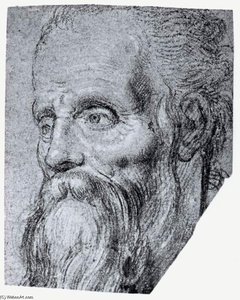
Portret Simone Peterzano

14 najsłynniejszych obrazów artysty Simone Peterzano – wybór z galerii

Aktualizacja: Listopad 2026 · ranking według naszego wskaźnika popularności (liczba wyszukiwań, wizyt i zamówień dla każdego dzieła) · 14 dzieł Simone Peterzano w naszym katalogu

W skrócie

Spośród wszystkich dzieł oryginalnych, które pozostawił Simone Peterzano, najsłynniejszym jest Venus and Cupid (1554), znajdujący się w kolekcji Statens Museum for Kunst w Kopenhaga. Tuż za nimi znajdują się Head of an Old Bearded Man (1578) oraz Ecce Homo (1585). Nasz katalog zawiera 14 dzieł autorstwa Simone Peterzano; galeria zachowała 14 najbardziej podziwianych na świecie prac, z których każda została przedstawiona wraz z datą powstania, informacją o muzeum oraz jej historią.

1540 – 1599, Wenecja Mannerism Najwięcej dzieł: Civiche Raccolte d'Arte

10 najlepszych obrazów artysty Simone Peterzano: wybór galerii

1
Venus and Cupid (1554) autorstwa Simone Peterzano

Venus and Cupid

1554 · Oil · Statens Museum for Kunst, Kopenhaga

This work, titled Venus and Cupid, was executed by the Italian Mannerist painter Simone Peterzano. The painting presents a quiet encounter between the mythological figures of Venus and her young son, Cupid. It is a piece that reflects the specific stylistic transitions occurring in late sixteenth-century Italy, capturing a moment of classical grace through a Mannerist lens.

2
Head of an Old Bearded Man (1578) autorstwa Simone Peterzano

Head of an Old Bearded Man

1578 · Chalk · Museo Civici, Mediolan

The artwork, titled Head of an Old Bearded Man, is a focused portrait study by the artist Simone Peterzano. Created about 1578, this work captures the likeness of an elderly man. The subject's face is the singular point of interest, rendered with a quiet, heavy presence. It is a study of age and the physical weight of time.

3
Ecce Homo (1585) autorstwa Simone Peterzano

Ecce Homo

1585 · Oil On Canvas · Kunsthistorisches Museum, Wiedeń

This vertical oil on canvas portrait, dated 1585, focuses on the upper body of a man positioned slightly off-center. The subject is Christ, depicted with a crown of thorns upon his head and eyes cast downward. A strong sense of three-dimensional volume is achieved through highly directional lighting that emerges from the upper left, casting deep shadows across the right side of the face and torso. The color palette relies…

4
Study of a Half-Length Figure (1580) autorstwa Simone Peterzano

Study of a Half-Length Figure

1580 · Charcoal · Civiche Raccolte d'Arte, Milan

In this intimate study, Simone Peterzano presents "Study of a Half-Length Figure," a work that focuses intently on the human form. Created about 1580, the drawing captures the torso and head of a nude female figure. The composition is tightly framed around the upper body, creating a sense of proximity that invites a quiet, close observation of the anatomy. There is a subtle tension in the way the subject is…

Kontynuacja zestawienia Simone Peterzano, od 11 do 14

Tematy, które przyciągnęły wzrok Simone Peterzano

Cztery motywy najczęściej powracające w tych oryginałach, z których każdy doczekał się swojego najdoskonalszego przykładu.

Muzea przechowujące oryginały Simone Peterzano

5 muzeów, w których znajduje się najwięcej obrazów z tej strony.

Muzea Miasto Dzieła artysty Simone Peterzano Obrazy z tej listy
Civiche Raccolte d'Arte, MilanCiviche Raccolte d'Arte Milan 4 Study of a Half-Length Figure, Still-Life of Figs, Peapods and Cherries
Statens Museum for Kunst, KopenhagaStatens Museum for Kunst Kopenhaga 1 Venus and Cupid
Museo Civici, MediolanMuseo Civici Mediolan 1 Head of an Old Bearded Man
Kunsthistorisches Museum, WiedeńKunsthistorisches Museum Wiedeń 1 Ecce Homo
Musée Des Beaux, StrasburgMusée Des Beaux Strasburg 1 Deposition of Christ

Simone Peterzano dekada po dekadzie: oryginały definiujące każdy okres

Dzieła według dekad

Wybierz dekadę, aby zobaczyć dzieło, które ją definiuje.

Pytania kolekcjonerów o obrazy Simone Peterzano

Z jakiego dzieła najbardziej znany jest Simone Peterzano?Odkryj odpowiedź

Venus and Cupid (1554), Statens Museum for Kunst, Kopenhaga. Następne są Head of an Old Bearded Man (1578) oraz Ecce Homo (1585).

W jakim wieku był Simone Peterzano, gdy powstało Venus and Cupid?Odkryj odpowiedź

14 lat: Venus and Cupid pochodzi z 1554, a Simone Peterzano urodził(a) się w 1540.

Jakie są dziesięć najsłynniejszych obrazów, których autorem jest Simone Peterzano?Odkryj odpowiedź

Venus and Cupid, Head of an Old Bearded Man, Ecce Homo, Study of a Half-Length Figure, Autoportret simone peterzano, Madonna and child, An allegory of music, Still-Life of Figs, Peapods and Cherries i Still-Life of Squash, Lilies, Peaches, and Pears. Powyższy ranking zawiera rok powstania oraz muzeum dla każdego z nich.

Ile obrazów pozostawił po sobie Simone Peterzano?Odkryj odpowiedź

Nasz katalog zawiera 14 dzieł artysty Simone Peterzano, datowanych od 1554 do 1585.

W których muzeach znajdują się arcydzieła Simone Peterzano?Odkryj odpowiedź

W większości znajdują się w Civiche Raccolte d'Arte (Milan), Statens Museum for Kunst (Kopenhaga) i Museo Civici (Mediolan). Powyższa tabela muzeów zawiera ich pełną listę.

W których latach Simone Peterzano namalował swoje najsłynniejsze dzieła?Odkryj odpowiedź

W 1580s: 4 z 14 dzieł na tej stronie powstało w tym czasie, w tym Ecce Homo.

Jakie są pierwsze i ostatnie słynne oryginały Simone Peterzano?Odkryj odpowiedź

Na tej stronie najwcześniejszy to Venus and Cupid (1554), a najpóźniejszy Ecce Homo (1585).

Jakie tematy Simone Peterzano wybierał najczęściej?Odkryj odpowiedź

Man (2) i Italian art (2), w ramach 14 dzieł na tej stronie.

Do jakiego nurtu artystycznego należy Simone Peterzano?Odkryj odpowiedź

Mannerism, sądząc po oryginałach na tej stronie.

Które dzieła Simone Peterzano znajdują się w Civiche Raccolte d'Arte?Odkryj odpowiedź

Study of a Half-Length Figure, Still-Life of Figs i Peapods and Cherries: Civiche Raccolte d'Arte, Milan posiada 4 dzieł widocznych na tej stronie.

Simone Peterzano: życie i twórczość

Simone Peterzano: Life and Legacy

Early Life and Training

  • Born: Venice, Italy in 1540.
  • Initial training under the tutelage of Titian, a master of Venetian Renaissance painting. This foundational experience deeply influenced Peterzano’s use of color and composition.
  • Peterzano's early career saw him move to Milan, where he began to establish himself as a painter of religious subjects.

Artistic Development and Style

  • Peterzano’s style evolved within the context of Mannerism, characterized by elongated figures, stylized poses, and dramatic compositions. However, he infused this with a Venetian sensibility learned from Titian.
  • His work demonstrates influences from other prominent artists of the time, including Veronese and Tintoretto, particularly in his use of vibrant colors and dynamic scenes.
  • Over time, Peterzano’s style became more monumental and austere, reflecting a shift towards a more restrained aesthetic.

Major Works and Achievements

  • Frescoes in San Maurizio al Monastero Maggiore (Milan): Early works showcasing his Venetian influences and establishing his reputation in Milan.
  • Frescoes at Garegnano Charterhouse (1578-1582): Considered one of his most significant achievements, these frescoes demonstrate a masterful command of composition and narrative.
  • Religious Paintings: Numerous altarpieces and devotional works for churches throughout Milan and the surrounding region, including “Madonna with Child and Saints” (Bioggio) and “St. Ambrose between Sts. Gervasius and Protasius” (Duomo of Milan).
  • Still Life paintings: Peterzano also created several still life paintings, demonstrating a keen eye for detail and texture.

Influence and Historical Significance

  • Peterzano’s most enduring legacy lies in his role as the teacher of Caravaggio, one of the most revolutionary artists in Baroque history. He instructed Caravaggio between 1584 and 1588.
  • While Caravaggio ultimately developed a highly individual style, Peterzano provided him with a solid foundation in technique and composition.
  • Peterzano’s work represents a bridge between the Mannerist tradition and the emerging Baroque style. His emphasis on dramatic lighting and emotional intensity foreshadowed developments in 17th-century painting.
  • Death: Peterzano died in Milan in 1596, leaving behind a significant body of work that continues to be studied and appreciated today.

Legacy and Further Study

  • Peterzano’s contributions to art history are increasingly recognized for their influence on Caravaggio and his role in the transition from Mannerism to Baroque.
  • His paintings offer valuable insights into the artistic climate of late 16th-century Italy.