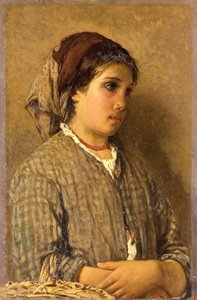
Portret Silvestro Lega

65 najsłynniejszych obrazów artysty Silvestro Lega, każdy niepowtarzalny

Aktualizacja: Listopad 2026 · ranking według naszego wskaźnika popularności (liczba wyszukiwań, wizyt i zamówień dla każdego dzieła) · 65 dzieł Silvestro Lega w naszym katalogu

W skrócie

Portrait of Giuseppe Garibaldi (1861) to obraz autorstwa Silvestro Lega, który przyciąga najwięcej spojrzeń. Następnie wzrok kieruje się na Head of the Virgin Mary from Perugino (1845) i Portrait of his brother Ettore as a child (1855). Spośród 65 dzieł Silvestro Lega w naszym katalogu, tych 65 jest najbardziej znanych – każde z nich to unikatowy oryginał, przedstawiony wraz z rokiem powstania, muzeum oraz powodem, dla którego przetrwało próbę czasu.

1826 – 1895, Modigliana Realism Najwięcej dzieł: Palazzo Pitti

10 najlepszych obrazów autorstwa Silvestro Lega według oka galerii

1
Portrait of Giuseppe Garibaldi (1861) autorstwa Silvestro Lega

Portrait of Giuseppe Garibaldi

1861 · Oil

Created in 1861, the portrait emerges from a period of intense political movement in Italy. The subject's attire and the presence of the rifle suggest a connection to the military campaigns and the rugged lifestyle associated with the era's political shifts. The painting reflects the 19th-century movement toward realism, prioritizing direct observation and the accurate depiction of the human form within a natural setting.

2
Head of the Virgin Mary from Perugino (1845) autorstwa Silvestro Lega

Head of the Virgin Mary from Perugino

1845 · Chalk

The artwork titled Head of the Virgin Mary from Perugino is a portrait created by the artist Silvestro Lega. This depiction focuses on the subject of the Virgin Mary, presented in a close-up view that emphasizes the head and shoulders. The work is dated to about 1845.

3
Portrait of his brother Ettore as a child (1855) autorstwa Silvestro Lega

Portrait of his brother Ettore as a child

1855 · Oil On Canvas · Pinacoteca di Brera, Mediolan

A young boy sits in a moment of profound stillness, his gaze meeting the viewer with a calm, somewhat melancholic expression. He is positioned slightly off-center, a bust-length figure that feels immediate and intimate. The soft light, descending from the upper left, brushes against the contours of his face, casting gentle shadows that grant his features a palpable three-dimensional volume. There is a sense of weight to his presence, as…

4
Among the flowers in the garden (1862) autorstwa Silvestro Lega

Among the flowers in the garden

1862 · Oil

The scene unfolds within the quiet confines of Among the flowers in the garden, an oil on canvas that captures a fleeting moment of stillness. Silvestro Lega, a significant figure in 19th-century Italian art, brings this garden to life through his careful observation of the natural world. The work dates to about 1862, a period when the artist's hand began to move toward a more profound engagement with the reality…

5
Camp of Zouaves (1861) autorstwa Silvestro Lega

Camp of Zouaves

1861 · Charcoal

In "Camp of Zouaves" by Silvestro Lega, the composition follows a horizontal format that emphasizes the breadth of the military encampment. A central tent dominates the middle ground, acting as a focal point for the surrounding activity. To the left, a soldier blowing a horn provides a strong vertical element that draws the eye through the scene. The foreground is characterized by rough terrain and various scattered details, establishing a…

6
The water wheel [sketch] (1863) autorstwa Silvestro Lega

The water wheel [sketch]

1863 · Charcoal

In The water wheel [sketch], Silvestro Lega organizes a horizontally oriented scene that emphasizes the structural length of the machinery. The water wheel dominates the central portion of the composition, acting as the primary anchor for the viewer's eye. A lone figure is positioned near the wheel, providing a sense of scale and human presence within the rural setting. This arrangement focuses the viewer's attention on the intersection of mechanical…

7
In the cellar (1870) autorstwa Silvestro Lega

In the cellar

1870 · Oil On Canvas

The oil painting titled In the cellar was executed by the artist Silvestro Lega. This work, created in 1870, is rendered in oil on canvas. The piece measures 27 x 35 cm.

8
Reading (1864) autorstwa Silvestro Lega

Reading

1864 · Oil

Two figures sit anchored in a moment of stillness. They are caught in the soft, diffused light of a private afternoon, their bodies turned toward one another in a shared, silent communion. One figure wears a dress of pale blue, a cool note against the warmth of the surrounding world. They are engaged in the simple act of reading, a gesture that pulls the viewer into their intimate circle. The…

9
The reading (1867) autorstwa Silvestro Lega

The reading

The Reading by Silvestro Lega is an oil painting on canvas created about 1867. The work depicts a young woman seated upon a wooden bench. She is positioned in a state of quiet focus, her attention directed toward a book held in her hands. The scene is set against a backdrop of textured walls and a window with closed shutters, creating a contained, domestic environment.

10
The painter (1869) autorstwa Silvestro Lega

The painter

1869 · Oil On Canvas

In The painter, Silvestro Lega presents a young woman positioned slightly off-center within the confines of her studio. The vertical composition emphasizes her presence, focusing the viewer's attention on her figure as she gazes downward toward a painter's palette held in her hands. This downward gaze suggests a moment of quiet contemplation or intense focus on her craft. At the base of the scene, a rug provides a grounding element…

Słynne obrazy artysty Silvestro Lega, od 11 do 65

11The Dying Mazzini (Mazzini morente) (1873) autorstwa Silvestro LegaThe Dying Mazzini (Mazzini morente)1873 · Rhode Island School of Design Museum of Art 12Woman sitting by a window sewing (1872) autorstwa Silvestro LegaWoman sitting by a window sewing1872 13In the garden (1883) autorstwa Silvestro LegaIn the garden1883 14Pitcher painted with bust of a young woman and floral motifs (1885) autorstwa Silvestro LegaPitcher painted with bust of a young woman and floral motifs1885 15Man writing (1885) autorstwa Silvestro LegaMan writing1885 16Portrait of a peasant woman (1890) autorstwa Silvestro LegaPortrait of a peasant woman1890 17Head of a boy (1890) autorstwa Silvestro LegaHead of a boy1890 18Woman from Gabbro (1888) autorstwa Silvestro LegaWoman from Gabbro1888 19Bust of a young girl (1887) autorstwa Silvestro LegaBust of a young girl1887 20Peasant women from Gabbro (1889) autorstwa Silvestro LegaPeasant women from Gabbro1889 21Peasant woman at rest (1890) autorstwa Silvestro LegaPeasant woman at rest1890 22La visita (1868) autorstwa Silvestro LegaLa visita1868 · Galleria Nazionale d'Arte Moderna 23Bust of a peasant woman (1873) autorstwa Silvestro LegaBust of a peasant woman1873 · Palazzo Pitti 24Villa Batelli along the Affrico river (1863) autorstwa Silvestro LegaVilla Batelli along the Affrico river1863 25Il primo dolore (1863) autorstwa Silvestro LegaIl primo dolore1863 26Landscape (1860) autorstwa Silvestro LegaLandscape1860 27Portrait of a Child (1861) autorstwa Silvestro LegaPortrait of a Child1861 28Farmhouses (1864) autorstwa Silvestro LegaFarmhouses1864 29Courtyard entrance (1864) autorstwa Silvestro LegaCourtyard entrance1864 30Little country church (1874) autorstwa Silvestro LegaLittle country church1874 31Woman from Gabbro (1885) autorstwa Silvestro LegaWoman from Gabbro1885 32The house of Don Giovanni Verità (1885) autorstwa Silvestro LegaThe house of Don Giovanni Verità1885 33The hut on the farm (1880) autorstwa Silvestro LegaThe hut on the farm1880 34Garden in Bellariva (1884) autorstwa Silvestro LegaGarden in Bellariva1884 35Farmhouse with haystack (1880) autorstwa Silvestro LegaFarmhouse with haystack1880 36Country Girl Leaning against a Ladder (1885) autorstwa Silvestro LegaCountry Girl Leaning against a Ladder1885 37Farmhouse and haystacks (1888) autorstwa Silvestro LegaFarmhouse and haystacks1888 38Church of San Michele in Crespina (1886) autorstwa Silvestro LegaChurch of San Michele in Crespina1886 39Pagliai al sole (1890) autorstwa Silvestro LegaPagliai al sole1890 40Figure of a woman autorstwa Silvestro LegaFigure of a woman 41Seated man autorstwa Silvestro LegaSeated man 42Young peasant woman autorstwa Silvestro LegaYoung peasant woman 43The maid of the Bandini house autorstwa Silvestro LegaThe maid of the Bandini house 44Don Verità autorstwa Silvestro LegaDon Verità 45The spinner autorstwa Silvestro LegaThe spinner 46Young peasant woman autorstwa Silvestro LegaYoung peasant woman 47Peasant woman from Gabbro autorstwa Silvestro LegaPeasant woman from Gabbro 48The letter autorstwa Silvestro LegaThe letter 49Don Giovanni autorstwa Silvestro LegaDon Giovanni 50The stitcher of lace trimmings for women's dresses autorstwa Silvestro LegaThe stitcher of lace trimmings for women's dresses 51The Bandini sisters (1890) autorstwa Silvestro LegaThe Bandini sisters1890 · Museum of Modern and Contemporary Art of Trento and Rovereto 52The owner of the farm (1887) autorstwa Silvestro LegaThe owner of the farm1887 · Palazzo Pitti 53Ritorno dei bersaglieri italiani da una ricognizione (1861) autorstwa Silvestro LegaRitorno dei bersaglieri italiani da una ricognizione1861 · Palazzo Pitti 54Head of a woman (1885) autorstwa Silvestro LegaHead of a woman1885 · Pinacoteca di Brera 55Self-portrait (1861) autorstwa Silvestro LegaSelf-portrait1861 · Galleria degli Uffizi 56In the villa (1880) autorstwa Silvestro LegaIn the villa1880 · Palazzo Pitti 57A Walk in the Garden (1870) autorstwa Silvestro LegaA Walk in the Garden1870 58Woman with ivy (1887) autorstwa Silvestro LegaWoman with ivy1887 59The pergola (1864) autorstwa Silvestro LegaThe pergola1864 · Palazzo Pitti 60Signora al Pianoforte autorstwa Silvestro LegaSignora al Pianoforte 61The courier's horse autorstwa Silvestro LegaThe courier's horse 62Small village with battlements autorstwa Silvestro LegaSmall village with battlements 63Il pergolato (also known as Il dopopranzo) (1868) autorstwa Silvestro LegaIl pergolato (also known as Il dopopranzo)1868 · Civica Galleria d'Arte Moderna 64The painter Tommasi painting in the garden (1885) autorstwa Silvestro LegaThe painter Tommasi painting in the garden1885 65Il canto di uno stornello (1867) autorstwa Silvestro LegaIl canto di uno stornello1867 · Palazzo Pitti

Słynne obrazy Silvestro Lega epoka po epoce

Tematy, które przyciągnęły wzrok Silvestro Lega

Cztery motywy najczęściej powracające w tych oryginałach, z których każdy doczekał się swojego najdoskonalszego przykładu.

Muzea przechowujące oryginały Silvestro Lega

8 muzeów, w których znajduje się najwięcej obrazów z tej strony.

Muzea Miasto Dzieła artysty Silvestro Lega Obrazy z tej listy
Palazzo Pitti, FlorencjaPalazzo Pitti Florencja 6 Bust of a peasant woman, The owner of the farm, Ritorno dei bersaglieri italiani da una ricognizione
Pinacoteca di Brera, MediolanPinacoteca di Brera Mediolan 2 Portrait of his brother Ettore as a child, Head of a woman
Pinacoteca metropolitana di Bari or Pinacoteca C. Giaquinto, BariPinacoteca metropolitana di Bari or Pinacoteca C. Giaquinto Bari 1 The reading
Rhode Island School of Design Museum of Art, ProvidenceRhode Island School of Design Museum of Art Providence 1 The Dying Mazzini (Mazzini morente)
Galleria Nazionale d'Arte Moderna, RzymGalleria Nazionale d'Arte Moderna Rzym 1 La visita
Museum of Modern and Contemporary Art of Trento and RoveretoMuseum of Modern and Contemporary Art of Trento and Rovereto 1 The Bandini sisters
Galleria degli Uffizi, FlorencjaGalleria degli Uffizi Florencja 1 Self-portrait
Civica Galleria d'Arte Moderna, MediolanCivica Galleria d'Arte Moderna Mediolan 1 Il pergolato (also known as Il dopopranzo)

Silvestro Lega na przestrzeni dekad: jeden unikatowy oryginał dla każdego

Dzieła według dekad

Wybierz dekadę, aby zobaczyć dzieło, które ją definiuje.

Obrazy artysty Silvestro Lega: pytania do galerii

Jakie jest najsłynniejsze dzieło artysty Silvestro Lega?Odkryj odpowiedź

Portrait of Giuseppe Garibaldi (1861). Następne są Head of the Virgin Mary from Perugino (1845) oraz Portrait of his brother Ettore as a child (1855).

W jakim wieku Silvestro Lega stworzył/a Portrait of Giuseppe Garibaldi?Odkryj odpowiedź

35 lat: Portrait of Giuseppe Garibaldi pochodzi z 1861, a Silvestro Lega urodził(a) się w 1826.

Które dziesięć obrazów Silvestro Lega jest najbardziej znanych?Odkryj odpowiedź

Portrait of Giuseppe Garibaldi, Head of the Virgin Mary from Perugino, Portrait of his brother Ettore as a child, Among the flowers in the garden, Camp of Zouaves, The water wheel [sketch], In the cellar, Reading, The reading i The painter. Powyższy ranking zawiera rok powstania oraz muzeum dla każdego z nich.

Ile znanych dzieł stworzył Silvestro Lega?Odkryj odpowiedź

Nasz katalog zawiera 65 dzieł artysty Silvestro Lega, datowanych od 1845 do 1890.

Gdzie można zobaczyć najsłynniejsze oryginały Silvestro Lega?Odkryj odpowiedź

W większości znajdują się w Palazzo Pitti (Florencja), Pinacoteca di Brera (Mediolan) i Pinacoteca metropolitana di Bari or Pinacoteca C. Giaquinto (Bari). Powyższa tabela muzeów zawiera ich pełną listę.

W jakim okresie Silvestro Lega stworzył/a swoje najsłynniejsze obrazy?Odkryj odpowiedź

W 1860s: 19 z 65 dzieł na tej stronie powstało w tym czasie, w tym Portrait of Giuseppe Garibaldi.

Który z najsłynniejszych obrazów artysty Silvestro Lega powstał najwcześniej, a który najpóźniej?Odkryj odpowiedź

Na tej stronie najwcześniejszy to Head of the Virgin Mary from Perugino (1845), a najpóźniejszy Portrait of a peasant woman (1890).

Jakie tematy preferował Silvestro Lega?Odkryj odpowiedź

Woman (11), Portrait (10) i Landscape (8), w ramach 65 dzieł na tej stronie.

Jakich materiałów Silvestro Lega używał najczęściej?Odkryj odpowiedź

Oil On Canvas, dla 16 z 65 dzieł na tej stronie.

Do jakiego nurtu należy twórczość Silvestro Lega?Odkryj odpowiedź

Realism, sądząc po oryginałach na tej stronie.

Jakie oryginały Silvestro Lega można zobaczyć w Palazzo Pitti?Odkryj odpowiedź

Bust of a peasant woman, The owner of the farm i Ritorno dei bersaglieri italiani da una ricognizione: Palazzo Pitti, Florencja posiada 6 dzieł widocznych na tej stronie.

Silvestro Lega: portret artysty

Silvestro Lega: Życie w barwach włoskiego realizmu

  • Urodzony: Modigliana, Włochy (1826)
  • Zmarł: 1895

Silvestro Lega był postacią o fundamentalnym znaczeniu dla włoskiej sztuki XIX wieku, uznawaną za jednego z czołowych przedstawicieli ruchu Macchiaioli. Jego twórczość stanowi głębokie świadectwo oddania realizmowi oraz uważnej obserwacji codzienności, nierozerwalnie splatając artystyczną wrażliwość z politycznymi prądami epoki.

Młodość i artystyczne korzenie

Lega przyszedł na świat w zamożnej rodzinie w Modiglianie, niedaleko Forlì. Już od 1838 roku, uczęszczając do Kolegium Pijarów, ujawnił swój niezwykły talent do rysunku. Swoją formalną ścieżkę edukacyjną kontynuował w florenckiej Accademia di Belle Arti (1843-1847), gdzie pod okiem Benedetto Servoliniego i Tommaso Gazzariniego doskonalił warsztat rysunkowy, a krótko także studiował malarstwo u Giuseppe Bezzuoliego. Kluczowym elementem jego formacji była nauka u Luigi Mussiniego, który zaszczepił w nim florenckie zasady konstrukcji i rysunku wywodzące się z XV wieku. Ta solidna podstawa akademicka stała się fundamentem, na którym artysta budował swoją późniejszą, bardziej swobodną ekspresję. Jego życie nie było jednak odizolowane od burzliwej historii – jako ochotnik garibaldzki, brał udział w kampaniach wojskowych walczących o włoską niepodległość (1848–49), co dowodzi jego głębokiego zaangażowania w ideały Risorgimento.

Narodziny nowej estetyki: Ruch Macchiaioli

Początkowo styl Legi pozostawał silnie zakorzeniony w tradycji akademickiej, co zauważył współczesny mu krytyk Diego Martelli, odnotowując rzadkie uczestnictwo artysty w ożywionych dyskusjach w Caffè Michelangelo – sercu florenckiej bohemy. Jednak około 1859 roku nastąpił przełom; Lega zaczął odchodzić od puryzmu Mussiniego na rzecz rodzącego się realizmu, co wyraźnie widać w lunetach malowanych dla Oratorium Madonna del Cantone w Modiglianie. Artysta wraz z towarzyszami – Odoardo Borranim, Giuseppe Abbatim, Telemaco Signinim i Raffaello Sernesim – przyjął technikę en plein air, wychodząc bezpośrednio w naturę, by chwytać subtelne niuanse światła i krajobrazu. Szczególnie inspirujący był dla niego czas spędzony z rodziną Batelli nad rzeką Affrico (1861-1870). To właśnie tam, malując ich dzieci i kobiety, Lega odnalazł temat swojej najbardziej intymnej twórczości, nasyconej spokojem domowego ogniska.

Mistrzostwo formy i tematyki

Twórczość Legi to niezwykły balans między klasyczną kompozycją a nowoczesnym podejściem do koloru, czerpanym z bezpośredniej obserwacji natury. Jego obrazy charakteryzują się precyzyjnie zdefiniowanymi formami oraz atmosferą oddaną poprzez transparentność barw, co w późniejszych latach zaczęło wykazywać wpływy impresjonizmu. Wśród jego najbardziej ikonicznych dzieł znajdują się takie jak „Spacer po ogrodzie” (1870), „Il Pergolato” (znane również jako „Po obiedzie”) (1864), czy „Dom Don Giovanniego Veritá” (1885). Skupiając się na scenach wiejskiego życia, rodzinnych spotkaniach i portretach, artysta podniósł prozaiczne, codzienne doświadczenia zwykłych ludzi do rangi wysokiej sztuki.

Tragedia, poszukiwania i dziedzictwo

Droga artystyczna Legi nie była wolna od osobistych dramatów. Rok 1870 przyniósł mu niewyobrażalną stratę – śmierć ukochanej Virginii Batelli oraz trzech braci, co pogrążyło go w głębokiej depresji i zmusiło do czteroletniej przerwy w malowaniu (1874-1878). Mimo tych trudności, artysta nie stracił kontaktu ze światem sztuki; podziwiał twórczość Camille’a Pissarro i wraz z Odoardo Borranim próbował prowadzić galerię we Florencji. W późniejszych latach, pełniąc rolę guwernera dla synów rodziny Tommasi, odnalazł nową stabilność. Jego ostatnie dzieła, jak „The Gabbarigiane”, mimo postępujących problemów ze wzrokiem, wciąż świadczą o niezłomnym przywiązaniu do realizmu. Dziedzictwo Silvestro Legi polega na genialnej syntezie tradycyjnych technik z nową, realistyczną estetyką Macchiaioli, co pozwoliło mu uchwycić istotę włoskiego ducha i trwale wpisać się w historię europejskiego malarstwa.