Portret Samuel Morse

89 najsłynniejszych obrazów artysty Samuel Morse, każdy niepowtarzalny

Aktualizacja: Listopad 2026 · ranking według naszego wskaźnika popularności (liczba wyszukiwań, wizyt i zamówień dla każdego dzieła) · 96 dzieł Samuel Morse w naszym katalogu

W skrócie

Erastus Torrey (1816) to obraz autorstwa Samuel Morse, który przyciąga najwięcej spojrzeń. Następnie wzrok kieruje się na Alexander Metcalf Fisher (1794-1822), B.A. 1813, M.A. 1816 (1822) i Mrs. Addin Lewis (Fanny Lewis) (1790-1832) (1830). Spośród 96 dzieł Samuel Morse w naszym katalogu, tych 89 jest najbardziej znanych – każde z nich to unikatowy oryginał, przedstawiony wraz z rokiem powstania, muzeum oraz powodem, dla którego przetrwało próbę czasu.

1791 – 1872, Charlestown Romanticism Najwięcej dzieł: Yale University Art Gallery

10 najlepszych obrazów autorstwa Samuel Morse według oka galerii

1
Erastus Torrey (1816) autorstwa Samuel Morse

Erastus Torrey

1816 · Oil On Canvas

The sitter sits with hands clasped, a posture of quiet gravity that defines the early 19th-century portrait. Dressed in formal attire of the period, the man presents a somber, almost severe countenance. The composition focuses heavily on the individual, utilizing a dark, formal palette to emphasize the subject's presence. A hint of a richly upholstered chair and a bench in the background provide a sense of domestic stability and social…

2
Alexander Metcalf Fisher (1794-1822), B.A. 1813, M.A. 1816 (1822) autorstwa Samuel Morse

Alexander Metcalf Fisher (1794-1822), B.A. 1813, M.A. 1816

1822 · Oil On Canvas · Yale University Art Gallery, Nowe Havane

The air in the room feels heavy, thick with the scent of old parchment and the quiet weight of intellectual pursuit. A young man sits at a table, his presence commanding a stillness that contrasts sharply with the chaos brewing just beyond the window. He is Alexander Metcalf Fisher, a man whose life is captured here in a moment of profound, somber dignity. The light catches the crisp white of…

3
Mrs. Addin Lewis (Fanny Lewis) (1790-1832) (1830) autorstwa Samuel Morse

Mrs. Addin Lewis (Fanny Lewis) (1790-1832)

1830 · Oil On Canvas · Yale University Art Gallery, Nowe Havane

The room falls into a quiet, heavy stillness as she sits. Mrs. Addin Lewis, known to those close to her as Fanny, meets the viewer's gaze with a steady, calm composure. She is positioned in a three-quarter view, her form anchored by an ornate chair that seems to emerge from the darkness. The light does not merely illuminate her; it carves her out of the gloom, catching the pale curve…

4
Jedidiah Morse (1761-1826), B.A. 1783, M.A. 1786 (1810) autorstwa Samuel Morse

Jedidiah Morse (1761-1826), B.A. 1783, M.A. 1786

1810 · Oil On Canvas · Yale University Art Gallery, Nowe Havane

The room holds a heavy, scholarly stillness. An elderly man sits in a three-quarter view, his presence commanding the space through a quiet, dignified gravity. He leans slightly forward, a quill in hand, caught in a moment of profound intellectual labor. To his left, a bookshelf rises, its rectangular spines creating a rhythmic, geometric counterpoint to the soft, organic curves of his figure. Above him, a heavy drape falls in…

5
Mrs. David Curtis DeForest  (Julia Wooster), (1795-1873) (1823) autorstwa Samuel Morse

Mrs. David Curtis DeForest (Julia Wooster), (1795-1873)

1823 · Oil On Canvas · Yale University Art Gallery, Nowe Havane

The light enters from the upper left, a soft intrusion that catches the curve of a neck and the pale expanse of a chest. Julia Wooster DeForest sits in a quiet, three-quarter pose, her gaze meeting the viewer with a steady, direct presence. She is draped in the cool tones of a blue gown, the fabric catching the light to reveal the delicate architecture of lace and the heavy, intricate…

6
By Candlelight (Mrs. Jedidiah Morse [Elizabeth Ann Breese]) (1766-1828) (1820) autorstwa Samuel Morse

By Candlelight (Mrs. Jedidiah Morse [Elizabeth Ann Breese]) (1766-1828)

1820 · Oil On Canvas · Yale University Art Gallery, Nowe Havane

In this intimate portrait from 1820, we find ourselves drawn into a private moment of contemplation. The subject, Elizabeth Ann Breese, is captured in a medium shot, her presence defined by the soft, directional glow of an unseen candle. This light, rising from below the frame, carves her features out of the surrounding darkness, casting upward shadows that lend a sense of profound depth to the composition. There is a…

7
Jedidiah Morse (1761-1826) B.A. 1783, M.A. 1786 (1820) autorstwa Samuel Morse

Jedidiah Morse (1761-1826) B.A. 1783, M.A. 1786

1820 · Yale University Art Gallery, Nowe Havane

The room falls away, leaving only the quiet weight of a man’s gaze. He sits in a space defined by darkness, where the light does not merely fall but seems to emerge from the deep, umber shadows to claim his features. This is a portrait of Jedidiah Morse, captured in a moment of profound stillness. His face, marked by the wisdom of years, catches the light upon a high forehead…

8
Jeremiah Day (1773-1867), B.A. 1795, M.A. 1789 (1823) autorstwa Samuel Morse

Jeremiah Day (1773-1867), B.A. 1795, M.A. 1789

1823 · Oil On Canvas · Yale University Art Gallery, Nowe Havane

A seated man occupies the center-right of the frame, his body turned slightly toward the viewer in a three-quarter length pose. He is positioned leaning toward a table, his hands resting upon a large, thick volume. The composition is defined by a monochromatic palette of grey, black, and white, emphasizing the sharp edges of a dark coat and the crispness of a white collar. Directional lighting from the upper left…

9
Elizabeth Ann Breese Morse (Mrs. Jedidiah Morse) (1766-1828) (1823) autorstwa Samuel Morse

Elizabeth Ann Breese Morse (Mrs. Jedidiah Morse) (1766-1828)

1823 · Oil On Panel · Harvard Art Museums, Cambridge

The room falls away, leaving only the quiet dignity of an elderly woman emerging from a deep, atmospheric darkness. Elizabeth Ann Breese Morse sits before us, her presence felt through the soft textures of her attire and the steady gaze of her expression. The light catches the crisp, white ruffles of her bonnet and the intricate lace of her large collar, pulling her features out of the umber and burnt…

10
Eliphalet Terry (1824) autorstwa Samuel Morse

Eliphalet Terry

1824 · Oil On Canvas · National Gallery of Art, Waszyngton

Samuel Finley Breese Morse painted Eliphalet Terry in 1824. This formal portrait captures an elderly man, presenting a likeness intended to convey both status and character. The subject is rendered with a serious expression and a dignified posture, suggesting an individual of authority and wisdom.

Słynne obrazy artysty Samuel Morse, od 11 do 89

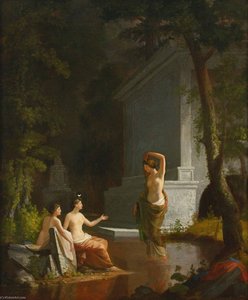
11Eli Whitney (1765-1825) B.A. 1792, M.A. 1795 (1822) autorstwa Samuel MorseEli Whitney (1765-1825) B.A. 1792, M.A. 17951822 · Yale University Art Gallery 12Dr. (d.1826) and Mrs. Thomas Holman (Lucia Ruggles), (d.1886) (1819) autorstwa Samuel MorseDr. (d.1826) and Mrs. Thomas Holman (Lucia Ruggles), (d.1886)1819 · Yale University Art Gallery 13The Judgment of Jupiter (1814) autorstwa Samuel MorseThe Judgment of Jupiter1814 · Yale University Art Gallery 14Dying Hercules (1812) autorstwa Samuel MorseDying Hercules1812 · Yale University Art Gallery 15Cyrus Mansfield (1808) autorstwa Samuel MorseCyrus Mansfield1808 · Metropolitan Museum of Art 16Self-portrait (1809) autorstwa Samuel MorseSelf-portrait1809 17James Monroe (1819) autorstwa Samuel MorseJames Monroe1819 18Joseph Gales (1822) autorstwa Samuel MorseJoseph Gales1822 · National Gallery of Art 19Scene from Spenser’s "Fairie Queene":  Una and the Dwarf (1827) autorstwa Samuel MorseScene from Spenser’s "Fairie Queene": Una and the Dwarf1827 · Toledo Museum of Art 20Portrait of David C. de Forest (1823) autorstwa Samuel MorsePortrait of David C. de Forest1823 · National Museum of Fine Arts 21Little Miss Hone (1824) autorstwa Samuel MorseLittle Miss Hone1824 · Museum of Fine Arts 22Mrs. Juliet Kahlenkamp (1829) autorstwa Samuel MorseMrs. Juliet Kahlenkamp1829 · New Britain Museum of American Art 23Landscape Composition: Helicon and Aganippe (Allegorical Landscape of New York University) (1836) autorstwa Samuel MorseLandscape Composition: Helicon and Aganippe (Allegorical Landscape of New York University)1836 · New York Historical Society 24Mrs. Jacob Morton (Catharine Ludlow, 1767–1849) (1833) autorstwa Samuel MorseMrs. Jacob Morton (Catharine Ludlow, 1767–1849)1833 · New York Historical Society 25Jacob Morton (1761-1836) (1833) autorstwa Samuel MorseJacob Morton (1761-1836)1833 · New York Historical Society 26Mrs. Christopher Champlin (1815) autorstwa Samuel MorseMrs. Christopher Champlin1815 · Fine Arts Museums of San Francisco 27Samuel F. B. Morse. Self-portrait (1812) autorstwa Samuel MorseSamuel F. B. Morse. Self-portrait1812 · National Portrait Gallery 28Gallery of the Louvre autorstwa Samuel MorseGallery of the Louvre 29Mrs. Daniel DeSaussure Bacot (1820) autorstwa Samuel MorseMrs. Daniel DeSaussure Bacot1820 30Mrs. Robert Young Hayne (Rebecca Brewton Motte Alston) (1820) autorstwa Samuel MorseMrs. Robert Young Hayne (Rebecca Brewton Motte Alston)1820 31Sketch for the Chapel of the Virgin at Subiaco (1830) autorstwa Samuel MorseSketch for the Chapel of the Virgin at Subiaco1830 · Worcester Art Museum 32De Witt Clinton (1826) autorstwa Samuel MorseDe Witt Clinton1826 · Metropolitan Museum of Art 33Dr. Frederick Gore King (1827) autorstwa Samuel MorseDr. Frederick Gore King1827 34Reverend and Mrs. Hiram Bingham (1819) autorstwa Samuel MorseReverend and Mrs. Hiram Bingham1819 · Yale University Art Gallery 35Portrait of Mrs. John Earnest Poyas (Catherine Smith, 1769–1836) autorstwa Samuel MorsePortrait of Mrs. John Earnest Poyas (Catherine Smith, 1769–1836)Museum of Fine Arts 36Mrs. Thomas Fuller (Mary Fuller) autorstwa Samuel MorseMrs. Thomas Fuller (Mary Fuller)Museum of Fine Arts 37Dr. Thomas Fuller autorstwa Samuel MorseDr. Thomas FullerMuseum of Fine Arts 38The Reverend Thomas Harvey Skinner autorstwa Samuel MorseThe Reverend Thomas Harvey SkinnerMuseum of Fine Arts 39John W. Forbes (b. ca. 1781) autorstwa Samuel MorseJohn W. Forbes (b. ca. 1781)New York Historical Society 40Head of a Man (from McGuire Scrapbook) autorstwa Samuel MorseHead of a Man (from McGuire Scrapbook) 41Captain Demaresque of Gloucester, Massachusetts autorstwa Samuel MorseCaptain Demaresque of Gloucester, Massachusetts 42Portrait of Dr. James E. B. Finley autorstwa Samuel MorsePortrait of Dr. James E. B. FinleyIndianapolis Museum of Art 43The Morse Family autorstwa Samuel MorseThe Morse Family 44Reverend Nathaniel Bowen autorstwa Samuel MorseReverend Nathaniel Bowen 45De Witt Clinton autorstwa Samuel MorseDe Witt Clinton 46Mrs. John Colcock (Melliscent Jones) autorstwa Samuel MorseMrs. John Colcock (Melliscent Jones) 47George Hyde Clarke autorstwa Samuel MorseGeorge Hyde ClarkeSaint Louis Art Museum 48Portrait of Lucretia Pickering Walker Morse autorstwa Samuel MorsePortrait of Lucretia Pickering Walker Morse 49Colonel William Drayton autorstwa Samuel MorseColonel William Drayton 50Marquis de Lafayette (1826) autorstwa Samuel MorseMarquis de Lafayette1826 · Komisja Sztuki Miasta Nowego Jorku 51Susan Walker Morse (The Muse) autorstwa Samuel MorseSusan Walker Morse (The Muse)Metropolitan Museum of Art 52Jonas Platt autorstwa Samuel MorseJonas PlattBrooklyn Museum 53Portrait of a Young Man autorstwa Samuel MorsePortrait of a Young ManMilwaukee Art Museum 54Mrs. Robert Young Hayne (Rebecca Motte Alston) autorstwa Samuel MorseMrs. Robert Young Hayne (Rebecca Motte Alston) 55Unidentified Woman autorstwa Samuel MorseUnidentified Woman 56Portrait of Jonas Platt autorstwa Samuel MorsePortrait of Jonas Platt 57Robert Young Hayne autorstwa Samuel MorseRobert Young Hayne 58Niagara Falls with Rainbow and Indians autorstwa Samuel MorseNiagara Falls with Rainbow and IndiansMuseum of Fine Arts 59Mrs. James Ladson (Judith Smith) autorstwa Samuel MorseMrs. James Ladson (Judith Smith) 60Portrait of De Witt Clinton autorstwa Samuel MorsePortrait of De Witt Clinton 61Portrait of Samuel Nelson autorstwa Samuel MorsePortrait of Samuel Nelson 62Portrait of William Cullen Bryant autorstwa Samuel MorsePortrait of William Cullen Bryant 63Portrait of John Adams autorstwa Samuel MorsePortrait of John Adams 64Lydia Coit Terry (Mrs. Eliphalet Terry) autorstwa Samuel MorseLydia Coit Terry (Mrs. Eliphalet Terry)National Gallery of Art 65Portrait of Alexander Metcalf Fisher autorstwa Samuel MorsePortrait of Alexander Metcalf Fisher 66Portrait of Mrs. James Ladson autorstwa Samuel MorsePortrait of Mrs. James LadsonGibbes Museum of Art 67Alexander Calder autorstwa Samuel MorseAlexander Calder 68Mrs. Francis Dallas Quash (Emma Doughty) autorstwa Samuel MorseMrs. Francis Dallas Quash (Emma Doughty) 69Eliphalet Terry autorstwa Samuel MorseEliphalet Terry 70Self-Portrait autorstwa Samuel MorseSelf-Portrait 71Portrait of James Monroe autorstwa Samuel MorsePortrait of James Monroe 72Portrait of Alexander Calder autorstwa Samuel MorsePortrait of Alexander Calder 73Portrait of Benjamin West (copy after Sir Thomas Lawrence) autorstwa Samuel MorsePortrait of Benjamin West (copy after Sir Thomas Lawrence) 74Self-Portait autorstwa Samuel MorseSelf-Portait 75Mrs. George Watson autorstwa Samuel MorseMrs. George Watson 76Mrs. Daniel de Saussure Bacot autorstwa Samuel MorseMrs. Daniel de Saussure Bacot 77Portrait of William Henry Harrison autorstwa Samuel MorsePortrait of William Henry Harrison 78Chapel of the Virgin at Subiaco autorstwa Samuel MorseChapel of the Virgin at SubiacoWorcester Art Museum 79Portrait of Mrs. Samuel Nelson (Catherine Anne Russell) autorstwa Samuel MorsePortrait of Mrs. Samuel Nelson (Catherine Anne Russell) 80Self-Portrait 2 autorstwa Samuel MorseSelf-Portrait 2 81Lucretia Morse and her Children autorstwa Samuel MorseLucretia Morse and her Children 82Mrs. Richard C. Morse and Her Two Children (Elizabeth Ann and Charlotte) (aka The Goldfish) autorstwa Samuel MorseMrs. Richard C. Morse and Her Two Children (Elizabeth Ann and Charlotte) (aka The Goldfish) 83Portrait of a Man autorstwa Samuel MorsePortrait of a Man 84Study for the Old House of Representatives autorstwa Samuel MorseStudy for the Old House of RepresentativesSmithsonian American Art Museum 85Diana at the Fountain autorstwa Samuel MorseDiana at the Fountain 86The Goldfish Bowl (Mrs. Richard Cary Morse and Family) autorstwa Samuel MorseThe Goldfish Bowl (Mrs. Richard Cary Morse and Family)Smithsonian American Art Museum 87Gallery of the Louvre (1833) autorstwa Samuel MorseGallery of the Louvre1833 · Terra Fondation für Amerikanische Kunst 88The House of Representatives autorstwa Samuel MorseThe House of RepresentativesNational Gallery of Art 89Marquis de Lafayette (1825) autorstwa Samuel MorseMarquis de Lafayette1825 · Crystal Bridges Museum of American Art

Słynne obrazy Samuel Morse epoka po epoce

Tematy, które przyciągnęły wzrok Samuel Morse

Cztery motywy najczęściej powracające w tych oryginałach, z których każdy doczekał się swojego najdoskonalszego przykładu.

Muzea przechowujące oryginały Samuel Morse

8 muzeów, w których znajduje się najwięcej obrazów z tej strony.

Muzea Miasto Dzieła artysty Samuel Morse Obrazy z tej listy
Yale University Art Gallery, Nowe HavaneYale University Art Gallery Nowe Havane 12 Alexander Metcalf Fisher (1794-1822), B.A. 1813, M.A. 1816, Mrs. Addin Lewis (Fanny Lewis) (1790-1832), Jedidiah Morse (1761-1826), B.A. 1783, M.A. 1786
Museum of Fine Arts, BostonMuseum of Fine Arts Boston 5 Little Miss Hone, Mrs. Thomas Fuller (Mary Fuller), Dr. Thomas Fuller
National Gallery of Art, WaszyngtonNational Gallery of Art Waszyngton 4 Eliphalet Terry, Joseph Gales, Lydia Coit Terry (Mrs. Eliphalet Terry)
New York Historical Society, Nowy JorkNew York Historical Society Nowy Jork 4 Landscape Composition: Helicon and Aganippe (Allegorical Landscape of New York University), Mrs. Jacob Morton (Catharine Ludlow, 1767–1849), Jacob Morton (1761-1836)
Metropolitan Museum of Art, Nowy JorkMetropolitan Museum of Art Nowy Jork 3 Cyrus Mansfield, De Witt Clinton, Susan Walker Morse (The Muse)
Worcester Art Museum, WorcesterWorcester Art Museum Worcester 2 Sketch for the Chapel of the Virgin at Subiaco, Chapel of the Virgin at Subiaco
Smithsonian American Art Museum, WaszyngtonSmithsonian American Art Museum Waszyngton 2 Study for the Old House of Representatives, The Goldfish Bowl (Mrs. Richard Cary Morse and Family)
Harvard Art Museums, CambridgeHarvard Art Museums Cambridge 1 Elizabeth Ann Breese Morse (Mrs. Jedidiah Morse) (1766-1828)

Samuel Morse na przestrzeni dekad: jeden unikatowy oryginał dla każdego

Dzieła według dekad

Wybierz dekadę, aby zobaczyć dzieło, które ją definiuje.

Obrazy artysty Samuel Morse: pytania do galerii

Jakie jest najsłynniejsze dzieło artysty Samuel Morse?Odkryj odpowiedź

Erastus Torrey (1816). Następne są Alexander Metcalf Fisher (1794-1822), B.A. 1813, M.A. 1816 (1822) oraz Mrs. Addin Lewis (Fanny Lewis) (1790-1832) (1830).

W jakim wieku Samuel Morse stworzył/a Erastus Torrey?Odkryj odpowiedź

25 lat: Erastus Torrey pochodzi z 1816, a Samuel Morse urodził(a) się w 1791.

Które dziesięć obrazów Samuel Morse jest najbardziej znanych?Odkryj odpowiedź

Erastus Torrey, Alexander Metcalf Fisher (1794-1822), B.A. 1813, M.A. 1816, Mrs. Addin Lewis (Fanny Lewis) (1790-1832), Jedidiah Morse (1761-1826), B.A. 1783, M.A. 1786, Mrs. David Curtis DeForest (Julia Wooster), (1795-1873), By Candlelight (Mrs. Jedidiah Morse [Elizabeth Ann Breese]) (1766-1828), Jedidiah Morse (1761-1826) B.A. 1783, M.A. 1786, Jeremiah Day (1773-1867), B.A. 1795, M.A. 1789, Elizabeth Ann Breese Morse (Mrs. Jedidiah Morse) (1766-1828) i Eliphalet Terry. Powyższy ranking zawiera rok powstania oraz muzeum dla każdego z nich.

Ile znanych dzieł stworzył Samuel Morse?Odkryj odpowiedź

Nasz katalog zawiera 96 dzieł artysty Samuel Morse, datowanych od 1808 do 1836.

Gdzie można zobaczyć najsłynniejsze oryginały Samuel Morse?Odkryj odpowiedź

W większości znajdują się w Yale University Art Gallery (Nowe Havane), Museum of Fine Arts (Boston) i National Gallery of Art (Waszyngton). Powyższa tabela muzeów zawiera ich pełną listę.

W jakim okresie Samuel Morse stworzył/a swoje najsłynniejsze obrazy?Odkryj odpowiedź

W 1820s: 19 z 89 dzieł na tej stronie powstało w tym czasie, w tym Alexander Metcalf Fisher (1794-1822), B.A. 1813, M.A. 1816.

Który z najsłynniejszych obrazów artysty Samuel Morse powstał najwcześniej, a który najpóźniej?Odkryj odpowiedź

Na tej stronie najwcześniejszy to Cyrus Mansfield (1808), a najpóźniejszy Landscape Composition: Helicon and Aganippe (Allegorical Landscape of New York University) (1836).

Jakie tematy preferował Samuel Morse?Odkryj odpowiedź

Men (17), Man (15) i Portraits (14), w ramach 89 dzieł na tej stronie.

Jakich materiałów Samuel Morse używał najczęściej?Odkryj odpowiedź

Oil On Canvas, dla 22 z 89 dzieł na tej stronie.

Do jakiego nurtu należy twórczość Samuel Morse?Odkryj odpowiedź

Romanticism i Neoclassical portraiture, sądząc po oryginałach na tej stronie.

Jakie oryginały Samuel Morse można zobaczyć w Yale University Art Gallery?Odkryj odpowiedź

Alexander Metcalf Fisher (1794-1822), B.A. 1813, M.A. 1816, Mrs. Addin Lewis (Fanny Lewis) (1790-1832) i Jedidiah Morse (1761-1826), B.A. 1783, M.A. 1786: Yale University Art Gallery, Nowe Havane posiada 12 dzieł widocznych na tej stronie.

Samuel Morse: portret artysty

Życie łączące sztukę z innowacją: Samuel Finley Breese Morse

Samuel Finley Breese Morse, nazwisko nierozerwalnie związane z świtem nowoczesnej komunikacji, był kimś znacznie więcej niż tylko wynalazcą telegrafu i alfabetu Morse'a. Był utalentowanym i ambitnym artystą, którego płótna chwytały ducha wczesnoamerykańskiego wieku XIX, odzwierciedlając zarówno rodzącą się tożsamość narodową, jak i echa europejskich tradycji artystycznych. Urodzony 27 kwietnia 1791 roku w Charlestown w stanie Massachusetts, w rodzinie przesiąkniętej intelektualnym i religijnym żarem – jego ojciec, Jedidiah Morse, był prominentnym kalwińskim duchownym i geografem – młody Samuel kształtował swoją osobowość pod wpływem rygorystycznego wychowania, które zaszczepiło w nim głębokie poczucie celu. Choć przeznaczenie skłaniało go ku sławie naukowej, jego pierwotna pasja tkwiła mocno w świecie sztuki. Po ukończeniu Yale College z wyróżnieniem w 1810 roku, Morse rozpoczął karierę malarza, utrzymując się ze zleceń portretowych, a jednocześnie pielęgnując swoje artystyczne ambicje.

Lata formacyjne i rozwój artystyczny

Dostrzegając potrzebę formalnego wykształcenia, nieosiągalnego wówczas w rodzącym się amerykańskim świecie sztuki, Morse w 1811 roku udał się do Anglii, szukając nauki pod okiem cenionego brytyjskiego artysty Washingtona Allstona. Ten okres okazał się kluczowy dla ukształtowania jego stylu. Allston, zwolennik romantyzmu, zachęcał Morse'a do eksploracji dramatycznych kompozycji, ekspresyjnego pociągnięcia pędzla i emocjonalnie naładowanej tematyki. Wczesne dzieła Morse'a wykazują wyraźny dług wdzięczności wobec europejskich mistrzów, takich jak Benjamin West czy J.M.W. Turner, jednak artysta szybko zaczął kreować własny, unikalny głos. Jego monumentalne dzieło, Umierający Herkules, ukończone w tym czasie, stanowi świadectwo rozwijającej się biegłości w anatomicznej precyzji i dramatycznej narracji. Obraz ten, będący czymś więcej niż tylko ćwiczeniem z techniki malarskiej, jest często interpretowany jako ukryty komentarz polityczny – symboliczna reprezentacja Stanów Zjednoczonych zmagających się z postrzeganą tyranią brytyjskiego panowania i polityki Federalistów. Potężna symbolika tego dzieła rezonowała z rosnącym poczuciem amerykańskiego nacjonalizmu. Powróciwszy do Ameryki w 1815 roku, Morse kontynuował malowanie portretów i scen historycznych, w tym Lądowanie Pielgrzymów, co umocniło jego reputację malarza zdolnego do uchwycenia zarówno indywidualnych podobieństw, jak i wielkich narracji. Obraz ten w błyskotliwy sposób połączył kalwińskie przekonania ze wspólną historią Brytanii i Ameryki, subtelnie nawigując w złożonym krajobrazie politycznym tamtych czasów. Sąd Jowisza, kolejne istotne dzieło z tego okresu, zademonstrowało zdolność Morse'a do łączenia kunsztu artystycznego z głęboko wyznawanymi przekonaniami duchowymi przy jednoczesnym wyrażaniu antyfederalistycznych nastrojów.

Dążenie do innowacji: Od płótna do telegrafu

Mimo osiągnięcia uznania jako artysta, Morse coraz bardziej frustrował się niestabilnością finansową i ograniczonymi możliwościami dostępnymi w amerykańskim świecie sztuki. Przełom nastąpił podczas podróży powrotnej z Europy w 1832 roku, kiedy dowiedział się o najnowszych postępach w dziedzinie elektromagnetyzmu. Rozbudziło to nową ciekawość intelektualną, która ostatecznie skierowała go na inną ścieżkę – drogę innowacji naukowej. Napędzany pragnieniem stworzenia szybszego i bardziej niezawodnego środka komunikacji, Morse poświęcił się opracowaniu systemu przesyłania wiadomości na duże odległości za pomocą sygnałów elektrycznych. Nie był w tym dążeniu osamotniony; wielu europejskich naukowców eksperymentowało z podobnymi technologiami. Jednak geniusz Morse'a tkwił w jego zdolności do syntezy istniejących idei w praktyczny i komercyjnie wykonalny system. Współpracował z Alfredem Vaelem, który znacząco przyczynił się do rozwoju słynnego dziś alfabetu Morse'a – systemu kropek i kresek reprezentujących litery oraz liczby. W 1837 roku opatentował swój telegraf jednoprzewodowy, co stanowiło przełomowy moment w historii komunikacji.

Dziedzictwo wykraczające poza pociągnięcie pędzla

Kolejne lata upłynęły pod znakiem nieustannych wysiłków na rzecz promocji i wdrożenia jego wynalazku. Morse uzyskał fundusze od Kongresu na budowę eksperymentalnej linii telegraficznej między Waszyngtonem a Baltimore, która w 1844 roku pomyślnie przesłała swoją pierwszą wiadomość: „Co Bóg uczynił?”. Ta demonstracja wyniosła Morse'a na szczyty narodowej sławy, ugruntowując jego miejsce jako wizjonerskiego wynalazcy. Choć przez całe życie kontynuował malowanie, jego wysiłki artystyczne coraz częściej ustępowały miejsca pracy nad telegrafem i projektami kabli transatlantyckich. Stawiał czoła licznym bataliom prawnym o prawa patentowe, ale ostatecznie otrzymał międzynarodowe uznanie za swój wkład w technologię komunikacyjną. Samuel Finley Breese Morse zmarł w Nowym Jorku w 1872 roku, pozostawiając po sobie dziedzictwo wykraczające daleko poza sferę sztuki. Był członkiem zarówno American Antiquarian Society, jak i American Academy of Arts and Sciences, co stanowi potwierdzenie jego wieloaspektowych osiągnięć. Jego obrazy pozostają poruszającym świadectwem jego talentu artystycznego, podczas gdy jego wynalazek zrewolucjonizował komunikację, na zawsze zmieniając bieg ludzkiej historii. Dziś dzieła Morse'a można odnaleźć w prestiżowych muzeach, takich jak New York Museum of Art, a także upamiętniono je na cmentarzu Green-Wood w Nowym Jorku – jako godny hołd dla człowieka, który połączył dwa pozornie odległe światy: sztukę i innowację.