Salomo D’Italia: A Pioneer of Jewish Diaspora Art
Salomo D’Italia (also Salomo d'italia), born around 1619 in Mantua, Italy, was a prolific copper engraver who achieved international renown during the Dutch Golden Age. His artistic legacy rests primarily on his monumental illustrations for Esther Scroll, a masterpiece that seamlessly blended Jewish diaspora themes with the spirit of liberation animating Amsterdam following the Eighty Years’ War—a testament to his profound understanding of cultural currents and artistic innovation.- Early Life & Training: Little is known about D'Italia’s formative years beyond his birthplace. He honed his engraving skills in Mantua, absorbing influences from Mannerism and Renaissance traditions prevalent at the time. These foundational experiences would prove crucial to shaping his distinctive style.
- Amsterdam Years & Patronage: D’Italia relocated to Amsterdam around 1640, establishing himself as a respected engraver and securing commissions from influential patrons—primarily Jewish merchants eager to commemorate biblical narratives and express their aspirations for autonomy amidst religious persecution.
- The Esther Scroll: The centerpiece of D’Italia's oeuvre is undoubtedly the Esther Scroll, commissioned by Rabbi Hayyim Vital in 1649. This ambitious project involved painstakingly transferring biblical scenes onto copper plates using mezzotint technique—a process known for its tonal richness and ability to convey subtle nuances of light and shadow.
- Technique & Style: D’Italia's engraving style is characterized by meticulous detail, expressive linework, and a masterful command of chiaroscuro—the dramatic interplay between light and dark—resulting in images imbued with palpable emotion and conveying the grandeur of biblical storytelling. His prints demonstrate an exceptional grasp of perspective and anatomical accuracy.
- Legacy & Influence: D’Italia's Esther Scroll stands as one of the earliest surviving depictions of Jewish life during the diaspora, capturing a pivotal moment in Jewish history—the siege of Jerusalem and the courageous defiance of Mordechai and Esther against imperial oppression. It remains an enduring symbol of resilience and artistic excellence, influencing subsequent generations of engravers and artists alike.
Exploring ‘Termoigrografo’: An Industrial Sculpture
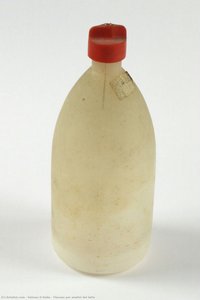
Beyond his biblical illustrations, D’Italia produced a singular sculptural piece titled “Termoigrografo,” created in 1970. This innovative artwork combines copper and metal to represent meteorological data—a testament to D'Italia's versatility as an artist and his engagement with contemporary technological advancements. The sculpture embodies the spirit of experimentation and reflects the broader artistic landscape of its era.- Material & Design: Crafted from copper and metal, “Termoigrografo” showcases a striking visual contrast between smooth surfaces and textured textures—a deliberate choice intended to convey complexity and dynamism.
- Symbolism & Concept: The sculpture’s form evokes imagery of heat and cold—representing opposing forces that govern weather patterns—underscoring D’Italia's fascination with scientific observation and artistic interpretation.
The Esther Scroll Revisited: A Masterpiece of Biblical Illustration
The Esther Scroll remains D’Italia’s most celebrated achievement, cementing his place as a pivotal figure in Jewish art history. Its enduring appeal stems from its profound psychological depth and masterful execution—a testament to D'Italia's artistic vision and technical prowess. The scroll exemplifies the fusion of biblical narrative with humanist ideals characteristic of the Dutch Golden Age.- Mezzotint Technique: D’Italia skillfully employed mezzotint engraving, a technique that utilizes hardened copper plates and abrasive powders to create tonal gradations—resulting in prints possessing unparalleled luminosity and expressive power.
- Composition & Detail: The scroll's composition is meticulously balanced, guiding the viewer's gaze across dramatic scenes depicting Esther’s courageous plea before King Xerxes and Mordechai’s unwavering loyalty. Every detail—from facial expressions to drapery folds—is rendered with painstaking accuracy.
Beyond the Scroll: Reflections on Venetian Art & Patronage
D'Italia’s artistic journey extended beyond Amsterdam, where he collaborated with Lodovico Furlanetto on “Nuoua pianta eleuata della nobile e cospicua citta di Venezia,” a map documenting Venice’s architectural heritage. This project demonstrates D’Italia’s commitment to preserving cultural traditions and engaging in dialogue between art and scholarship—reflecting the intellectual ferment of his time.- Venetian Influence: Venetian artistic sensibilities profoundly impacted D’Italia's aesthetic sensibilities, fostering a fascination with classical ideals and decorative ornamentation.
Concluding Remarks: An Artist Ahead of His Time
Salomo D’Italia died in Amsterdam around 1655, leaving behind an indelible mark on the history of engraving and Jewish art. His Esther Scroll continues to inspire admiration for its artistic brilliance and historical significance—a testament to his enduring legacy as a visionary artist who captured the spirit of his era while elevating biblical storytelling to new heights.Pytania i odpowiedzi
Pod jakimi innymi nazwiskami znany jest Salomo D'Italia?
Salomo D'Italia jest znany/a również pod pseudonimami: Salom Italia.
Czy istnieje zestawienie wszystkich tematów, które malował Salomo D'Italia?
Strona Atlas tematów prezentuje dzieła Salomo D'Italia pogrupowane według tematów.
Gdzie można znaleźć dzieła Salomo D'Italia pogrupowane według nurtów artystycznych?
Dzieła artysty Salomo D'Italia można przeglądać według nurtów na stronie Wszystkie nurty artystyczne.