Portret Robert Duncanson

100 najsłynniejszych obrazów artysty Robert Duncanson – wybór z galerii

Aktualizacja: Październik 2026 · ranking według naszego wskaźnika popularności (liczba wyszukiwań, wizyt i zamówień dla każdego dzieła) · 146 dzieł Robert Duncanson w naszym katalogu

W skrócie

Z wszystkich oryginałów pozostawionych przez Robert Duncanson, najsłynniejszym jest Italianate Landscape (1855). Tuż za nimi znajdują się Man Fishing (1848) oraz Light and Shade on Ruins on Carthage, (painting) (1845). Nasz katalog zawiera 146 dzieł autorstwa Robert Duncanson; galeria zachowała 100 najbardziej podziwianych na świecie prac, z których każda została przedstawiona wraz z datą powstania, informacją o muzeum oraz jej historią.

1821 – 1872, Fayette Hudson river style Najwięcej dzieł: Smithsonian American Art Museum

10 najlepszych obrazów artysty Robert Duncanson: wybór galerii

1
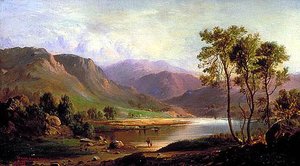
Italianate Landscape (1855) autorstwa Robert Duncanson

Italianate Landscape

1855 · Oil On Canvas

The foreground is dominated by a single tree with green leaves, positioned such that its roots appear to emerge directly from the ground. This central botanical element anchors the composition, providing a sense of scale against the broader environment. Beyond this immediate greenery, the landscape opens into a middle ground populated by several figures. These individuals are scattered throughout the scene, some positioned near the viewer and others appearing as…

The Robert Duncanson selection continues, 11 to 100

11Still Life with Fruit and Nuts (1848) autorstwa Robert DuncansonStill Life with Fruit and Nuts1848 · National Gallery of Art 12Falls of Minehaha, Cincinnati, Ohio, (painting) (1862) autorstwa Robert DuncansonFalls of Minehaha, Cincinnati, Ohio, (painting)1862 13Richard Sutton Rust, I, (painting) (1858) autorstwa Robert DuncansonRichard Sutton Rust, I, (painting)1858 14Landscape with Family by Lake, (painting) (1858) autorstwa Robert DuncansonLandscape with Family by Lake, (painting)1858 · Smithsonian American Art Museum 15Portrait of Freeman Carey, (painting) (1856) autorstwa Robert DuncansonPortrait of Freeman Carey, (painting)1856 16Canadian Falls (1865) autorstwa Robert DuncansonCanadian Falls1865 · Narodowa Galeria Kanady 17Landscape with Men and Boats, (painting) (1868) autorstwa Robert DuncansonLandscape with Men and Boats, (painting)1868 18Dog's Head of Scotland, (painting) (1870) autorstwa Robert DuncansonDog's Head of Scotland, (painting)1870 19Vesuvius and Pompeii, (painting) (1871) autorstwa Robert DuncansonVesuvius and Pompeii, (painting)1871 20Mountain Pool, (painting) (1870) autorstwa Robert DuncansonMountain Pool, (painting)1870 21Romantic Landscape, (painting) (1871) autorstwa Robert DuncansonRomantic Landscape, (painting)1871 22American Winemaker Nicholas Longworth (1858) autorstwa Robert DuncansonAmerican Winemaker Nicholas Longworth1858 · Cincinnati Art Museum 23Floral Still-Life (1852) autorstwa Robert DuncansonFloral Still-Life1852 · Taft Museum of Art 24Landscape Mural (1852) autorstwa Robert DuncansonLandscape Mural1852 · Taft Museum of Art 25William Berthelet (1846) autorstwa Robert DuncansonWilliam Berthelet1846 · Detroit Institute of Arts 26The Caves (1869) autorstwa Robert DuncansonThe Caves1869 · Amon Carter Museum of American Art 27Ellen's Isle, Loch Katrine (1871) autorstwa Robert DuncansonEllen's Isle, Loch Katrine1871 · Detroit Institute of Arts 28Landscape Mural (1852) autorstwa Robert DuncansonLandscape Mural1852 · Taft Museum of Art 29Scotch Highlands (1848) autorstwa Robert DuncansonScotch Highlands1848 · Smithsonian American Art Museum 30Mayan Ruins, Yucatan (1848) autorstwa Robert DuncansonMayan Ruins, Yucatan1848 · Dayton Art Institute 31Western Hunters Encampment, (painting) (1848) autorstwa Robert DuncansonWestern Hunters Encampment, (painting)1848 32Roses Fancy Still Life, Still Life with Roses, (painting) (1848) autorstwa Robert DuncansonRoses Fancy Still Life, Still Life with Roses, (painting)1848 33Vulture and Its Prey, (painting) (1844) autorstwa Robert DuncansonVulture and Its Prey, (painting)1844 · Smithsonian American Art Museum 34Roses Still Life, (painting) (1848) autorstwa Robert DuncansonRoses Still Life, (painting)1848 35Cliff Mine (1848) autorstwa Robert DuncansonCliff Mine1848 36Vulture and Its Prey (1844) autorstwa Robert DuncansonVulture and Its Prey1844 37Roses Still Life (1848) autorstwa Robert DuncansonRoses Still Life1848 · Smithsonian American Art Museum 38Roses Fancy Still Life, Still Life with Roses (1848) autorstwa Robert DuncansonRoses Fancy Still Life, Still Life with Roses1848 · Smithsonian American Art Museum 39Landscape Mural (1852) autorstwa Robert DuncansonLandscape Mural1852 · Taft Museum of Art 40Landscape with Waterfall (1853) autorstwa Robert DuncansonLandscape with Waterfall1853 · Cincinnati Art Museum 41Landscape with Ruin (1853) autorstwa Robert DuncansonLandscape with Ruin1853 · Museum of Art 42Cincinnati from Covington, Kentucky (1851) autorstwa Robert DuncansonCincinnati from Covington, Kentucky1851 · Cincinnati Art Museum 43A View of Asheville, North Carolina (1850) autorstwa Robert DuncansonA View of Asheville, North Carolina1850 · Museum of Fine Arts 44Dream of Arcadia (1852) autorstwa Robert DuncansonDream of Arcadia1852 45The Ford, (painting) (1852) autorstwa Robert DuncansonThe Ford, (painting)1852 46Chapultepec Castle, (painting) (1855) autorstwa Robert DuncansonChapultepec Castle, (painting)1855 47Fruit Still Life (1849) autorstwa Robert DuncansonFruit Still Life1849 · National Gallery of Art 48Italianate Landscape, (painting) (1855) autorstwa Robert DuncansonItalianate Landscape, (painting)1855 49Still Life, (painting) (1849) autorstwa Robert DuncansonStill Life, (painting)1849 50Summer (1849) autorstwa Robert DuncansonSummer1849 51The Garden of Eden (1852) autorstwa Robert DuncansonThe Garden of Eden1852 · High Museum of Art 52Winter (1849) autorstwa Robert DuncansonWinter1849 53The Stone Bridge (1851) autorstwa Robert DuncansonThe Stone Bridge1851 54Carp River, Lake Superior (1850) autorstwa Robert DuncansonCarp River, Lake Superior1850 55Pompeii (1855) autorstwa Robert DuncansonPompeii1855 · Smithsonian American Art Museum 56View of Lake Pepin, Minnesota (1862) autorstwa Robert DuncansonView of Lake Pepin, Minnesota1862 · Cleveland Museum of Art 57Minneopa Falls, Minnesota (1862) autorstwa Robert DuncansonMinneopa Falls, Minnesota1862 · Cincinnati Art Museum 58Land of the Lotus Eaters (1861) autorstwa Robert DuncansonLand of the Lotus Eaters1861 59Chapultpec Castle (1860) autorstwa Robert DuncansonChapultpec Castle1860 · SCAD Museum of Art 60On the St. Anne's River, (painting) (1863) autorstwa Robert DuncansonOn the St. Anne's River, (painting)1863 61Mensehoha Falls, (painting) (1862) autorstwa Robert DuncansonMensehoha Falls, (painting)1862 62Lancaster, N. H., (painting) (1862) autorstwa Robert DuncansonLancaster, N. H., (painting)1862 63Minnenopa Falls, Minnesota, (painting) (1862) autorstwa Robert DuncansonMinnenopa Falls, Minnesota, (painting)1862 64Forest Landscape, (painting) (1857) autorstwa Robert DuncansonForest Landscape, (painting)1857 65Valley Pasture, (painting) (1857) autorstwa Robert DuncansonValley Pasture, (painting)1857 66Landscape with Brook (1859) autorstwa Robert DuncansonLandscape with Brook1859 67Remembrances of a Scene near Auerbach, (painting) (1856) autorstwa Robert DuncansonRemembrances of a Scene near Auerbach, (painting)1856 68Western Forest (also known as Aftermath of a Tornado) (1857) autorstwa Robert DuncansonWestern Forest (also known as Aftermath of a Tornado)1857 · Cincinnati Art Museum 69Lancaster, New Hampshire (1862) autorstwa Robert DuncansonLancaster, New Hampshire1862 · Museum of Fine Arts 70Valley Pasture (1857) autorstwa Robert DuncansonValley Pasture1857 · Smithsonian American Art Museum 71Remembrances of a Scene near Auerbach (1856) autorstwa Robert DuncansonRemembrances of a Scene near Auerbach1856 · Smithsonian American Art Museum 72Portrait of Freeman Cary (1856) autorstwa Robert DuncansonPortrait of Freeman Cary1856 · Smithsonian American Art Museum 73Landscape with Family by Lake (1858) autorstwa Robert DuncansonLandscape with Family by Lake1858 74Storm Off the Irish Coast (1870) autorstwa Robert DuncansonStorm Off the Irish Coast1870 · Detroit Institute of Arts 75Vale of Kashmir (1867) autorstwa Robert DuncansonVale of Kashmir1867 · Cleveland Museum of Art 76Le Lac Saint-Charles (1864) autorstwa Robert DuncansonLe Lac Saint-Charles1864 · Musée national des beaux-arts du Québec 77Dog's Head of Scotland (1870) autorstwa Robert DuncansonDog's Head of Scotland1870 · Museum of Fine Arts 78Woodland Stream, an Idyll (1865) autorstwa Robert DuncansonWoodland Stream, an Idyll1865 · High Museum of Art 79Woodland Pool (1868) autorstwa Robert DuncansonWoodland Pool1868 · Cincinnati Art Museum 80View of the St. Anne's River (1870) autorstwa Robert DuncansonView of the St. Anne's River1870 · Saint Louis Art Museum 81The Rising Mist (1867) autorstwa Robert DuncansonThe Rising Mist1867 · Cincinnati Art Museum 82Loch Long (1867) autorstwa Robert DuncansonLoch Long1867 · Indianapolis Museum of Art 83Pompeii (1871) autorstwa Robert DuncansonPompeii1871 · Smithsonian American Art Museum 84Loch Long (1867) autorstwa Robert DuncansonLoch Long1867 · Indianapolis Museum of Art 85Meeting by the River (1864) autorstwa Robert DuncansonMeeting by the River1864 · Williams College Museum of Art 86Heart of the Andes (1871) autorstwa Robert DuncansonHeart of the Andes1871 87View of the St. Annes River, Canada, (painting) (1870) autorstwa Robert DuncansonView of the St. Annes River, Canada, (painting)1870 88Highland Scenery, the Pass of Lery, (painting) (1866) autorstwa Robert DuncansonHighland Scenery, the Pass of Lery, (painting)1866 89Mountain Landscape with Cows and Sheep, (painting) (1866) autorstwa Robert DuncansonMountain Landscape with Cows and Sheep, (painting)1866 90Woodland Pool, (painting) (1868) autorstwa Robert DuncansonWoodland Pool, (painting)1868 91Loch Long, (painting) (1867) autorstwa Robert DuncansonLoch Long, (painting)1867 · Smithsonian American Art Museum 92The Caves, (painting) (1869) autorstwa Robert DuncansonThe Caves, (painting)1869 93Landscape with Lake, (painting) (1864) autorstwa Robert DuncansonLandscape with Lake, (painting)1864 · Smithsonian American Art Museum 94Landscape (1870) autorstwa Robert DuncansonLandscape1870 95Vale of Kashmir (1870) autorstwa Robert DuncansonVale of Kashmir1870 96Waterfall on Mont Morency, (painting) (1864) autorstwa Robert DuncansonWaterfall on Mont Morency, (painting)1864 97Recollections of Italy (1864) autorstwa Robert DuncansonRecollections of Italy1864 · Wadsworth Atheneum 98Landscape in Scotland (1870) autorstwa Robert DuncansonLandscape in Scotland1870 99Landscape (1865) autorstwa Robert DuncansonLandscape1865 100Mount Oxford (1864) autorstwa Robert DuncansonMount Oxford1864

Tematy, które przyciągnęły wzrok Robert Duncanson

Cztery motywy najczęściej powracające w tych oryginałach, z których każdy doczekał się swojego najdoskonalszego przykładu.

Muzea przechowujące oryginały Robert Duncanson

8 muzeów, w których znajduje się najwięcej obrazów z tej strony.

Muzea Miasto Dzieła artysty Robert Duncanson Obrazy z tej listy
Smithsonian American Art Museum, WaszyngtonSmithsonian American Art Museum Waszyngton 22 Mount Healthy, Ohio, Landscape with Family by Lake, (painting), Scotch Highlands
Cincinnati Art Museum, CincinnatiCincinnati Art Museum Cincinnati 8 American Winemaker Nicholas Longworth, Landscape with Waterfall, Cincinnati from Covington, Kentucky
Taft Museum of Art, CincinnatiTaft Museum of Art Cincinnati 10 Floral Still-Life, Landscape Mural, Landscape Mural
Detroit Institute of Arts, DetroitDetroit Institute of Arts Detroit 5 William Berthelet, Ellen's Isle, Loch Katrine, Storm Off the Irish Coast
SCAD Museum of Art, SavannahSCAD Museum of Art Savannah 2 Man Fishing, Chapultpec Castle
National Gallery of Art, WaszyngtonNational Gallery of Art Waszyngton 2 Still Life with Fruit and Nuts, Fruit Still Life
High Museum of Art, AtlantaHigh Museum of Art Atlanta 2 The Garden of Eden, Woodland Stream, an Idyll
Cleveland Museum of Art, ClevelandCleveland Museum of Art Cleveland 2 View of Lake Pepin, Minnesota, Vale of Kashmir

Robert Duncanson dekada po dekadzie: oryginały definiujące każdy okres

Dzieła według dekad

Wybierz dekadę, aby zobaczyć dzieło, które ją definiuje.

Pytania kolekcjonerów o obrazy Robert Duncanson

Z jakiego dzieła najbardziej znany jest Robert Duncanson?Odkryj odpowiedź

Italianate Landscape (1855). Następne są Man Fishing (1848) oraz Light and Shade on Ruins on Carthage, (painting) (1845).

W jakim wieku był Robert Duncanson, gdy powstało Italianate Landscape?Odkryj odpowiedź

34 lat: Italianate Landscape pochodzi z 1855, a Robert Duncanson urodził(a) się w 1821.

Jakie są dziesięć najsłynniejszych obrazów, których autorem jest Robert Duncanson?Odkryj odpowiedź

Italianate Landscape, Man Fishing, Light and Shade on Ruins on Carthage, (painting), The Drunkard's Plight, (painting), William Berthelet, (painting), Mount Healthy, Ohio, Uncle Tom and Little Eva, (painting), Blue Hole, Flood Waters, Little Miami River, (painting), View of Asheville, North Carolina, (painting) i Pompeii, (painting). Powyższy ranking zawiera rok powstania oraz muzeum dla każdego z nich.

Ile obrazów pozostawił po sobie Robert Duncanson?Odkryj odpowiedź

Nasz katalog zawiera 146 dzieł artysty Robert Duncanson, datowanych od 1844 do 1871.

W których muzeach znajdują się arcydzieła Robert Duncanson?Odkryj odpowiedź

W większości znajdują się w Smithsonian American Art Museum (Waszyngton), Cincinnati Art Museum (Cincinnati) i Taft Museum of Art (Cincinnati). Powyższa tabela muzeów zawiera ich pełną listę.

W których latach Robert Duncanson namalował swoje najsłynniejsze dzieła?Odkryj odpowiedź

W 1850s: 34 z 100 dzieł na tej stronie powstało w tym czasie, w tym Italianate Landscape.

Jakie są pierwsze i ostatnie słynne oryginały Robert Duncanson?Odkryj odpowiedź

Na tej stronie najwcześniejszy to Mount Healthy, Ohio (1844), a najpóźniejszy Vesuvius and Pompeii, (painting) (1871).

Jakie tematy Robert Duncanson wybierał najczęściej?Odkryj odpowiedź

Landscape (7), Landscape painting (5) i Mountains (4), w ramach 100 dzieł na tej stronie.

Której techniki Robert Duncanson używał najczęściej?Odkryj odpowiedź

Oil On Canvas, dla 6 z 100 dzieł na tej stronie.

Do jakiego nurtu artystycznego należy Robert Duncanson?Odkryj odpowiedź

Hudson river style, sądząc po oryginałach na tej stronie.

Które dzieła Robert Duncanson znajdują się w Smithsonian American Art Museum?Odkryj odpowiedź

Mount Healthy, Ohio, Landscape with Family by Lake, (painting) i Scotch Highlands: Smithsonian American Art Museum, Waszyngton posiada 13 dzieł widocznych na tej stronie.

Robert Duncanson: życie i twórczość

Robert Seldon Duncanson: A Pioneer of the American Landscape

Robert Seldon Duncanson, a name that resonates with both artistic brilliance and profound historical significance, emerged as a pivotal figure in 19th-century American art. Born around 1821 in Fayetteville, New York, to parents of European and African descent—his father, John Dean Duncanson, a free Black tradesman who instilled the values of diligence and learning—Duncanson navigated a world riddled with racial prejudice while simultaneously achieving international acclaim as a landscape painter. His journey was one defined by self-education, unwavering dedication, and an intimate connection to the natural world, ultimately establishing him as the first African American artist to gain widespread recognition on both sides of the Atlantic. The family’s relocation to Monroe, Michigan, saw young Robert apprenticed in carpentry and painting, revealing an early aptitude for art that would soon shape his destiny.
From Portraiture to Panoramic Vistas

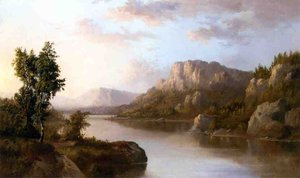
Duncanson's artistic development initially centered around portraiture—a practical means of establishing himself as a professional artist. However, the vibrant cultural scene of Cincinnati, Ohio—a city affectionately known as the “Athens of the West”—beckoned him in 1840, offering opportunities for growth and exposure that were unavailable elsewhere. Largely self-taught, Duncanson honed his skills through diligent study of prints and engravings, meticulously sketching directly from nature, and carefully copying the works of established masters. This rigorous approach fostered a keen eye for detail and remarkable technical proficiency—a testament to his dedication despite lacking formal training. It was in Cincinnati that he began his transformative transition towards landscape painting, drawn by the romantic ideals and sublime beauty of the American wilderness. The influence of the Hudson River School became increasingly apparent in his work, particularly the evocative compositions of Thomas Cole, whose dramatic depictions of nature resonated deeply with Duncanson’s artistic sensibilities. He wasn't merely replicating scenes; he was interpreting them through a uniquely personal lens, imbuing his canvases with a sense of tranquility and spiritual connection—a reflection of his own profound relationship with the natural world.

A European Sojourn and International Recognition

A pivotal moment in Duncanson’s career arrived in 1853-1854 with an extended tour of Europe. This journey provided him with invaluable exposure to the works of European masters, broadening his artistic horizons and refining his technique. He studied the Old Masters, absorbing their approaches to light, color, and composition—elements he skillfully integrated into his own distinctive style. Upon his return, Duncanson’s work demonstrated a newfound sophistication and maturity, attracting attention not only in America but also in England, Scotland, and Canada. Exhibitions followed, solidifying his reputation as an artist of considerable talent and vision. He became a key figure in developing the Ohio River Valley landscape tradition, capturing the serene beauty of the region with remarkable skill. His paintings weren’t simply representations of place; they were expressions of mood, atmosphere, and the sublime power of nature—often imbued with a sense of quiet contemplation.

Symbolism and Racial Context

While Duncanson primarily focused on depicting idyllic landscapes, his work has been subject to scholarly debate regarding potential symbolic meanings. Given his racial background and association with abolitionist leaders in Cincinnati, some historians and critics have suggested that subtle allegories related to the evils of slavery might be embedded within his paintings. The depiction of loggers floating rafts down rivers, for instance, could be interpreted as a metaphor for the forced migration of enslaved people—a poignant reminder of the injustices faced by African Americans during this era. However, it’s important to note that Duncanson himself often minimized the human narrative in his landscapes, prioritizing the beauty and grandeur of nature. This deliberate choice reflects a broader artistic trend of the time, where the emphasis was on capturing the sublime experience of being immersed in the natural world—rather than explicitly addressing social or political issues. Nevertheless, the possibility of these subtle racial metaphors adds another layer of complexity to Duncanson’s legacy, prompting ongoing discussion and interpretation among art historians.

Legacy and Historical Significance

Robert Seldon Duncanson's legacy extends far beyond his artistic achievements. He broke down barriers for African American artists during a period marked by pervasive racial discrimination, serving as an inspiration for future generations. His success challenged prevailing societal norms and demonstrated the power of art to transcend prejudice—a remarkable feat considering the limitations placed upon Black artists at the time. For many years, his work was unjustly overlooked, relegated to the margins of art history. However, recent scholarship and exhibitions have brought renewed attention to his contributions, recognizing him as a vital figure in American landscape painting. He died unexpectedly in 1872 while preparing for an exhibition in Detroit, possibly due to lead poisoning from the paints he used—a tragic end to a remarkable life. Today, Robert Seldon Duncanson stands as a pioneering figure—a testament to the power of art to overcome adversity and leave an indelible mark on the world. His serene vistas continue to captivate audiences, reminding us of the enduring beauty of nature and the remarkable talent of an artist who dared to dream beyond the limitations imposed upon him by his time.
  • Major Themes: Landscape painting, Romanticism, Hudson River School influence, spiritual connection with nature.
  • Notable Works: “Landscape with Sheep,” “Roses Still Life,” and numerous depictions of the Ohio River Valley.