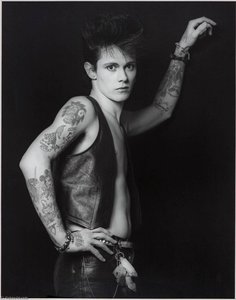
Portret Robert Mapplethorpe

31 najsłynniejszych obrazów artysty Robert Mapplethorpe – wybór z galerii

Aktualizacja: Listopad 2026 · ranking według naszego wskaźnika popularności (liczba wyszukiwań, wizyt i zamówień dla każdego dzieła) · 32 dzieł Robert Mapplethorpe w naszym katalogu

W skrócie

Spośród wszystkich dzieł oryginalnych, które pozostawił Robert Mapplethorpe, najsłynniejszym jest Ajitto, znajdujący się w kolekcji Muzeum George’a Eastmana w Rochester. Tuż za nimi znajdują się Ajitto oraz Patti Smith (1976). Nasz katalog zawiera 32 dzieł autorstwa Robert Mapplethorpe; galeria zachowała 31 najbardziej podziwianych na świecie prac, z których każda została przedstawiona wraz z datą powstania, informacją o muzeum oraz jej historią.

1948 – 1989, Dallas Contemporary realism Najwięcej dzieł: SCAD Museum of Art

10 najlepszych obrazów artysty Robert Mapplethorpe: wybór galerii

1
Ajitto autorstwa Robert Mapplethorpe

Ajitto

Black and White Photography · Muzeum George’a Eastmana, Rochester

This arresting monochrome photograph, titled Ajitto, immediately draws the viewer into an intimate space defined by shadow and exquisite form. It is a study in stillness, capturing a nude male figure seated upon a simple stool. The composition itself speaks to a deliberate sense of balance; the subject occupies the center, lending the piece a formal gravity that belies the vulnerability of the pose. Shot from a slightly elevated angle,…

2
Ajitto autorstwa Robert Mapplethorpe

Ajitto

Gelatin Silver Print · Muzeum George’a Eastmana, Rochester

Robert Mapplethorpe's "Ajitto," created in 1981, is not merely a photograph; it’s a distilled essence of vulnerability and introspection. The image, rendered in stark black and white gelatin silver print, depicts a young man seated on a simple stool, his hands clasped together between his legs – a pose that immediately evokes both shame and profound contemplation. The blurred background subtly emphasizes the subject's isolation, drawing our attention entirely to…

3
Patti Smith (1976) autorstwa Robert Mapplethorpe

Patti Smith

1976 · Black and White Photography

A stark, monochrome stillness settles over the frame as Patti Smith meets the lens. She stands in a moment of quiet intensity, her presence filling the space with a raw, unadorned energy. The light, descending from above and slightly to the left, carves out the contours of her face, casting deep shadows that lend a sculptural quality to her features. There is a directness in her eyes, a steady and…

4
Lily with Bud (1989) autorstwa Robert Mapplethorpe

Lily with Bud

1989 · Black and White Photography · SCAD Museum of Art, Savannah

In the quiet, monochromatic realm of Robert Mapplethorpe’s "Lily with Bud," beauty is not merely observed; it is sculpted from light and shadow. Created in 1989, this profound photograph serves as a masterclass in the art of the still life, capturing a single lily plant that stands as a testament to the artist's singular ability to find the divine within the organic. The composition is deceptively simple, presenting a fully…

5
Tulip (1984) autorstwa Robert Mapplethorpe

Tulip

1984 · Giclée Print · Galeria Dulwich, Londyn

Robert Mapplethorpe’s Tulip, executed in 1984, isn’t merely a photograph; it's an arresting distillation of form, color, and mood. Against a relentlessly black background – a void that seems to absorb all light – two tulips stand as beacons of delicate beauty. The image immediately commands attention, not with vibrant hues but through the masterful manipulation of tonal values, creating a dramatic interplay of light and shadow that elevates the…

6
Orchids (1985) autorstwa Robert Mapplethorpe

Orchids

1985 · Digital Photography · Galeria Dulwich, Londyn

Robert Mapplethorpe's "Orchids" is not merely a photograph; it’s an arresting distillation of form, light, and a quietly profound sense of stillness. Executed in 1985, this black-and-white image transcends the commonplace, transforming three orchids into subjects of almost sculptural intensity. It speaks to a world where beauty is rigorously defined, where precision reigns supreme, and where even the most delicate floral arrangement can evoke a powerful emotional response.

7
Lily (1984) autorstwa Robert Mapplethorpe

Lily

1984 · Gelatin Silver Print · SCAD Museum of Art, Savannah

In the quiet, monochromatic realm of Robert Mapplethorpe’s Lily, beauty is sculpted from light and shadow. Executed in 1984, this striking black and white photograph presents a highly stylized still life that focuses intensely on the flower’s form and texture. The composition centers on a single white lily positioned slightly off-center against a dense, dark background. A slender stem ascends diagonally across the frame, guiding the viewer’s gaze towards the…

8
Blue Rose (1988) autorstwa Robert Mapplethorpe

Blue Rose

1988 · Acrylic On Canvas · Galeria Dulwich, Londyn

Robert Mapplethorpe’s “Blue Rose”: A Study in Contrasts The photograph "Blue Rose" by Robert Mapplethorpe stands as an arresting testament to the artist's singular vision—a stark black and white depiction of a solitary blue rose against a velvety dark background. More than just a botanical subject, it embodies Mapplethorpe’s fascination with formal beauty intertwined with unsettling psychological depth, reflecting his broader exploration of desire and taboo subjects within the realm…

9
Lisa Lyon_9 autorstwa Robert Mapplethorpe

Lisa Lyon_9

Black and White Photography · Borusan Contemporary, Stambuł

The artwork titled Lisa Lyon_9 is a black and white photographic portrait created by the artist Robert Yarber. This specific piece features Lisa Lyon, a figure known for her work as a bodybuilder and actress. The image captures the subject in a monochrome palette, utilizing a range of grey tones, blacks, and whites to define the form.

10
Robert Mapplethorpe 1970-1983 autorstwa Robert Mapplethorpe

Robert Mapplethorpe 1970-1983

Black and White Photography · Modern Art Oxford, Oxford

The work titled Robert Mapplethorpe 1970-1983 emerges from the creative vision of Robert Yarber. This piece occupies a specific place within the artist's catalog, existing as a distinct entry in his ongoing body of work. It carries a presence that demands attention, inviting a close look at the way Yarber interprets his subject matter through his unique lens.

Kontynuacja zestawienia Robert Mapplethorpe, od 11 do 31

Słynne obrazy Robert Mapplethorpe epoka po epoce

Tematy, które przyciągnęły wzrok Robert Mapplethorpe

Cztery motywy najczęściej powracające w tych oryginałach, z których każdy doczekał się swojego najdoskonalszego przykładu.

Muzea przechowujące oryginały Robert Mapplethorpe

5 muzeów, w których znajduje się najwięcej obrazów z tej strony.

Muzea Miasto Dzieła artysty Robert Mapplethorpe Obrazy z tej listy
SCAD Museum of Art, SavannahSCAD Museum of Art Savannah 3 Lily with Bud, Lily, Orchid
Galeria Dulwich, LondynGaleria Dulwich Londyn 3 Tulip, Orchids, Blue Rose
Modern Art Oxford, OxfordModern Art Oxford Oxford 3 Robert Mapplethorpe 1970-1983, Robert Mapplethorpe 1970-1983, Robert Mapplethorpe 1970-1983
Muzeum George’a Eastmana, RochesterMuzeum George’a Eastmana Rochester 2 Ajitto, Ajitto
Borusan Contemporary, StambułBorusan Contemporary Stambuł 1 Lisa Lyon_9

Robert Mapplethorpe rok po roku: oryginały, które definiują każdy z nich

Zestawienie obejmuje twórczość Robert Mapplethorpe z okresu ponad 14 lat, od 1976 do 1989, prezentując najdoskonalsze oryginały z każdego roku.

Dzieła według lat

Wybierz rok, aby zobaczyć oryginały.

Pytania kolekcjonerów o obrazy Robert Mapplethorpe

Z jakiego dzieła najbardziej znany jest Robert Mapplethorpe?Odkryj odpowiedź

Ajitto, Muzeum George’a Eastmana, Rochester. Następne są Ajitto oraz Patti Smith (1976).

Jakie są dziesięć najsłynniejszych obrazów, których autorem jest Robert Mapplethorpe?Odkryj odpowiedź

Ajitto, Ajitto, Patti Smith, Lily with Bud, Tulip, Orchids, Lily, Blue Rose, Lisa Lyon_9 i Robert Mapplethorpe 1970-1983. Powyższy ranking zawiera rok powstania oraz muzeum dla każdego z nich.

Ile obrazów pozostawił po sobie Robert Mapplethorpe?Odkryj odpowiedź

Nasz katalog zawiera 32 dzieł artysty Robert Mapplethorpe, datowanych od 1976 do 1989.

W których muzeach znajdują się arcydzieła Robert Mapplethorpe?Odkryj odpowiedź

W większości znajdują się w SCAD Museum of Art (Savannah), Galeria Dulwich (Londyn) i Modern Art Oxford (Oxford). Powyższa tabela muzeów zawiera ich pełną listę.

W których latach Robert Mapplethorpe namalował swoje najsłynniejsze dzieła?Odkryj odpowiedź

W 1976: 4 z 31 dzieł na tej stronie powstało w tym czasie, w tym Patti Smith.

Jakie są pierwsze i ostatnie słynne oryginały Robert Mapplethorpe?Odkryj odpowiedź

Na tej stronie najwcześniejszy to Patti Smith (1976), a najpóźniejszy Lily with Bud (1989).

Jakie tematy Robert Mapplethorpe wybierał najczęściej?Odkryj odpowiedź

Black and white (8), Photography (5) i Portraits (3), w ramach 31 dzieł na tej stronie.

Której techniki Robert Mapplethorpe używał najczęściej?Odkryj odpowiedź

Black and White Photography, dla 5 z 31 dzieł na tej stronie.

Do jakiego nurtu artystycznego należy Robert Mapplethorpe?Odkryj odpowiedź

Contemporary realism, sądząc po oryginałach na tej stronie.

Które dzieła Robert Mapplethorpe znajdują się w SCAD Museum of Art?Odkryj odpowiedź

Lily with Bud, Lily i Orchid: SCAD Museum of Art, Savannah posiada 3 dzieł widocznych na tej stronie.

Robert Mapplethorpe: życie i twórczość

A Life Forged in Form: The World of Robert Mapplethorpe

Robert Mapplethorpe, a name synonymous with both breathtaking beauty and profound controversy, remains one of the most influential photographers of the 20th century. Born in Floral Park, New York, in 1946, his journey was not one of immediate artistic recognition but rather a gradual evolution fueled by experimentation, mentorship, and an unwavering commitment to exploring the boundaries of form and desire. Initially drawn to graphic arts at Pratt Institute, Mapplethorpe quickly found himself chafing against traditional academic constraints, ultimately leaving before completing his degree. This departure wasn’t a rejection of art itself, but a search for a medium that could more directly translate his burgeoning vision – a vision deeply influenced by artists like Joseph Cornell and Marcel Duchamp, whose embrace of the found object and conceptual play resonated with his own developing aesthetic sensibilities. These early years were marked by mixed-media collages, intricate assemblages born from salvaged materials and cut images, hinting at the formal precision and thematic concerns that would later define his photographic work.

The Polaroid Genesis and a Creative Partnership

The pivotal moment arrived with the acquisition of a Polaroid camera in 1970. This wasn’t merely a change in tools; it was a revelation. The immediacy of the Polaroid process allowed Mapplethorpe to bypass traditional darkroom techniques, focusing instead on composition, light, and shadow – elements that would become hallmarks of his style. Initially, these Polaroids were integrated into his collages, but they soon began to assert their independence, revealing a unique power in their stark black and white tonality. Simultaneously, a deeply significant relationship blossomed with poet and musician Patti Smith. Their connection, spanning from 1967 to 1972, was one of mutual artistic support and inspiration. Smith became a frequent subject for Mapplethorpe’s lens, her raw energy and bohemian spirit captured in images that possess an intimate vulnerability. This period wasn't just about romantic partnership; it was a crucible where both artists honed their craft, challenging each other to push creative boundaries. They shared a studio space, explored experimental music, and collaborated on visual projects – a dynamic exchange of ideas that profoundly shaped Mapplethorpe’s artistic vision.

Mastering the Form: Style, Subjects, and Controversy

Mapplethorpe’s photographic style is characterized by a rigorous formalism – an emphasis on composition, symmetry, and the interplay of light and shadow reminiscent of classical sculpture. He wasn't simply documenting his subjects; he was *constructing* them, elevating everyday objects and human forms to iconic status through meticulous technique. His subject matter was remarkably diverse: celebrity portraits featuring figures like Andy Warhol and Deborah Harry, exquisitely rendered floral still lifes – particularly orchids and calla lilies – and strikingly intimate self-portraits. However, it was his exploration of the BDSM subculture in 1970s and 80s New York City that ignited significant controversy. These images, unflinching in their depiction of sexuality and power dynamics, challenged conventional notions of taste and morality, sparking debates about censorship and artistic freedom. Mapplethorpe didn’t shy away from these controversies; he embraced them as an inherent part of his artistic practice, believing that art should provoke thought and challenge societal norms. He frequently referenced religious or classical imagery within his work, creating a compelling dialogue between contemporary subjects and historical art forms, further complicating interpretations and adding layers of meaning. The influence of artists like Duchamp is evident in Mapplethorpe’s deliberate use of everyday objects as artistic statements, elevating the mundane to the level of significance.

Influences and Development

Mapplethorpe's early influences extended beyond the avant-garde. He was deeply affected by the work of Joseph Cornell, whose box collages explored themes of memory and fantasy through carefully arranged found objects. Marcel Duchamp’s conceptual approach to art – challenging traditional notions of beauty and authorship – also resonated with Mapplethorpe’s developing aesthetic sensibilities. His early experimentation with mixed-media collage laid the groundwork for his later photographic work, demonstrating a fascination with composition, texture, and the juxtaposition of disparate elements. The move to Polaroid photography was crucial, allowing him to prioritize visual impact over technical complexities. He studied classical sculpture, particularly the works of Michelangelo, seeking inspiration in the formal balance and idealized beauty of ancient art forms. This influence is evident in his later portraits, which often possess a sculptural quality, with figures arranged in carefully considered poses that evoke a sense of timelessness.

Legacy and Lasting Impact

The mentorship of art curator Sam Wagstaff proved instrumental in Mapplethorpe’s career trajectory, providing crucial financial support and guidance during his formative years. Throughout the 1980s, Mapplethorpe exhibited extensively, gaining increasing recognition within the art world culminating in a major retrospective at the Whitney Museum of American Art in 1988 – a landmark achievement that solidified his position as a significant contemporary artist. However, this success was shadowed by controversy surrounding *Robert Mapplethorpe: The Perfect Moment* exhibition, which ignited fierce debates about public funding for art deemed obscene. Tragically, Mapplethorpe succumbed to AIDS in 1989, leaving behind a vast and complex body of work that continues to resonate today. Following his death, the Robert Mapplethorpe Foundation was established to preserve his artistic legacy, support medical research related to HIV/AIDS, and promote photography as an art form. His influence extends far beyond the realm of photography, impacting generations of artists with his bold exploration of sexuality, formalist approach, and unwavering commitment to pushing creative boundaries. Robert Mapplethorpe’s work remains a subject of ongoing discussion and analysis, cementing his place as one of the most important – and often challenging – American artists of the 20th century. He elevated photography to a respected art form, proving that it could be more than just documentation; it could be sculpture, poetry, and provocation all rolled into one striking image.