Portret Robert L Alexander

21 najsłynniejszych obrazów artysty Robert L Alexander – wybór z galerii

Aktualizacja: Listopad 2026 · ranking według naszego wskaźnika popularności (liczba wyszukiwań, wizyt i zamówień dla każdego dzieła) · 27 dzieł Robert L Alexander w naszym katalogu

W skrócie

Z wszystkich oryginałów pozostawionych przez Robert L Alexander, najsłynniejszym jest A Tangier Gateway (1887). Tuż za nimi znajdują się The Happy Mother (1887) oraz Wat and Wearie (1886). Nasz katalog zawiera 27 dzieł autorstwa Robert L Alexander; galeria zachowała 21 najbardziej podziwianych na świecie prac, z których każda została przedstawiona wraz z datą powstania, informacją o muzeum oraz jej historią.

1840 – 1923 Najwięcej dzieł: Scottish National Gallery

10 najlepszych obrazów artysty Robert L Alexander: wybór galerii

1
A Tangier Gateway (1887) autorstwa Robert L Alexander

A Tangier Gateway

1887 · Oil

The sun hangs high over a stone archway in Tangier, casting a soft light that filters through the opening to reveal a slice of brilliant blue sky. Within this frame, a man moves with a quiet, practiced rhythm, guiding two donkeys through the ancient masonry. The animals walk close together, their forms overlapping as they navigate the narrow passage. One donkey leads the way, its head slightly forward, while the…

2
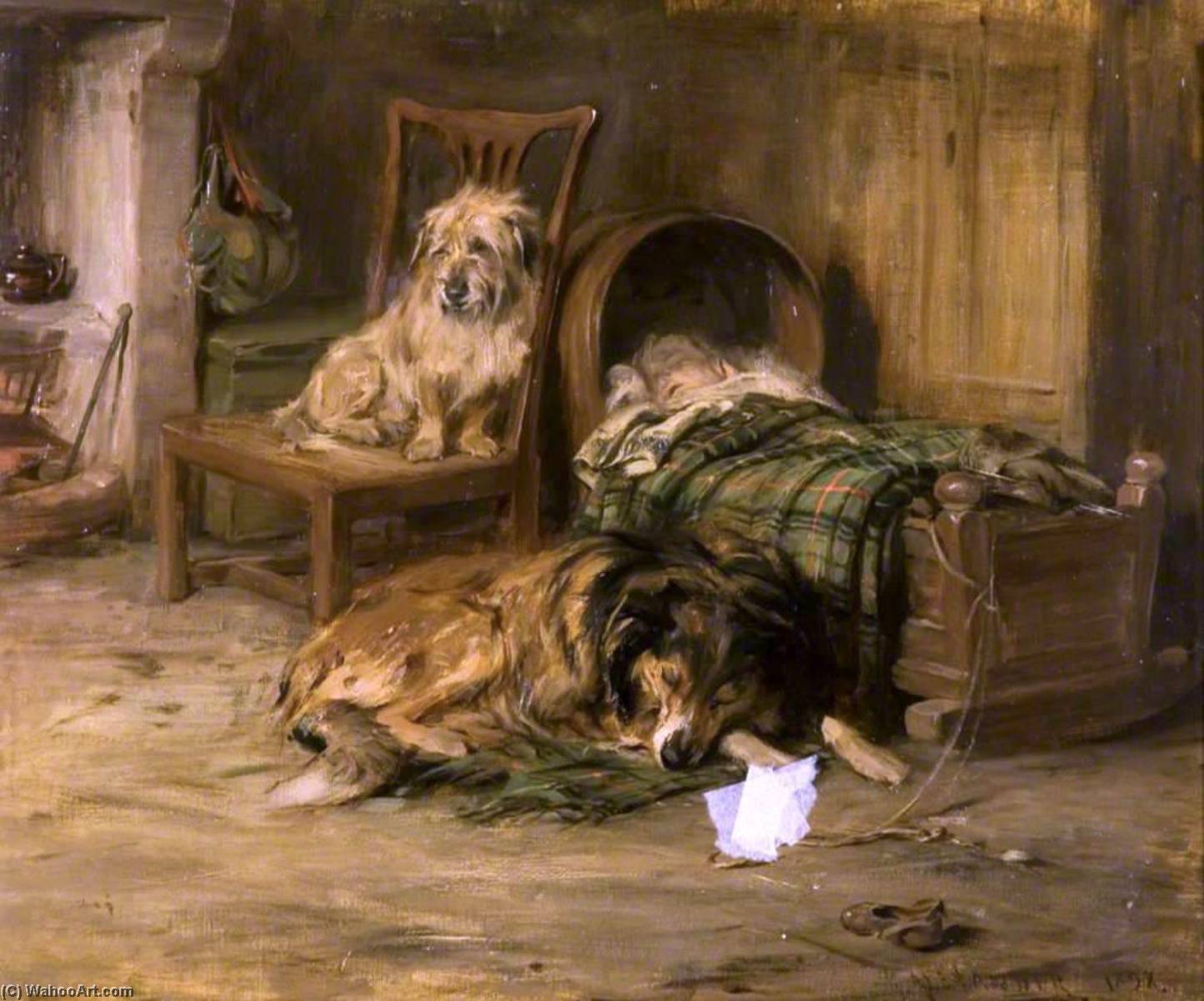
The Happy Mother (1887) autorstwa Robert L Alexander

The Happy Mother

1887 · Oil On Canvas · Scottish National Gallery, Edynburg

The Happy Mother is an oil on canvas painting by the artist Robert L Alexander. Created in 1887, this work belongs to the period when the artist was establishing his reputation within the Scottish art circles. The medium of oil on canvas allows for a detailed rendering of the textures present in the subject matter.
3
Wat and Wearie (1886) autorstwa Robert L Alexander

Wat and Wearie

1886 · Oil On Canvas · Royal Scottish Academy of Art - Architecture, Edynburg

A man and his horse move along a rural path under the soft, diffused light of late afternoon. The figure, dressed in the practical attire of a 19th-century laborer, walks ahead with a sack slung over his shoulder, his silhouette defined by the heavy folds of his clothing. Beside him, the horse turns its head toward the viewer, its gaze creating a direct connection with the observer. The scene is…

10
The Happy Mother (1887) autorstwa Robert L Alexander

The Happy Mother

1887 · Scottish National Gallery, Edynburg

The Happy Mother is a captivating oil on canvas painting created by Robert L Alexander in 1887. This beautiful artwork is currently housed at the National Galleries of Scotland in the United Kingdom. The painting measures 82 x 116 cm and showcases the artist's exceptional skill in capturing the warmth and bond between a mother dog and her puppies. A Heartwarming Scene The scene depicts a mother dog lying down…

Kontynuacja zestawienia Robert L Alexander, od 11 do 21

Tematy, które przyciągnęły wzrok Robert L Alexander

Cztery motywy najczęściej powracające w tych oryginałach, z których każdy doczekał się swojego najdoskonalszego przykładu.

Muzea przechowujące oryginały Robert L Alexander

8 muzeów, w których znajduje się najwięcej obrazów z tej strony.

Muzea Miasto Dzieła artysty Robert L Alexander Obrazy z tej listy
Scottish National Gallery, EdynburgScottish National Gallery Edynburg 2 The Happy Mother, The Happy Mother
Perth And Kinross Council, PerthPerth And Kinross Council Perth 2 Head of a Jack Russell Terrier, Donkey and Foal
Royal Scottish Academy of Art - Architecture, EdynburgRoyal Scottish Academy of Art - Architecture Edynburg 1 Wat and Wearie
Dundee Art Gallery And Museum, DundeeDundee Art Gallery And Museum Dundee 1 Drowsy Cronies
City Art Centre, EdynburgCity Art Centre Edynburg 1 Feeding the Horse
Muzeum Kunstmuseum Den Haag, HagaMuzeum Kunstmuseum Den Haag Haga 1 A St Bernard Dog
The National Trust For Scotland, ForresThe National Trust For Scotland Forres 1 Mr Wu – A Pekingese
The Fleming Collection, LondynThe Fleming Collection Londyn 1 The Dogs' Dinner (possibly 'More Free Than Welcome')

Robert L Alexander dekada po dekadzie: oryginały definiujące każdy okres

Dzieła według dekad

Wybierz dekadę, aby zobaczyć dzieło, które ją definiuje.

Pytania kolekcjonerów o obrazy Robert L Alexander

Z jakiego dzieła najbardziej znany jest Robert L Alexander?Odkryj odpowiedź

A Tangier Gateway (1887). Następne są The Happy Mother (1887) oraz Wat and Wearie (1886).

W jakim wieku był Robert L Alexander, gdy powstało A Tangier Gateway?Odkryj odpowiedź

47 lat: A Tangier Gateway pochodzi z 1887, a Robert L Alexander urodził(a) się w 1840.

Jakie są dziesięć najsłynniejszych obrazów, których autorem jest Robert L Alexander?Odkryj odpowiedź

A Tangier Gateway, The Happy Mother, Wat and Wearie, A Basset Hound, Head of a Deerhound, Goat and Kids, Auld Freens, Head of a Jack Russell Terrier, Head of a Jack Russell Terrier i The Happy Mother. Powyższy ranking zawiera rok powstania oraz muzeum dla każdego z nich.

Ile obrazów pozostawił po sobie Robert L Alexander?Odkryj odpowiedź

Nasz katalog zawiera 27 dzieł artysty Robert L Alexander, datowanych od 1874 do 1916.

W których muzeach znajdują się arcydzieła Robert L Alexander?Odkryj odpowiedź

W większości znajdują się w Scottish National Gallery (Edynburg), Perth And Kinross Council (Perth) i Royal Scottish Academy of Art - Architecture (Edynburg). Powyższa tabela muzeów zawiera ich pełną listę.

W których latach Robert L Alexander namalował swoje najsłynniejsze dzieła?Odkryj odpowiedź

W 1880s: 4 z 21 dzieł na tej stronie powstało w tym czasie, w tym A Tangier Gateway.

Jakie są pierwsze i ostatnie słynne oryginały Robert L Alexander?Odkryj odpowiedź

Na tej stronie najwcześniejszy to Head of a Goat (1874), a najpóźniejszy Head of a Jack Russell Terrier (1916).

Jakie tematy Robert L Alexander wybierał najczęściej?Odkryj odpowiedź

Man (2), Horse (2) i Scottish art (2), w ramach 21 dzieł na tej stronie.

Której techniki Robert L Alexander używał najczęściej?Odkryj odpowiedź

Oil On Canvas, dla 2 z 21 dzieł na tej stronie.

Które dzieła Robert L Alexander znajdują się w Scottish National Gallery?Odkryj odpowiedź

The Happy Mother i The Happy Mother: Scottish National Gallery, Edynburg posiada 2 dzieł widocznych na tej stronie.

Robert L Alexander: życie i twórczość

A Life Immersed in the Scottish Countryside: The World of Robert Alexander

Robert Alexander, born in 1840 in the small village of Dalgarven near Kilwinning in Ayrshire, Scotland, was an artist whose work became synonymous with the gentle warmth of domestic life and the rugged beauty of his homeland. His path to becoming a celebrated painter wasn’t conventional; rather than formal art schooling, Alexander began as an apprentice to a house-painter in Irvine, learning the fundamentals of landscape painting alongside more practical skills. This early grounding instilled in him not only technical proficiency but also a keen observation of light and form that would later characterize his distinctive style. He subsequently found employment with the Royal Scottish Museum in Edinburgh, further honing his abilities before dedicating himself fully to easel painting around 1868 – the year he first exhibited at the prestigious Royal Scottish Academy.

Capturing the Essence of Animals: A Rising Star

Alexander quickly distinguished himself by focusing on animal subjects, particularly dogs and horses. He didn’t merely *depict* these creatures; he sought to capture their personalities, their inherent dignity, and their connection to the rural world around them. His work resonated with a growing Victorian audience that appreciated both realism and sentimentality. He possessed an exceptional skill for portraying expressive eyes and textured coats, bringing his subjects vividly to life on canvas. This talent led to consistent exhibitions at the RSA – over 125 works were displayed throughout his lifetime – establishing him as a prominent figure in Scottish art circles. His election as an Associate of the Royal Scottish Academy (ARSA) in 1878 and then as a full Royal Scottish Academician (RSA) in 1888 solidified his position within the artistic establishment.

Impressionistic Touches and Pastoral Charm

While firmly rooted in realism, Alexander’s work demonstrates a clear influence of Impressionism. This is not to say he abandoned precise detail altogether, but rather that he embraced a looser brushstroke and a more nuanced understanding of light and color. His paintings often evoke a sense of atmosphere, capturing the fleeting moments of everyday life with remarkable sensitivity. Works like “Goat and Kids” exemplify this approach – a serene scene rendered with earthy tones and a delicate play of sunlight. He wasn’t interested in grand historical narratives or dramatic compositions; instead, he found beauty in the simple rhythms of rural existence: feeding horses, quiet moments within barns, and the tender bonds between animals and people. His paintings offer a glimpse into a world where life moved at a slower pace, and nature held a central place.

Legacy and Historical Significance

Robert Alexander’s contribution to Scottish animal painting is undeniable. He elevated the genre beyond mere portraiture, infusing his work with both artistic skill and emotional depth. He was not simply recording what he saw; he was interpreting it through a lens of warmth, understanding, and genuine affection. His paintings provide valuable insights into Victorian rural life and the evolving relationship between humans and animals. Furthermore, Alexander’s influence extended to his own family – his son, John Edwin Alexander, also became a successful artist, continuing the legacy of capturing the beauty of the Scottish countryside. Today, Robert Alexander's works are cherished for their charm, realism, and ability to transport viewers to a simpler, more idyllic time. His paintings continue to be exhibited and admired, ensuring that his vision of Scotland’s pastoral heart endures.