


1


Aktualizacja: Listopad 2026 · ranking według naszego wskaźnika popularności (liczba wyszukiwań, wizyt i zamówień dla każdego dzieła) · 5 dzieł René Richard w naszym katalogu
W skrócie
Portrait if Anya Chemiakin aged 31 (1890) to obraz autorstwa René Richard, który przyciąga najwięcej spojrzeń; oryginał znajduje się w Centre Pompidou, Paryż. Następnie wzrok kieruje się na Paysage de Charlevoix (1935) i Paysage. Spośród 5 dzieł René Richard w naszym katalogu, tych 5 jest najbardziej znanych – każde z nich to unikatowy oryginał, przedstawiony wraz z rokiem powstania, muzeum oraz powodem, dla którego przetrwało próbę czasu.
2 muzeów, w których znajduje się najwięcej obrazów z tej strony.
| Muzea | Miasto | Dzieła artysty René Richard | Obrazy z tej listy |
|---|---|---|---|
 Musée national des beaux-arts du Québec |
Quebec City | 4 | Paysage de Charlevoix, Paysage, Paysage |
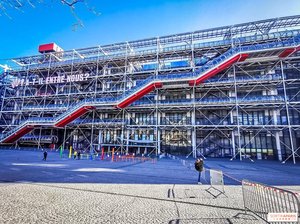 Centre Pompidou |
Paryż | 1 | Portrait if Anya Chemiakin aged 31 |
Wszystkie przedstawione tutaj oryginalne dzieła René Richard z datą powstania 1935 należą do jednego roku: są one uporządkowane według stopnia sławy.
Wybierz rok, aby zobaczyć oryginały.

Portrait if Anya Chemiakin aged 31 (1890), Centre Pompidou, Paryż. Następne są Paysage de Charlevoix (1935) oraz Paysage.
Nasz katalog zawiera 5 dzieł autorstwa René Richard.
W większości znajdują się w Musée national des beaux-arts du Québec (Quebec City) i Centre Pompidou (Paryż). Powyższa tabela muzeów zawiera ich pełną listę.
Paysage de Charlevoix, Paysage i Paysage: Musée national des beaux-arts du Québec, Quebec City posiada 4 dzieł widocznych na tej stronie.
In the vast, dusty corridors of biblical history, where names of kings and dates of conquests often blur into a nebulous haze of antiquity, the work of Edwin Richard Thiele emerges as a beacon of precision and clarity. Born in Chicago in 1895, Thiele was not merely a scholar but a meticulous reconstructor of lost eras. His life was a profound tapestry woven from threads of missionary zeal, archaeological curiosity, and an unyielding intellectual rigor. To understand Thiele is to understand a man who looked at the fragmented records of the Old Testament and saw not chaos, but a complex, beautiful clockwork waiting to be synchronized.
His journey began with a foundation of deep faith and linguistic mastery. After graduating from Emmanuel Missionary College in 1918 with a degree in ancient languages, Thiele did not immediately seek the quiet halls of academia; instead, he embraced the calling of service. His early years as a missionary secretary in Michigan prepared him for the rigors of global engagement, eventually leading him to the vibrant, bustling landscape of Shanghai in 1920. For twelve years, amidst the cultural crossroads of China, Thiele served as an editor and manager for the Signs of the Times Publishing House. It was during this period of editorial discipline that his eye for detail began to sharpen, a skill that would later prove indispensable when confronting the labyrinthine timelines of ancient Judah and Israel.
Thiele’s intellectual hunger could not be contained by the boundaries of publishing; it pulled him toward the earth itself. His passion for archaeology led him on expeditions through Persia, where he sought to touch the very artifacts that once breathed life into biblical narratives. These excursions were more than mere travels; they were spiritual and scientific quests to uncover the physical remnants of Jewish settlements in Mesopotamia. This hands-on engagement with the past provided a tangible weight to his scholarly pursuits, grounding his linguistic expertise in the grit and stone of historical reality.
Upon returning to the United States in 1937, Thiele transitioned into a period of intense academic refinement. At the University of Chicago, he pursued advanced studies that would culminate in a PhD in biblical archaeology. It was here that his true masterpiece began to take shape. He possessed a rare ability to synthesize disparate data points—astronomical observations, royal inscriptions, and sacred texts—into a cohesive chronological framework. His work was characterized by a refusal to accept historical discrepancies at face value, instead seeking the underlying logic that governed the reigns of ancient monarchs.
The pinnacle of Thiele’s career arrived with the publication of his seminal work, The Mysterious Numbers of the Hebrew Kings. This volume was far more than a dry academic text; it was a revolutionary reconstruction that challenged and ultimately reshaped the understanding of the biblical timeline. Through his brilliant analysis, he demonstrated how seemingly contradictory regnal years could be reconciled through an understanding of varying calendar systems and overlapping reigns. His achievement provided a structural backbone to the history of the kingdoms of Israel and Judah, offering a sense of historical continuity that had long been elusive.
Beyond his chronological triumphs, Thiele’s influence extended into the very heart of the academic and religious communities. As a professor at Andrews University, he mentored generations of scholars, instilling in them the same reverence for accuracy and truth that defined his own life. His legacy is found not only in the charts and tables of his research but in the enduring stability he brought to the study of the Old Testament. Even after his passing in 1986, the echoes of his meticulous investigations continue to resonate, reminding us that even within the most complex mysteries, there exists a profound and discoverable order.


