Portret Pushpamala N.

Obrazy: 10 najsłynniejszych dzieł artysty Pushpamala N. – spojrzenie galerii

Aktualizacja: Listopad 2026 · ranking według naszego wskaźnika popularności (liczba wyszukiwań, wizyt i zamówień dla każdego dzieła) · 10 dzieł Pushpamala N. w naszym katalogu

W skrócie

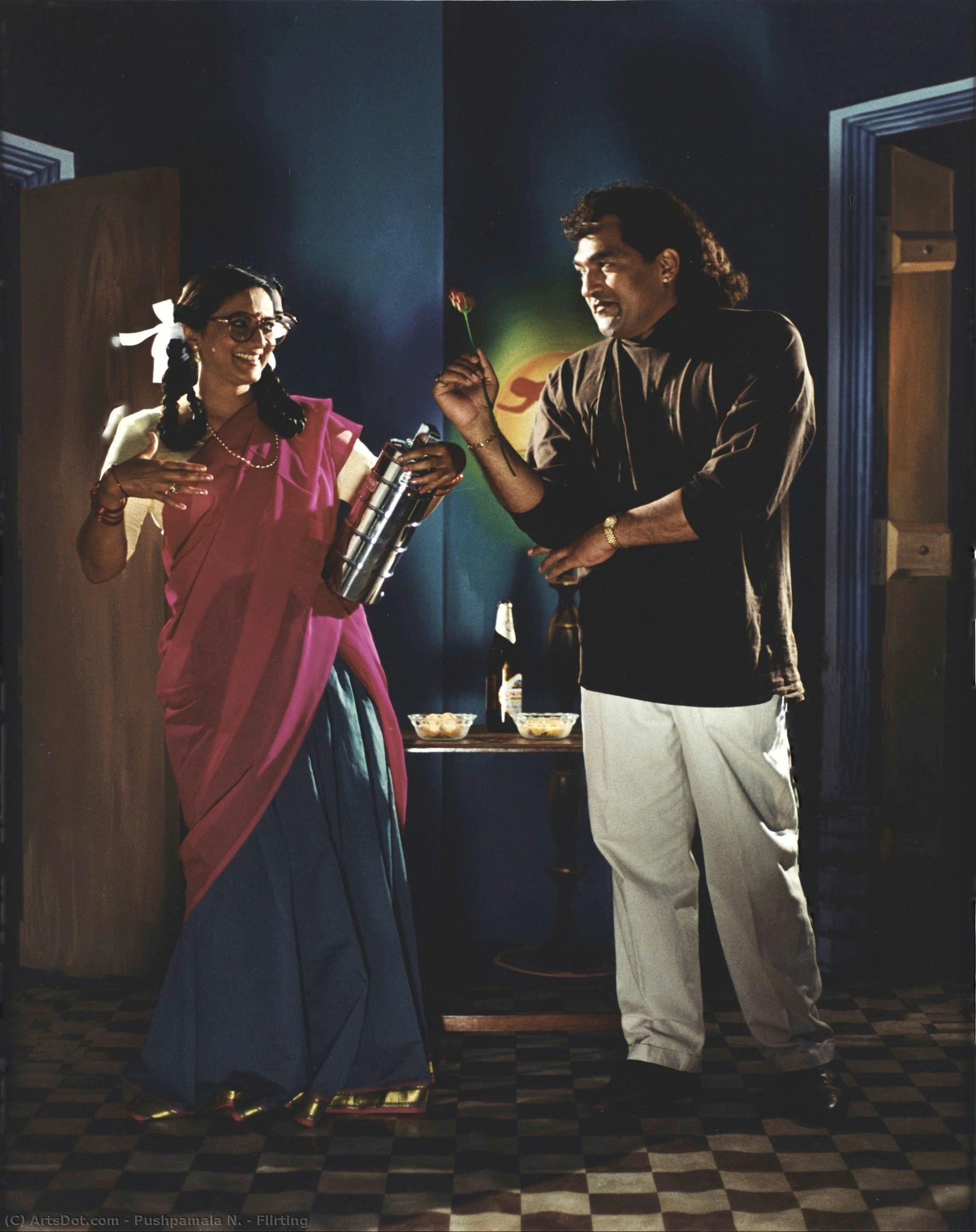
Według opinii kuratorów galerii, najsłynniejszym obrazem Pushpamala N. jest Portrait of a Christian woman (2003), którego oryginał znajduje się w Devi Art Foundation w Gurugram. Flirting (2004) i Labyrinth (1994) dopełniają trio, które zna każde oko. Z 10 dzieł Pushpamala N. w naszym katalogu, galeria prezentuje poniżej 10 najsłynniejszych prac – każda z nich jest oryginałem z podaniem roku powstania, muzeum oraz cech wyróżniających ją na tle innych.
urodzony 1956, Bengaluru Contemporary realism Najwięcej dzieł: Devi Art Foundation

10 najlepszych obrazów artysty Pushpamala N. w galerii

8
The Arrival of Vasco da Gama (after an 1898 painting by Jose Veloso Salgado) autorstwa Pushpamala N.

The Arrival of Vasco da Gama (after an 1898 painting by Jose Veloso Salgado)

Acrylic On Canvas · Kochi-Muziris Biennale, Kochi

Pushpamala N’s Reimagining of History: ‘The Arrival of Vasco da Gama’ Pushpamala N., born in Bangalore, India, in 1956, stands as a singular voice within contemporary Indian art—an artist who consistently dismantles conventions and reshapes artistic boundaries. Her journey commenced with a grounding in diverse academic pursuits – economics, English, and psychology from Bangalore University in 1977 – a foundation that subtly informs the socio-political nuances often interwoven into her…

Tematy, które przyciągnęły wzrok Pushpamala N.

Cztery motywy najczęściej powracające w tych oryginałach, z których każdy doczekał się swojego najdoskonalszego przykładu.

Muzea przechowujące oryginały Pushpamala N.

3 muzeów, w których znajduje się najwięcej obrazów z tej strony.

Muzea Miasto Dzieła artysty Pushpamala N. Obrazy z tej listy
Devi Art Foundation, GurugramDevi Art Foundation Gurugram 7 Portrait of a Christian woman, Flirting, Labyrinth
National Gallery of Modern Art, New DelhiNational Gallery of Modern Art New Delhi 2 Sleeping Pig, Pig
Kochi-Muziris Biennale, KochiKochi-Muziris Biennale Kochi 1 The Arrival of Vasco da Gama (after an 1898 painting by Jose Veloso Salgado)

Pushpamala N., flagowe dzieła każdego roku

Około dziesięć lat, od 1994 do 2004, wystarczyło dla Pushpamala N.: galeria prowadzi przez nie rok po roku, prezentując jeden słynny oryginał po drugim.

Dzieła według lat

Wybierz rok, aby zobaczyć oryginały.

Obrazy artysty Pushpamala N.: odpowiedzi galerii

Który obraz Pushpamala N. jest najsłynniejszy ze wszystkich?Odkryj odpowiedź

Portrait of a Christian woman (2003), Devi Art Foundation, Gurugram. Następne są Flirting (2004) oraz Labyrinth (1994).

Ile lat miał Pushpamala N., gdy ukończył Portrait of a Christian woman?Odkryj odpowiedź

47 lat: Portrait of a Christian woman pochodzi z 2003, a Pushpamala N. urodził(a) się w 1956.

Które to 10 najlepszych obrazów Pushpamala N.?Odkryj odpowiedź

Portrait of a Christian woman, Flirting, Labyrinth, Criminals, Toda, Returning from the tank, Yogini, The Arrival of Vasco da Gama (after an 1898 painting by Jose Veloso Salgado), Sleeping Pig i Pig. Powyższy ranking zawiera rok powstania oraz muzeum dla każdego z nich.

Ile dzieł stworzył/a Pushpamala N.?Odkryj odpowiedź

Nasz katalog zawiera 10 dzieł artysty Pushpamala N., datowanych od 1994 do 2004.

Gdzie można znaleźć najsłynniejsze oryginały autorstwa Pushpamala N.?Odkryj odpowiedź

W większości znajdują się w Devi Art Foundation (Gurugram), National Gallery of Modern Art (New Delhi) i Kochi-Muziris Biennale (Kochi). Powyższa tabela muzeów zawiera ich pełną listę.

Kiedy Pushpamala N. stworzył swoje najsłynniejsze obrazy?Odkryj odpowiedź

W 2004: 5 z 10 dzieł na tej stronie powstało w tym czasie, w tym Flirting.

Które z najsłynniejszych dzieł Pushpamala N. należą do jego najwcześniejszych i najpóźniejszych prac?Odkryj odpowiedź

Na tej stronie najwcześniejszy to Labyrinth (1994), a najpóźniejszy Flirting (2004).

Do jakich tematów Pushpamala N. powracał najczęściej?Odkryj odpowiedź

Indian art (3), Portrait (2) i Black and white (2), w ramach 10 dzieł na tej stronie.

Z jakim nurtem związany jest Pushpamala N.?Odkryj odpowiedź

Contemporary realism, sądząc po oryginałach na tej stronie.

Które oryginały artysty Pushpamala N. znajdują się w zbiorach Devi Art Foundation?Odkryj odpowiedź

Portrait of a Christian woman, Flirting i Labyrinth: Devi Art Foundation, Gurugram posiada 7 dzieł widocznych na tej stronie.

Pushpamala N.: artysta

A Life Sculpted in Multiple Realities

Pushpamala N., born in Bangalore, India, in 1956, is a pivotal figure in contemporary Indian art—an artist who has consistently challenged conventions and redefined the boundaries of artistic expression. Her journey began with a grounding in diverse academic pursuits – economics, English, and psychology from Bangalore University in 1977 – a foundation that perhaps subtly informs the socio-political undercurrents often present in her work. It was under the guidance of Indian artist Balan Nambiar that her initial artistic inclinations were nurtured, setting the stage for formal training as a sculptor at the Faculty of Fine Arts, Maharaja Sayajirao University of Baroda. This period proved formative, with Pushpamala completing both her Bachelor’s in 1982 and Master’s degree in 1985. The influence of artists like Raghav Kaneria, Bhupen Khakhar, and most profoundly, K.G. Subramanyan, resonated deeply during these years. Subramanyan's impact was particularly significant throughout the 1980s, shaping her early explorations with terracotta busts and reliefs—a period characterized by a dedication to mastering modeling techniques and an emerging focus on gesture and theatricality within animal and human forms, especially those of women.

From Sculpture to Subversion: A Shifting Landscape

For over a decade, Pushpamala N.’s artistic voice manifested primarily through sculpture. Her early works demonstrated a remarkable command of form and texture, evident in pieces like *Pig & Sleeping Pig*, terracotta sculptures that showcase her meticulous attention to detail. However, around 1995, a radical shift occurred. She transitioned from the tangible world of three-dimensional forms to the evocative realm of photography. This wasn’t merely a change in medium; it was a fundamental alteration in artistic approach—a move that unlocked new avenues for satire, self-representation, and a questioning of reality itself. Photography allowed her to dismantle traditional genres, subtly subverting expectations with humor, femininity, and a keen awareness of historical context. Her work became increasingly characterized by a unique blend of ethnographic documentation and performance art, frequently featuring herself as the central subject—a deliberate act of self-insertion that blurred the lines between artist and artwork. This period marked the emergence of her signature “photo-romances,” narrative sequences borrowing from popular culture, mythology, and historical references, all filtered through a distinctly ironic lens.

Themes of Identity, Politics, and History

Pushpamala N.’s art is deeply engaged with the complexities of Indian society, often serving as a poignant commentary on political and social life. The demolition of the Babri Masjid in 1992 and the subsequent communal violence left an indelible mark on her artistic trajectory, prompting explorations of these turbulent events and their aftermath. However, beyond overt political statements, a recurring theme throughout her oeuvre is the exploration of female identity—a subject she tackles with both sensitivity and subversive wit. She challenges norms, dismantles stereotypes, and often employs self-mockery as a tool for empowerment. Works like *Portrait of a Christian Woman* (2003), part of the Devi Art Foundation collection, exemplify this approach—a haunting black and white portrait that delves into themes of tradition, melancholy, and feminine form. Other notable works include *Labyrinth* (1994), also held by the Devi Art Foundation, and *The Arrival of Vasco da Gama* (after an 1898 painting by Jose Veloso Salgado), a photographic installation that brilliantly blends history with masquerade, questioning established narratives and inviting viewers to reconsider their perspectives. Even her earlier oil paintings, such as *Flirting* (2004), explore intimacy and domesticity with a nuanced understanding of human relationships.

Recognition and Lasting Influence

Pushpamala N.’s innovative work has garnered international recognition, with exhibitions at prestigious venues like the Saatchi Gallery in London and participation in landmark shows such as ‘Seven Young Sculptors’ (1985) in New Delhi. Her art has been showcased alongside Alex Mathew in Mumbai and featured in solo and group exhibitions at Espace Croisé in Roubaix, Gund Gallery in Gambier, Nature Morte in New Delhi, and Art Gallery Dubai. Her accessibility extends to the digital realm, with her work readily available through platforms like OriginalUniqueArt.com. More than just an artist, Pushpamala N. is recognized as a pioneer of conceptual art in India—a figure who has profoundly influenced artistic practice within the country. Her contributions to feminist experiments with subject matter, materials, and language are particularly significant, challenging conventional representations and perspectives. She continues to be an active force in contemporary Indian art, solidifying her legacy as a groundbreaking artist whose work resonates with both intellectual rigor and emotional depth—a true “entertaining artist-iconoclast,” as she has been aptly described. Her inventive approach across sculpture, conceptual photography, video, and performance ensures her continued relevance for generations to come.