Portret Philip Guston

100 najsłynniejszych obrazów artysty Philip Guston – wybór z galerii

Aktualizacja: Listopad 2026 · ranking według naszego wskaźnika popularności (liczba wyszukiwań, wizyt i zamówień dla każdego dzieła) · 111 dzieł Philip Guston w naszym katalogu

W skrócie

Z wszystkich oryginałów pozostawionych przez Philip Guston, najsłynniejszym jest The Pit (1976). Tuż za nimi znajdują się The Room (1970) oraz Early Mail Service and Construction of Railroads (mural study, Commerce, Georgia Post Office) (1938). Nasz katalog zawiera 111 dzieł autorstwa Philip Guston; galeria zachowała 100 najbardziej podziwianych na świecie prac, z których każda została przedstawiona wraz z datą powstania, informacją o muzeum oraz jej historią.

1913 – 1980, Montreal Neo expressionism Najwięcej dzieł: Metropolitan Museum of Art

10 najlepszych obrazów artysty Philip Guston: wybór galerii

1
The Pit (1976) autorstwa Philip Guston

The Pit

1976 · Oil On Canvas

We are looking at The Pit, a significant work by Philip Guston from 1976. This oil on canvas belongs to his Cyclops series, a period where his approach to the canvas underwent a profound transformation. It is a piece that marks a definitive departure from his earlier explorations, settling instead into a highly personal and direct mode of expression.

6
Ride (1969) autorstwa Philip Guston

Ride

1969 · Painting · Städel Museum, Frankfurt nad Menem

The canvas presents two hooded figures seated within the interior of an automobile. These figures are rendered with thick, heavy outlines and a cartoonish quality, their faces obscured by the white fabric of their hoods. One figure holds a smoking cigar between its fingers, the grey smoke curling upward into the surrounding space. The vehicle itself is positioned against a background of serially arranged, white, sheep-like clouds that drift across…

9
Last Piece (1958) autorstwa Philip Guston

Last Piece

1958

Last Piece is not Guston's last Abstract Expressionist painting, but it represents a transition away from the shimmering forms of the early 1950s towards the recognizable motifs of his later, more figurative works. If Buddhism, and concepts of nothingness, had informed his earlier abstractions, this represents a move away from those inspirations.

10
Untitled, #342 (1971) autorstwa Philip Guston

Untitled, #342

1971 · Oil On Paper · Georgia Museum of Art, Athens

The title, which references Rome, suggests a preoccupation with the classical world and the layers of history that settle upon a place. There is a tension here between the modern hand and the ancient subject. The work avoids the easy path of mere imitation, opting instead to engage with the essence of classical relief. It captures a sense of what remains after time has passed. The shadows are deep, and…

Kontynuacja zestawienia Philip Guston, od 11 do 100

11Gladiators (1940) autorstwa Philip GustonGladiators1940 12The Palette (1975) autorstwa Philip GustonThe Palette1975 13Bombardment (1937) autorstwa Philip GustonBombardment1937 14Monopoly (1964) autorstwa Philip GustonMonopoly1964 · Parrish Art Museum 15Martial Memory (1941) autorstwa Philip GustonMartial Memory1941 16The Young Mother (1944) autorstwa Philip GustonThe Young Mother1944 17Porch II (1947) autorstwa Philip GustonPorch II1947 18The Tormentors (1948) autorstwa Philip GustonThe Tormentors1948 19Study for Tormentors (1947) autorstwa Philip GustonStudy for Tormentors1947 20The Porch (1947) autorstwa Philip GustonThe Porch1947 21Painting No. 6 (1951) autorstwa Philip GustonPainting No. 61951 · Smithsonian American Art Museum 22Painting, Number 5 (1952) autorstwa Philip GustonPainting, Number 51952 · Metropolitan Museum of Art 23Painting No. 6 (1951) autorstwa Philip GustonPainting No. 61951 24Painting No. 9 (1952) autorstwa Philip GustonPainting No. 91952 25Ischia (1949) autorstwa Philip GustonIschia1949 26Untitled (1950) autorstwa Philip GustonUntitled1950 27Loft I (1950) autorstwa Philip GustonLoft I1950 28Review (1949) autorstwa Philip GustonReview1949 29Red Painting (1950) autorstwa Philip GustonRed Painting1950 30Three things are necessary for the salvation of man to know what he ought to believe to know what he ought to desire and to know what he ought to do. St. Thomas Aquinas, Two Precepts of Charity, 1273. From the series Great Ideas of Western Man (1952) autorstwa Philip GustonThree things are necessary for the salvation of man to know what he ought to believe to know what he ought to desire and to know what he ought to do. St. Thomas Aquinas, Two Precepts of Charity, 1273. From the series Great Ideas of Western Man1952 31Drawing Related to Zone (Drawing No. 19) (1954) autorstwa Philip GustonDrawing Related to Zone (Drawing No. 19)1954 32Late April (1961) autorstwa Philip GustonLate April1961 · Muzeum Izraela 33Duo (1961) autorstwa Philip GustonDuo1961 34Role (1959) autorstwa Philip GustonRole1959 · Cleveland Museum of Art 35Rite (1958) autorstwa Philip GustonRite1958 · Art Institute of Chicago 36Drawing 1960 (1960) autorstwa Philip GustonDrawing 19601960 · Metropolitan Museum of Art 37Close-Up III (1961) autorstwa Philip GustonClose-Up III1961 · Metropolitan Museum of Art 38Close Up III (1961) autorstwa Philip GustonClose Up III1961 39To Fellini (1958) autorstwa Philip GustonTo Fellini1958 40Celebration (1961) autorstwa Philip GustonCelebration1961 41Inhabiter (1965) autorstwa Philip GustonInhabiter1965 42Open Washes (1966) autorstwa Philip GustonOpen Washes1966 43Untitled (Book) (1968) autorstwa Philip GustonUntitled (Book)1968 44Untitled (1968) autorstwa Philip GustonUntitled1968 45City (1968) autorstwa Philip GustonCity1968 46Brushes (1969) autorstwa Philip GustonBrushes1969 47Discussion I (1969) autorstwa Philip GustonDiscussion I1969 48Shoes (1968) autorstwa Philip GustonShoes1968 49Untitled (1973) autorstwa Philip GustonUntitled1973 50Untitled (Cup) (1973) autorstwa Philip GustonUntitled (Cup)1973 51Untitled (Wall) (1971) autorstwa Philip GustonUntitled (Wall)1971 52Painter in Bed (1973) autorstwa Philip GustonPainter in Bed1973 53Roma (1971) autorstwa Philip GustonRoma1971 54Painting, Smoking, Eating (1972) autorstwa Philip GustonPainting, Smoking, Eating1972 55Figure in Interior (1970) autorstwa Philip GustonFigure in Interior1970 56Daydreams (1970) autorstwa Philip GustonDaydreams1970 57The Street from Ten Lithographs by Ten Artists (1971) autorstwa Philip GustonThe Street from Ten Lithographs by Ten Artists1971 58Cerveteri (1972) autorstwa Philip GustonCerveteri1972 59Pantheon (1973) autorstwa Philip GustonPantheon1973 60The Lesson (1975) autorstwa Philip GustonThe Lesson1975 · The Phillips Collection 61Web (1975) autorstwa Philip GustonWeb1975 62The Street (1977) autorstwa Philip GustonThe Street1977 63Back View (1977) autorstwa Philip GustonBack View1977 64Couple in bed (1977) autorstwa Philip GustonCouple in bed1977 65Deluge II (1975) autorstwa Philip GustonDeluge II1975 66Ancient Wall (1976) autorstwa Philip GustonAncient Wall1976 67Midnight Pass Road (1975) autorstwa Philip GustonMidnight Pass Road1975 68Monument (1976) autorstwa Philip GustonMonument1976 69Inside - Outside (1977) autorstwa Philip GustonInside - Outside1977 70Head and Bottle (1975) autorstwa Philip GustonHead and Bottle1975 71Step (1979) autorstwa Philip GustonStep1979 · Museum of Fine Arts 72Summer (1980) autorstwa Philip GustonSummer1980 73Wheel (1980) autorstwa Philip GustonWheel1980 74Room (1980) autorstwa Philip GustonRoom1980 75East Side (1980) autorstwa Philip GustonEast Side1980 76Untitled (8) (1980) autorstwa Philip GustonUntitled (8)1980 77As It Goes (1978) autorstwa Philip GustonAs It Goes1978 78Painter's Forms No. 2 (1978) autorstwa Philip GustonPainter's Forms No. 21978 79Tomb (1978) autorstwa Philip GustonTomb1978 80Door (1981) autorstwa Philip GustonDoor1981 81Studio Corner (1981) autorstwa Philip GustonStudio Corner1981 82Remains from Eight Lithographs to Benefit the Foundation for Contemporary Performance Arts, Inc (1981) autorstwa Philip GustonRemains from Eight Lithographs to Benefit the Foundation for Contemporary Performance Arts, Inc1981 83Gulf (1983) autorstwa Philip GustonGulf1983 84Painter (1983) autorstwa Philip GustonPainter1983 85City Limits (1969) autorstwa Philip GustonCity Limits1969 86Drawing for Conspirators (1930) autorstwa Philip GustonDrawing for Conspirators1930 · Whitney Museum of American Art 87Curtain autorstwa Philip GustonCurtain 88Days Work autorstwa Philip GustonDays Work 89Untitled (9) autorstwa Philip GustonUntitled (9) 90Box Tree, Rome autorstwa Philip GustonBox Tree, Rome 91Clock autorstwa Philip GustonClock 92The return autorstwa Philip GustonThe return 93Room autorstwa Philip GustonRoom 94Entrance autorstwa Philip GustonEntrance 95Green Rug autorstwa Philip GustonGreen Rug 96Inscapes. Words and Images autorstwa Philip GustonInscapes. Words and Images 97Talking autorstwa Philip GustonTalking 98Sleeping autorstwa Philip GustonSleeping 99A Critical Study autorstwa Philip GustonA Critical Study 100The lesson autorstwa Philip GustonThe lesson

Słynne obrazy Philip Guston epoka po epoce

Tematy, które przyciągnęły wzrok Philip Guston

Cztery motywy najczęściej powracające w tych oryginałach, z których każdy doczekał się swojego najdoskonalszego przykładu.

Muzea przechowujące oryginały Philip Guston

8 muzeów, w których znajduje się najwięcej obrazów z tej strony.

Muzea Miasto Dzieła artysty Philip Guston Obrazy z tej listy
Metropolitan Museum of Art, Nowy JorkMetropolitan Museum of Art Nowy Jork 3 Painting, Number 5, Drawing 1960, Close-Up III
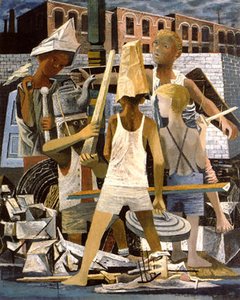
Smithsonian American Art Museum, WaszyngtonSmithsonian American Art Museum Waszyngton 2 Early Mail Service and Construction of Railroads (mural study, Commerce, Georgia Post Office), Painting No. 6
Städel Museum, Frankfurt nad MenemStädel Museum Frankfurt nad Menem 1 Ride
Georgia Museum of Art, AthensGeorgia Museum of Art Athens 1 Untitled, #342
Parrish Art Museum, Water MillParrish Art Museum Water Mill 1 Monopoly
Muzeum Izraela, JerozolimaMuzeum Izraela Jerozolima 1 Late April
Cleveland Museum of Art, ClevelandCleveland Museum of Art Cleveland 1 Role
Art Institute of Chicago, ChicagoArt Institute of Chicago Chicago 1 Rite

Philip Guston dekada po dekadzie: oryginały definiujące każdy okres

Dzieła według dekad

Wybierz dekadę, aby zobaczyć dzieło, które ją definiuje.

Pytania kolekcjonerów o obrazy Philip Guston

Z jakiego dzieła najbardziej znany jest Philip Guston?Odkryj odpowiedź

The Pit (1976). Następne są The Room (1970) oraz Early Mail Service and Construction of Railroads (mural study, Commerce, Georgia Post Office) (1938).

W jakim wieku był Philip Guston, gdy powstało The Pit?Odkryj odpowiedź

63 lat: The Pit pochodzi z 1976, a Philip Guston urodził(a) się w 1913.

Jakie są dziesięć najsłynniejszych obrazów, których autorem jest Philip Guston?Odkryj odpowiedź

The Pit, The Room, Early Mail Service and Construction of Railroads (mural study, Commerce, Georgia Post Office), Painter III, To B.W.T., Ride, The Studio, Agean, Last Piece i Untitled, #342. Powyższy ranking zawiera rok powstania oraz muzeum dla każdego z nich.

Ile obrazów pozostawił po sobie Philip Guston?Odkryj odpowiedź

Nasz katalog zawiera 111 dzieł artysty Philip Guston, datowanych od 1930 do 1980.

W których muzeach znajdują się arcydzieła Philip Guston?Odkryj odpowiedź

W większości znajdują się w Metropolitan Museum of Art (Nowy Jork), Smithsonian American Art Museum (Waszyngton) i Städel Museum (Frankfurt nad Menem). Powyższa tabela muzeów zawiera ich pełną listę.

W których latach Philip Guston namalował swoje najsłynniejsze dzieła?Odkryj odpowiedź

W 1970s: 30 z 100 dzieł na tej stronie powstało w tym czasie, w tym The Pit.

Jakie są pierwsze i ostatnie słynne oryginały Philip Guston?Odkryj odpowiedź

Na tej stronie najwcześniejszy to Drawing for Conspirators (1930), a najpóźniejszy Agean (1980).

Jakie tematy Philip Guston wybierał najczęściej?Odkryj odpowiedź

Symbols (7), Buildings (4) i Arts (4), w ramach 100 dzieł na tej stronie.

Której techniki Philip Guston używał najczęściej?Odkryj odpowiedź

Oil On Canvas, dla 2 z 100 dzieł na tej stronie.

Do jakiego nurtu artystycznego należy Philip Guston?Odkryj odpowiedź

Neo expressionism, sądząc po oryginałach na tej stronie.

Które dzieła Philip Guston znajdują się w Metropolitan Museum of Art?Odkryj odpowiedź

Painting, Number 5, Drawing 1960 i Close-Up III: Metropolitan Museum of Art, Nowy Jork posiada 3 dzieł widocznych na tej stronie.

Philip Guston: życie i twórczość

Philip Guston: Podróż przez Abstrakcję i Konfrontację

Philip Guston, urodzony w Montrealu jako Phillip Goldstein w 1913 roku, a zmarły w Woodstock, Nowy Jork, w 1980, był postacią niezwykle złożoną i kontrowersyjną w historii amerykańskiej sztuki. Jego kariera, trwająca niemal pół wieku, to fascynująca opowieść o ciągłym poszukiwaniu artystycznym, o odrzucaniu konwencji i bezkompromisowym podejściu do poruszania trudnych tematów społecznych i politycznych. Guston nie był malarzem łatwym – jego twórczość wywoływała zarówno zachwyt, jak i sprzeciw, a on sam często balansował na granicy akceptacji i marginalizacji.

Wczesne lata życia Gustona były naznaczone tragedią. Samobójstwo ojca, żydowskiego imigranta z Odessy, w 1923 roku głęboko wpłynęło na jego psychikę i przyszłą twórczość. Już jako nastolatek wykazywał talent plastyczny, studiując w Los Angeles Manual Arts High School, gdzie spotkał Jacksona Pollocka – przyjaźń z nim miała istotny wpływ na jego artystyczne kształtowanie się. W tym okresie Guston eksperymentował z różnymi stylami, czerpiąc inspirację z renesansowych mistrzów, takich jak Piero della Francesca, a także z malarzy socrealizmu i europejskiego ekspresjonizmu. Wczesne prace Gustona charakteryzowały się figuratywnością i często poruszały tematy związane z okrucieństwem wojny oraz codziennym życiem Amerykanów.

Od Abstrakcji do Figuratywnego Powrotu

Po II wojnie światowej Guston, pod wpływem dominujących trendów w nowojorskiej scenie artystycznej, przeszedł transformację ku abstrakcyjnemu ekspresjonizmowi. Stał się jednym z kluczowych przedstawicieli tego nurtu, obok takich gigantów jak Jackson Pollock i Willem de Kooning. Jego obrazy z lat 50. to dynamiczne kompozycje pełne gestualnych pociągnięć farby, wyrażające emocje i energię w sposób niemal całkowicie pozbawiony reprezentacji. W tym okresie Guston osiągnął uznanie krytyków i publiczności, a jego prace były prezentowane na prestiżowych wystawach.

Jednakże, w połowie lat 60., Guston dokonał radykalnego zwrotu – porzucił abstrakcję i powrócił do figury. Ta decyzja była odebrana przez wielu jako zdrada ideałów ekspresjonizmu abstrakcyjnego, ale dla samego artysty stanowiła wyraz potrzeby wyrażania bardziej bezpośrednich i osobistych treści. Nowy etap twórczości Gustona charakteryzował się groteskową deformacją postaci ludzkich, użyciem ograniczonej palety barw oraz wprowadzeniem elementów satyrycznych i humorystycznych.

Kontrowersje i Spuścizna: Obrazy Amerykańskiej Tożsamości

Najbardziej kontrowersyjnym i zarazem najbardziej znaczącym rozdziałem w twórczości Gustona są jego późne prace, powstałe w latach 70. Obrazy te, pełne mrocznej ironii i groteskowych symboli, przedstawiały sceny z życia amerykańskiego podwórka – klany Ku Klux Klan, politycy, a także codzienne sytuacje widziane przez pryzmat dziecięcej perspektywy. Guston bez ogródek poruszał tematy rasizmu, antysemityzmu i faszyzmu, prowokując dyskusję na temat ciemnych stron amerykańskiej tożsamości. Jego obrazy, choć często niepokojące i trudne w odbiorze, były wyrazem głębokiego zaangażowania społecznego i politycznego.

Philip Guston pozostawił po sobie niezwykle złożoną i wielowymiarową spuściznę. Jego twórczość, choć często kwestionowana i kontrowersyjna, zrewolucjonizowała amerykańską sztukę i otworzyła drogę dla nowych form ekspresji artystycznej. Guston był malarzem odważnym, który nie bał się konfrontacji z trudnymi tematami i który w swojej twórczości poszukiwał prawdy – nawet jeśli ta prawda była bolesna i niezręczna. Jego prace znajdują się w kolekcjach najważniejszych muzeów na świecie, a jego wpływ na kolejne pokolenia artystów jest niepodważalny.