Portret Pedro Figari

56 najsłynniejszych obrazów artysty Pedro Figari, każdy niepowtarzalny

Aktualizacja: Październik 2026 · ranking według naszego wskaźnika popularności (liczba wyszukiwań, wizyt i zamówień dla każdego dzieła) · 56 dzieł Pedro Figari w naszym katalogu

W skrócie

Tertulia at the inn before eating. The inn (1919) to obraz autorstwa Pedro Figari, który przyciąga najwięcej spojrzeń; oryginał znajduje się w National Museum of Fine Arts, Buenos Aires. Następnie wzrok kieruje się na Candombe carnival (1932) i Lavanderas En Los Medanos O Los Amigos. Spośród 56 dzieł Pedro Figari w naszym katalogu, tych 56 jest najbardziej znanych – każde z nich to unikatowy oryginał, przedstawiony wraz z rokiem powstania, muzeum oraz powodem, dla którego przetrwało próbę czasu.

1861 – 1938, Montevideo Impressionism Najwięcej dzieł: National Museum of Fine Arts

10 najlepszych obrazów autorstwa Pedro Figari według oka galerii

4
El Beso autorstwa Pedro Figari

El Beso

Oil On Canvas · National Museum of Fine Arts, Buenos Aires

El Beso is an oil painting on canvas by Pedro Figari. Born in Montevideo in 1861, the artist lived until 1938, a period that saw him transition from a career in law and politics to a dedicated practice in the visual arts. His later years were defined by a shift toward a unique, intuitive approach to painting, often reconstructing scenes from memory rather than direct observation.

Słynne obrazy artysty Pedro Figari, od 11 do 56

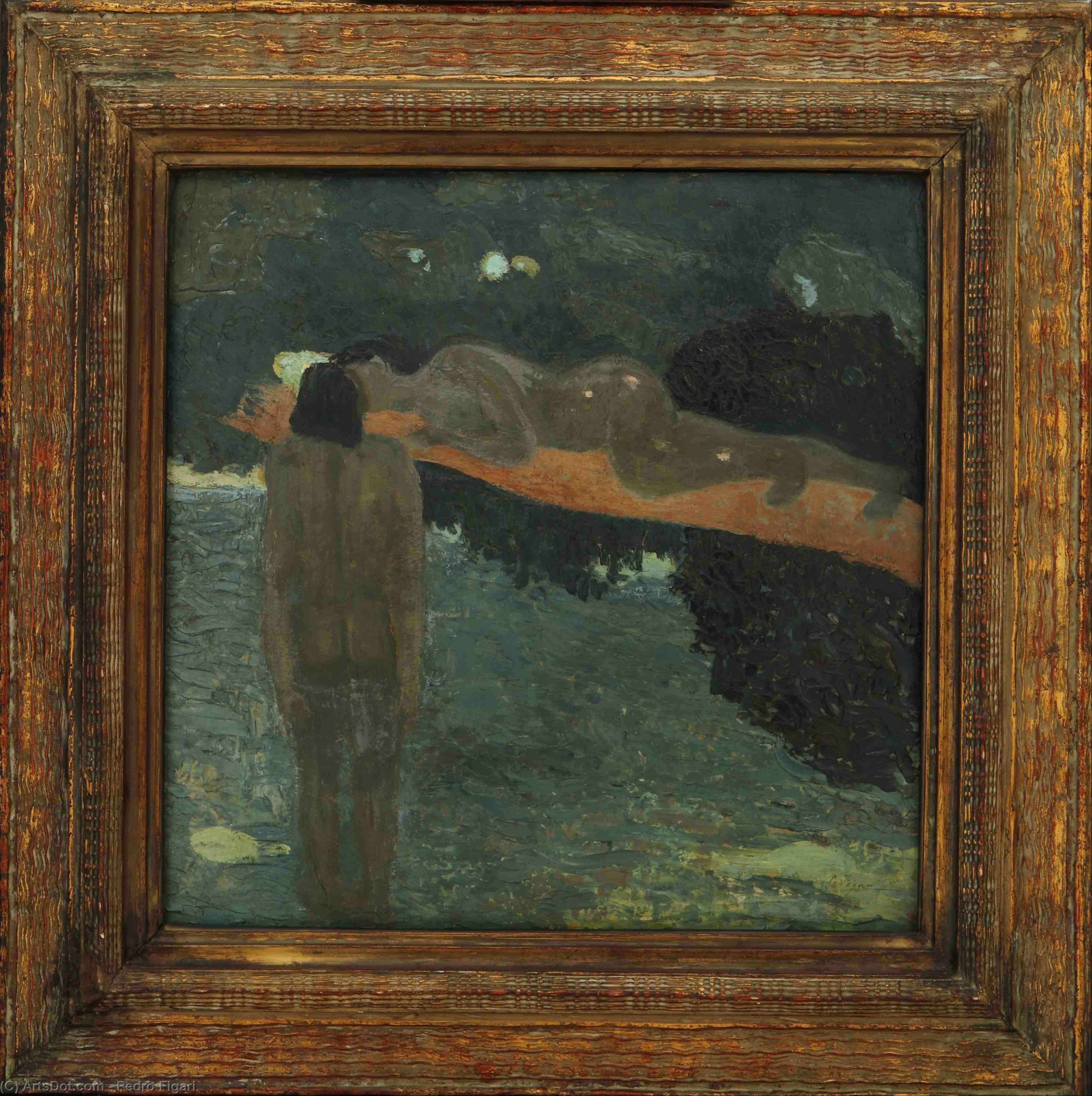
11La Vida autorstwa Pedro FigariLa Vida 12El Requiebro autorstwa Pedro FigariEl Requiebro 13El Patio O Patio Unitario autorstwa Pedro FigariEl Patio O Patio UnitarioNational Museum of Fine Arts 14El Gaucho Candioti autorstwa Pedro FigariEl Gaucho CandiotiNational Museum of Fine Arts 15Negras En La Puerta O Negras En Zaguán autorstwa Pedro FigariNegras En La Puerta O Negras En ZaguánNational Museum of Fine Arts 16The Dance (Bailongo) (1925) autorstwa Pedro FigariThe Dance (Bailongo)1925 17Creole Dance (1925) autorstwa Pedro FigariCreole Dance1925 18Peeling the pava (1925) autorstwa Pedro FigariPeeling the pava1925 · National Museum of Fine Arts 19Off for the Honeymoon (1925) autorstwa Pedro FigariOff for the Honeymoon1925 20Double Wedding (1930) autorstwa Pedro FigariDouble Wedding1930 21Idilio campero (1935) autorstwa Pedro FigariIdilio campero1935 · Inter-American Development Bank 22Nocturne (1918) autorstwa Pedro FigariNocturne1918 · Colección de Arte Amalia Lacroze de Fortabat 23A Request to Rosas autorstwa Pedro FigariA Request to Rosas 24Mass departure autorstwa Pedro FigariMass departureNational Museum of Fine Arts 25The pampas or return of the dance autorstwa Pedro FigariThe pampas or return of the danceNational Museum of Fine Arts 26Injuria autorstwa Pedro FigariInjuria 27La Diligancia autorstwa Pedro FigariLa Diligancia 28Damas Antiguas autorstwa Pedro FigariDamas Antiguas 29Rincón De Negros autorstwa Pedro FigariRincón De Negros 30Las Visitas autorstwa Pedro FigariLas Visitas 31La Media Caña autorstwa Pedro FigariLa Media Caña 32Pericón - autorstwa Pedro FigariPericón -National Museum of Fine Arts 33Jardín Bajo La Luna O Quietud En La Quinta autorstwa Pedro FigariJardín Bajo La Luna O Quietud En La QuintaNational Museum of Fine Arts 34El Pericón autorstwa Pedro FigariEl Pericón 35Negros Y Mulatas autorstwa Pedro FigariNegros Y Mulatas 36Patio autorstwa Pedro FigariPatioNational Museum of Fine Arts 37Cuestión De Razas autorstwa Pedro FigariCuestión De Razas 38Alevosía autorstwa Pedro FigariAlevosía 39Works Of Pedro Figari autorstwa Pedro FigariWorks Of Pedro Figari 40Los miriñaques autorstwa Pedro FigariLos miriñaques 41Reunión Colonial autorstwa Pedro FigariReunión Colonial 42Pampa autorstwa Pedro FigariPampaNational Museum of Fine Arts 43Deliberando autorstwa Pedro FigariDeliberando 44Hacia La Fiesta autorstwa Pedro FigariHacia La Fiesta 45Cuarteleras autorstwa Pedro FigariCuartelerasNational Museum of Fine Arts 46Confidencia autorstwa Pedro FigariConfidenciaNational Museum of Fine Arts 47Camelias Blancas autorstwa Pedro FigariCamelias Blancas 48Las Vecinas autorstwa Pedro FigariLas VecinasNational Museum of Fine Arts 49Candombe autorstwa Pedro FigariCandombeNational Museum of Fine Arts 50Candombe O Candombe Bajo La Luna autorstwa Pedro FigariCandombe O Candombe Bajo La LunaNational Museum of Fine Arts 51Lamento autorstwa Pedro FigariLamentoNational Museum of Fine Arts 52Cancha De Bochas autorstwa Pedro FigariCancha De BochasNational Museum of Fine Arts 53Pericón autorstwa Pedro FigariPericónNational Museum of Fine Arts 54Baile En El Rancho autorstwa Pedro FigariBaile En El RanchoNational Museum of Fine Arts 55Una Diligencia autorstwa Pedro FigariUna DiligenciaNational Museum of Fine Arts 56Tertulia autorstwa Pedro FigariTertuliaNational Museum of Fine Arts

Słynne obrazy Pedro Figari epoka po epoce

Tematy, które przyciągnęły wzrok Pedro Figari

Cztery motywy najczęściej powracające w tych oryginałach, z których każdy doczekał się swojego najdoskonalszego przykładu.

Muzea przechowujące oryginały Pedro Figari

3 muzeów, w których znajduje się najwięcej obrazów z tej strony.

Muzea Miasto Dzieła artysty Pedro Figari Obrazy z tej listy
National Museum of Fine Arts, Buenos AiresNational Museum of Fine Arts Buenos Aires 25 Tertulia at the inn before eating. The inn, Candombe carnival, Lavanderas En Los Medanos O Los Amigos
Inter-American Development Bank, Washington, D.C.Inter-American Development Bank Washington, D.C. 1 Idilio campero
Colección de Arte Amalia Lacroze de Fortabat, Buenos AiresColección de Arte Amalia Lacroze de Fortabat Buenos Aires 1 Nocturne

Pedro Figari na przestrzeni dekad: jeden unikatowy oryginał dla każdego

Dzieła według dekad

Wybierz dekadę, aby zobaczyć dzieło, które ją definiuje.

Obrazy artysty Pedro Figari: pytania do galerii

Jakie jest najsłynniejsze dzieło artysty Pedro Figari?Odkryj odpowiedź

Tertulia at the inn before eating. The inn (1919), National Museum of Fine Arts, Buenos Aires. Następne są Candombe carnival (1932) oraz Lavanderas En Los Medanos O Los Amigos.

W jakim wieku Pedro Figari stworzył/a Tertulia at the inn before eating. The inn?Odkryj odpowiedź

58 lat: Tertulia at the inn before eating. The inn pochodzi z 1919, a Pedro Figari urodził(a) się w 1861.

Które dziesięć obrazów Pedro Figari jest najbardziej znanych?Odkryj odpowiedź

Tertulia at the inn before eating. The inn, Candombe carnival, Lavanderas En Los Medanos O Los Amigos, El Beso, While the Ball Rolls, El Maturrango, Encuentro En El Camino, Carreta, La Amita i Preparando El Candombe. Powyższy ranking zawiera rok powstania oraz muzeum dla każdego z nich.

Ile znanych dzieł stworzył Pedro Figari?Odkryj odpowiedź

Nasz katalog zawiera 56 dzieł artysty Pedro Figari, datowanych od 1918 do 1935.

Gdzie można zobaczyć najsłynniejsze oryginały Pedro Figari?Odkryj odpowiedź

W większości znajdują się w National Museum of Fine Arts (Buenos Aires), Inter-American Development Bank (Washington, D.C.) i Colección de Arte Amalia Lacroze de Fortabat (Buenos Aires). Powyższa tabela muzeów zawiera ich pełną listę.

W jakim okresie Pedro Figari stworzył/a swoje najsłynniejsze obrazy?Odkryj odpowiedź

W 1920s: 4 z 56 dzieł na tej stronie powstało w tym czasie, w tym The Dance (Bailongo).

Który z najsłynniejszych obrazów artysty Pedro Figari powstał najwcześniej, a który najpóźniej?Odkryj odpowiedź

Na tej stronie najwcześniejszy to Nocturne (1918), a najpóźniejszy Idilio campero (1935).

Jakie tematy preferował Pedro Figari?Odkryj odpowiedź

Social gathering (4), Uruguayan culture (3) i Uruguayan art (3), w ramach 56 dzieł na tej stronie.

Do jakiego nurtu należy twórczość Pedro Figari?Odkryj odpowiedź

Impressionism i Modernism, sądząc po oryginałach na tej stronie.

Jakie oryginały Pedro Figari można zobaczyć w National Museum of Fine Arts?Odkryj odpowiedź

Tertulia at the inn before eating. The inn, Candombe carnival i Lavanderas En Los Medanos O Los Amigos: National Museum of Fine Arts, Buenos Aires posiada 25 dzieł widocznych na tej stronie.

Pedro Figari: portret artysty

A Life Imbued with Uruguayan Essence

Pedro Figari, a name now inextricably linked to the vibrant heart of Latin American modernism, was far more than simply a painter; he was a complex and deeply felt embodiment of his nation’s soul. Born in Montevideo in 1861, his life unfolded not as a linear progression but as a rich tapestry woven from legal practice, political engagement, literary pursuits, and ultimately, an extraordinary artistic awakening. Figari's journey wasn’t one of immediate artistic ambition; initially drawn to the structured world of law, he earned his degree in 1886, a profession that profoundly shaped his understanding of human nature – its complexities, injustices, and inherent dignity. His early years as a defense attorney, representing often marginalized individuals, exposed him to the raw realities of Uruguayan society, experiences that simmered beneath the surface until they found their voice through his art decades later. A marriage in 1886 brought him into a family life, but it was also a catalyst for travel – specifically, a sojourn to France where he encountered the revolutionary currents of post-impressionism, an encounter that subtly yet profoundly influenced his artistic trajectory. However, it wasn’t until 1921, at the remarkable age of sixty, that Figari fully embraced painting, unleashing a torrent of creativity that would forever alter the landscape of Latin American art.

From Legal Chambers to Artistic Visions

For decades prior, Figari skillfully balanced his demanding legal and political commitments with intermittent artistic endeavors – sketching, watercolor studies, and early oil paintings that hinted at the talent yet to be fully realized. He was a significant figure in Uruguayan public life, serving as a member of Parliament, directing the Escuela Nacional de Artes y Oficios (National School of Arts and Crafts), and contributing meaningfully to intellectual discourse through his writings on law, education, aesthetics, and even utopian ideals. This diverse background wasn’t a distraction from his artistic aspirations; rather, it served as an invaluable foundation, imbuing his art with a keen observational skill, a deep understanding of social dynamics, and a nuanced ability to articulate complex ideas. The move to Buenos Aires in 1921 proved to be a pivotal turning point. It was here, amidst the bustling energy of Argentina’s artistic scene, that Figari shed the constraints of earlier, academically-influenced styles and began to forge his own distinctive voice – one rooted in memory, emotion, and an unwavering connection to his homeland. He deliberately abandoned meticulous realism, opting instead for a more intuitive approach—painting not what he *saw*, but what he *remembered*. This reliance on memory wasn’t simply a technical choice; it allowed him to distill the essence of his experiences, imbuing his work with a deeply personal and nostalgic quality.

A Pioneer's Palette: Style and Subject Matter

Figari’s artistic style is immediately recognizable for its vibrant color palettes, bold brushstrokes, and seemingly naïve simplicity. He wasn’t interested in creating illusions of depth or photographic accuracy; instead, he treated his canvases as studies in color and form, reconstructing Uruguayan scenes from the fragments of his memory. His subjects were drawn almost exclusively from the world he knew intimately – the gauchos roaming the pampas, lively carnival celebrations, the rituals and daily life of Montevideo’s black community, and the quiet intimacy of colonial patios. These weren't merely picturesque depictions; they were poignant reflections on Uruguayan identity, social customs, and a disappearing way of life. He captured fleeting moments – a dance, a gathering, a street scene – with an immediacy that felt both timeless and deeply rooted in place. His technique, often employing impasto with visible brushwork, further emphasized the expressive power of color and texture, creating paintings that pulsated with energy and emotion. The influence of post-impressionism is evident not in meticulous imitation but in Figari’s willingness to prioritize feeling over strict representation – a key characteristic of his unique style.

Breaking with Tradition: A Latin American Voice

Pedro Figari emerged during a crucial period in Latin American art history—a time when artists were actively seeking to break free from European artistic dominance and define their own unique aesthetic identities. Traditional academic painting often focused on historical or religious subjects, prioritizing technical skill over genuine expression. Figari challenged this convention by embracing a more direct, unpretentious style that allowed him to subtly critique social norms and celebrate the vibrancy of Uruguayan culture. He believed in the power of art to connect with the everyday experiences of ordinary people, rejecting elitism in favor of authenticity. His work resonated with a growing sense of national pride and a desire to reclaim indigenous roots. He wasn’t alone in this endeavor—artists like Diego Rivera and Tarsila do Amaral were also forging new paths—but Figari's unique blend of memory, color, and social commentary established him as a pivotal figure in the development of Latin American modernism. He anticipated later modernist developments with his expressive brushwork and rejection of mechanistic representation.

Legacy and Enduring Influence

Pedro Figari’s legacy extends far beyond his individual artistic achievements. He is remembered not just as a painter, but as one of the first Latin American artists to successfully forge a distinctly regional style, prioritizing feeling and essence over strict realism. His work continues to inspire artists and art lovers alike with its vibrant energy, emotional depth, and unwavering commitment to capturing the spirit of Uruguay. He demonstrated that true modernity wasn’t about imitating European trends but about finding one's own voice—a lesson that resonated throughout Latin America and beyond. He died in 1938, leaving behind a body of work that stands as a testament to his artistic vision, intellectual curiosity, and enduring love for his homeland. His paintings are not merely representations of Uruguayan life; they *are* Uruguay – its colors, its rhythms, its soul – preserved on canvas for generations to come.