


1


Aktualizacja: Listopad 2026 · ranking według naszego wskaźnika popularności (liczba wyszukiwań, wizyt i zamówień dla każdego dzieła) · 8 dzieł Olivia Irvine w naszym katalogu
W skrócie
Według opinii kuratorów galerii, najsłynniejszym obrazem Olivia Irvine jest 'How does your garden grow ' (1989), którego oryginał znajduje się w Scottish National Gallery of Modern Art w Edynburg. Hole in the Hedge (1990) i Stay Blue (1991) dopełniają trio, które zna każde oko. Z 8 dzieł Olivia Irvine w naszym katalogu, galeria prezentuje poniżej 8 najsłynniejszych prac – każda z nich jest oryginałem z podaniem roku powstania, muzeum oraz cech wyróżniających ją na tle innych.




The painting The Heat of the Moment by Olivia Irvine is a stunning example of oil on canvas artwork, measuring 91 x 60 cm. Created in 1989, this piece is a beautiful representation of three birds perched on a metal structure, set against a winter backdrop with snow-covered ground. The artist's use of color and composition brings the scene to life, inviting the viewer to step into the serene atmosphere.…
4 muzeów, w których znajduje się najwięcej obrazów z tej strony.
| Muzea | Miasto | Dzieła artysty Olivia Irvine | Obrazy z tej listy |
|---|---|---|---|
 Nhs Lothian |
Edinburgh | 4 | Hole in the Hedge, Recent Times, 'Galicia as I had imagined it to be' |
 Scottish National Gallery of Modern Art |
Edynburg | 2 | 'How does your garden grow ', The Heat of the Moment |
 University of Stirling |
Stirling | 1 | Stay Blue |
 Royal College of Physicians of Edinburgh |
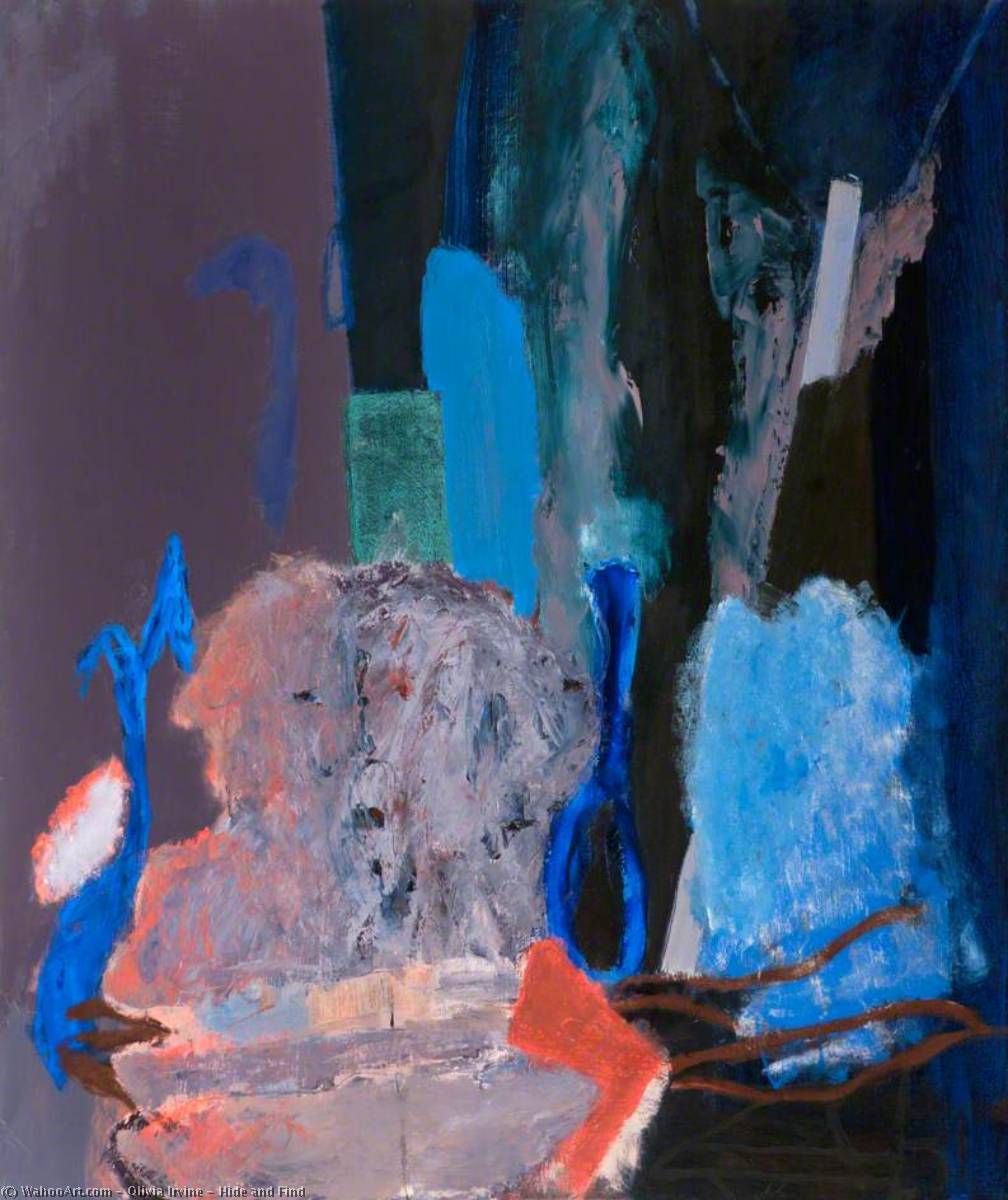
Edynburg | 1 | Hide and Find |
Oryginały Olivia Irvine z tego okresu obejmują 3 lat, od 1989 do 1991: galeria prezentuje najsłynniejsze z nich.
Wybierz rok, aby zobaczyć oryginały.
'How does your garden grow ' (1989), Scottish National Gallery of Modern Art, Edynburg. Następne są Hole in the Hedge (1990) oraz Stay Blue (1991).
29 lat: 'How does your garden grow ' pochodzi z 1989, a Olivia Irvine urodził(a) się w 1960.
Nasz katalog zawiera 8 dzieł artysty Olivia Irvine, datowanych od 1989 do 1991.
W większości znajdują się w Nhs Lothian (Edinburgh), Scottish National Gallery of Modern Art (Edynburg) i University of Stirling (Stirling). Powyższa tabela muzeów zawiera ich pełną listę.
W 1989: 2 z 8 dzieł na tej stronie powstało w tym czasie, w tym 'How does your garden grow '.
Na tej stronie najwcześniejszy to 'How does your garden grow ' (1989), a najpóźniejszy Stay Blue (1991).
Hole in the Hedge, Recent Times i 'Galicia as I had imagined it to be': Nhs Lothian, Edinburgh posiada 4 dzieł widocznych na tej stronie.
In the quiet, textured landscapes of Olivia Irvine’s paintings, one finds a profound dialogue between the tangible world and the ephemeral nature of recollection. Born in Kilwinning, Scotland, Irvine has cultivated a creative practice that serves as a bridge between reality and the subconscious. Her work does not merely depict scenes; it reconstructs them, pulling from the depths of childhood memories and domestic intimacy to create painted worlds that feel simultaneously like cherished relics and fleeting dreams. Through a meticulous engagement with color, mark-making, and the interplay of shapes, she invites viewers into an ambiguous space where imagery surfaces, evolves, and occasionally vanishes, much like a dream upon waking.
Irvine’s artistic foundation was forged at the prestigious Edinburgh College of Art, where she earned her BA Honours in Drawing and Painting along with a Diploma in Postgraduate Studies. This rigorous academic training provided her with the technical vocabulary to explore complex themes later in her career. Her journey was significantly expanded by international exposure; a Spanish Government Scholarship allowed her to immerse herself in the vibrant artistic culture of Madrid at the Universidad Complutense de Madrid, while a subsequent Master’s degree in European Fine Art at the Winchester School of Art in Barcelona further refined her aesthetic sensibilities. These experiences in Spain and France—including an exchange program at Les Beaux Arts de Montpelier—infused her work with a diverse cultural perspective and a fascination with how light and place shape identity.
What distinguishes Irvine’s oeuvre is her masterful command over the physical properties of her media. She often works with oil paint and distemper—a medium where pigment is bound with glue—to create a striking contrast between vigorous, spontaneous strokes and delicate, translucent passages. This textural matrix allows her to achieve a sense of transience; her canvases possess a weightiness born of impasto and layered forms, yet they retain a ghostly quality, as if the subject matter might dissolve at any moment. Her fascination with pure pigment has even led her to experiment with more ancient, elemental techniques such as egg tempera and buon fresco, further deepening the historical resonance of her surfaces.
The imagery within these textured layers often revolves around recurring motifs that evoke a sense of nostalgia and domesticity. One might encounter:
Beyond the technical execution, Irvine’s significance lies in her ability to use the formal language of painting to explore autobiography and place. Her work does not rely on direct representation but rather on a combination of sketches, memory, and fantasy. By allowing the dynamics of the picture-making process itself to dictate the outcome, she achieves results that are often surprising and deeply emotive. Whether capturing the serene atmosphere of birds in a winter landscape, as seen in The Heat of the Moment, or exploring the abstract emotional landscapes of works like Hide and Find, Irvine remains a vital voice in contemporary British art.
Her contribution to the art world is marked by a refusal to be confined to a single mode of expression. From her involvement in experimental film workshops in Glasgow to her established presence in the Edinburgh gallery scene, she continues to push the boundaries of how much emotion can be embedded within a single layer of paint. Through her dedication to capturing the fleeting and the felt, Olivia Irvine ensures that the landscapes of the past remain vibrantly, tangibly present.
