


1


Aktualizacja: Październik 2026 · ranking według naszego wskaźnika popularności (liczba wyszukiwań, wizyt i zamówień dla każdego dzieła) · 32 dzieł Morris Graves w naszym katalogu
W skrócie
Według galerii najsłynniejszym obrazem Morris Graves jest Bird Singing in the Moonlight (1938). Crow, Surf and Moon (1943) i Logged Mountains (1943) dopełniają trio, które zna każde oko. Z 32 dzieł Morris Graves w naszym katalogu, galeria prezentuje poniżej 30 najsłynniejszych prac – każda z nich jest oryginałem z podaniem roku powstania, muzeum oraz cech wyróżniających ją na tle innych.


The Logged Mountains painting by Morris Graves is a thought-provoking artwork that showcases the artist's skill in combining natural elements with artistic expression. Created in 1943, this oil on canvas painting measures 66 x 92 cm and is currently housed at the Smithsonian American Art Museum in the United States. Artist Background Morris Graves was an American artist known for his delicate and contemplative drawings that capture the essence of…


 Woodpeckers1941
12
 Bird And Chalice1939
13
 Folded Wings Memory the Moon Weeping1943
14
 Night Sky No. 21944 · Art Museum
15
 South American Brush Bird1944
16
 Oregon, from the United States Series1948
17
 Young Gander Ready for Flight1952 · The Phillips Collection
18
 August Still Life1952 · The Phillips Collection
19
 Young Gander1952
20
 Bird Masking1953
21
 Marsh Orchids1955 · Art Museum
22
 Spirit Bird1956
23
 Bouquet1954
24
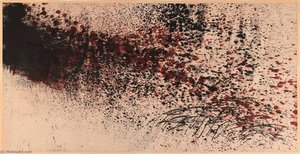 Spring with Machine Age Noise V1957
25
 Flowers1954
26
 Poverty Winter - Still Life1982 · Art Museum
27
 Summer Still Life1988
28
 Hibernation1954
29
 State of the World (Double Necked Vessel)
30
 Winter Flower (Ireland)
3 muzeów, w których znajduje się najwięcej obrazów z tej strony.
| Muzea | Miasto | Dzieła artysty Morris Graves | Obrazy z tej listy |
|---|---|---|---|
 Art Museum |
Seattle | 6 | Crow, Surf and Moon, Bird in the Night, Sea, Fish and Constellation |
 The Phillips Collection |
Waszyngton | 3 | Surf and Bird, Young Gander Ready for Flight, August Still Life |
 Smithsonian American Art Museum |
Waszyngton | 1 | Logged Mountains |
Wybierz dekadę, aby zobaczyć dzieło, które ją definiuje.


Bird Singing in the Moonlight (1938). Następne są Crow, Surf and Moon (1943) oraz Logged Mountains (1943).
28 lat: Bird Singing in the Moonlight pochodzi z 1938, a Morris Graves urodził(a) się w 1910.
Bird Singing in the Moonlight, Crow, Surf and Moon, Logged Mountains, Surf and Bird, Snake and Moon, Wheelbarrow, Bird in the Night, Sea, Fish and Constellation, Bird in the Spirit i Nestling. Powyższy ranking zawiera rok powstania oraz muzeum dla każdego z nich.
Nasz katalog zawiera 32 dzieł artysty Morris Graves, datowanych od 1934 do 1988.
W większości znajdują się w Art Museum (Seattle), The Phillips Collection (Waszyngton) i Smithsonian American Art Museum (Waszyngton). Powyższa tabela muzeów zawiera ich pełną listę.
W 1940s: 11 z 30 dzieł na tej stronie powstało w tym czasie, w tym Crow, Surf and Moon.
Na tej stronie najwcześniejszy to Wheelbarrow (1934), a najpóźniejszy Summer Still Life (1988).
Crow, Surf and Moon, Bird in the Night i Sea, Fish and Constellation: Art Museum, Seattle posiada 6 dzieł widocznych na tej stronie.