Portret Miné Okubo

Obrazy: 72 najsłynniejszych dzieł artysty Miné Okubo – spojrzenie galerii

Aktualizacja: Listopad 2026 · ranking według naszego wskaźnika popularności (liczba wyszukiwań, wizyt i zamówień dla każdego dzieła) · 72 dzieł Miné Okubo w naszym katalogu

W skrócie

Według opinii kuratorów galerii, najsłynniejszym obrazem Miné Okubo jest (3 Women Going to Church) (1948), którego oryginał znajduje się w Japanese American National Museum w Los Angeles. Walking over muddy ground, Central Utah Relocation Project, Topaz, Utah, 1942-1944 (1944) i Teaching art classes, Tanforan Assembly Center, San Bruno, California, 1942 (1944) dopełniają trio, które zna każde oko. Z 72 dzieł Miné Okubo w naszym katalogu, galeria prezentuje poniżej 72 najsłynniejszych prac – każda z nich jest oryginałem z podaniem roku powstania, muzeum oraz cech wyróżniających ją na tle innych.

1912 – 2001, Riverside Social realism Najwięcej dzieł: Japanese American National Museum

10 najlepszych obrazów artysty Miné Okubo w galerii

1
(3 Women Going to Church) (1948) autorstwa Miné Okubo

(3 Women Going to Church)

1948 · Gouache · Japanese American National Museum, Los Angeles

Three women move toward the viewer, their bodies rendered as simplified, rectangular forms. They walk in a somber line, heads bowed under the weight of a quiet gravity. In their hands, they hold books, small anchors of faith against the surrounding bleakness. The figures are heavy with a sense of shared purpose, their rounded features catching subtle highlights amidst a landscape of muted blues and browns.

2
Walking over muddy ground, Central Utah Relocation Project, Topaz, Utah, 1942-1944 (1944) autorstwa Miné Okubo

Walking over muddy ground, Central Utah Relocation Project, Topaz, Utah, 1942-1944

1944 · Drawing · Japanese American National Museum, Los Angeles

Miné Okubo’s “Walking Over Muddy Ground, Central Utah Relocation Project, Topaz, Utah, 1942-1944” isn't merely a depiction of a landscape; it’s a distilled essence of hardship, determination, and the quiet dignity of a people displaced. Rendered in stark black and white, the drawing captures a pivotal moment within the Topaz War Relocation Center—a microcosm of the larger narrative of Japanese American internment during World War II. The image immediately draws…

3
Teaching art classes, Tanforan Assembly Center, San Bruno, California, 1942 (1944) autorstwa Miné Okubo

Teaching art classes, Tanforan Assembly Center, San Bruno, California, 1942

1944 · Ink On Paper · Japanese American National Museum, Los Angeles

In this work, titled Teaching art classes, Tanforan Assembly Center, San Bruno, California, 1942, the artist Miné Okubo captures a quiet, instructional moment within the confines of a relocation center. Created in 1944, the piece offers a view into the daily life of Japanese Americans during the wartime era. It is a document of a specific time and place, recorded through the eyes of someone who lived through the experience…

4
Posting of Civilian Exclusion Order/Evacuation Order No. 19, Berkeley, California, 1942 (1944) autorstwa Miné Okubo

Posting of Civilian Exclusion Order/Evacuation Order No. 19, Berkeley, California, 1942

1944 · Acrylic On Canvas · Japanese American National Museum, Los Angeles

Miné Okubo's "Posting of Civilian Exclusion Order/Evacuation Order No. 19, Berkeley, California, 1942" isn’t merely a historical document rendered in ink and paper; it’s a visceral embodiment of fear, uncertainty, and the profound disruption inflicted upon Japanese Americans during World War II. Created in 1942, amidst the escalating anxieties of wartime America, this powerful black-and-white drawing captures a pivotal moment – the public announcement of an evacuation order that would…

5
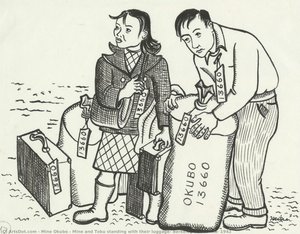
Mine and Toku standing with their luggage, Berkeley, California, 1942 (1944) autorstwa Miné Okubo

Mine and Toku standing with their luggage, Berkeley, California, 1942

1944 · Acrylic On Paper · Japanese American National Museum, Los Angeles

Miné Okubo's "Mine and Toku Standing with Their Luggage, Berkeley, California, 1942" isn’t merely a photograph; it’s a distilled essence of experience, a poignant snapshot frozen in time during a profoundly unsettling chapter of American history. Created in 1944, shortly after the internment of Japanese Americans following Pearl Harbor, this deceptively simple drawing offers an intimate and deeply affecting glimpse into the lives of two individuals – Miné and her…

6
Community toilets, Tanforan Assembly Center, San Bruno, California, 1942 (1944) autorstwa Miné Okubo

Community toilets, Tanforan Assembly Center, San Bruno, California, 1942

1944 · Ink On Paper · Japanese American National Museum, Los Angeles

Miné Okubo's "Community Toilets, Tanforan Assembly Center, San Bruno, California, 1942" is far more than a simple depiction of a utilitarian space. It’s a poignant and profoundly moving testament to the everyday realities faced by Japanese Americans unjustly incarcerated during World War II. Rendered in stark black ink on white paper, the artwork transcends its subject matter to become a powerful symbol of loss, dignity, and quiet resilience within a…

7
Mine and Toku arrive in their barrack, Central Utah Relocation Project, Topaz, Utah, 1942 (1944) autorstwa Miné Okubo

Mine and Toku arrive in their barrack, Central Utah Relocation Project, Topaz, Utah, 1942

1944 · Acrylic On Canvas · Japanese American National Museum, Los Angeles

Miné Okubo's "Mine and Toku arrive in their barrack, Central Utah Relocation Project, Topaz, Utah, 1942" isn’t merely a drawing; it’s a distilled essence of trauma, displacement, and the quiet dignity of survival. Created during her forced incarceration at the Topaz War Relocation Center in 1942, this stark black-and-white image offers an intimate glimpse into a profoundly unsettling chapter of American history – the unjust internment of Japanese Americans during…

8
Eating lunch while awaiting departure inside the Civil Control Station, Berkeley, California, 1942 (1944) autorstwa Miné Okubo

Eating lunch while awaiting departure inside the Civil Control Station, Berkeley, California, 1942

1944 · Acrylic On Canvas · Japanese American National Museum, Los Angeles

Miné Okubo's "Eating Lunch while awaiting departure inside the Civil Control Station, Berkeley, California, 1942" isn't merely a depiction of a scene; it’s a distilled essence of wartime anxiety and the profound human cost of forced displacement. Created during a period of immense upheaval – the incarceration of Japanese Americans following Pearl Harbor – this black-and-white pen and ink drawing transcends its documentary origins to become a poignant meditation on…

9
Medical exam in laundry building, Central Utah Relocation Project, Topaz, Utah, 1942 (1944) autorstwa Miné Okubo

Medical exam in laundry building, Central Utah Relocation Project, Topaz, Utah, 1942

1944 · Ink · Japanese American National Museum, Los Angeles

The scene unfolds within the stark confines of a laundry building at the Topaz War Relocation Center. Here, in "Medical exam in laundry building, Central Utah Relocation Project, Topaz, Utah, 1942," the artist Miné Okubo captures a moment of quiet, clinical scrutiny. The air feels heavy with the weight of the surrounding enclosure, a space where the routine of a medical examination meets the lived reality of the Topaz camp.…

10
New bachelor dorms at Barrack 14, Tanforan Assembly Center, San Bruno, California, 1942 (1944) autorstwa Miné Okubo

New bachelor dorms at Barrack 14, Tanforan Assembly Center, San Bruno, California, 1942

1944 · Acrylic On Canvas · Japanese American National Museum, Los Angeles

Within the stark, geometric confines of the Tanforan Assembly Center during World War II, Miné Okubo captured a poignant and enduring moment – “New Bachelor Dorms at Barrack 14.” This deceptively simple ink-on-paper illustration transcends mere documentation; it’s a testament to human dignity amidst displacement, a quiet observation of daily life within the shadow of internment. Created in 1942-1944, during a period of immense upheaval for Japanese Americans, Okubo's work…

Obrazy artysty Miné Okubo, uszeregowane od 11 do 72 miejsca

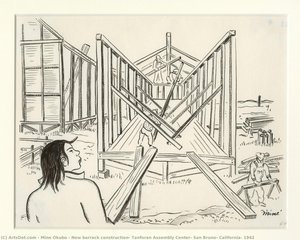
11Army blanket distribution, Central Utah Relocation Project, Topaz, Utah, 1942 (1944) autorstwa Miné OkuboArmy blanket distribution, Central Utah Relocation Project, Topaz, Utah, 19421944 · Japanese American National Museum 12Obtaining drinking water, Central Utah Relocation Project, Topaz, Utah, 1942-1944 (1944) autorstwa Miné OkuboObtaining drinking water, Central Utah Relocation Project, Topaz, Utah, 1942-19441944 · Japanese American National Museum 13Working at the Topaz Times, Central Utah Relocation Project, Topaz, Utah, 1942 (1944) autorstwa Miné OkuboWorking at the Topaz Times, Central Utah Relocation Project, Topaz, Utah, 19421944 · Japanese American National Museum 14Teacher and students in classroom, Central Utah Relocation Project, Topaz, Utah, 1942-1944 (1944) autorstwa Miné OkuboTeacher and students in classroom, Central Utah Relocation Project, Topaz, Utah, 1942-19441944 · Japanese American National Museum 15Waiting in line to receive vaccinations, Tanforan Assembly Center, San Bruno, California, 1942 (1944) autorstwa Miné OkuboWaiting in line to receive vaccinations, Tanforan Assembly Center, San Bruno, California, 19421944 · Japanese American National Museum 16Mosquitos and flies in the barracks, Central Utah Relocation Project, Topaz, Utah, 1942-1944 (1944) autorstwa Miné OkuboMosquitos and flies in the barracks, Central Utah Relocation Project, Topaz, Utah, 1942-19441944 · Japanese American National Museum 17Observing camp activities from a rooftop, Tanforan Assembly Center, San Bruno, California, 1942 (1944) autorstwa Miné OkuboObserving camp activities from a rooftop, Tanforan Assembly Center, San Bruno, California, 19421944 · Japanese American National Museum 18Bus ride to Central Utah Relocation Project, Topaz, Utah, 1942 (1944) autorstwa Miné OkuboBus ride to Central Utah Relocation Project, Topaz, Utah, 19421944 · Japanese American National Museum 19Listening to radio announcement of bombing of Pearl Harbor, with brother Toku, Berkeley, California, 1941 (1944) autorstwa Miné OkuboListening to radio announcement of bombing of Pearl Harbor, with brother Toku, Berkeley, California, 19411944 · Japanese American National Museum 20Registering at the Civil Control Station at Pilgrim Hall of the First Congregational Church, Berkeley, California, 1942 (1944) autorstwa Miné OkuboRegistering at the Civil Control Station at Pilgrim Hall of the First Congregational Church, Berkeley, California, 19421944 · Japanese American National Museum 21Arrival at Tanforan Assembly Center, San Bruno, California, 1942 (1944) autorstwa Miné OkuboArrival at Tanforan Assembly Center, San Bruno, California, 19421944 · Japanese American National Museum 22Waiting in line for supper, Tanforan Assembly Center, San Bruno, California, 1942 (1944) autorstwa Miné OkuboWaiting in line for supper, Tanforan Assembly Center, San Bruno, California, 19421944 · Japanese American National Museum 23Induction at Central Utah Relocation Project, Topaz, Utah, 1942 (1944) autorstwa Miné OkuboInduction at Central Utah Relocation Project, Topaz, Utah, 19421944 · Japanese American National Museum 24[Untitled] (1977) autorstwa Miné Okubo[Untitled]1977 · Japanese American National Museum 25New barrack construction, Tanforan Assembly Center, San Bruno, California, 1942 (1944) autorstwa Miné OkuboNew barrack construction, Tanforan Assembly Center, San Bruno, California, 19421944 · Japanese American National Museum 26Arrival of evacuees from Hawaii, Central Utah Relocation Project, Topaz, Utah, 1942-1944 (1944) autorstwa Miné OkuboArrival of evacuees from Hawaii, Central Utah Relocation Project, Topaz, Utah, 1942-19441944 · Japanese American National Museum 27Carrying mattresses to the barrack, Central Utah Relocation Project, Topaz, Utah, 1942 (1944) autorstwa Miné OkuboCarrying mattresses to the barrack, Central Utah Relocation Project, Topaz, Utah, 19421944 · Japanese American National Museum 28Eating in the mess hall, Central Utah Relocation Project, Topaz, Utah, 1942-1944 (1944) autorstwa Miné OkuboEating in the mess hall, Central Utah Relocation Project, Topaz, Utah, 1942-19441944 · Japanese American National Museum 29Mine with open newspaper, surrounded by anti-Japanese slogans, Berkeley, California, 1941 (1944) autorstwa Miné OkuboMine with open newspaper, surrounded by anti-Japanese slogans, Berkeley, California, 19411944 · Japanese American National Museum 30Scavenging lumber to build furniture, Central Utah Relocation Project, Topaz, Utah, 1942 (1944) autorstwa Miné OkuboScavenging lumber to build furniture, Central Utah Relocation Project, Topaz, Utah, 19421944 · Japanese American National Museum 31Landscaping with trees, Central Utah Relocation Project, Topaz, Utah, 1942-1944 (1944) autorstwa Miné OkuboLandscaping with trees, Central Utah Relocation Project, Topaz, Utah, 1942-19441944 · Japanese American National Museum 32Snowball fight, Central Utah Relocation Project, Topaz, Utah, 1942-1944 (1944) autorstwa Miné OkuboSnowball fight, Central Utah Relocation Project, Topaz, Utah, 1942-19441944 · Japanese American National Museum 33Families preparing for evacuation, Berkeley, California, 1942 (1944) autorstwa Miné OkuboFamilies preparing for evacuation, Berkeley, California, 19421944 · Japanese American National Museum 34First night at Tanforan Assembly Center, San Bruno, California, 1942 (1944) autorstwa Miné OkuboFirst night at Tanforan Assembly Center, San Bruno, California, 19421944 · Japanese American National Museum 35Mine and Toku assemble cots, Tanforan Assembly Center, San Bruno, California, 1942 (1944) autorstwa Miné OkuboMine and Toku assemble cots, Tanforan Assembly Center, San Bruno, California, 19421944 · Japanese American National Museum 36Awaiting registration at the Civil Control Station at Pilgrim Hall of the First Congregational Church, Berkeley, California, 1942 (1944) autorstwa Miné OkuboAwaiting registration at the Civil Control Station at Pilgrim Hall of the First Congregational Church, Berkeley, California, 19421944 · Japanese American National Museum 37Waiting to disembark from the bus at Tanforan Assembly Center, San Bruno, California, 1942 (1944) autorstwa Miné OkuboWaiting to disembark from the bus at Tanforan Assembly Center, San Bruno, California, 19421944 · Japanese American National Museum 38Dining with friends in Berkeley, California, ca.1939-1941 (1944) autorstwa Miné OkuboDining with friends in Berkeley, California, ca.1939-19411944 · Japanese American National Museum 39Mine at train station in Berne, Switzerland, 1939 (1944) autorstwa Miné OkuboMine at train station in Berne, Switzerland, 19391944 · Japanese American National Museum 40Arrival at Central Utah Relocation Project, Topaz, Utah, 1942 (1944) autorstwa Miné OkuboArrival at Central Utah Relocation Project, Topaz, Utah, 19421944 · Japanese American National Museum 41[Untitled] (1978) autorstwa Miné Okubo[Untitled]1978 · Japanese American National Museum 42Interior view of Mine and Toku (1944) autorstwa Miné OkuboInterior view of Mine and Toku1944 · Japanese American National Museum 43Luggage delivery truck, Tanforan Assembly Center, San Bruno, California, 1942 (1944) autorstwa Miné OkuboLuggage delivery truck, Tanforan Assembly Center, San Bruno, California, 19421944 · Japanese American National Museum 44Mine and Toku are shown to their barrack, Tanforan Assembly Center, San Bruno, California, 1942 (1944) autorstwa Miné OkuboMine and Toku are shown to their barrack, Tanforan Assembly Center, San Bruno, California, 19421944 · Japanese American National Museum 45Unfinished camp construction, Central Utah Relocation Project, Topaz, Utah, 1942 (1944) autorstwa Miné OkuboUnfinished camp construction, Central Utah Relocation Project, Topaz, Utah, 19421944 · Japanese American National Museum 46Mine reads newspaper announcing war declaration against Japan, Berkeley, California, 1941 (1944) autorstwa Miné OkuboMine reads newspaper announcing war declaration against Japan, Berkeley, California, 19411944 · Japanese American National Museum 47Walking with guide to Barrack 16, Room 50, Tanforan Assembly Center, San Bruno, California, 1942 (1944) autorstwa Miné OkuboWalking with guide to Barrack 16, Room 50, Tanforan Assembly Center, San Bruno, California, 19421944 · Japanese American National Museum 48[Untitled] (1978) autorstwa Miné Okubo[Untitled]1978 · Japanese American National Museum 49Interior of Mine and Toku (1944) autorstwa Miné OkuboInterior of Mine and Toku1944 · Japanese American National Museum 50[Untitled] (1970) autorstwa Miné Okubo[Untitled]1970 · Japanese American National Museum 51Receiving hostile looks while traveling by bus, Berkeley, California, 1941-42 (1944) autorstwa Miné OkuboReceiving hostile looks while traveling by bus, Berkeley, California, 1941-421944 · Japanese American National Museum 52Mine and Toku preparing for departure, Berkeley, California, 1942 (1944) autorstwa Miné OkuboMine and Toku preparing for departure, Berkeley, California, 19421944 · Japanese American National Museum 53Returning home for curfew, Berkeley, California, 1942 (1944) autorstwa Miné OkuboReturning home for curfew, Berkeley, California, 19421944 · Japanese American National Museum 54Mail-order clothing from Sears Roebuck, Central Utah Relocation Project, Topaz, Utah, 1942-1944 (1944) autorstwa Miné OkuboMail-order clothing from Sears Roebuck, Central Utah Relocation Project, Topaz, Utah, 1942-19441944 · Japanese American National Museum 55[Untitled] (1969) autorstwa Miné Okubo[Untitled]1969 · Japanese American National Museum 56[Untitled] (1968) autorstwa Miné Okubo[Untitled]1968 · Japanese American National Museum 57Rocky Ladies ? (1977) autorstwa Miné OkuboRocky Ladies ?1977 · Japanese American National Museum 58Bachelor (1944) autorstwa Miné OkuboBachelor1944 · Japanese American National Museum 59[Untitled] (1969) autorstwa Miné Okubo[Untitled]1969 · Japanese American National Museum 60[Untitled] (1974) autorstwa Miné Okubo[Untitled]1974 · Japanese American National Museum 61Victory gardens, Central Utah Relocation Project, Topaz, Utah, 1942-1944 (1944) autorstwa Miné OkuboVictory gardens, Central Utah Relocation Project, Topaz, Utah, 1942-19441944 · Japanese American National Museum 62Trimming grass inside living quarters, Tanforan Assembly Center, San Bruno, California, 1942 (1944) autorstwa Miné OkuboTrimming grass inside living quarters, Tanforan Assembly Center, San Bruno, California, 19421944 · Japanese American National Museum 63Departure postings at the Civil Control Station, Berkeley, California, 1942 (1944) autorstwa Miné OkuboDeparture postings at the Civil Control Station, Berkeley, California, 19421944 · Japanese American National Museum 64Medical exam at Tanforan Assembly Center, San Bruno, California, 1942 (1944) autorstwa Miné OkuboMedical exam at Tanforan Assembly Center, San Bruno, California, 19421944 · Japanese American National Museum 65Mine and Toku sweep the stall, Tanforan Assembly Center, San Bruno, California, 1942 (1944) autorstwa Miné OkuboMine and Toku sweep the stall, Tanforan Assembly Center, San Bruno, California, 19421944 · Japanese American National Museum 66Inspection of evacuees for contraband, Tanforan Assembly Center, San Bruno, California, 1942 (1944) autorstwa Miné OkuboInspection of evacuees for contraband, Tanforan Assembly Center, San Bruno, California, 19421944 · Japanese American National Museum 67Relocation notification, Tanforan Assembly Center, San Bruno, California, 1942 (1944) autorstwa Miné OkuboRelocation notification, Tanforan Assembly Center, San Bruno, California, 19421944 · Japanese American National Museum 68Receiving room assignments at Tanforan Assembly Center, San Bruno, California, 1942 (1944) autorstwa Miné OkuboReceiving room assignments at Tanforan Assembly Center, San Bruno, California, 19421944 · Japanese American National Museum 69Waiting to use the washrooms, Central Utah Relocation Project, Topaz, Utah, 1942-1944 (1944) autorstwa Miné OkuboWaiting to use the washrooms, Central Utah Relocation Project, Topaz, Utah, 1942-19441944 · Japanese American National Museum 70Rest stop with military police, Nevada, 1942 (1944) autorstwa Miné OkuboRest stop with military police, Nevada, 19421944 · Japanese American National Museum 71Niezdefiniowany (1978) autorstwa Miné OkuboNiezdefiniowany1978 · Japanese American National Museum 72Shopping at the canteen, Tanforan Assembly Center, San Bruno, California, 1942 (1944) autorstwa Miné OkuboShopping at the canteen, Tanforan Assembly Center, San Bruno, California, 19421944 · Japanese American National Museum

Słynne obrazy Miné Okubo epoka po epoce

Tematy, które przyciągnęły wzrok Miné Okubo

Cztery motywy najczęściej powracające w tych oryginałach, z których każdy doczekał się swojego najdoskonalszego przykładu.

Muzea przechowujące oryginały Miné Okubo

Muzeum, w którym znajduje się najwięcej obrazów prezentowanych na tej stronie.

Muzea Miasto Dzieła artysty Miné Okubo Obrazy z tej listy
Japanese American National Museum, Los AngelesJapanese American National Museum Los Angeles 72 (3 Women Going to Church), Walking over muddy ground, Central Utah Relocation Project, Topaz, Utah, 1942-1944, Teaching art classes, Tanforan Assembly Center, San Bruno, California, 1942

Miné Okubo, jedno kultowe dzieło na dekadę

Dzieła według dekad

Wybierz dekadę, aby zobaczyć dzieło, które ją definiuje.

Obrazy artysty Miné Okubo: odpowiedzi galerii

Który obraz Miné Okubo jest najsłynniejszy ze wszystkich?Odkryj odpowiedź

(3 Women Going to Church) (1948), Japanese American National Museum, Los Angeles. Następne są Walking over muddy ground, Central Utah Relocation Project, Topaz, Utah, 1942-1944 (1944) oraz Teaching art classes, Tanforan Assembly Center, San Bruno, California, 1942 (1944).

Ile lat miał Miné Okubo, gdy ukończył (3 Women Going to Church)?Odkryj odpowiedź

36 lat: (3 Women Going to Church) pochodzi z 1948, a Miné Okubo urodził(a) się w 1912.

Które to 10 najlepszych obrazów Miné Okubo?Odkryj odpowiedź

(3 Women Going to Church), Walking over muddy ground, Central Utah Relocation Project, Topaz, Utah, 1942-1944, Teaching art classes, Tanforan Assembly Center, San Bruno, California, 1942, Posting of Civilian Exclusion Order/Evacuation Order No. 19, Berkeley, California, 1942, Mine and Toku standing with their luggage, Berkeley, California, 1942, Community toilets, Tanforan Assembly Center, San Bruno, California, 1942, Mine and Toku arrive in their barrack, Central Utah Relocation Project, Topaz, Utah, 1942, Eating lunch while awaiting departure inside the Civil Control Station, Berkeley, California, 1942, Medical exam in laundry building, Central Utah Relocation Project, Topaz, Utah, 1942 i New bachelor dorms at Barrack 14, Tanforan Assembly Center, San Bruno, California, 1942. Powyższy ranking zawiera rok powstania oraz muzeum dla każdego z nich.

Ile dzieł stworzył/a Miné Okubo?Odkryj odpowiedź

Nasz katalog zawiera 72 dzieł artysty Miné Okubo, datowanych od 1944 do 1978.

Gdzie można znaleźć najsłynniejsze oryginały autorstwa Miné Okubo?Odkryj odpowiedź

W większości znajdują się w Japanese American National Museum (Los Angeles). Powyższa tabela muzeów zawiera ich pełną listę.

Kiedy Miné Okubo stworzył swoje najsłynniejsze obrazy?Odkryj odpowiedź

W 1940s: 62 z 72 dzieł na tej stronie powstało w tym czasie, w tym (3 Women Going to Church).

Które z najsłynniejszych dzieł Miné Okubo należą do jego najwcześniejszych i najpóźniejszych prac?Odkryj odpowiedź

Na tej stronie najwcześniejszy to Walking over muddy ground, Central Utah Relocation Project, Topaz, Utah, 1942-1944 (1944), a najpóźniejszy [Untitled] (1978).

Do jakich tematów Miné Okubo powracał najczęściej?Odkryj odpowiedź

Resilience (37), Observation (21) i Japanese american (16), w ramach 72 dzieł na tej stronie.

W jakiej technice najczęściej tworzył Miné Okubo?Odkryj odpowiedź

Acrylic On Canvas, dla 34 z 72 dzieł na tej stronie.

Z jakim nurtem związany jest Miné Okubo?Odkryj odpowiedź

Social realism, sądząc po oryginałach na tej stronie.

Które oryginały artysty Miné Okubo znajdują się w zbiorach Japanese American National Museum?Odkryj odpowiedź

(3 Women Going to Church), Walking over muddy ground, Central Utah Relocation Project, Topaz, Utah, 1942-1944 i Teaching art classes, Tanforan Assembly Center, San Bruno, California, 1942: Japanese American National Museum, Los Angeles posiada 72 dzieł widocznych na tej stronie.

Miné Okubo: artysta

Miné Okubo: Życie i Dzieło Artysty Świadka Historii

Miné Okubo, urodzona w Riverside, Kalifornii, w 1912 roku, była artystką, której życie nieodłącznie splatało się z jednym z najbardziej bolesnych rozdziałów historii Stanów Zjednoczonych – niewolniczymi obozami internowania dla Amerykanów pochodzenia japońskiego. Jej historia to nie tylko talent artystyczny, ale przede wszystkim niezwykła odwaga, niezachwiana obserwacja i siła sztuki jako świadka wydarzeń. Już od najmłodszych lat, otoczona kreatywnością – jej matka była utalentowaną kaligrafem, a ojciec erudytą – Okubo podjęła kroki w kierunku formalnego wykształcenia artystycznego, studiując na Uniwersytecie Kalifornijskim w Berkeley i później podróżując do Europy w 1938 roku, aby poszerzyć swoje horyzonty artystyczne. Ten okres nauki został nagle przerwany przez nadciągającą II wojnę światową, zmuszając ją do powrotu do Ameryki tuż przed osiągnięciem apogeum napięć międzynarodowych. Nie mogła sobie wtedy wyobrazić, że ten powrót nie przyniesie jej kontynuacji artystycznej, lecz skłoni do doświadczenia niewoli i wydarzeń, które zdefiniowały zarówno jej życie, jak i twórczość.

Świadectwo Sztuki w Ścianach Obozów

Atak na Pearl Harbor radykalnie zmienił bieg życia Okubo, tak jak dla wielu innych Amerykanów pochodzenia japońskiego. W 1942 roku wraz ze swoim bratem Benjim została uprowadzona z domu i niesprawiedliwie osadzona w Tanforan Assembly Center, dawnej torowisku przekształconej w tymczasowe miejsce przechowawcze przed przeniesieniem do bardziej stałego Topaz War Relocation Center w Utah. To właśnie w tych ogrodzonych przez żelazo murach, otoczonych kurzem i rozpaczą, Okubo rozpoczęła swoje najważniejsze artystyczne przedsięwzięcie. Prowadzone przez niemal nieodpartą potrzebę dokumentowania rzeczywistości wokół niej, zaczęła tworzyć niezwykły wizualny zapis życia w obozie – ponad 2000 szkiców i rysunków starannie wykonanych węglem, akwarelami i ołówkiem. Nie były to monumentalne obrazy historyczne czy idealizowane portrety; były to surowe, szczere przedstawienia codziennego istnienia: zatłoczone pomieszczenia mieszkalne, biurokracja, twarze naznaczone zmartwieniem i rezygnacją, chwile ciszy i pokory w obliczu głębokiego cierpienia. Sztuka Okubo nie była jedynie osobistą reakcją; była aktem sprzeciwu, odmową milczenia i zapomnienia.

Citizen 13660: Świadectwo Dehumanizacji i Nadziei

Po wyjściu z Topaz w 1944 roku Okubo przekształciła swoje doświadczenia w przełomowe dzieło artystyczne i literackie – *Citizen 13660*. Wydane w 1946 roku, książka składała się z 198 jej rysunków towarzyszących im poruszającymi słowami. Tytuł ten symbolicznie odnosi się do numeru przypisanego jej w systemie internowania – ponaglający do refleksji nad dehumanizującym procesem, który doświadczyli ona i wielu innych. *Citizen 13660* nie była jedynie kroniką cierpienia; była też wyrazistym portretem ludzkiego ducha w obliczu przeciwności losu. Okubo nie unikała przedstawiania okrucieństw i niesprawiedliwości, ale również uchwyciła momenty wspólnoty, humoru i cichej siły. Rysunki charakteryzują się bezpośredniością, głębią emocjonalną i mistrzowskim wykorzystaniem linii i cienia. Książka szybko stała się fundamentalnym dokumentem opisującym doświadczenie Japończyków pochodzenia japońskiego w obozach, oferując bezkompromisowy wgląd w mroczny rozdział historii amerykańskiej.

Wpływy Artystyczne i Rozwój

Po wojnie Okubo przeniósł się do Nowego Jorku i kontynuowała karierę artystyczną, pracując jako ilustratorka dla magazynów i książek oraz realizując projekty murali. Chociaż nigdy nie porzuciła tematów sprawiedliwości społecznej i godności ludzkiej, które definiowały jej pracę w czasie wojny, jej styl ewoluował z czasem. Eksplorowała różne media i techniki, ale zawsze pozostawała wierna swoim przekonaniom. Okubo czerpała inspirację z nurtu realizmu społecznego – który podkreślał przedstawianie problemów społecznych i codziennego życia z bezkompromisową szczerością – oraz artystów takich jak Käthe Kollwitz, znaną ze swoich potężnych obrazów ludzkiego cierpienia. Przez całe swoje życie tworzyła dzieła, które odzwierciedlały jej osobiste doświadczenia i głębokie przekonania. Miné Okubo zmarła w 2001 roku, pozostawiając po sobie dziedzictwo, które nadal rezonuje współcześnie. Jej sztuka jest nie tylko dokumentem historycznym; to głęboko ludzkie historie zapisane węglem i akwarelami, zmuszające nas do pamięci, uczenia się i nigdy nie powtarzania błędów przeszłości.

Znaczenie Historyczne i Dziedzictwo

Sztuka Miné Okubo jest ważnym świadectwem historii Ameryki, a jej twórczość pozostaje inspiracją dla artystów i badaczy na całym świecie. Jej dzieła przypominają o potrzebie pamięci, zrozumienia i walki z uprzedzeniami oraz dyskryminacją. Sztuka Okubo to nie tylko zapis wydarzeń, ale przede wszystkim głos tych, którzy zostali pozbawieni wolności i praw.