A Quiet Revolution in Color: The Life and Art of Milton Avery
Milton Clark Avery, born March 7, 1885, in the small hamlet of Altmar, New York, wasn’t a painter who stormed the art world with manifestos or radical pronouncements. Instead, his revolution unfolded quietly, through a subtle yet profound exploration of color and form that would deeply influence generations of American artists. His early life was steeped in practicality; as the son of a tanner, Avery began working at sixteen to support his family after his father’s untimely death, taking on various blue-collar jobs while nurturing a burgeoning passion for art. This period instilled in him a grounded sensibility, a connection to everyday life that would permeate his work.
Early Life and Artistic Beginnings
Born into modest circumstances—his father was a leather craftsman—Avery’s formative years were marked by hard labor and familial responsibility. Following his father's death in 1905, he shouldered the burden of caring for nine female relatives, securing employment at factories and construction sites to provide for his household. Despite these challenges, Avery maintained an unwavering dedication to pursuing his artistic interests, enrolling in classes at the Connecticut League of Art Students and later honing his skills at the Art Students League of New York—institutions that fostered a disciplined approach to art education.
Influences from European Modernism
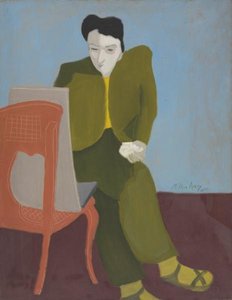
Avery’s artistic vision was shaped by encounters with groundbreaking movements originating in Europe. He absorbed the bold color palettes of French Fauvism, spearheaded by Henri Matisse, recognizing its liberation from naturalistic representation. Simultaneously, he studied German Expressionism, particularly the work of Ernst Ludwig Kirchner, acknowledging the expressive distortions and psychological depth inherent in this style. However, Avery skillfully synthesized these influences into something uniquely his own—a distinctive aesthetic characterized by simplified forms and luminous color relationships.
The Avery Style: Harmony and Emotion
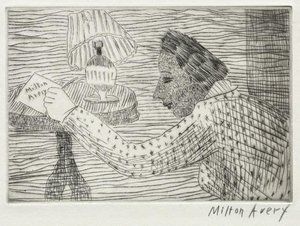
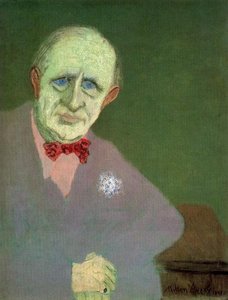
Avery’s artistic method centered on distilling subjects – landscapes, figures, still lifes – to their essential forms, prioritizing color harmonies and emotional resonance over meticulous detail. He deliberately reduced complexity, focusing instead on conveying mood and atmosphere through carefully considered color palettes. This approach—often described as “the Avery style”—was informed by a deep appreciation for the natural world and a desire to capture fleeting moments of beauty with understated grace. His canvases glowed with vibrant hues—often reds, yellows, and blues—creating an immersive experience for the viewer.
Recognition and Legacy: Roy Neuberger’s Champion
For decades, Avery’s work remained largely unrecognized outside of a small circle of fellow artists and collectors. This changed dramatically through the discerning eye of Roy Neuberger, a New York art dealer who recognized the exceptional quality and originality of Avery's paintings. Recognizing Avery’s talent and potential, Neuberger embarked on an ambitious campaign to elevate his artistic reputation—acquiring over one hundred canvases from Avery’s oeuvre and strategically lending or donating them to prominent museums across America. This concerted effort brought Avery’s art to a wider audience, establishing him as a pivotal figure in American Modernism and securing his place among the most celebrated colorists of the twentieth century. His enduring influence can be seen in the work of subsequent generations of artists—particularly Color Field painters Mark Rothko and Adolph Gottlieb—who embraced Avery's pioneering approach to abstraction.
A Lasting Impression: Simplicity, Color, and Emotion
Milton Avery’s artistic legacy transcends mere stylistic innovation; it embodies a profound philosophical commitment to capturing the essence of experience. His paintings are not merely depictions of visual subjects but rather meditations on mood, atmosphere, and emotional resonance—achieved through the masterful manipulation of color and form. Like Rothko and Gottlieb before him, Avery demonstrated that art could communicate powerfully without resorting to representational illusion. He died January 3, 1965, in New York City, leaving behind a body of work that continues to inspire artists today—a testament to his unwavering dedication to artistic exploration and the enduring beauty of simplicity.