Portret Lynd Ward

48 najsłynniejszych obrazów artysty Lynd Ward – wybór z galerii

Aktualizacja: Październik 2026 · ranking według naszego wskaźnika popularności (liczba wyszukiwań, wizyt i zamówień dla każdego dzieła) · 48 dzieł Lynd Ward w naszym katalogu

W skrócie

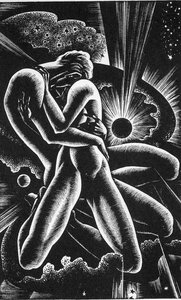
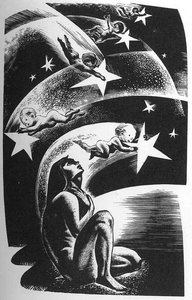
Z wszystkich oryginałów pozostawionych przez Lynd Ward, najsłynniejszym jest God's Man (1929). Tuż za nimi znajdują się Beowulf wrestles with Grendel (1933) oraz Wild Pilgrimage (1932). Nasz katalog zawiera 48 dzieł autorstwa Lynd Ward; galeria zachowała 48 najbardziej podziwianych na świecie prac, z których każda została przedstawiona wraz z datą powstania, informacją o muzeum oraz jej historią.

1905 – 1985, Chicago Expressionism

10 najlepszych obrazów artysty Lynd Ward: wybór galerii

The Lynd Ward selection continues, 11 to 48

Tematy, które przyciągnęły wzrok Lynd Ward

Cztery motywy najczęściej powracające w tych oryginałach, z których każdy doczekał się swojego najdoskonalszego przykładu.

Lynd Ward dekada po dekadzie: oryginały definiujące każdy okres

Dzieła według dekad

Wybierz dekadę, aby zobaczyć dzieło, które ją definiuje.

Pytania kolekcjonerów o obrazy Lynd Ward

Z jakiego dzieła najbardziej znany jest Lynd Ward?Odkryj odpowiedź

God's Man (1929). Następne są Beowulf wrestles with Grendel (1933) oraz Wild Pilgrimage (1932).

W jakim wieku był Lynd Ward, gdy powstało God's Man?Odkryj odpowiedź

24 lat: God's Man pochodzi z 1929, a Lynd Ward urodził(a) się w 1905.

Jakie są dziesięć najsłynniejszych obrazów, których autorem jest Lynd Ward?Odkryj odpowiedź

God's Man, Beowulf wrestles with Grendel, Wild Pilgrimage, Prelude to a Million Years, Prelude to a Million Years, Alec Waugh's ''Most Women...'', Prelude to a Million Years (12), Prelude to a Million Years (10), Alec Waugh's ''Hot Countries'' i Wild Pilgrimage. Powyższy ranking zawiera rok powstania oraz muzeum dla każdego z nich.

Ile obrazów pozostawił po sobie Lynd Ward?Odkryj odpowiedź

Nasz katalog zawiera 48 dzieł artysty Lynd Ward, datowanych od 1929 do 1969.

W których latach Lynd Ward namalował swoje najsłynniejsze dzieła?Odkryj odpowiedź

W 1930s: 27 z 48 dzieł na tej stronie powstało w tym czasie, w tym Beowulf wrestles with Grendel.

Jakie są pierwsze i ostatnie słynne oryginały Lynd Ward?Odkryj odpowiedź

Na tej stronie najwcześniejszy to God's Man (1929), a najpóźniejszy Day of the Hawk (1969).

Jakie tematy Lynd Ward wybierał najczęściej?Odkryj odpowiedź

Symbols (20), Characters (13) i Nudes (12), w ramach 48 dzieł na tej stronie.

Do jakiego nurtu artystycznego należy Lynd Ward?Odkryj odpowiedź

Expressionism, sądząc po oryginałach na tej stronie.

Lynd Ward: życie i twórczość

Lynd Ward: Pioneer of Wordless Novels & Master Wood Engraver

Lynd Kendall Ward, born in Chicago in 1905, was an artist whose vision extended far beyond the canvas or sculpture garden. He wasn’t merely a creator of images; he was a visual storyteller, a chronicler of the human condition rendered through the demanding and beautiful medium of wood engraving. His upbringing, steeped in progressive ideals thanks to his father, Harry F. Ward—a Methodist minister and early champion of the American Civil Liberties Union—instilled within him a deep sense of social justice that would permeate every facet of his artistic output. This wasn’t a childhood of privilege, but one enriched by books, particularly those lavishly illustrated, igniting an early passion for narrative through imagery. Summers spent immersed in the Canadian wilderness further nurtured this sensibility, fostering a profound appreciation for nature which frequently found expression in the evocative landscapes and symbolic elements within his art. Ward's formal training at Teachers College, Columbia University, culminated in graduation in 1926 and marriage to May Yonge McNeer—a partnership that would prove creatively fertile, yielding some of the most beloved children’s books of their era. A pivotal journey to Europe followed, where he honed his skills in wood engraving at the National Academy of Graphic Arts in Leipzig, Germany, under the tutelage of Hans Alexander Mueller.

Early Life and Influences

Ward's formative years were shaped by a father deeply committed to social reform—Harry F. Ward, a Methodist minister and fervent advocate for civil liberties—who instilled within his son a conviction that art could serve as a vehicle for promoting justice and compassion. This intellectual lineage profoundly impacted Ward’s artistic trajectory, fostering an unwavering belief in the importance of confronting societal issues through visual representation. His mother, Harriet May “Daisy” Kendall Ward, was born in Kansas City, Missouri, in 1873, and their marriage in 1899 marked the beginning of a lifelong collaboration—both personally and artistically. The couple’s early exposure to literature, particularly books adorned with striking illustrations, cultivated Ward's fascination with storytelling through imagery—a passion that would define his artistic endeavors throughout his life. Notably, Ward’s artistic sensibilities were significantly influenced by Frans Masereel’s *The Sun*, a groundbreaking wordless novel that championed the expressive power of visual narrative without relying on textual descriptions. This seminal work served as an inspiration for Ward's own ambitious undertaking: to craft narratives entirely conveyed through meticulously crafted woodcut illustrations—a bold departure from conventional storytelling methods.

The Birth of Wordless Novels and Artistic Innovation

Ward’s artistic breakthrough arrived with the conception of *God’s Man* (1929), a wordless novel that immediately established him as a pioneer in the burgeoning genre of graphic narratives. Rejecting the constraints of language, Ward embraced the inherent communicative potential of imagery—demonstrating an unparalleled understanding of how to convey complex themes—such as moral dilemmas and societal pressures—with breathtaking directness. This innovative approach resonated powerfully with the anxieties of the era, mirroring the turbulent climate surrounding the Wall Street Crash and cementing Ward’s reputation as a visionary artist who dared to challenge artistic conventions. Following *God's Man*, Ward continued his exploration of visual storytelling with equally compelling works like *Madman’s Drum* (1930), which confronted audiences with the horrors of war—a poignant reflection of the pervasive disillusionment felt during that period. He further developed his distinctive style in *Wild Pilgrimage* (1932) and *Prelude to a Million Years* (1933)—works that delve into themes of alienation and existential contemplation, respectively. These novels weren’t merely artistic experiments; they were deeply rooted in Ward's unwavering commitment to social commentary—a testament to his belief that art could serve as a catalyst for fostering empathy and promoting meaningful dialogue.

Technical Mastery: Wood Engraving and Beyond

Lynd Ward’s artistic legacy rests upon his unparalleled mastery of wood engraving—a technique demanding precision, patience, and an acute sensitivity to visual form. Under the guidance of Hans Alexander Mueller at the National Academy of Graphic Arts in Leipzig, Germany, Ward honed his skills in this exacting craft—transforming raw timber into exquisitely detailed prints that captured both beauty and profound emotional resonance. Beyond wood engraving, Ward cultivated a diverse artistic repertoire encompassing watercolor, oil painting, brushwork, lithography, and mezzotint—demonstrating an impressive command of multiple mediums and techniques. His meticulous attention to detail—evident in every piece he created—reflected his unwavering dedication to craftsmanship and his belief that artistry demanded uncompromising standards of excellence. Ward’s prints are celebrated for their striking compositions, masterful tonal gradations, and evocative depictions of landscapes and human figures—establishing him as one of the foremost practitioners of wood engraving in America during his time.

Legacy and Enduring Influence

Lynd Ward's contribution to American art transcends mere technical proficiency; it resides in his courageous embrace of unconventional storytelling methods—a pioneering spirit that foreshadowed the rise of graphic novels decades later. His wordless novels stand as monumental achievements in visual narrative—inspiring artists who strive to communicate complex ideas and emotions without resorting to verbal exposition. Ward’s enduring influence extends beyond the realm of literature; his illustrations for children's books—particularly *The Biggest Bear* (1953)—remain cherished classics—celebrated for their ability to convey universal themes of courage, compassion, and self-acceptance. Lynd Ward passed away in 1985, leaving behind a body of work that continues to captivate audiences worldwide—a testament to an artist who dared to transform the visual arts into a powerful instrument for social engagement and artistic innovation.