Kenneth Clifton Noland: A Life Immersed in Color
Kenneth Clifton Noland, a name inextricably linked to the vibrant and revolutionary world of Color Field painting, was more than just an artist; he was a pioneer who fundamentally reshaped our perception of space, form, and the very essence of visual experience. Born in Asheville, North Carolina, in 1924, his journey from a young boy captivated by music and art to a globally recognized abstract painter is a testament to relentless exploration, intellectual rigor, and an unwavering commitment to pushing the boundaries of artistic expression. Noland’s legacy rests not only on his stunningly beautiful canvases but also on his profound influence on subsequent generations of artists.
Early Influences and Artistic Formation
Noland's early life instilled in him a deep appreciation for aesthetics, nurtured by a household that valued both music and visual arts. This foundation proved crucial as he embarked on his artistic education after serving in the U.S. Air Force during World War II, utilizing the G.I. Bill to pursue formal training. A pivotal moment arrived with his enrollment at Black Mountain College in 1946 – an institution renowned for its experimental and interdisciplinary approach to art. It was here that Noland encountered a constellation of influential figures who profoundly shaped his artistic philosophy. Instructors like Ilya Bolotowsky introduced him to the principles of Neo-plasticism, drawing inspiration from Piet Mondrian’s geometric abstraction, while Josef Albers imparted invaluable insights into Bauhaus theory and the science of color perception – concepts that would become central to Noland's approach. The emphasis on understanding how colors interact and create visual effects was a cornerstone of his artistic development.
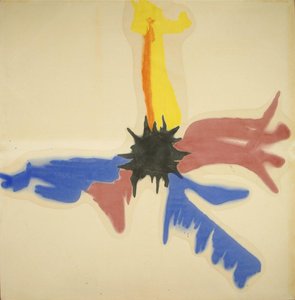
Further enriching his artistic horizons, Noland spent time studying sculpture with Ossip Zadkine in Paris, gaining experience in European art traditions. This period solidified his commitment to experimentation and broadened his technical skills. However, it was a chance encounter back in America that truly set him on the path toward his signature style: a meeting with Helen Frankenthaler in 1953. Frankenthaler’s revolutionary “soak-stain” technique – applying thinned paint directly onto unprimed canvas – captivated Noland and Morris Louis, offering a radical departure from traditional painting methods and unlocking new possibilities for color as an independent element within the artwork.
The Emergence of Distinctive Style: Circles, Chevrons, and Shaped Canvases
Noland’s immediate response to Frankenthaler's technique was a series of striking concentric circles – often referred to as “targets.” These weren’t merely depictions of targets; they were meticulously crafted investigations into the relationship between image and canvas edge. He employed unexpected color combinations, creating visual tension and exploring how the edges of the canvas itself could contribute to the overall composition. Beginning (1958) exemplifies this early phase, showcasing his mastery of color interaction and spatial dynamics. This period demonstrated a deliberate attempt to break free from traditional representational painting.
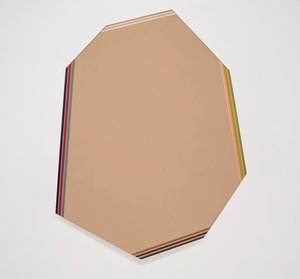
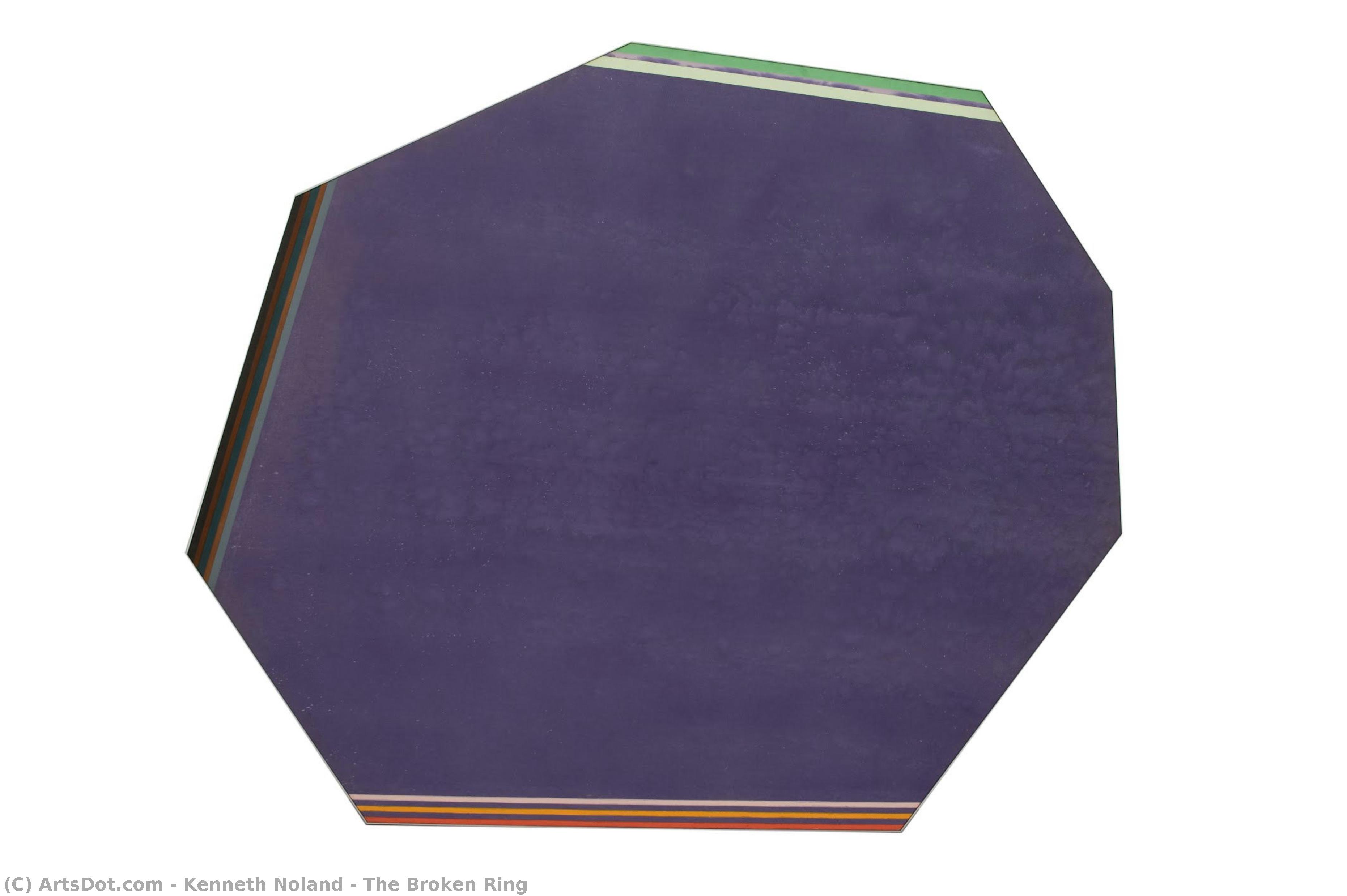
Around 1958, Noland began to move beyond the simple circle motif, venturing into explorations with chevrons and stripes – a shift that retained the emphasis on pure color while introducing a greater sense of structure. However, it was his groundbreaking experimentation with shaped canvases that truly cemented his place in art history. Initially experimenting with diamonds or chevrons, Noland progressively evolved toward highly irregular forms, emphasizing the canvas edges not as boundaries but as integral structural elements – actively participating in the overall composition and challenging conventional notions of pictorial space. These “target paintings” were not simply about color; they were about the *experience* of seeing.
Recognition and Lasting Legacy
Noland’s innovative work quickly garnered recognition within the art world. He was prominently featured in Clement Greenberg's influential 1964 exhibition, Post-Painterly Abstraction, which solidified Color Field painting as a major force in contemporary art. This exposure brought him international acclaim and established his position alongside other leading figures of the movement. That same year, he occupied half of the American pavilion at the Venice Biennale, demonstrating his standing on the global stage. Major retrospective exhibitions followed throughout the 1970s and 80s, including a comprehensive survey at the Solomon R. Guggenheim Museum in New York in 1977, traveling to prestigious institutions like the Hirshhorn Museum and Sculpture Garden and the Toledo Museum of Art. These exhibitions underscored his enduring influence and continued to celebrate his contributions to abstract art.
Beyond individual exhibitions, Noland’s work profoundly influenced subsequent generations of artists. His pioneering use of shaped canvases challenged traditional notions of painting, opening up new avenues for artistic expression. As a key figure in the Washington Color School, he helped establish a distinct American voice within the broader context of abstract art. Kenneth Clifton Noland passed away in 2010, leaving behind a legacy as one of the most significant and influential artists of the 20th century – an artist who dared to redefine the boundaries of visual experience through the power of color and form.
A Lasting Impact
- Noland’s influence extends beyond his immediate contemporaries, inspiring artists exploring abstraction, color theory, and spatial relationships even now.
- His pioneering use of shaped canvases challenged conventional notions of painting, opening up new avenues for artistic expression.
- As a key figure in the Washington Color School, he helped establish a distinct American voice within the broader context of abstract art.