Karl Friedrich Schinkel (1781–1841): A Prussian Visionary
Karl Friedrich Schinkel, born in Neuruppin, Germany, in 1781, occupies a singular position within the annals of 19th-century art and architecture. His life was a compelling narrative woven with threads of personal hardship and professional triumph, unfolding against the backdrop of shifting political landscapes and burgeoning artistic movements. The devastating fire that ravaged Neuruppin in 1787, tragically claiming his father’s life while Schinkel was still a young boy, cast a long shadow over his formative years. This early experience, perhaps, instilled within him a profound appreciation for order, permanence, and the enduring power of form—qualities that would later define his artistic vision. It undoubtedly contributed to the meticulous precision and emotional resonance so characteristic of his mature work. He received early mentorship under Friedrich Gilly and his father David Gilly, both influential architects in Berlin, absorbing their classical principles while simultaneously encountering more experimental ideas – a crucial blend that shaped his developing aesthetic sensibilities. These foundational years provided Schinkel with a robust understanding of architectural history and technique, preparing him for the pivotal decisions that lay ahead.Early Influences and Artistic Aspirations
Schinkel’s artistic journey began with an initial fascination for painting, demonstrating considerable talent in landscape and portraiture. However, a transformative encounter occurred during an exhibition in Berlin in 1810—a moment of profound self-assessment triggered by Caspar David Friedrich’s *Wanderer above the Sea of Fog*. The sheer emotional depth and masterful execution of Friedrich's work compelled Schinkel to confront his own artistic inclinations. Recognizing that achieving such heights in painting did not align with his innate sensibilities, he made the decisive shift to architecture—a decision born not merely from pragmatic considerations but from a deep conviction about where his true creative potential resided. This was not simply a change of profession; it represented an embrace of intellectual honesty and a commitment to pursuing artistic excellence where it felt most authentic. His formative years under Gilly instilled in him a bedrock understanding of classical architectural tradition, equipping him with the knowledge and skills necessary to navigate the complexities of his chosen path. He diligently studied the works of Roman architects like Vitruvius and Michelangelo, absorbing their principles of proportion and harmony—elements that would permeate his subsequent designs.From Painterly Dreams to Architectural Mastery
The turning point arrived during Friedrich’s exhibition where Schinkel was struck by the profound emotional resonance of *Wanderer above the Sea of Fog*. This experience fundamentally reshaped his artistic perspective, prompting him to question whether painting truly offered the fulfillment he craved. Recognizing that his own artistic inclinations didn't resonate with achieving such heights in painting, he made the decisive shift to architecture—a decision rooted in intellectual honesty and a dedication to pursuing artistic excellence where it felt most natural. This wasn’t merely a change of profession; it signified an embrace of profound conviction about where his true creative potential lay. He understood that architectural design could convey emotion and grandeur in ways that painting often struggled to accomplish, fostering a deeper engagement with the human experience. His early training under Gilly solidified this understanding, grounding him in the foundational principles of classical architecture—a legacy that would inform his entire artistic career.The Gothic Revival: Embracing Romantic Spirit
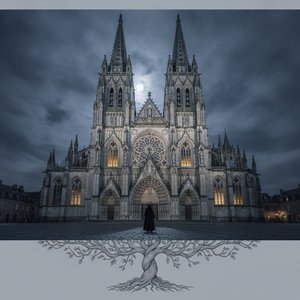
Schinkel’s architectural style is remarkably difficult to categorize neatly, representing instead a sophisticated synthesis of various influences. While firmly rooted in Neoclassical ideals—a reaction against the perceived excesses of Baroque and Rococo—he moved away from the prevailing emphasis on Imperial Roman forms, opting for a more refined Greek-inspired aesthetic. This embrace of Greek Revival was not merely stylistic; it reflected Schinkel’s belief that architecture should possess both structural integrity and poetic resonance, engaging with history while simultaneously evoking emotion. However, he did not limit himself to Neoclassicism. He demonstrated a remarkable aptitude for the Gothic Revival style—exemplified in works like Schloss Rosenau and Friedrichswerder Church—a stylistic choice that signaled his willingness to explore diverse historical traditions. This fascination with Gothic architecture stemmed from a deep appreciation for its expressive qualities—the soaring arches, ribbed vaults, stained glass windows, and intricate ornamentation—elements that conveyed spiritual grandeur and evoked feelings of awe and wonder. He skillfully blended Gothic elements with classical proportions and decorative motifs, creating buildings that transcended stylistic boundaries and achieved a harmonious balance between tradition and innovation.Legacy: Shaping Berlin and Beyond
Schinkel’s legacy is indelibly etched into the urban landscape of Berlin and beyond through his numerous landmark creations—buildings that continue to inspire awe and admiration today. The Neue Wache (1816–1818), an early masterpiece, showcases his emerging Neoclassical style with its restrained elegance and dignified presence—a testament to Schinkel’s ability to capture the spirit of a nation in stone and steel. The National Monument for the Liberation Wars (1818–1821) stands as a powerful symbol of Prussian resilience and national pride—a monumental achievement reflecting Schinkel's mastery of architectural form and symbolism. The Schauspielhaus (1819–1821), rebuilt on Gendarmenmarkt after a devastating fire, exemplifies his refined theatre design—a testament to Schinkel’s understanding of spatial aesthetics and theatrical experience. However, it is perhaps the Altes Museum (1823–1830), located on Museum Island—a building that redefined museum architecture worldwide—that remains Schinkel's most iconic achievement—a masterpiece of classical elegance embodying Schinkel’s vision for a harmonious blend of art and intellect. Beyond Berlin, Schinkel undertook ambitious projects in the Prussian provinces, from Rhineland to East Prussia—demonstrating his unwavering commitment to shaping the nation’s cultural landscape. His influence extended far beyond the physical structures he erected; he was also a prolific theorist and draftsman—disseminating his ideas through publications like *Sammlung architektonischer Entwürfe* (1820–1837) and *Werke der höheren Baukunst* (1840–1846)—inspiring generations of architects to embrace innovation while honoring tradition. Schinkel’s enduring contribution to German architectural history—a bridge between Neoclassicism and Modernism—solidifies his place as one of the most influential figures in nineteenth-century art and design.Pytania i odpowiedzi
Gdzie można znaleźć dzieła Karl Friedrich Schinkel pogrupowane według nurtów artystycznych?
Nurty, w których tworzył/a Karl Friedrich Schinkel, można zobaczyć na stronie Wszystkie nurty artystyczne artysty, gdzie dzieła są pogrupowane według nurtów.
Czy mogę przeglądać dzieła Karl Friedrich Schinkel według słów kluczowych?
Strona Według słów kluczowych artysty Karl Friedrich Schinkel grupuje jego dzieła według słów kluczowych.
Czy istnieje chronologiczny opis twórczości Karl Friedrich Schinkel?
Kariera Karl Friedrich Schinkel rozwija się etap po etapie na stronie Osiągnięcia artystyczne: jako pozioma oś czasu dzieł, pogrupowanych w rozdziały odpowiadające poszczególnym okresom twórczości.